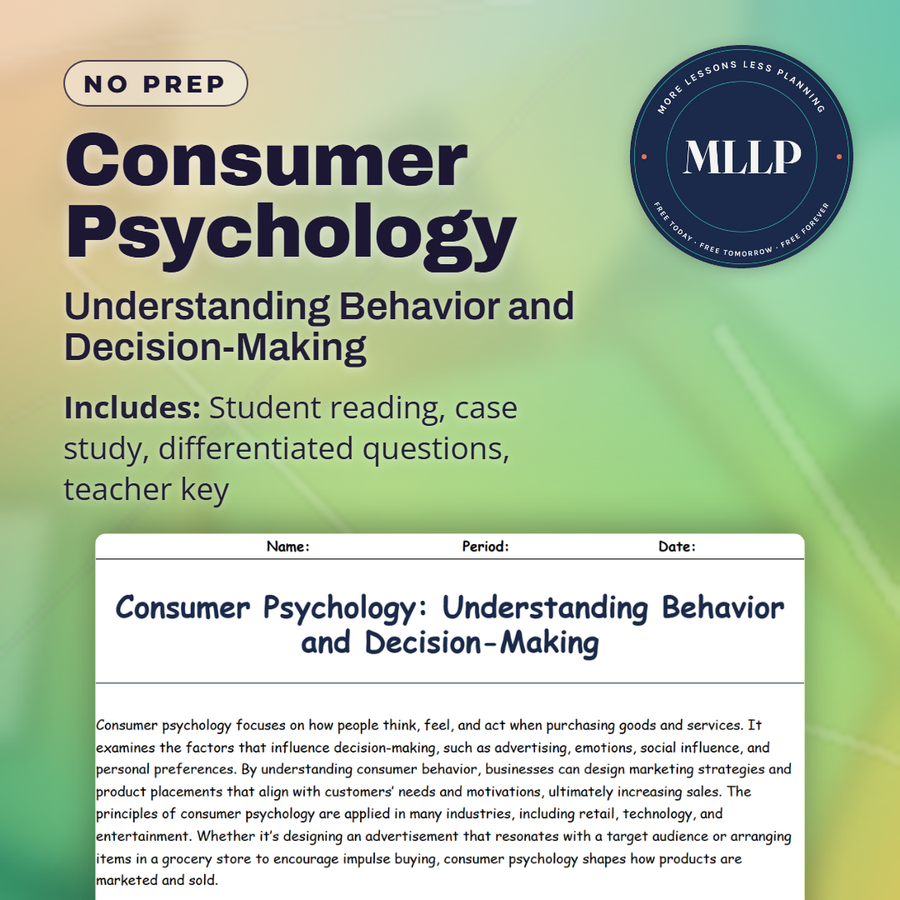
Consumer Psychology: Understanding Behavior and Decision-Making
Quality reviewed September 2026
Facts verified September 10, 2026
- Subject
- Social Studies
- Grades
- Grades 9-12
- Length
- 7-page student worksheet
- Time
- About one 50-minute class period
- Great for
- Sub plans and independent work
- Includes
- Reading passage, comprehension questions + full answer key
- Format
- Print-and-go PDF
What students do
- Match five marketing concepts, including scarcity effect, anchoring, and social proof, to their definitions
- Fill in blanks identifying scarcity, peer influence, and anchoring from the reading
- Read a case study on a limited-edition sneaker release and explain how scarcity drove sales
- Write short answers on how emotional appeals and digital marketing shape buying decisions
What it covers
- Factors that influence consumer behavior, including emotion and peer influence
- Marketing strategies built on scarcity, social proof, and anchoring
- How digital marketing has changed the way businesses reach consumers
Start reading this worksheet
Consumer psychology focuses on how people think, feel, and act when purchasing goods and services. It examines the factors that influence decision-making, such as advertising, emotions, social influence, and personal preferences. By understanding consumer behavior, businesses can design marketing strategies and product placements that align with customers’ needs and motivations, ultimately increasing sales. The principles of consumer psychology are applied in many industries, including retail, technology, and entertainment. Whether it’s designing an advertisement that resonates with a target audience or arranging items in a grocery store to encourage impulse buying, consumer psychology shapes how products are marketed and sold.
Factors Influencing Consumer Behavior
Consumers are influenced by a variety of internal and external factors when making purchasing decisions. One major influence is motivation, which drives people to seek products that fulfill their needs. Psychologist Abraham Maslow’s Hierarchy of Needs explains this concept, suggesting that people prioritize basic needs like food and safety before pursuing higher-level needs like self-esteem and self-actualization. For example, a person might prioritize buying groceries over a luxury item, but once basic needs are met, they might splurge on something that makes them feel special. Perception also plays a key role in consumer behavior. People interpret marketing messages differently based on their beliefs, values, and past experiences. A brand’s logo, color scheme, or slogan can evoke specific emotions or associations that influence whether a consumer feels positively or negatively about a product. This is why companies invest heavily in branding—to create a memorable and appealing image. Social factors, such as peer influence and cultural norms, significantly impact consumer behavior as well. Many people are swayed by recommendations from friends or family, and trends often drive purchasing decisions. For instance, the rise of social media influencers has amplified the power of peer influence, with followers buying products endorsed by individuals they admire.
The Role of Emotions in Decision-Making
Emotions are central to consumer decision-making, often outweighing logic. Positive emotions, like happiness or excitement, are commonly used in advertising to create a connection between the consumer and the product. For example, a commercial showing a family enjoying a meal together may evoke feelings of warmth and nostalgia, encouraging viewers to buy that brand of food. Conversely, negative emotions can also drive purchases. Fear-based marketing, such as ads for home security systems, uses concern for safety to motivate consumers to act. By tapping into emotions, marketers influence how consumers perceive the value of a product or service.
Like what you read? The full reading, the case study, and every question set are in the free download below, along with the answer key.
Why this matters
Nobody thinks of themselves as an easy mark for marketing, yet the scarcity effect still gets nearly everyone at some point. The reading traces it through a case study on a sneaker release that sold out on urgency alone, then separates that pull from the anchoring and social proof tactics covered elsewhere in the piece.
Every student has bought something because it felt like it was about to disappear, which makes scarcity the easiest lever to spot in their own shopping history. Emotional appeals and digital marketing use quieter versions of the same trick, and pointing to anchoring in a price tag they already fell for gives students a reason to pay attention next time they shop.
From one teacher to another
I use this one when we talk about how marketing plays on psychology to get people to buy things. Students match terms like anchoring and social proof to their definitions, then work through a case study on a sneaker company that used scarcity to sell out a limited release. The short answer questions ask them to connect emotional appeals and digital marketing to decisions they have actually made as shoppers. Answer key is included.
What you get
Download
Where should I send the next one?
Everything here is free and it stays that way. Leave your email and I'll send you the new lessons as they go up. You can unsubscribe from any one of them.
Related resources
Clinical Psychology: Understanding and Treating Mental Health Disorders
Developmental Psychology: Understanding Human Growth Across the Lifespan
Educational Psychology: Understanding Learning Processes and Teaching Strategies
Health Psychology: The Link Between Mind and Body
Industrial/Organizational Psychology: Understanding Workplace Behavior and Productivity
Military Psychology: Supporting Service Members Through Science
Every lesson on this site is free to download and use. If one of them saved you a prep period, you can chip in a few bucks toward my three kids' daycare fund. That's genuinely where tips go.