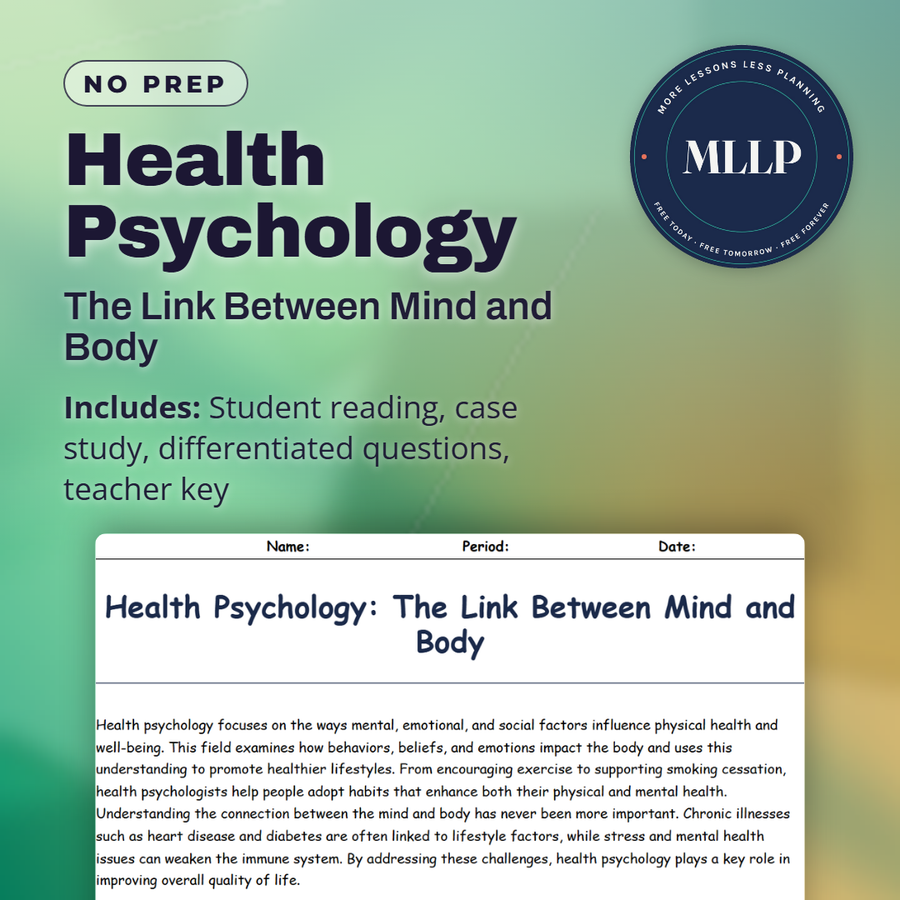
Health Psychology: The Link Between Mind and Body
Quality reviewed September 2026
Facts verified September 10, 2026
- Subject
- Social Studies
- Grades
- Grades 9-12
- Length
- 8-page student worksheet
- Time
- About one 50-minute class period
- Great for
- Sub plans and independent work
- Includes
- Reading passage, comprehension questions + full answer key
- Format
- Print-and-go PDF
What students do
- Match five terms, including the biopsychosocial model and motivational interviewing, to their definitions
- Fill in blanks naming the biopsychosocial model, cognitive-behavioral therapy, and stress
- Read a case study on managing stress for better physical health and answer what strategies the psychologist used
- Write short answers on the biopsychosocial model and starting an exercise routine
What it covers
- The connection between mental and physical health through the biopsychosocial model
- Behavioral interventions such as stress management, CBT, and motivational interviewing
- Public health campaigns and health psychology's role in chronic illness
Start reading this worksheet
Health psychology focuses on the ways mental, emotional, and social factors influence physical health and well-being. This field examines how behaviors, beliefs, and emotions impact the body and uses this understanding to promote healthier lifestyles. From encouraging exercise to supporting smoking cessation, health psychologists help people adopt habits that enhance both their physical and mental health. Understanding the connection between the mind and body has never been more important. Chronic illnesses such as heart disease and diabetes are often linked to lifestyle factors, while stress and mental health issues can weaken the immune system. By addressing these challenges, health psychology plays a key role in improving overall quality of life.
The Connection Between Mental and Physical Health
Mental and physical health are deeply interconnected. Stress, for instance, affects the body by increasing levels of cortisol, a hormone that, when elevated for long periods, can contribute to conditions such as high blood pressure and weakened immunity. Similarly, mental health disorders like depression are linked to higher risks of chronic illnesses, including heart disease and diabetes. Conversely, physical health can influence mental well-being. Chronic pain or illnesses often lead to feelings of frustration, isolation, or anxiety, creating a cycle where mental and physical health challenges reinforce one another. Health psychologists work to break this cycle by addressing the underlying factors that contribute to poor health outcomes. One important concept in health psychology is the biopsychosocial model, which considers biological, psychological, and social factors when examining health. For example, a patient recovering from surgery may need medication (biological), emotional support (psychological), and encouragement from family or friends (social) to heal effectively. This holistic approach helps address the many factors that influence health.
Behavioral Interventions for Better Health
One of the primary goals of health psychology is to encourage behaviors that improve overall health and prevent disease. Behavioral interventions often focus on helping individuals make small, sustainable changes to their daily habits. For instance, instead of asking someone to completely overhaul their diet, a health psychologist might encourage them to start by adding one serving of vegetables to each meal. Exercise is a key area of focus in health psychology because of its significant benefits for both physical and mental health. Regular physical activity reduces the risk of chronic illnesses, improves mood, and lowers stress levels. However, getting started can be difficult, especially for individuals who face barriers like lack of time or motivation. Health psychologists use techniques such as goal setting and motivational interviewing to help people overcome these challenges and stick with an exercise routine. Another common intervention involves promoting smoking cessation. Smoking is a major risk factor for illnesses like lung cancer and heart disease, yet many smokers struggle to quit due to the addictive nature of nicotine. Health psychologists use strategies such as cognitive-behavioral therapy (CBT) to help smokers identify and change the thought patterns that trigger their cravings. Nicotine replacement therapies and support groups are often combined with these strategies to improve success rates.
Like what you read? The full reading, the case study, and every question set are in the free download below, along with the answer key.
Why this matters
Stress does not stay contained in a person's head. The biopsychosocial model here treats mental and physical health as one connected system, which is why health psychology plays a role in chronic illness, not just mood. A case study follows someone reducing stress specifically to improve their physical health.
The part I care about is what students do with someone trying to start an exercise routine. If they can explain that person's odds using biological, psychological, and social pieces together, and name where stress management or motivational interviewing might help, they understand the model instead of reciting it.
From one teacher to another
I use this when we get into the mind-body connection unit because it grounds the biopsychosocial model in an actual case instead of just defining it. Students match concepts like motivational interviewing and social support to their definitions, fill in blanks on stress and CBT, then read a case study about reducing stress to improve physical health. The short answer questions get them applying the material to someone trying to start exercising. Answer key is included so it grades fast.
What you get
Download
Where should I send the next one?
Everything here is free and it stays that way. Leave your email and I'll send you the new lessons as they go up. You can unsubscribe from any one of them.
Related resources
Clinical Psychology: Understanding and Treating Mental Health Disorders
Consumer Psychology: Understanding Behavior and Decision-Making
Developmental Psychology: Understanding Human Growth Across the Lifespan
Educational Psychology: Understanding Learning Processes and Teaching Strategies
Industrial/Organizational Psychology: Understanding Workplace Behavior and Productivity
Military Psychology: Supporting Service Members Through Science
Every lesson on this site is free to download and use. If one of them saved you a prep period, you can chip in a few bucks toward my three kids' daycare fund. That's genuinely where tips go.