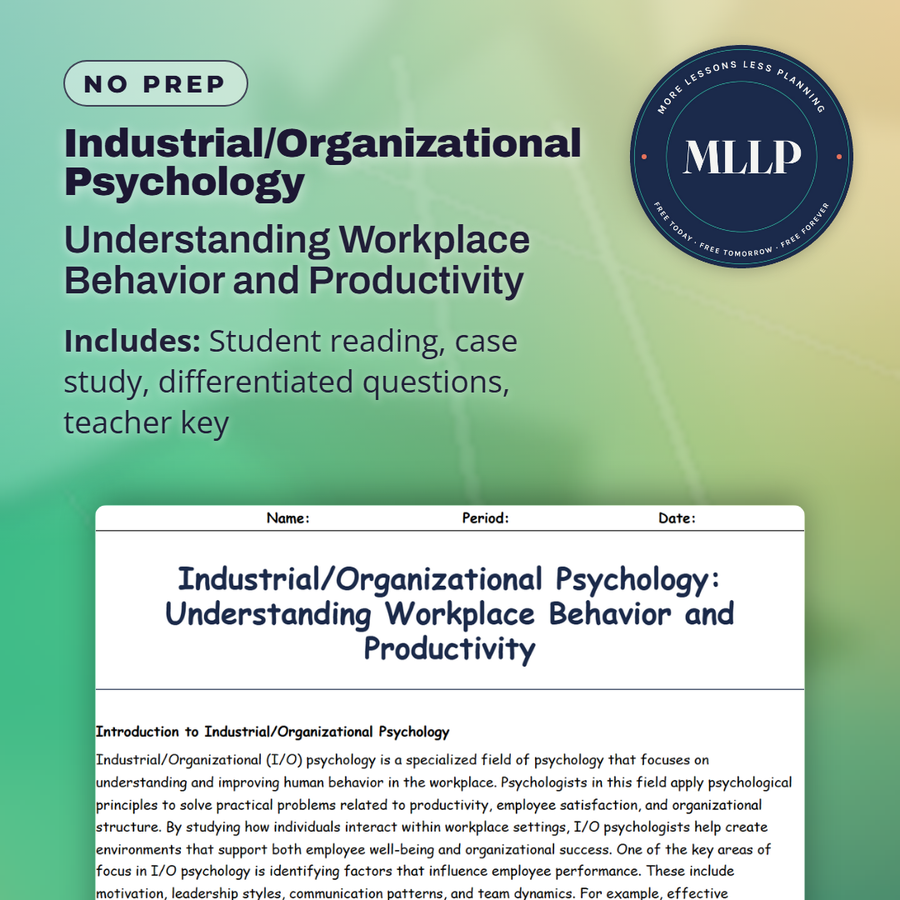
Industrial/Organizational Psychology: Understanding Workplace Behavior and Productivity
Quality reviewed September 2026
Facts verified September 10, 2026
- Subject
- Social Studies
- Grades
- Grades 9-12
- Length
- 8-page student worksheet
- Time
- About one 50-minute class period
- Great for
- Sub plans and independent work
- Includes
- Reading passage, comprehension questions + full answer key
- Format
- Print-and-go PDF
What students do
- Match five terms, including transformational and laissez-faire leadership, to their definitions
- Fill in blanks naming training programs, transformational leadership, and time management
- Read a case study on leadership training at a marketing firm and answer how the I/O psychologist diagnosed the issues
- Write short answers on workplace stress strategies and how remote work changes the field
What it covers
- The science behind workplace productivity and employee performance
- Leadership styles, including transformational, transactional, and laissez-faire
- Team dynamics and the future of I/O psychology in remote work
Start reading this worksheet
Introduction to Industrial/Organizational Psychology
Industrial/Organizational (I/O) psychology is a specialized field of psychology that focuses on understanding and improving human behavior in the workplace. Psychologists in this field apply psychological principles to solve practical problems related to productivity, employee satisfaction, and organizational structure. By studying how individuals interact within workplace settings, I/O psychologists help create environments that support both employee well-being and organizational success. One of the key areas of focus in I/O psychology is identifying factors that influence employee performance. These include motivation, leadership styles, communication patterns, and team dynamics. For example, effective communication between team members can boost morale and productivity, while poor communication may lead to misunderstandings and workplace conflict. I/O psychologists often evaluate these dynamics through surveys, observations, and performance assessments to recommend changes that benefit both employees and management. Another important aspect of I/O psychology is the study of job satisfaction and employee engagement. Employees who feel valued and supported are more likely to stay committed to their roles, leading to higher retention rates and better overall performance. To enhance job satisfaction, organizations may implement recognition programs, offer professional development opportunities, and encourage feedback from employees.
The Science Behind Productivity
Productivity is a cornerstone of any successful organization. I/O psychologists use evidence-based strategies to identify and address barriers to productivity. One such strategy is the development of employee training programs, which help individuals gain the skills and knowledge necessary to perform their tasks efficiently. Effective training programs are tailored to the specific needs of the workforce and may include hands-on workshops, e-learning modules, or mentorship opportunities. Workplace stress is another factor that can impact productivity. Stress may arise from tight deadlines, unclear expectations, or interpersonal conflicts. I/O psychologists work with organizations to design stress management programs, such as time management training or access to mental health resources. Additionally, they may recommend flexible work schedules or changes to the physical work environment to reduce stress. The physical layout of a workplace can also influence productivity. For example, open office designs can promote collaboration but may also lead to distractions. I/O psychologists study these environments and suggest changes to maximize efficiency. Factors such as lighting, noise levels, and ergonomic furniture are all considered when creating a productive workspace.
Leadership and Team Dynamics
Leadership is a critical component of workplace success. Different leadership styles—such as transformational, transactional, and laissez-faire leadership—can have varying effects on team performance. Transformational leaders inspire and motivate employees by setting a vision and encouraging creativity, while transactional leaders focus on structure and rewards for achieving specific goals. Laissez-faire leaders take a hands-off approach, allowing employees to work independently. I/O psychologists often assess leadership effectiveness by gathering feedback from employees and observing workplace interactions. Based on their findings, they may recommend leadership development programs that focus on communication skills, conflict resolution, and emotional intelligence. Team dynamics also play a significant role in workplace productivity. Teams that collaborate effectively are more likely to achieve their goals, while teams with poor communication or unresolved conflicts may struggle. I/O psychologists help organizations foster teamwork through activities such as team-building exercises, personality assessments, and workshops on group decision-making.
Like what you read? The full reading, the case study, and every question set are in the free download below, along with the answer key.
Why this matters
Most people assume a struggling team is simply full of people who are not working hard enough. The marketing firm in this reading complicates that picture: an I/O psychologist diagnoses the issues, and the team's performance gets fixed through leadership training.
That fix sends students looking at the people running a team, not only the people on it. Remote work adds a natural extension: students already sense that leading a team through a screen takes different skills than leading one in a room, and now they have the vocabulary, transformational, transactional, laissez-faire, to say why.
From one teacher to another
I use this reading for the workplace psychology unit since it covers leadership styles students can picture from jobs or sports teams. They match transformational, transactional, and laissez-faire leadership to their definitions, fill in blanks on training programs and time management, then read a case study on a marketing firm fixing team performance through leadership training. Short answer questions ask them to name real strategies I/O psychologists use for workplace stress. Key included.
What you get
Download
Where should I send the next one?
Everything here is free and it stays that way. Leave your email and I'll send you the new lessons as they go up. You can unsubscribe from any one of them.
Related resources
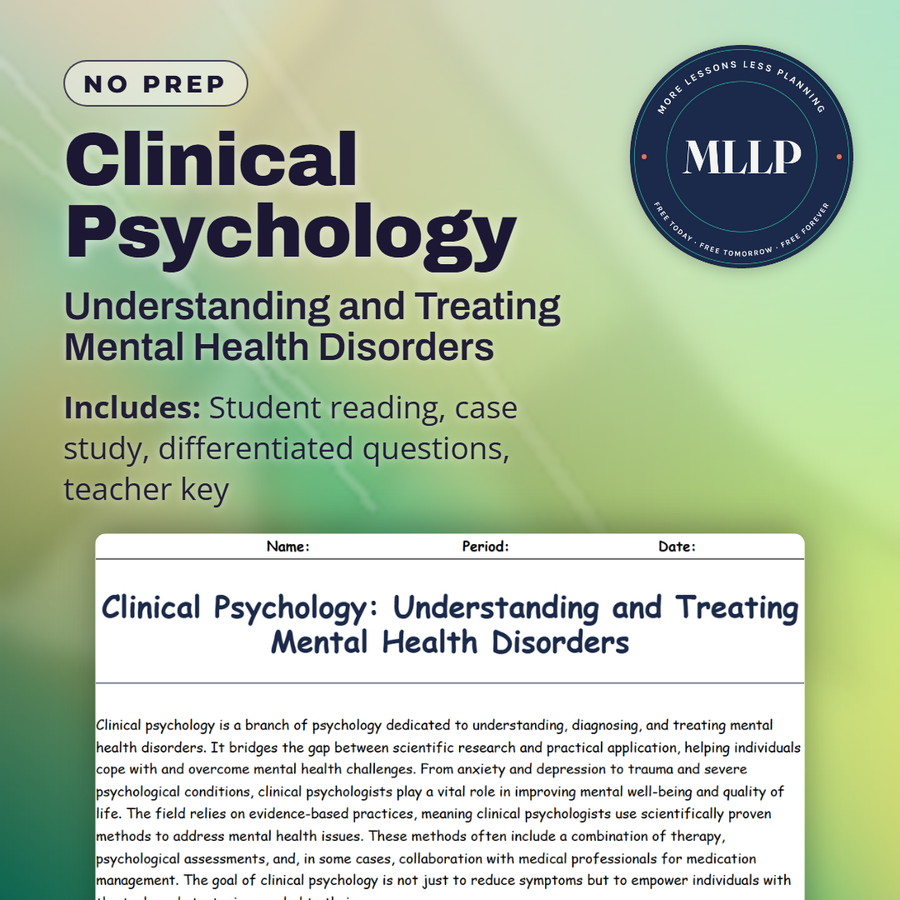
Clinical Psychology: Understanding and Treating Mental Health Disorders
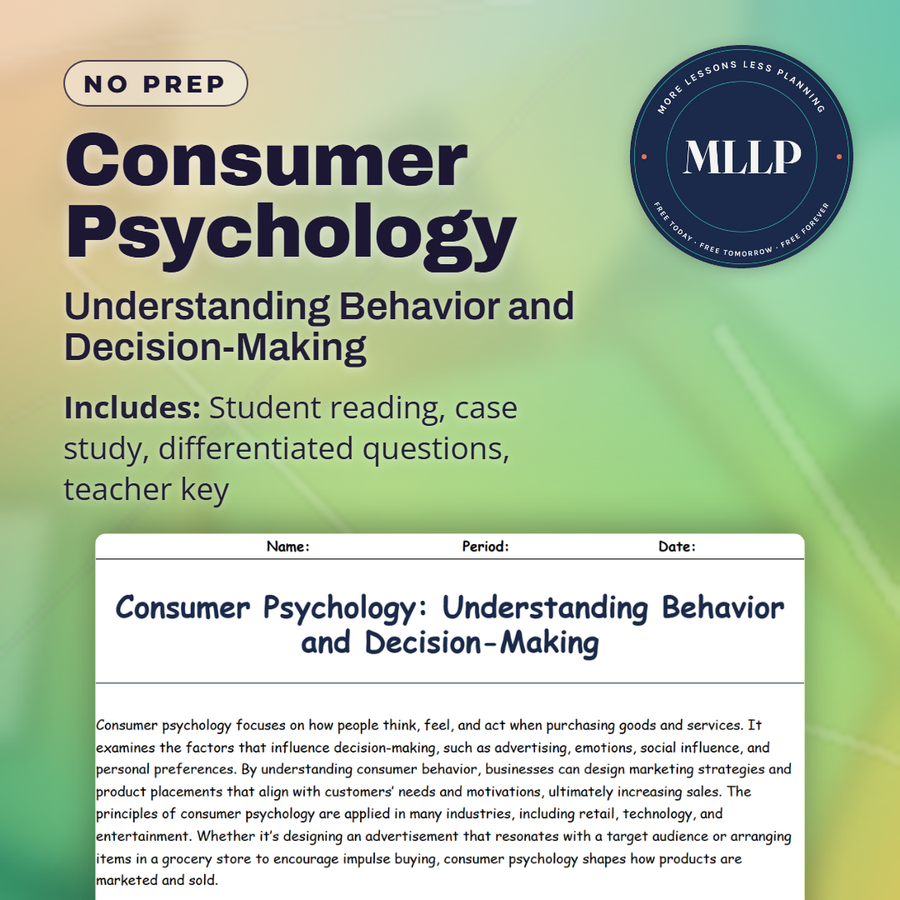
Consumer Psychology: Understanding Behavior and Decision-Making
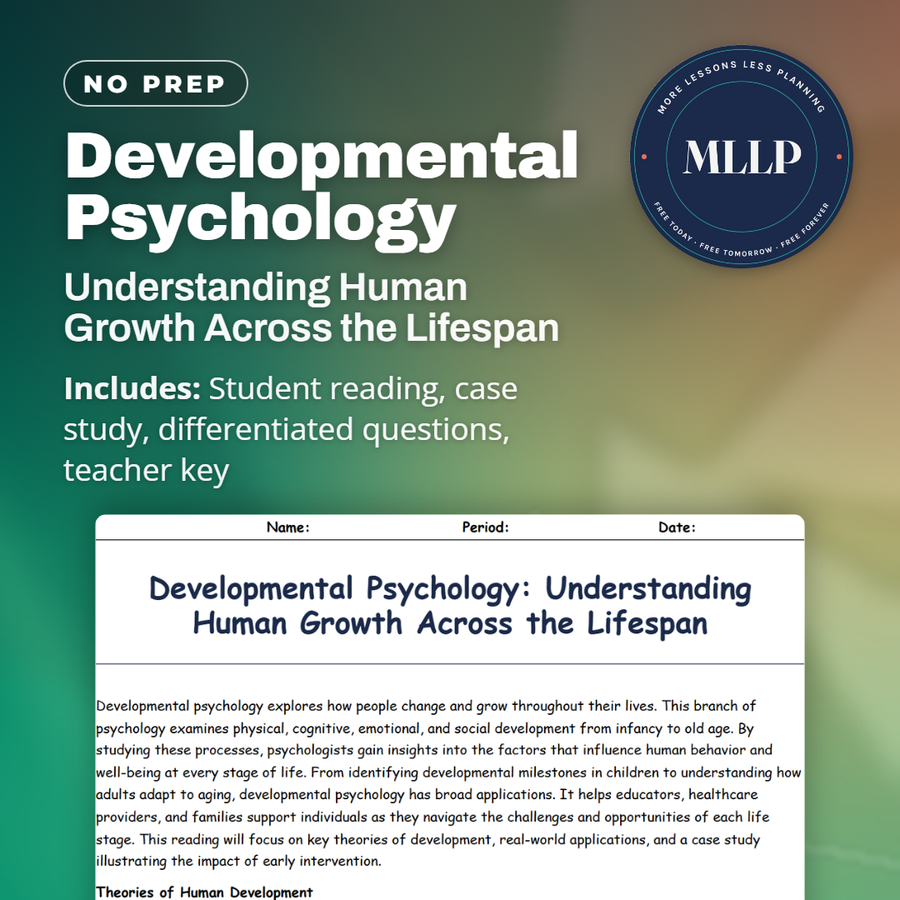
Developmental Psychology: Understanding Human Growth Across the Lifespan
Educational Psychology: Understanding Learning Processes and Teaching Strategies
Health Psychology: The Link Between Mind and Body
Military Psychology: Supporting Service Members Through Science
Every lesson on this site is free to download and use. If one of them saved you a prep period, you can chip in a few bucks toward my three kids' daycare fund. That's genuinely where tips go.