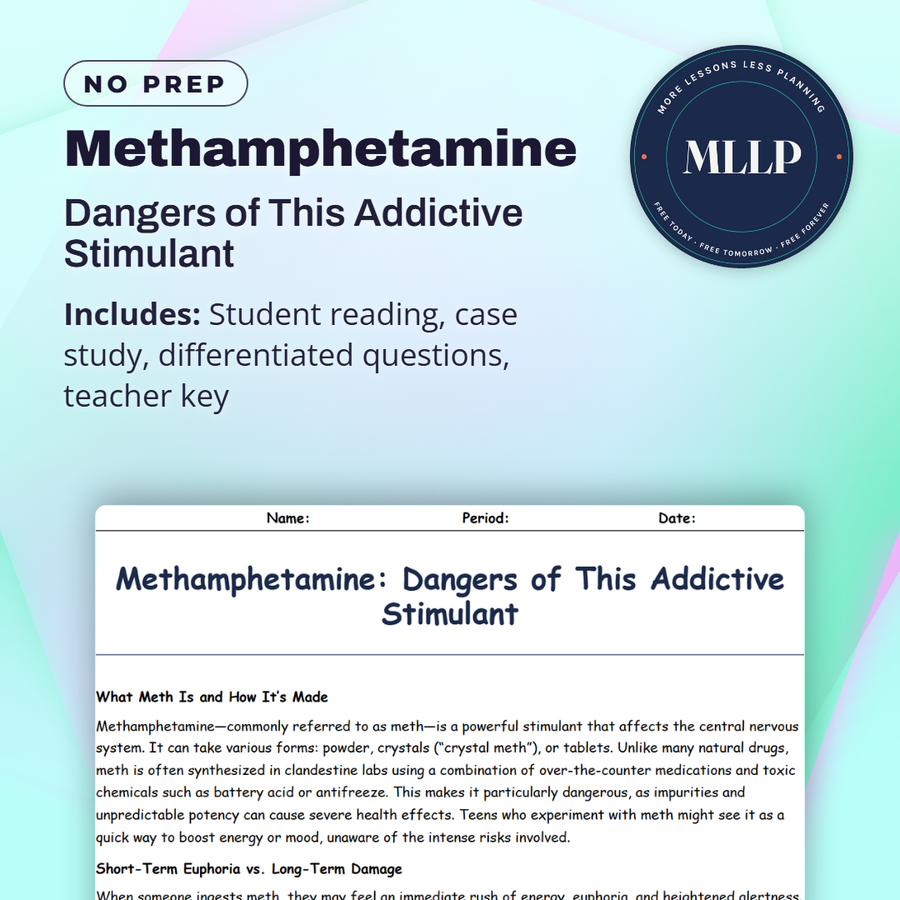
Methamphetamine: Dangers of This Addictive Stimulant
Quality reviewed September 2026
Facts verified September 21, 2026
- Subject
- Career & Life Skills
- Grades
- Grades 9-12
- Length
- 7-page student worksheet
- Time
- About one 50-minute class period
- Great for
- Sub plans and independent work
- Includes
- Reading passage, comprehension questions + full answer key
- Format
- Print-and-go PDF
What students do
- Match five terms - formication, psychosis, binge, euphoria, and cravings - to the definition naming what each one is
- Fill in three blanks naming meth as a stimulant, the compulsive skin-picking behavior called formication, and the symptoms that follow a crash
- Answer three multiple-choice questions on meth's short-term effect, what meth mouth is, and how meth-induced paranoia can change behavior
- Write short answers on why the initial rush can trap a teen into repeated use, why paranoia and hallucinations happen, and what a first step toward help looks like
What it covers
- The crash cycle - intense energy and euphoria followed by exhaustion, depression, and cravings
- Physical and mental effects that build with continued use, including meth mouth, skin sores, paranoia, and psychosis
- Hailey's case study, from a first try for energy at a party to an inpatient treatment program built around adolescent addiction
Start reading this worksheet
What Meth Is and How It’s Made
Methamphetamine, commonly referred to as meth, is a powerful stimulant that affects the central nervous system. It can take various forms: powder, crystals (“crystal meth”), or tablets. Unlike many natural drugs, meth is often synthesized in clandestine labs using a combination of over-the-counter medications and toxic chemicals such as battery acid or antifreeze. This makes it particularly dangerous, as impurities and unpredictable potency can cause severe health effects. Teens who experiment with meth might see it as a quick way to boost energy or mood, unaware of the intense risks involved.
Short-Term Euphoria vs. Long-Term Damage
When someone ingests meth, they may feel an immediate rush of energy, euphoria, and heightened alertness. This high, however, is typically followed by a “crash” marked by exhaustion, depression, and intense cravings for more. Prolonged use leads to significant changes in the brain’s dopamine system, making it hard to feel pleasure from everyday activities. Over time, users may experience “meth mouth,” characterized by severe dental decay, and skin sores caused by obsessive picking. Additionally, meth places a tremendous strain on the cardiovascular system, increasing heart rate and blood pressure, which can precipitate strokes or heart attacks even in young people.
Paranoia, Hallucinations, and Psychosis
Meth doesn’t just damage the body; it profoundly impacts the mind. Chronic use can lead to paranoia, hallucinations, and erratic behaviors. Some users report feeling like insects are crawling under their skin, a sensation called “formication”, leading them to pick at their skin compulsively. Extended binges, where users stay awake for days, amplify these effects. As teens are still solidifying their coping mechanisms and emotional regulation, meth-induced psychosis can severely disrupt their mental health development, sometimes with lasting repercussions.
Like what you read? The full reading, the case study, and every question set are in the free download below, along with the answer key.
Why this matters
Meth is one of the substances where the short-term high and the long-term cost are almost impossible to reconcile in a single mental picture, which is exactly why the reading spends so much time on Hailey's crash instead of just her first high. Teenage brains are still building the systems that regulate mood and impulse control, and this reading shows students what happens to that system under a stimulant this powerful. It also matters because recovery gets real space in this reading; students see that Hailey's early intervention shaped her outcome as much as the mistake that started it.
If you or someone you know is struggling, call or text 988 (Suicide & Crisis Lifeline, US) or talk to a trusted adult right away.
From one teacher to another
This reading doesn't open with a warning. It opens with why a stimulant like meth appeals to a stressed-out teen in the first place, since Hailey tries it once, at a party, chasing more energy for an all-night study session. The crash that follows is where the reading does its real work: exhaustion, mood swings, red sores from compulsive scratching, and a paranoia that convinces her classmates are talking about her. Students end the reading with the recovery section, which is honest about how hard quitting is and how much early intervention matters.
What you get
Download
Where should I send the next one?
Everything here is free and it stays that way. Leave your email and I'll send you the new lessons as they go up. You can unsubscribe from any one of them.
Related resources
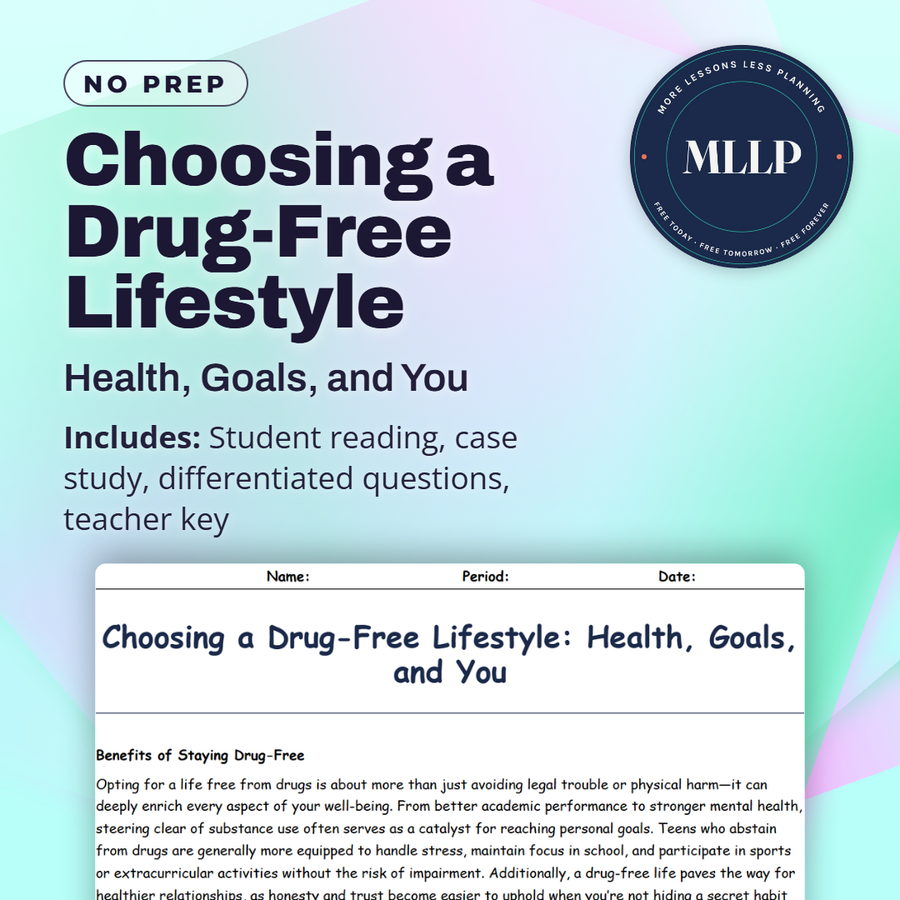
Choosing a Drug-Free Lifestyle: Health, Goals, and You
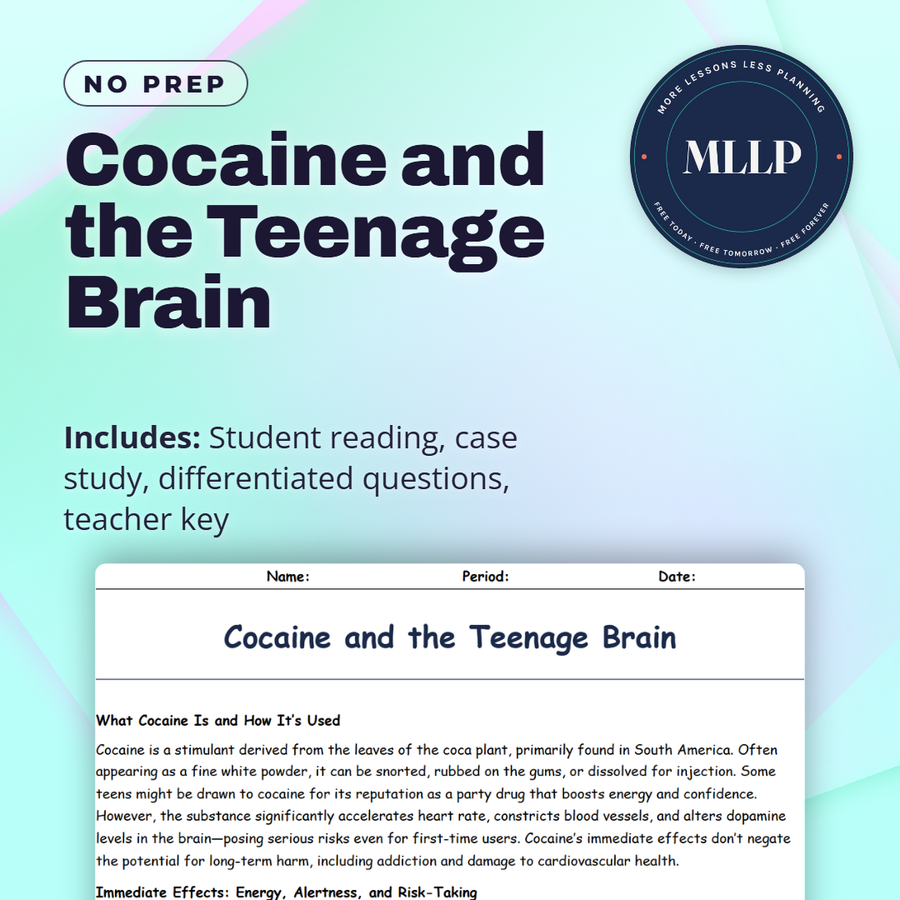
Cocaine and the Teenage Brain
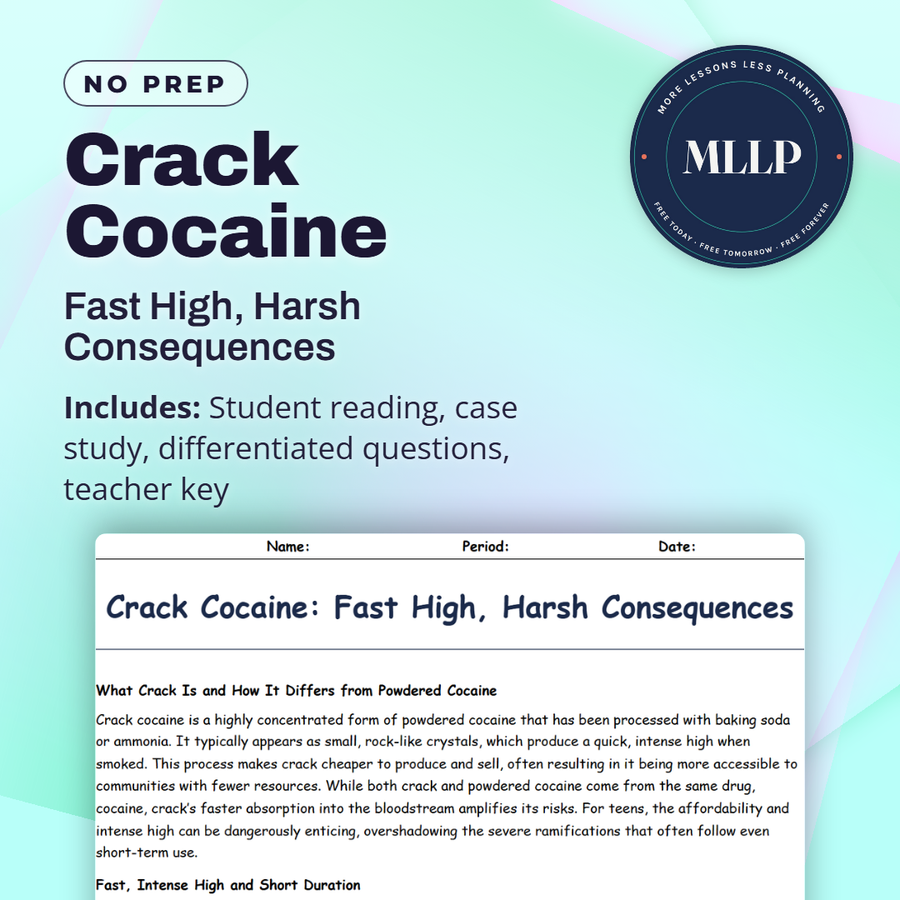
Crack Cocaine: Fast High, Harsh Consequences
Heroin and Teens: Understanding the Risks and Realities
How Addiction Changes the Brain: Science for Students
How to Handle Peer Pressure and Say No with Confidence
Every lesson on this site is free to download and use. If one of them saved you a prep period, you can chip in a few bucks toward my three kids' daycare fund. That's genuinely where tips go.