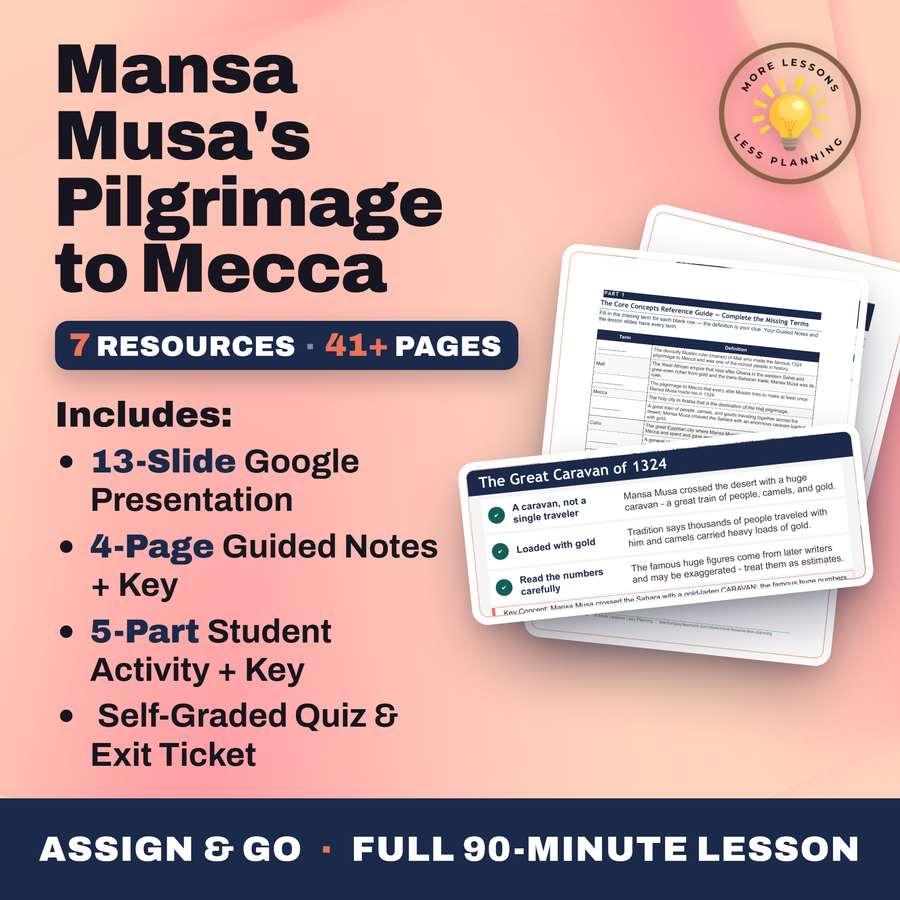
Mansa Musa's Pilgrimage to Mecca
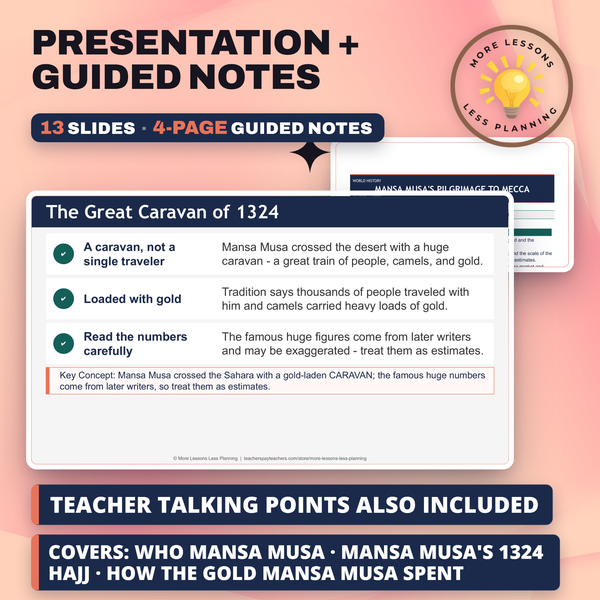
- Slide deck
- Guided notes
- Guided notes teacher key
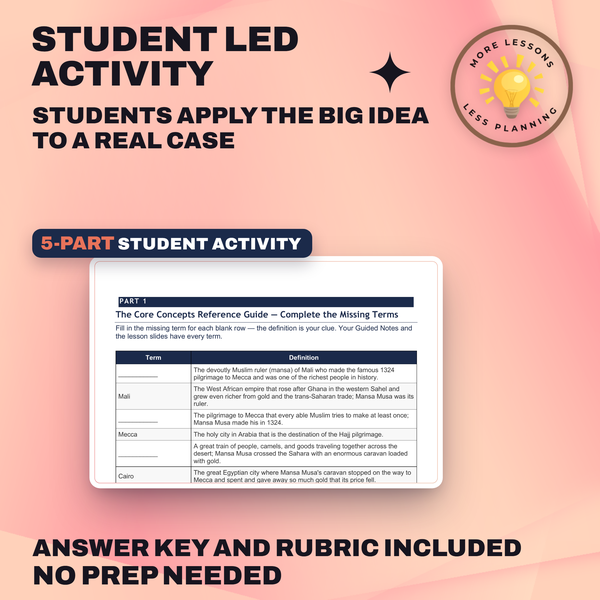
- Activity + answer key
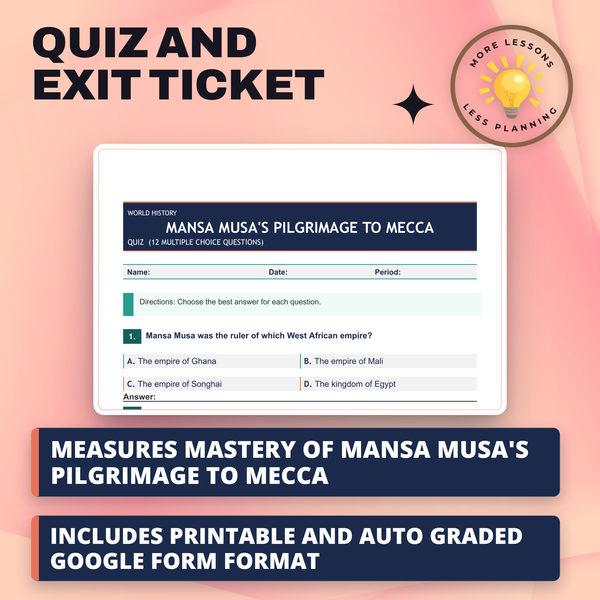
- Quiz + answer key
- Exit ticket + answer key
- Teacher guide
- Teacher presentation notes
Where should I send the next one?
Everything here is free and it stays that way. Leave your email and I'll send you the new lessons as they go up. You can unsubscribe from any one of them.
Every file in this toolkit
Related resources
Great Zimbabwe Stone City
Songhai and Timbuktu Scholarship
The Great Schism of 1054
The Islamic Golden Age
The Rise of Islam and the Caliphates
The Swahili Coast Trade Cities
What students do
- Analyze al-Umari's account of the gold Mansa Musa spent in Cairo, recorded twelve years after the visit
- Calculate why flooding one city with gold made that same gold lose value, an early lesson in inflation
- Argue why the famous caravan numbers should be treated as later estimates rather than exact counts
- Explain what the 1375 Catalan Atlas actually proves, and what it doesn't, about Mansa Musa's fame
What it covers
- How Mali rose after Ghana and grew richer on gold and the trans-Saharan trade
- Why al-Umari counts as a near-contemporary but still secondhand source
- The distinction between Timbuktu's golden age under Mali and the earlier empire of Ghana
- What actually happened to gold prices in Cairo, and for roughly how long
Learning targets
- Explain who Mansa Musa was and how the empire of Mali grew rich on gold and the trans-Saharan trade.
- Describe Mansa Musa's 1324 Hajj to Mecca - the religious duty behind it and the scale of the caravan across the Sahara to Cairo - and judge the famous numbers as later estimates.
- Explain how the gold Mansa Musa spent and gave away in Cairo flooded the market and made gold cheap for years (inflation).
- Analyze a primary source - al-Umari's account of the gold in Cairo (via Dubois, 1896) - and judge it as a near-contemporary but secondhand account, and explain how the Hajj put West Africa on the 1375 Catalan Atlas.
From one teacher to another
The detail students remember is the one where a king gives away so much gold that he accidentally crashes its value in Cairo for about twelve years. Getting there means placing Mali correctly after Ghana first and treating the famous caravan numbers as later estimates, not facts, since they come from writers working well after 1324. Reading al-Umari afterward changes how they read him: he wasn't in the room, he was collecting other people's memories a dozen years later, and that gap matters.
Every lesson on this site is free to download and use. If one of them saved you a prep period, you can chip in a few bucks toward my three kids' daycare fund. That's genuinely where tips go.