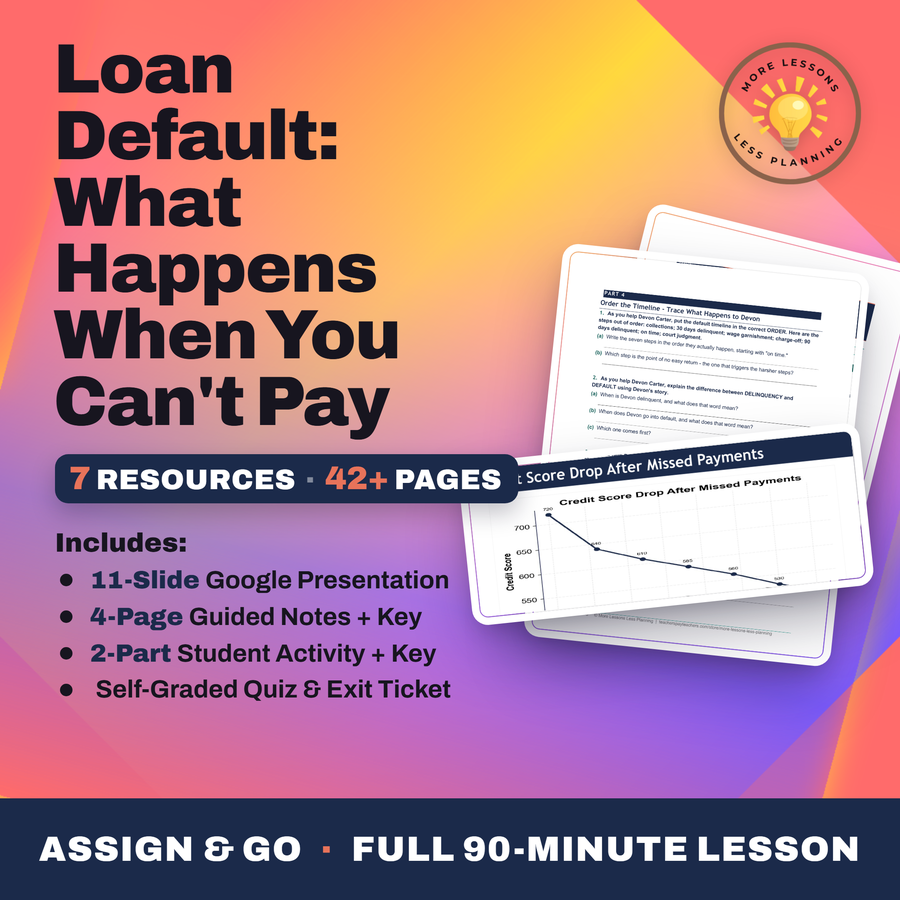

Loan Default - What Happens When You Can't Pay
- Slide deck
- Guided notes
- Guided notes teacher key
- Activity + answer key
- Quiz + answer key
- Exit ticket + answer key
- Teacher guide
- Teacher presentation notes
Where should I send the next one?
Everything here is free and it stays that way. Leave your email and I'll send you the new lessons as they go up. You can unsubscribe from any one of them.
Every file in this toolkit
Related resources
Student Loans and Financial Aid
The Debt Snowball vs Avalanche - Paying It Off
Bonds - Lending to Governments and Companies
Financial Goals - Short, Medium and Long Term
Health Insurance - The Most Confusing Bill You'll Get
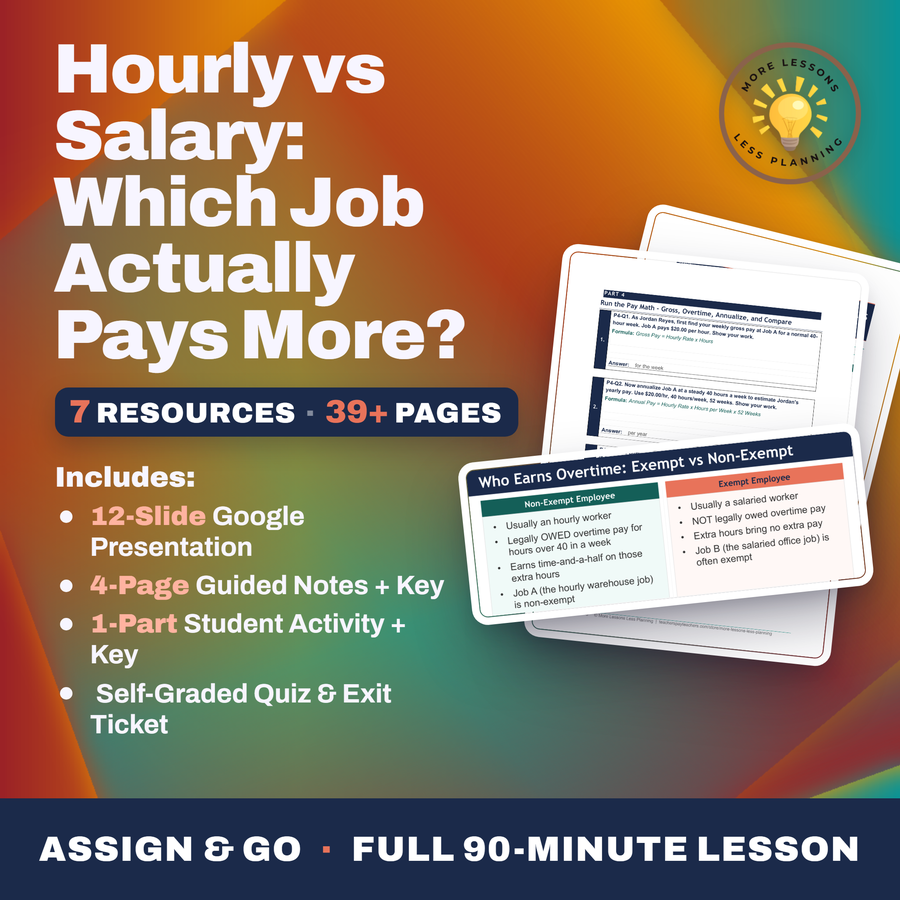
Hourly vs Salary: Which Job Actually Pays More?
What students do
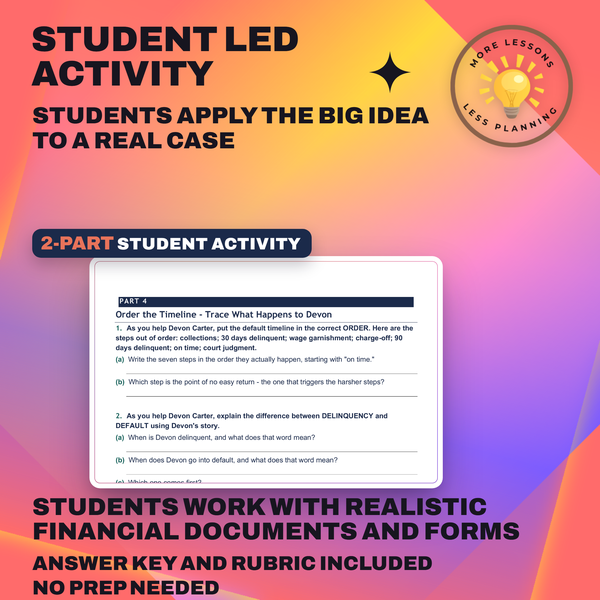
- Trace the default timeline from a missed payment through collections and wage garnishment
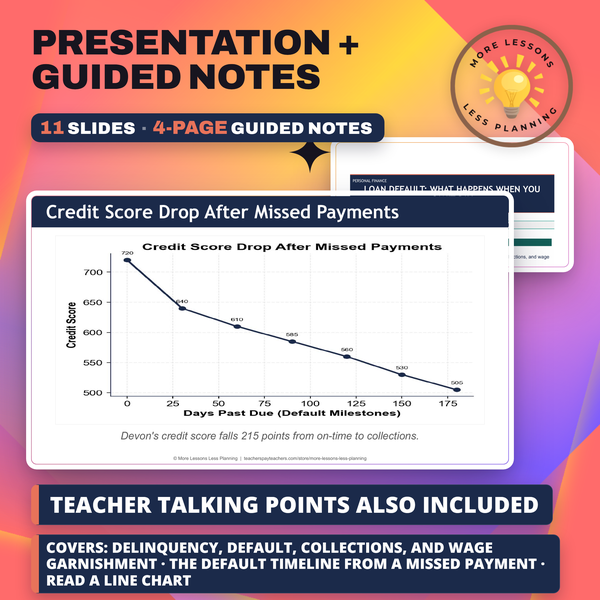
- Read a line chart tracking a credit score drop across each missed-payment milestone
- Calculate a wage garnishment amount under the federal 25% disposable-pay cap
- Identify the options a borrower has before default and explain how each one helps
What it covers
- The difference between delinquency and default, and why delinquency comes first
- What a charge-off actually means, and why the debt is still owed afterward
- How collections and a court judgment lead to wage garnishment
- Deferment, hardship plans, and refinancing as ways to stop the slide early
Learning targets
- Define delinquency, default, collections, and wage garnishment
- Trace the default timeline from a missed payment through charge-off, collections, and wage garnishment
- Read a line chart that tracks how a credit score drops across the missed-payment milestones
- Identify the options a borrower has BEFORE default and explain how each one helps
From one teacher to another
By the third slide the room always goes quiet, the credit score line falling step by step down Devon Carter's timeline, and nobody expected a lost job to end in wage garnishment this fast. Students trace his 720 score through the missed payment, the charge-off, and the collections call, then calculate his garnishment themselves under the federal 25% cap. The moment I care about most is the last slide, because it's still reversible, almost every step of it, if you call the lender early.
Every lesson on this site is free to download and use. If one of them saved you a prep period, you can chip in a few bucks toward my three kids' daycare fund. That's genuinely where tips go.