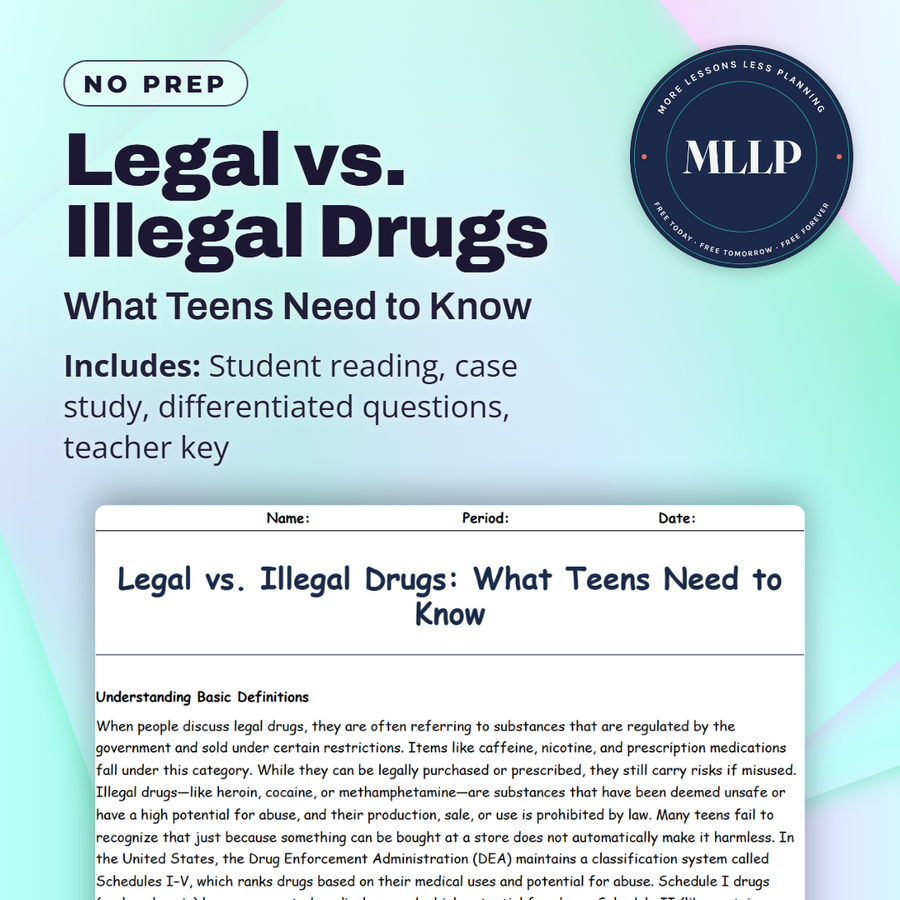
Legal vs. Illegal Drugs: What Teens Need to Know
Quality reviewed September 2026
Facts verified September 21, 2026
- Subject
- Career & Life Skills
- Grades
- Grades 9-12
- Length
- 8-page student worksheet
- Time
- About one 50-minute class period
- Great for
- Sub plans and independent work
- Includes
- Reading passage, comprehension questions + full answer key
- Format
- Print-and-go PDF
What students do
- Match five terms - Schedule I, over-the-counter, prescription use, Schedule V, and illegal drug - to the definition that actually describes each one
- Fill in three blanks naming over-the-counter drugs, controlled substances, and what it's called when a teen shares prescription pills with a friend
- Answer three multiple-choice questions on what actually separates a legal drug from an illegal one and why a legal drug can still cause harm
- Write short answers on why a prescription can feel automatically safe, and how an arrest record can follow a teen into college and job applications
What it covers
- The DEA's five-tier schedule system and what pushes a drug from Schedule I down to Schedule V
- Why ordinary legal substances, from nicotine to a friend's prescription, still carry real legal and health risk when misused
- Jordan's case study, where borrowing a friend's ADHD medication during finals week leads to dependence and a trip to the doctor
Start reading this worksheet
Understanding Basic Definitions
When people discuss legal drugs, they are often referring to substances that are regulated by the government and sold under certain restrictions. Items like caffeine, nicotine, and prescription medications fall under this category. While they can be legally purchased or prescribed, they still carry risks if misused. Illegal drugs (like heroin, cocaine, or methamphetamine) are substances that have been deemed unsafe or have a high potential for abuse, and their production, sale, or use is prohibited by law. Many teens fail to recognize that just because something can be bought at a store does not automatically make it harmless. In the United States, the Drug Enforcement Administration (DEA) maintains a classification system called Schedules I–V, which ranks drugs based on their medical uses and potential for abuse. Schedule I drugs (such as heroin) have no accepted medical use and a high potential for abuse. Schedule II (like certain opioids) have recognized medical uses but also significant abuse risks. As you move down to Schedule V, the substances typically have lower potential for abuse. The complexity of these classifications can be confusing. Teens may hear about a prescription painkiller and assume it’s safe because it’s not outright banned, but misuse of prescription drugs can be extremely dangerous, even deadly. For this reason, understanding the difference between legal and illegal, as well as the risks involved with each, is the first step toward making informed decisions.
Why Some Legal Drugs Are Still Harmful
Many legal substances can be harmful if used incorrectly or in excess. Nicotine in cigarettes and vaping products is legal for adults but remains highly addictive; its use in adolescence can lead to long-term dependence. Alcohol, while not a “drug” in the controlled substances sense, also fits into the discussion about legal substances that have significant health and legal implications for teens. Over-the-counter cough syrups or pain relievers seem benign, but excessive use can cause severe organ damage or even fatal overdoses. Understanding the legal consequences is also crucial. Even misusing your own prescription medication can lead to legal trouble if you share it with someone else. Also, driving under the influence of certain over-the-counter drugs, if they impair your ability to operate a vehicle safely, can result in legal penalties. Sometimes, teens think that if it’s sold in a pharmacy, there can’t be any serious ramifications. Yet, the law doesn’t make exceptions for “I didn’t know it was dangerous.”
Classifying Drugs: Schedules and Their Meanings
The DEA schedules serve as a guide for medical professionals, pharmacies, and law enforcement. Schedule I: No accepted medical use, high abuse potential (e.g., heroin, LSD). Schedule II: Medical uses with severe restrictions, high abuse potential (e.g., oxycodone, methamphetamine in specific forms). Schedule III–IV: Moderate to low potential for dependence, recognized medical uses (e.g., anabolic steroids, some sleep medications). Schedule V: Lower potential for abuse, widely accepted medical uses (e.g., certain cough preparations). Some states have their own laws that can further regulate or criminalize substances differently. For example, certain prescription drugs may be moved to a stricter schedule at the state level if officials notice higher rates of misuse. This can lead to confusion about what’s legal or illegal depending on where you live, emphasizing the need for reliable information and caution.
Like what you read? The full reading, the case study, and every question set are in the free download below, along with the answer key.
Why this matters
Every one of my students has taken an over-the-counter pain reliever without reading the label, which is exactly the habit this reading is trying to interrupt. The gap between legal and safe is where a lot of real trouble starts, whether that's a shared ADHD pill during finals week or a cough medicine taken past the recommended dose. Students also need to know the DEA schedule system isn't trivia; it explains why one arrest for an illegal substance can follow a teen into college applications and financial aid decisions for years afterward.
If you or someone you know is struggling, call or text 988 (Suicide & Crisis Lifeline, US) or talk to a trusted adult right away.
From one teacher to another
I built this one around the assumption that trips kids up most: if a doctor can prescribe it, it can't really be dangerous. The reading walks through the DEA's schedule system first, so students see why heroin and a Schedule V cough medicine land in completely different categories despite both being regulated substances. Jordan's case study carries the second half of the sheet - he borrows a friend's ADHD pills to cram for finals and ends up needing counseling to manage the stress that started the whole thing. By the end, students have to sit with the DEA table themselves and reason out where a specific substance would fall and why.
What you get
Download
Where should I send the next one?
Everything here is free and it stays that way. Leave your email and I'll send you the new lessons as they go up. You can unsubscribe from any one of them.
Related resources
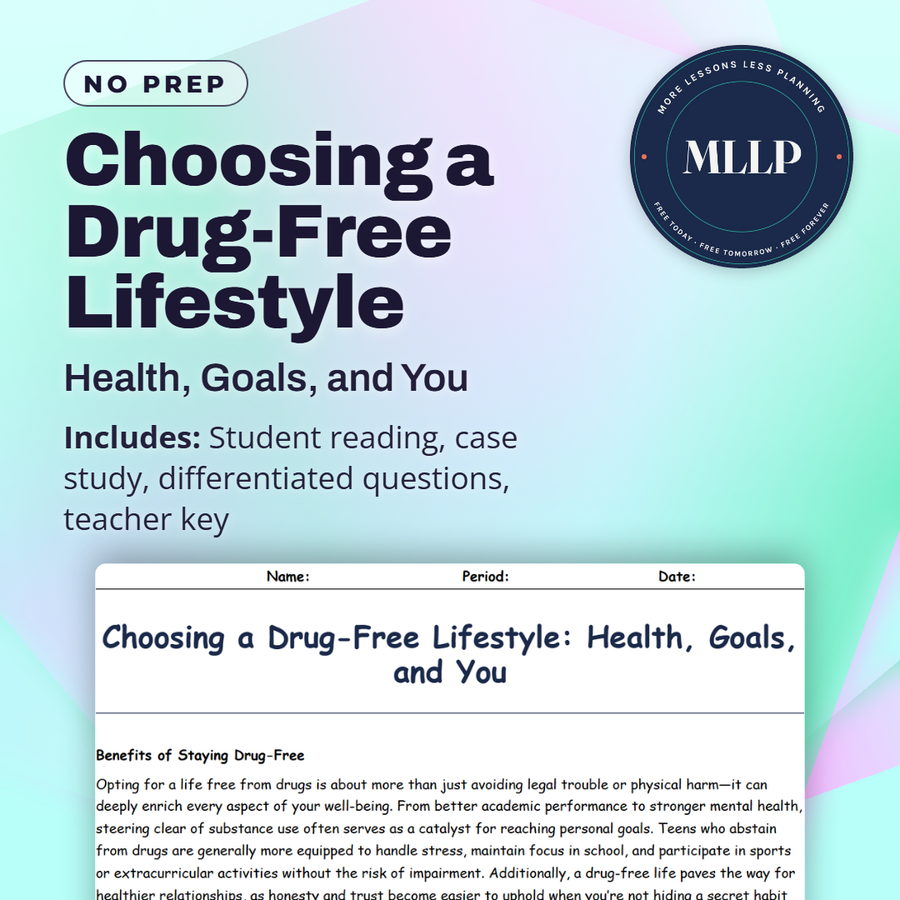
Choosing a Drug-Free Lifestyle: Health, Goals, and You
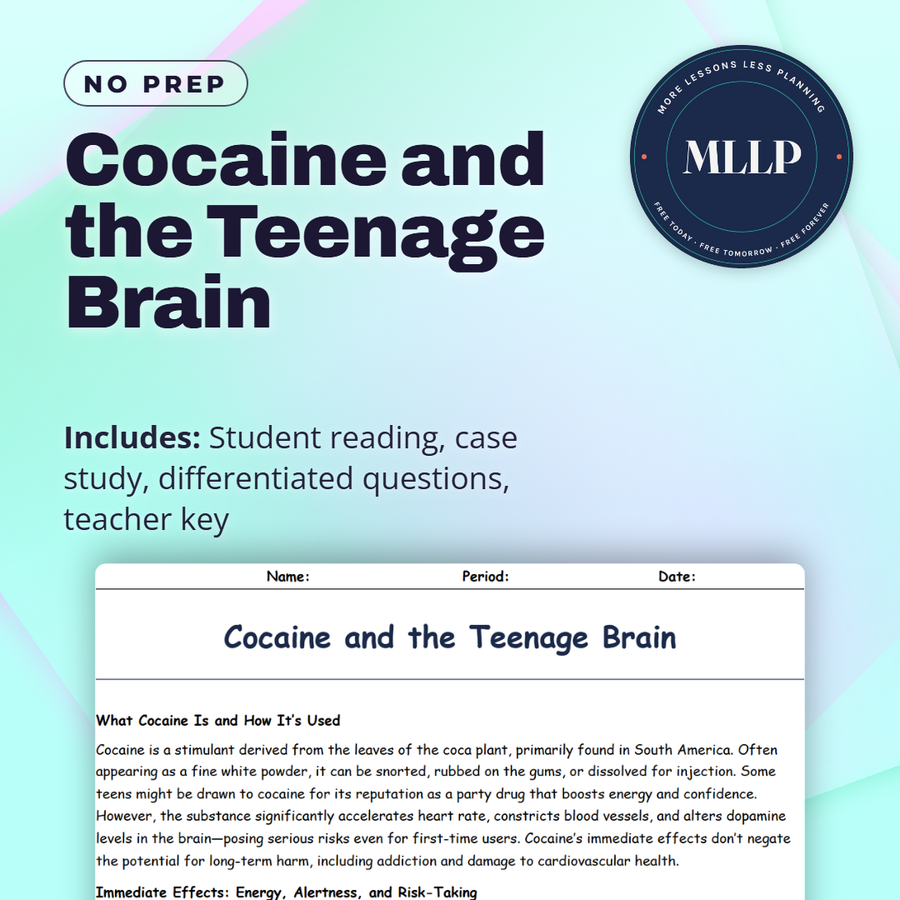
Cocaine and the Teenage Brain
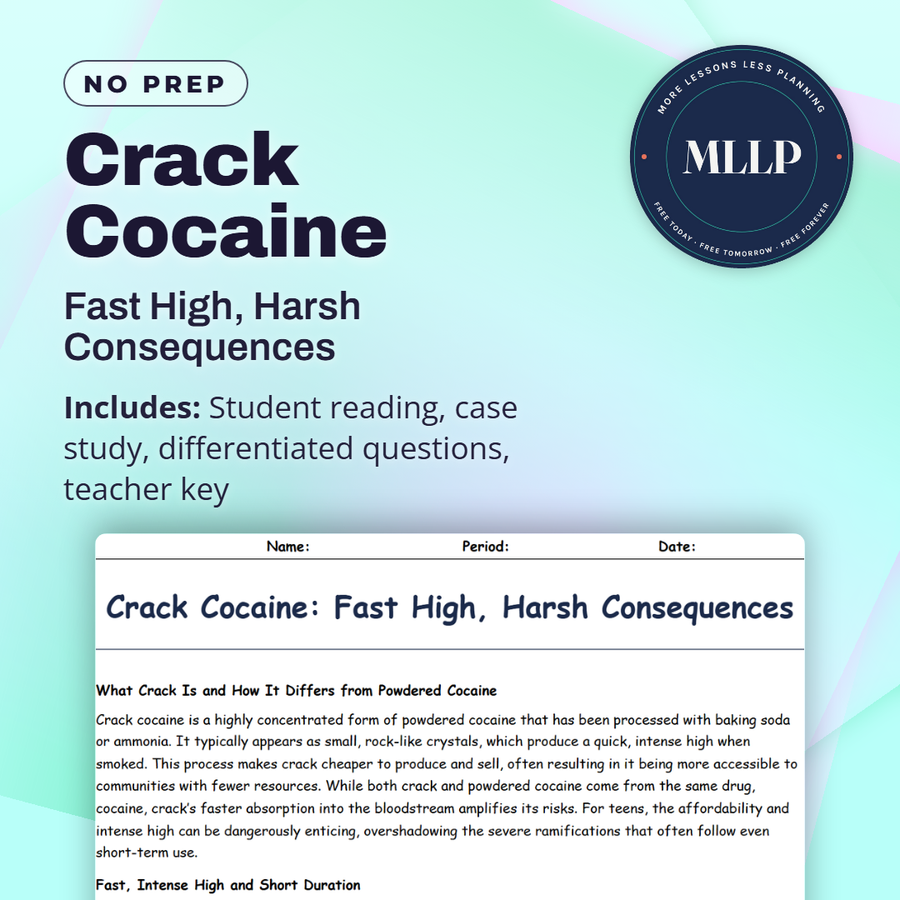
Crack Cocaine: Fast High, Harsh Consequences
Heroin and Teens: Understanding the Risks and Realities
How Addiction Changes the Brain: Science for Students
How to Handle Peer Pressure and Say No with Confidence
Every lesson on this site is free to download and use. If one of them saved you a prep period, you can chip in a few bucks toward my three kids' daycare fund. That's genuinely where tips go.