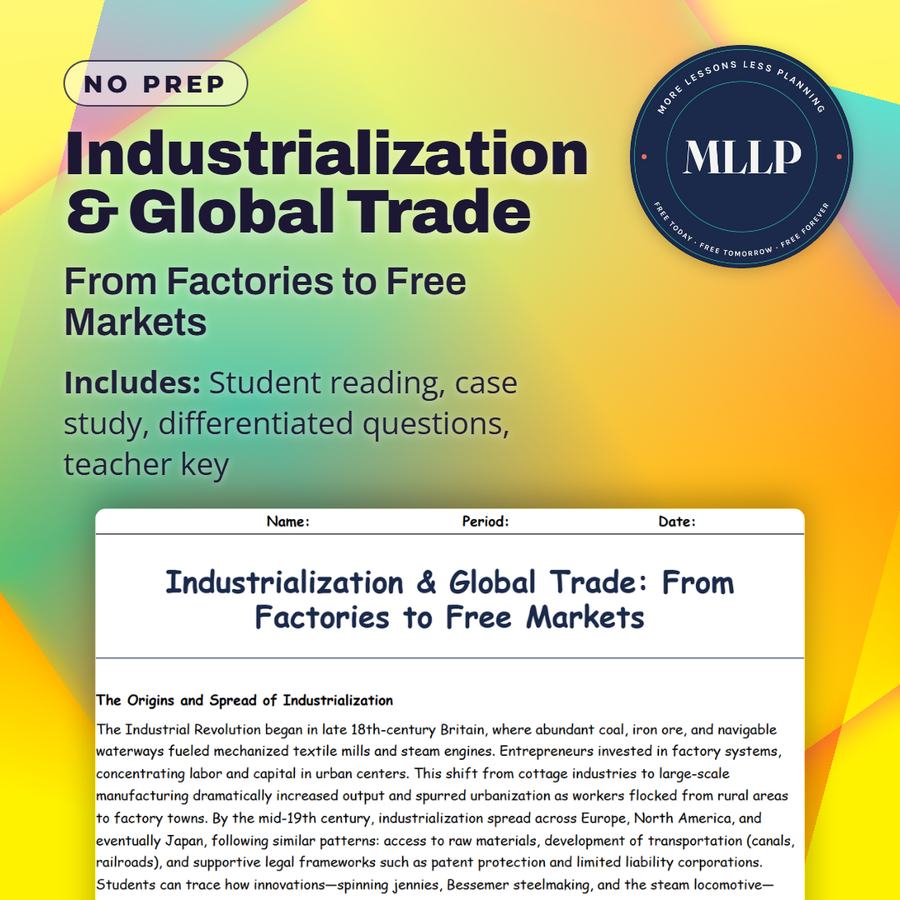
Industrialization & Global Trade: From Factories to Free Markets
Quality reviewed September 2026
Facts verified September 14, 2026
- Subject
- Social Studies
- Grades
- Grades 9-12
- Length
- 7-page student worksheet
- Time
- About one 50-minute class period
- Great for
- Sub plans and independent work
- Includes
- Reading passage, comprehension questions + full answer key
- Format
- Print-and-go PDF
What students do
- Match terms like free-trade zone, containerization, manufacturing corridor, and the Suez Canal to their correct definitions
- Fill in the blank sentences on where the Industrial Revolution began, containerized shipping, and tax holidays in special economic zones
- Answer multiple choice questions on what the Suez Canal connects, when containerization became widespread, and the goal of free-trade zones
- Write short answers on Britain's early industrial advantages, how railroads changed manufacturing geography, and a challenge facing global value chains today
What it covers
- How Britain's coal, iron, and waterways sparked the Industrial Revolution and the spread of factory systems
- How railways, canals, and containerization built the transportation networks behind modern global trade
- A case study on Shenzhen's Special Economic Zone and how it grew from a fishing town into a manufacturing powerhouse
Start reading this worksheet
The Origins and Spread of Industrialization
The Industrial Revolution began in late 18th-century Britain, where abundant coal, iron ore, and navigable waterways fueled mechanized textile mills and steam engines. Entrepreneurs invested in factory systems, concentrating labor and capital in urban centers. This shift from cottage industries to large-scale manufacturing dramatically increased output and spurred urbanization as workers flocked from rural areas to factory towns. By the mid-19th century, industrialization spread across Europe, North America, and eventually Japan, following similar patterns: access to raw materials, development of transportation (canals, railroads), and supportive legal frameworks such as patent protection and limited liability corporations. Students can trace how innovations (spinning jennies, Bessemer steelmaking, and the steam locomotive) reshaped social structures, labor systems, and global trade networks, laying the groundwork for modern economic geography.
Transportation Networks and Trade Expansion
Efficient transportation underpinned the rise of global trade. Railways and steamships slashed transit times, linking inland factories to sea ports. The opening of the Suez Canal in 1869 and later the Panama Canal in 1914 further connected major markets, reducing shipping distances between Europe, Asia, and the Americas. Modern containerization, introduced in the 1950s, standardized goods handling: a single container can move smoothly from ship to rail to truck. Today’s global supply chains depend on port hubs (Rotterdam, Shanghai, and Los Angeles) that manage millions of containers annually. High-school learners study how these networks reduce costs, enable just-in-time manufacturing, and integrate distant regions into a cohesive economic system, but also how chokepoints and disruptions (strikes, natural disasters) can ripple through global markets. Table 1: Leading Container Ports and Their Trade Connections
Manufacturing Corridors & Free-Trade Zones
Over time, governments established manufacturing corridors: regions with clusters of factories, suppliers, and logistics hubs. Examples include the M4 corridor in the U.K., the Rust Belt in the U.S. Midwest, and China’s Yangtze River Delta. These corridors benefit from economies of scale, specialized labor pools, and shared infrastructure.
Like what you read? The full reading, the case study, and every question set are in the free download below, along with the answer key.
Why this matters
Shenzhen was a fishing town before it became the manufacturing powerhouse this reading uses to close out a story that starts with Britain's coal, iron, and waterways. Seeing both ends of that timeline together makes industrialization feel like one continuous pattern instead of two separate stories.
Modern trade still runs through infrastructure built generations ago, railways and canals that industrialization needed as much as coal and iron did. Explaining a challenge facing global value chains today is where that history catches up with the present.
From one teacher to another
This one traces industrialization from Britain's coal and iron all the way to Shenzhen's special economic zone, which helps students see globalization as a continuation of older patterns rather than something brand new. The Shenzhen case study is a great hook since the scale of its growth is hard to believe. It pairs naturally with the globalization and outsourcing reading, since the two connect so directly.
What you get
Download
Where should I send the next one?
Everything here is free and it stays that way. Leave your email and I'll send you the new lessons as they go up. You can unsubscribe from any one of them.
Related resources
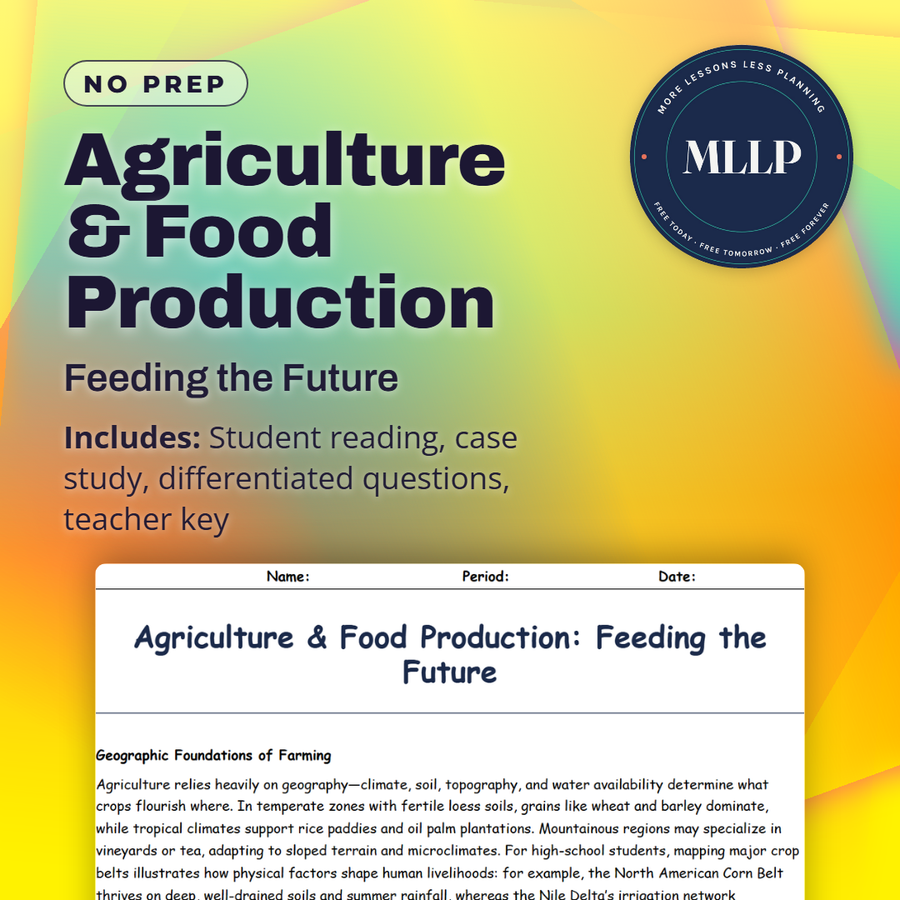
Agriculture & Food Production: Feeding the Future
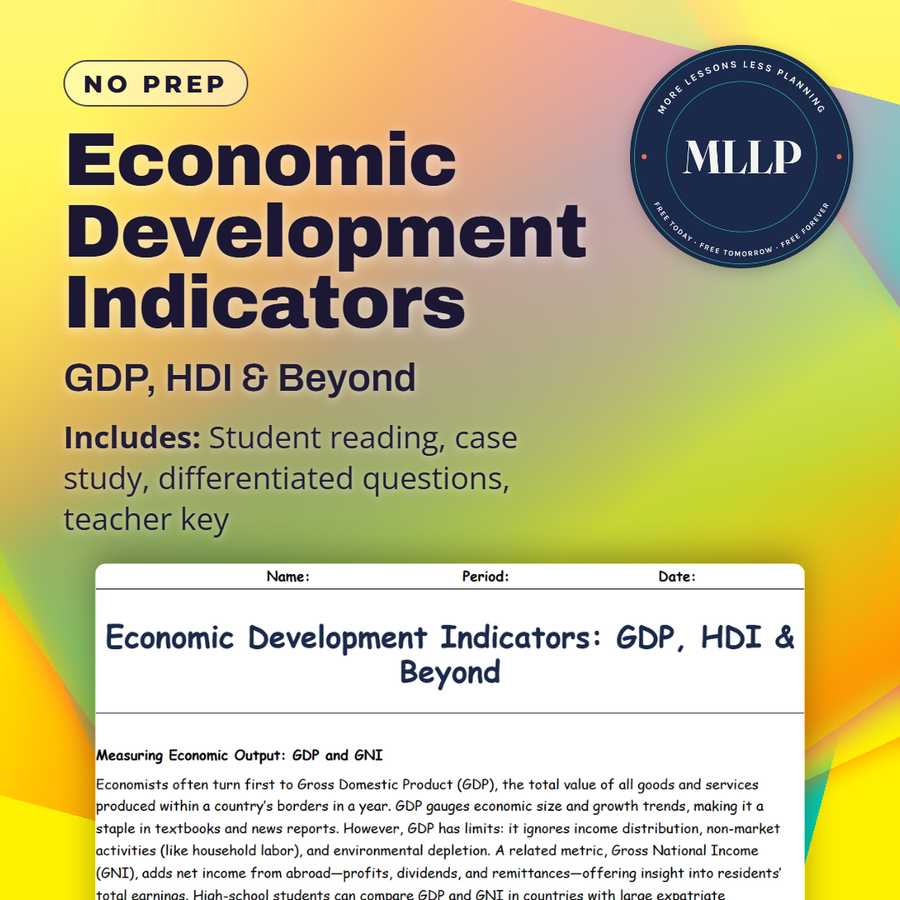
Economic Development Indicators: GDP, HDI & Beyond
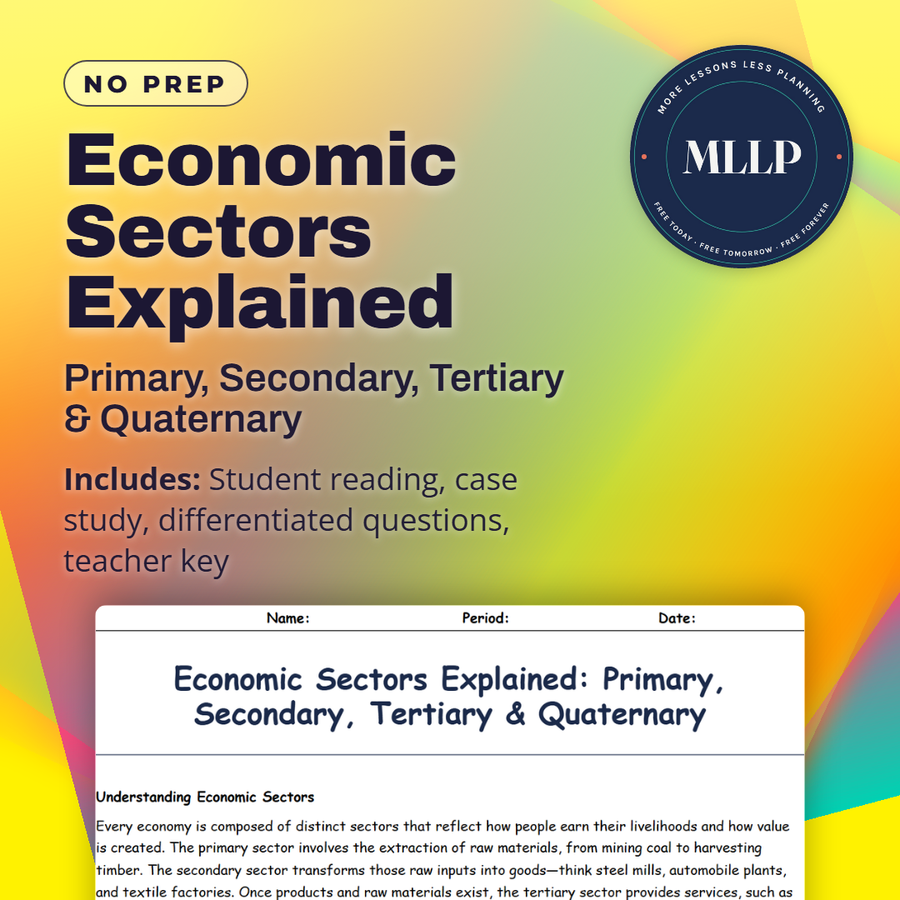
Economic Sectors Explained: Primary, Secondary, Tertiary & Quaternary
Economic Systems Compared: Capitalism, Socialism & Mixed Models
Globalization & Outsourcing: Connecting World Economies
Industrial Resources & Sustainability: Balancing Growth
Every lesson on this site is free to download and use. If one of them saved you a prep period, you can chip in a few bucks toward my three kids' daycare fund. That's genuinely where tips go.