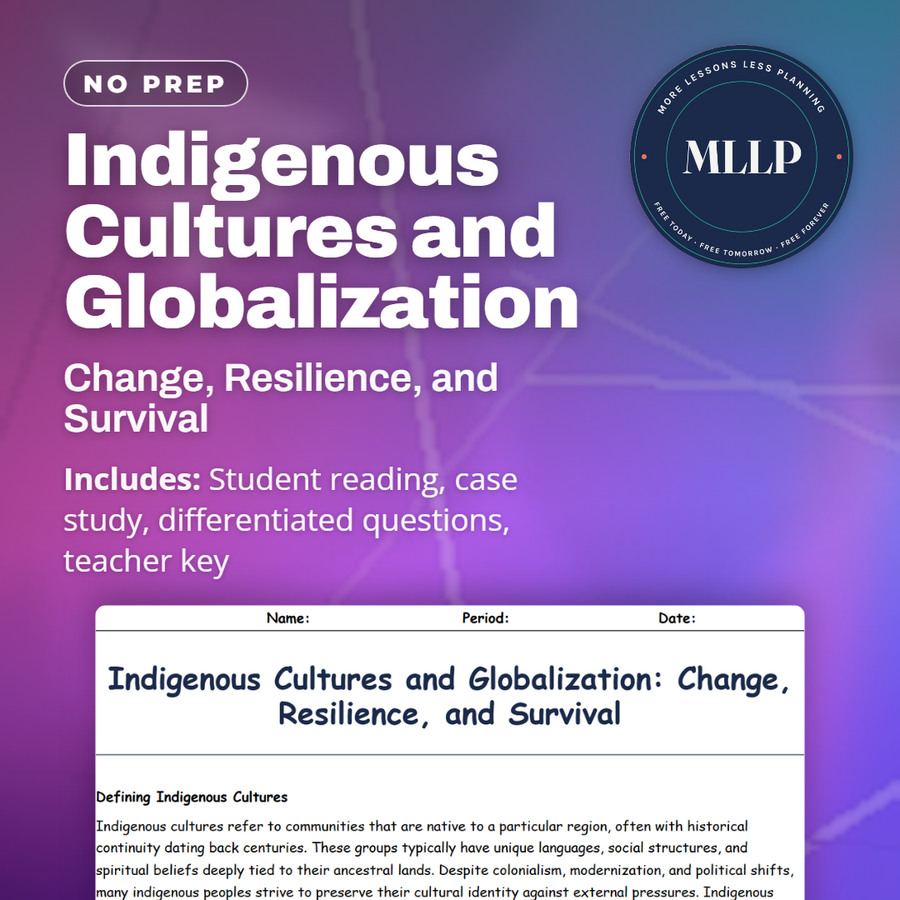
Indigenous Cultures and Globalization: Change, Resilience, and Survival
Quality reviewed September 2026
Facts verified September 14, 2026
- Subject
- Social Studies
- Grades
- Grades 9-12
- Length
- 7-page student worksheet
- Time
- About one 50-minute class period
- Great for
- Sub plans and independent work
- Includes
- Reading passage, comprehension questions + full answer key
- Format
- Print-and-go PDF
What students do
- Match terms like Eco-Tourism, Cultural Commodification, and Self-Determination to their correct definitions
- Fill in the blank sentences on cultural commodification, eco-tourism, and cultural loss
- Answer multiple choice questions on what defines indigenous cultures, the risks modern industry brings to indigenous lands, and what self-determination means
- Write short answers on the challenges of losing indigenous languages, how logging or mining can be negotiated fairly, and why self-determination matters
What it covers
- What defines indigenous cultures and how globalization introduces both opportunity and risk to traditional ways of life
- Examples of cultural resistance and adaptation, including land rights negotiations and community-led eco-tourism
- A case study on the Mapari people negotiating with a logging company to protect sacred land while building an eco-tourism initiative
Start reading this worksheet
Defining Indigenous Cultures
Indigenous cultures refer to communities that are native to a particular region, often with historical continuity dating back centuries. These groups typically have unique languages, social structures, and spiritual beliefs deeply tied to their ancestral lands. Despite colonialism, modernization, and political shifts, many indigenous peoples strive to preserve their cultural identity against external pressures. Indigenous cultures are often rich in oral traditions, ceremonies, and ecological knowledge derived from living close to nature.
Globalization’s Impact on Traditional Ways of Life
Globalization brings roads, technology, and market forces into remote areas, posing a threat to long-standing traditions. On one hand, better transportation can offer medical supplies, education, and employment opportunities. On the other, it can disrupt the balance indigenous communities have maintained with the environment, as new industries demand resources or introduce pollution. Cultural loss occurs when younger generations abandon local languages and customs in favor of dominant global languages, consumer goods, and urban lifestyles. Some communities adapt by blending traditional practices with modern elements, while others resist external influences in an effort to protect their heritage. The debate over whether modernization equals progress is complex; many argue that real progress involves safeguarding cultural diversity as a global asset.
Case Studies of Cultural Resistance and Adaptation
Around the world, numerous examples highlight indigenous resilience. Some groups negotiate with governments or corporations to secure rights to their ancestral lands, ensuring control over resources and cultural sites. Others use legal mechanisms, forming councils to govern local affairs. Adaptation can take many forms, such as using social media to teach indigenous languages, or establishing eco-tourism ventures managed by the community. These ventures can showcase traditional craftsmanship or environmental stewardship, generating income without decimating local culture. However, such efforts are not without controversy. Critics sometimes question whether these adaptations commodify culture or alter its meaning. Yet, many indigenous leaders see strategic partnerships and controlled tourism as ways to remain economically viable while preserving traditions.
Like what you read? The full reading, the case study, and every question set are in the free download below, along with the answer key.
Why this matters
The Mapari people do not simply resist a logging company or simply accept its offer. They negotiate, protecting sacred land while building an eco-tourism initiative of their own, a more honest picture of how indigenous communities respond to outside pressure than a story with a clear winner.
Negotiating logging or mining fairly does not let students reach for an easy answer. I pair that tension with why self-determination matters, since the Mapari case only lands once students know who actually gets to decide.
From one teacher to another
This one introduces students to the real tradeoffs indigenous communities face when globalization reaches their land, from resource extraction to eco-tourism. I like that the case study on the Mapari people does not present an easy answer. It shows a community negotiating a compromise between economic pressure and protecting sacred sites. It works well alongside a unit on globalization, human rights, or environmental geography.
What you get
Download
Where should I send the next one?
Everything here is free and it stays that way. Leave your email and I'll send you the new lessons as they go up. You can unsubscribe from any one of them.
Related resources
Cultural Diffusion and Exchange: How Ideas Spread Around the World
Cultural Landscapes: How Humans Shape and Reflect Culture on Land
Culture and Identity: How Geography Shapes Who We Are
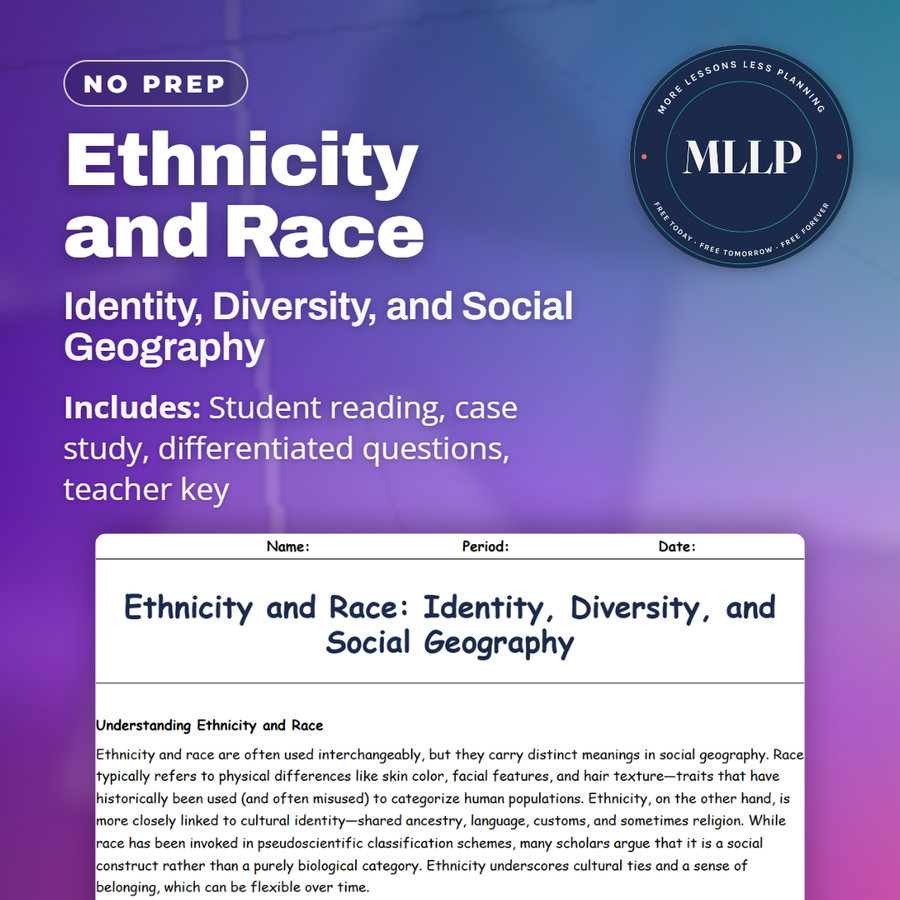
Ethnicity and Race: Identity, Diversity, and Social Geography
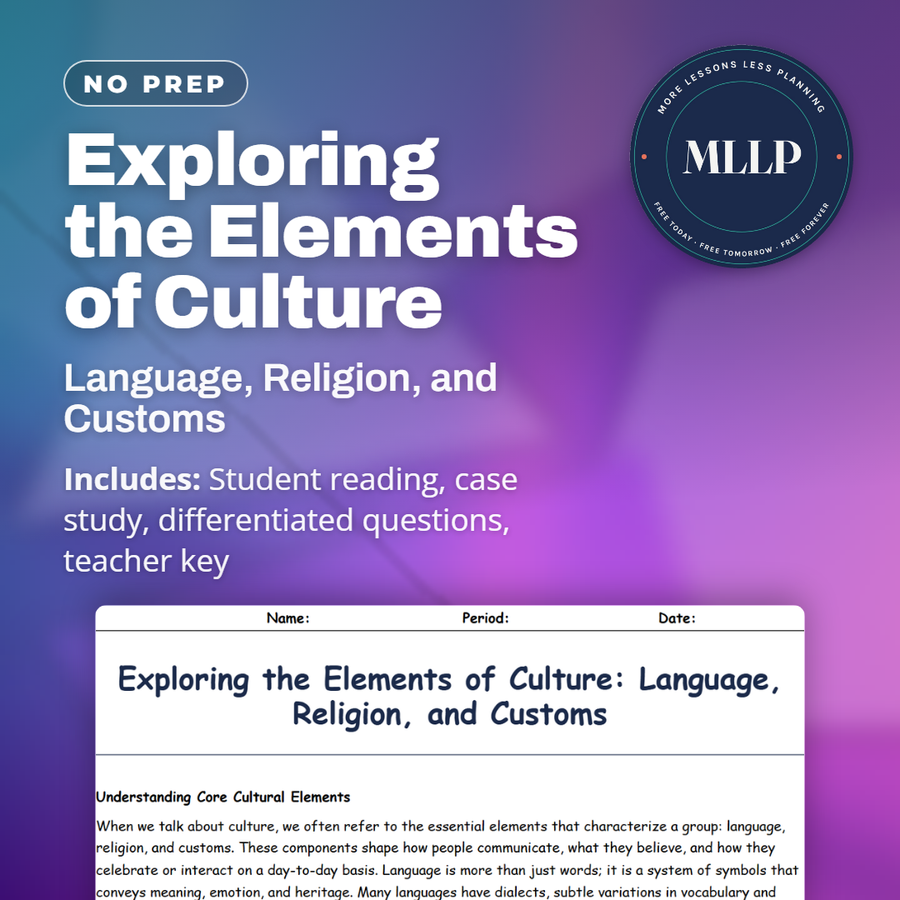
Exploring the Elements of Culture: Language, Religion, and Customs
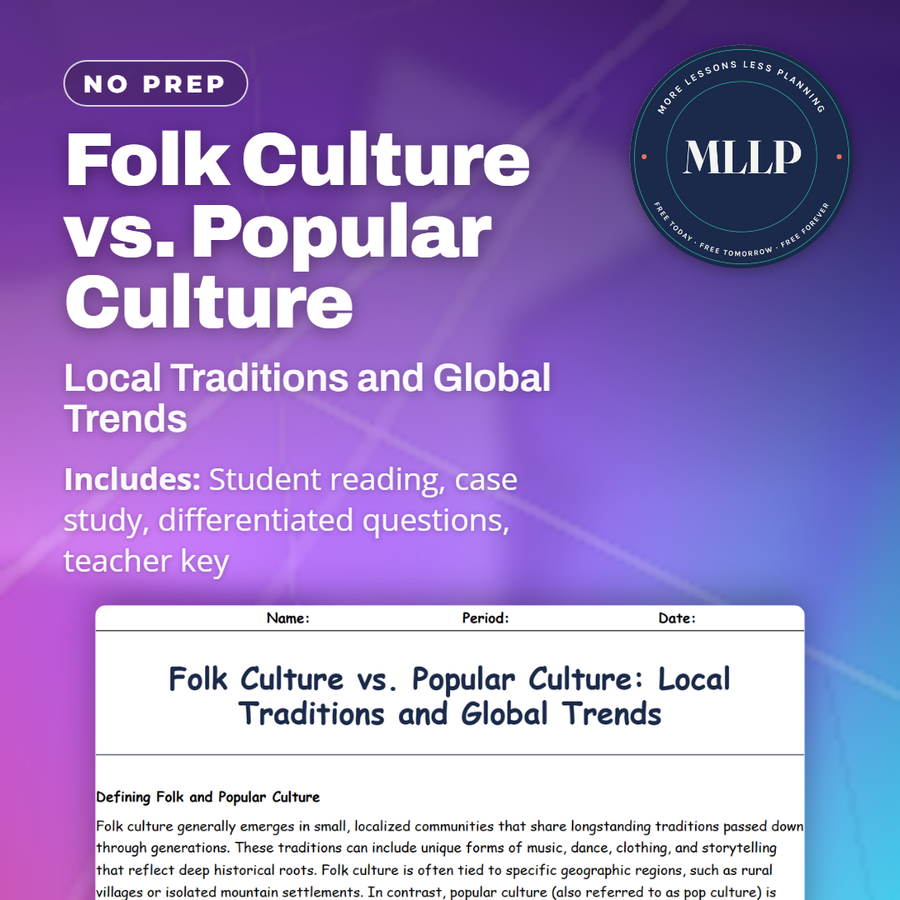
Folk Culture vs. Popular Culture: Local Traditions and Global Trends
Every lesson on this site is free to download and use. If one of them saved you a prep period, you can chip in a few bucks toward my three kids' daycare fund. That's genuinely where tips go.