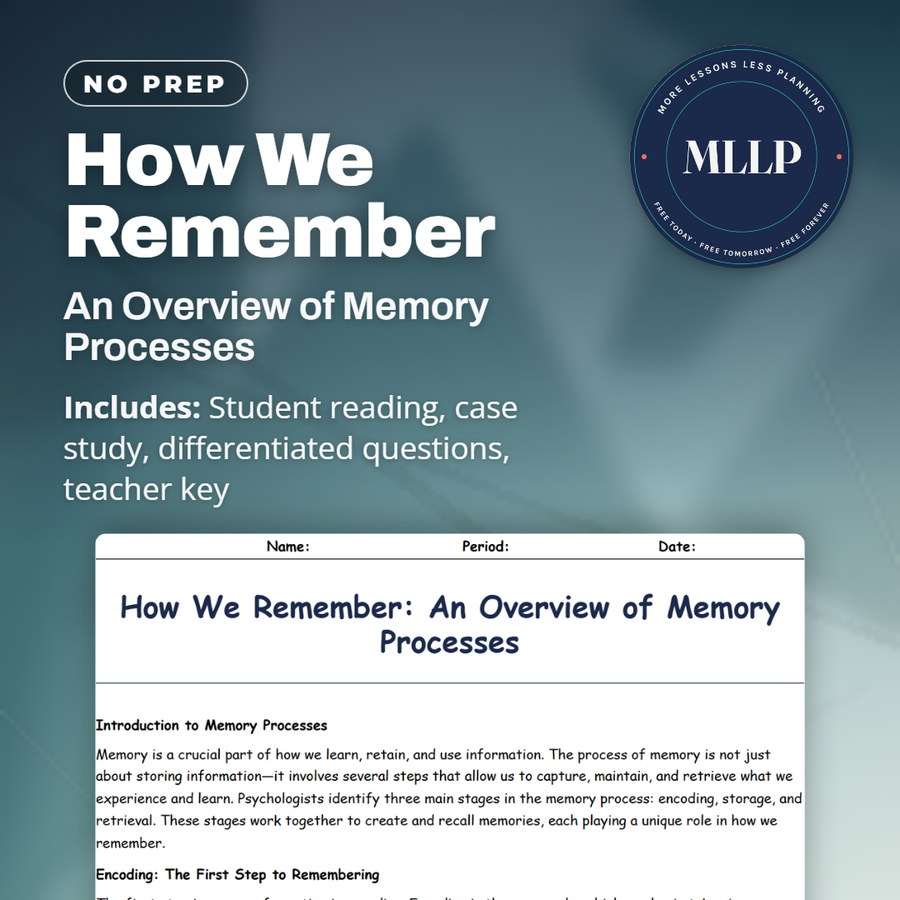
How We Remember: An Overview of Memory Processes
Quality reviewed September 2026
Facts verified September 10, 2026
- Subject
- Social Studies
- Grades
- Grades 9-12
- Length
- 6-page student worksheet
- Time
- About one 50-minute class period
- Great for
- Sub plans and independent work
- Includes
- Reading passage, comprehension questions + full answer key
- Format
- Print-and-go PDF
What students do
- Match terms like encoding, sensory memory, retrieval, and long-term memory to their correct definitions
- Fill in the blank sentences on encoding, sensory memory, and interference
- Answer multiple choice questions on acoustic encoding, where information gets transformed for storage, and the limits of short-term memory
- Write short answers comparing short-term and long-term memory, explaining semantic encoding, and describing interference with an example
What it covers
- The three stages of memory: encoding, storage, and retrieval, and how they depend on each other
- Visual, acoustic, and semantic encoding, plus sensory, short-term, and long-term memory storage
- A case study on emotional encoding and how emotionally significant images are remembered more accurately
Start reading this worksheet
Introduction to Memory Processes
Memory is a crucial part of how we learn, retain, and use information. The process of memory is not just about storing information; it involves several steps that allow us to capture, maintain, and retrieve what we experience and learn. Psychologists identify three main stages in the memory process: encoding, storage, and retrieval. These stages work together to create and recall memories, each playing a unique role in how we remember.
Encoding: The First Step to Remembering
The first step in memory formation is encoding. Encoding is the process by which our brain takes in information and transforms it into a format that can be stored. Think of encoding as translating thoughts, images, or sounds into something that our brain can work with, like converting data into a file format that a computer can save. There are different types of encoding: Visual Encoding: Involves transforming images or visual information into memory, such as the appearance of a landmark. Acoustic Encoding: This type focuses on sounds, like a song melody or a teacher’s voice in class. Semantic Encoding: Perhaps the most powerful form of encoding, semantic encoding processes information based on meaning. For example, understanding the concept behind a math formula rather than just memorizing it. The more meaningful or emotionally engaging the information, the better it is likely to be encoded and stored for later retrieval. This is why memories of important events, like a graduation day, are often so vivid.
Storage: Where Memories Live
Once information is encoded, it needs a place to reside. This is where storage comes in. Storage is the process by which we maintain information over time, ranging from seconds to a lifetime. Psychologists categorize memory storage into three main systems: sensory memory, short-term memory, and long-term memory. Sensory Memory: This is a fleeting storage system that holds sensory information for a few seconds. Sensory memory acts like a quick snapshot; for instance, when you briefly glance at an image and can still "see" it after closing your eyes, that's sensory memory at work. Short-Term Memory (STM): STM holds information we are actively using, but it has a limited capacity. It can usually store 5-9 items at a time and lasts only around 20-30 seconds unless actively rehearsed. For example, when you’re trying to remember a phone number just long enough to dial it. Long-Term Memory (LTM): Long-term memory is essentially unlimited in capacity and can hold information indefinitely. Memories we consciously recall, like facts, are known as explicit memories. Others, such as skills like riding a bike, are implicit memories stored in long-term memory without conscious thought.
Like what you read? The full reading, the case study, and every question set are in the free download below, along with the answer key.
Why this matters
Emotionally significant images are remembered more accurately than ones that carry no emotional weight, a finding the case study on emotional encoding builds this reading around. Students trace the process in order: visual, acoustic, and semantic encoding first, then how memory gets stored as sensory, short-term, and long-term.
Interference only becomes real once a student explains it in a specific example instead of repeating mine back, which is what I actually check for. Comparing short-term and long-term memory right before the unit moves into forgetting pushes students to see memory as three connected stages instead of one blurry system.
From one teacher to another
I hand this out when we start the memory unit because it walks students through encoding, storage, and retrieval in order, which is how I want them to think about the process. The case study on emotional encoding is a favorite since it gives them a real experiment to reference instead of just memorizing the three stages. The matching section covers the core vocabulary, and the short answer questions push them to compare short-term and long-term memory and explain interference with their own example. It works well right before we cover forgetting.
What you get
Download
Where should I send the next one?
Everything here is free and it stays that way. Leave your email and I'll send you the new lessons as they go up. You can unsubscribe from any one of them.
Related resources
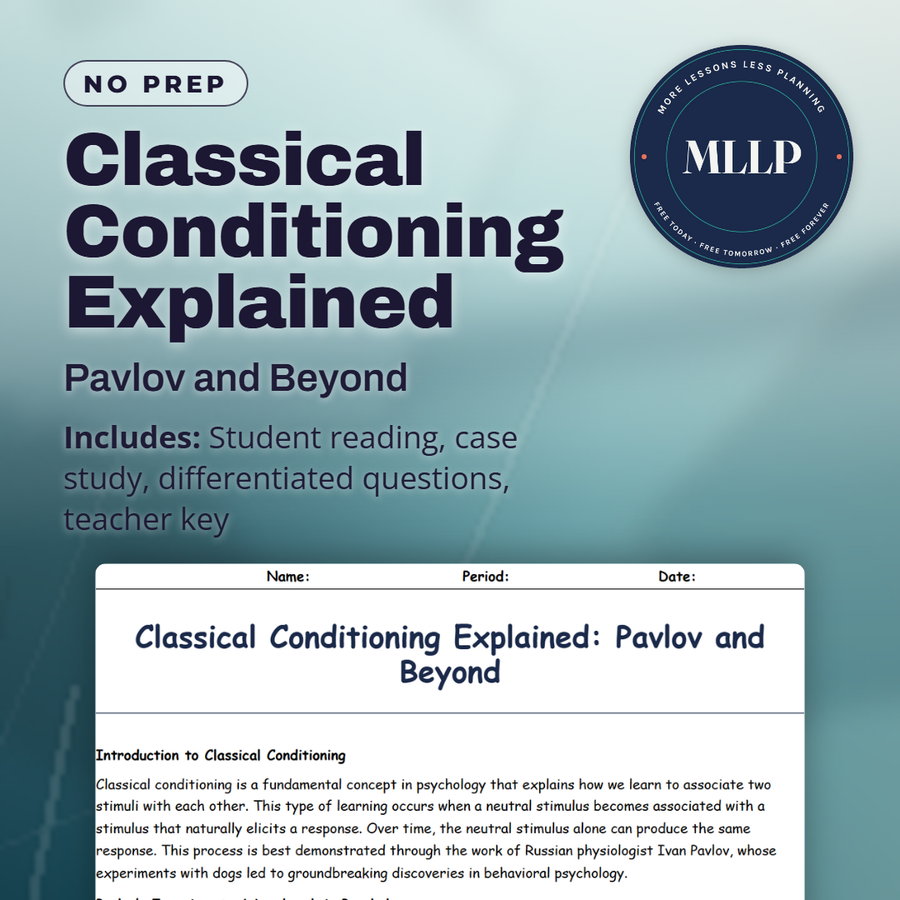
Classical Conditioning Explained: Pavlov and Beyond
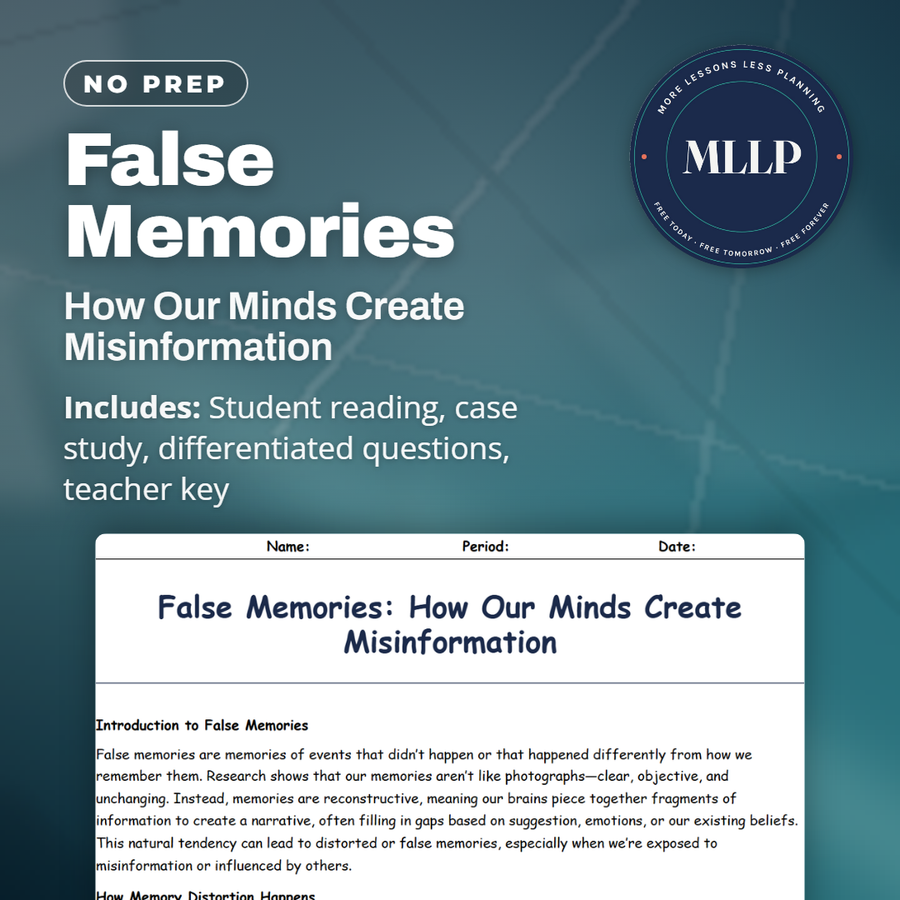
False Memories: How Our Minds Create Misinformation
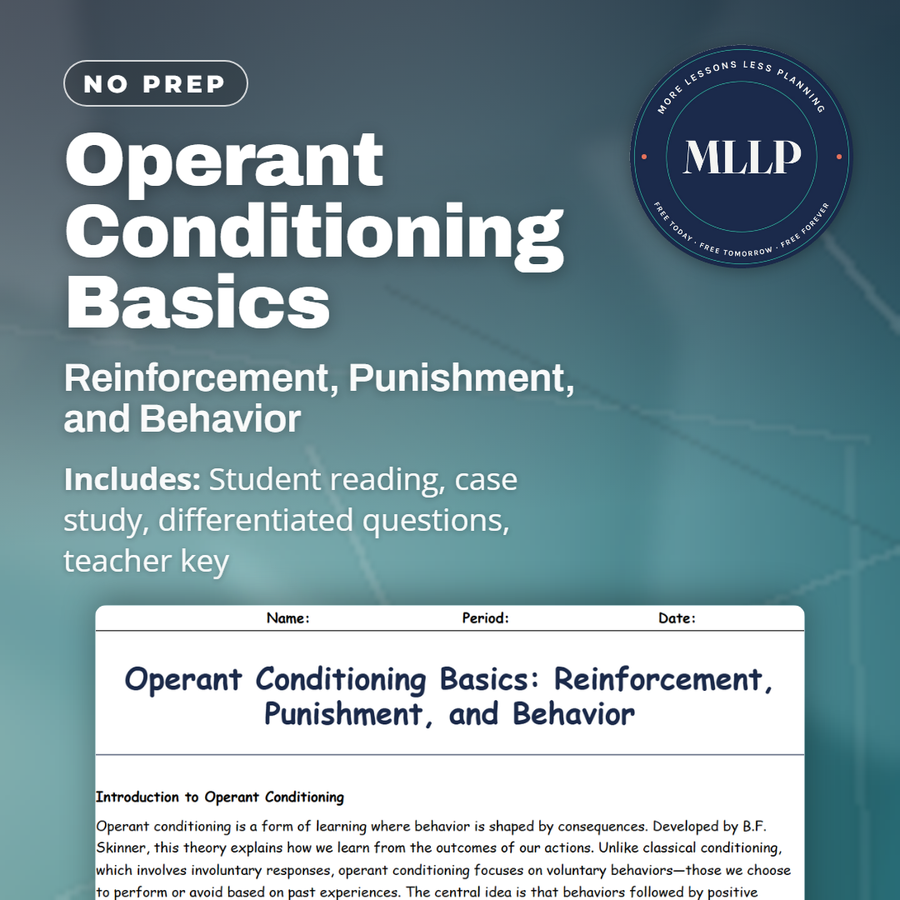
Operant Conditioning Basics: Reinforcement, Punishment, and Behavior

Sleep Disorders and Their Impact on Health: Insomnia to Narcolepsy

Stages of Sleep: NREM, REM, and Their Effects on Health
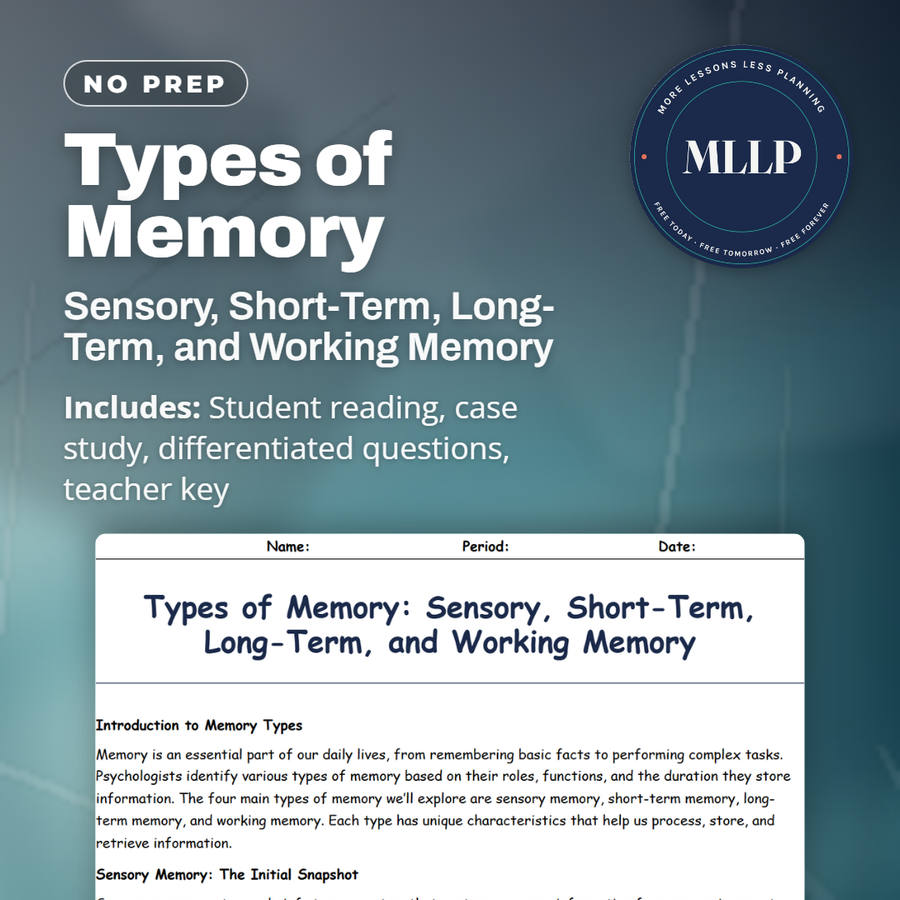
Types of Memory: Sensory, Short-Term, Long-Term, and Working Memory
Every lesson on this site is free to download and use. If one of them saved you a prep period, you can chip in a few bucks toward my three kids' daycare fund. That's genuinely where tips go.