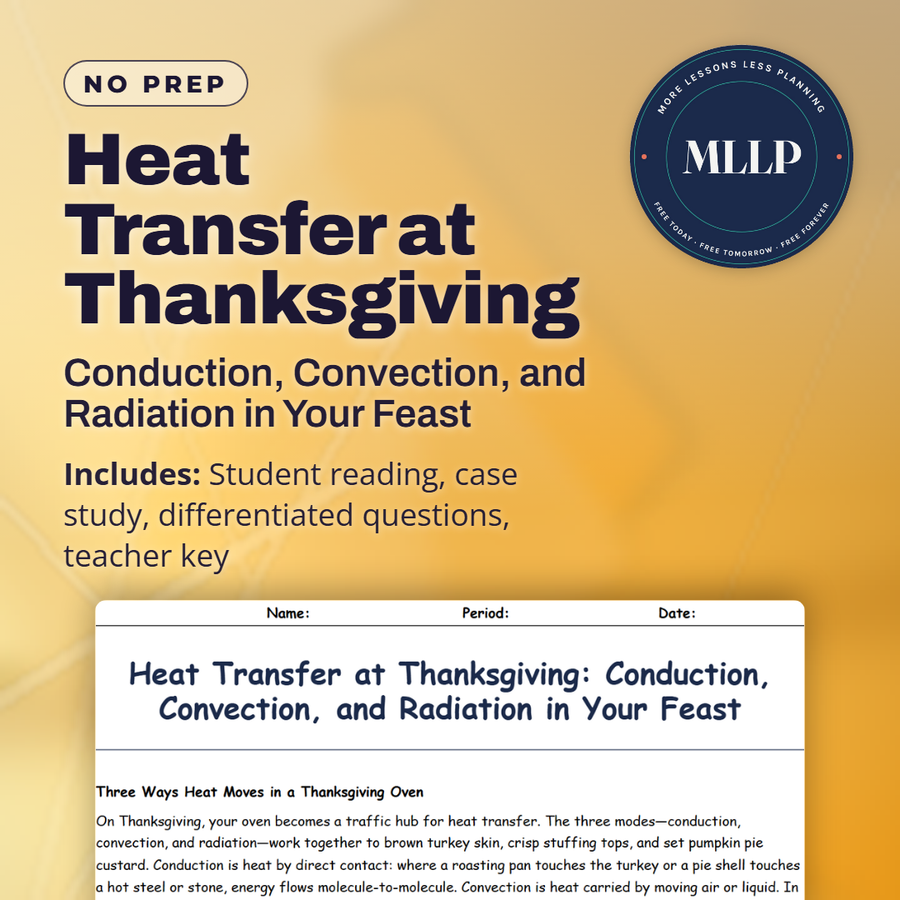
Heat Transfer at Thanksgiving: Conduction, Convection, and Radiation in Your Feast
Quality reviewed September 2026
Facts verified September 9, 2026
- Subject
- Science
- Grades
- Grades 9-12
- Length
- 8-page student worksheet
- Time
- About one 50-minute class period
- Great for
- Sub plans and independent work
- Includes
- Reading passage, comprehension questions + full answer key
- Format
- Print-and-go PDF
What students do
- Identify which heat-transfer mode (conduction, convection, or radiation) dominates each dish
- Calculate safe cooking temperatures and timing using thermal physics
- Explain how moisture management controls browning and doneness
- Design a two-stage roasting plan using heat-transfer principles
What it covers
- Conduction, convection, and radiation in ovens
- Thermal mass and cookware physics
- Maillard browning and moisture evaporation
Start reading this worksheet
Three Ways Heat Moves in a Thanksgiving Oven
On Thanksgiving, your oven becomes a traffic hub for heat transfer. The three modes (conduction, convection, and radiation) work together to brown turkey skin, crisp stuffing tops, and set pumpkin pie custard. Conduction is heat by direct contact: where a roasting pan touches the turkey or a pie shell touches a hot steel or stone, energy flows molecule-to-molecule. Convection is heat carried by moving air or liquid. In an oven, hot air rises and cooler air sinks, creating currents; a convection fan speeds that movement so hot air scrubs the food’s surface, drying it faster. Radiation is heat sent as infrared (IR) waves from hot elements and oven walls; the broiler is pure radiant intensity, browning surfaces even before the air warms. A Thanksgiving roast uses all three at once. The turkey’s skin absorbs IR (radiation) and hot air (convection) to climb above the boiling point; then heat conducts inward from the surface to the center. Stuffing behaves similarly: the top dries and browns from radiation and dry convection, while the interior sets by conduction and steam convection. Understanding which mode dominates each dish helps solve holiday problems such as soggy skin, pale rolls, and underbaked centers, without changing recipes, just the physics.
Tools of the Feast: Pans, Racks, and Ovens as Heat Systems
Cookware isn’t neutral; it controls temperature swings and thermal gradients. Aluminum conducts quickly and evens out hot spots in sheet pans for rolls and roasted vegetables. Cast iron has huge thermal mass, so once it is hot, it stays hot and resists temperature dips when you add cold green beans or a heavy roast, boosting conduction and searing. A roasting rack elevates the bird, letting air reach the underside so convection can dry the skin all around. Dark, thin baking sheets absorb radiant energy and brown cookies and rolls faster than shiny pans. Your oven also shapes heat. Standard bake relies on natural convection currents; switching to a convection fan increases the convective heat transfer coefficient, thinning the cool, moist boundary layer clinging to food. That’s why convection finishes turkey skin or stuffing tops more decisively. The broiler provides intense radiation that jump-starts color, but use short bursts or you’ll scorch sugar glazes before the interior sets. Adding a preheated baking steel/stone to a rack turns the oven into a thermal battery; it stores energy and improves bottom crust crisping for pies and rolls via strong conduction.
Moisture Management: The Hidden Gatekeeper of Browning
The number-one Thanksgiving browning blocker is water. Wet surfaces stick near 212°F (100°C) until moisture evaporates; below that threshold, robust Maillard browning stalls. That’s why cooks air-dry turkeys, pat dry poultry and vegetables, and avoid crowding pans. A crowded sheet traps steam, so vegetables steam instead of roast. With turkey, frequent basting re-wets and cools the skin. Flavorful, yes, but if done too often, it suppresses browning. Near the end, switch to brushing fat (butter/oil) sparingly; fat aids heat transfer without adding much water. Stuffing faces a similar tradeoff. Covered, it cooks efficiently with steam convection, setting the interior. Uncovered, it browns by dry convection and radiation. For a crisp cap and moist middle, bake covered first, then uncover for a high-heat or convection finish. Pumpkin pie needs a different balance: too much convective blast early can ripple or crack the custard. Start with steady heat and finish with modest radiation (upper rack or brief broil far from the element) only if you want a deeper top color, taking care not to overcook the center.
Like what you read? The full reading, the case study, and every question set are in the free download below, along with the answer key.
Why this matters
A turkey that browns unevenly or stays pale under the gravy usually gets blamed on the recipe, but it is almost always a heat transfer problem. Aria's plan starts hot, using radiation and air movement to drive off surface moisture, then drops the heat so convection alone finishes the crisping.
In my class, cooking mistakes get treated as personal failure long before they get treated as physics, so auditing a neighbor's failed attempt, too much basting, a pan set too deep, and naming what went wrong turns the kitchen into a lab. Pairing temperature readings with heat transfer modes gives students a habit they can use anywhere.
From one teacher to another
I use this worksheet to turn a kitchen problem into physics. Most students have watched something burn or stay pale in an oven without knowing why. The case study puts a student named Aria in charge of Thanksgiving roasting: she starts hot to drive off surface moisture with radiation and strong air movement, then lowers the heat and runs convection only at the end so the skin crisps and the inside stays tender. Students trace the numbers through her plan, then audit a neighbor's failed approach, constant basting, deep pans, tight packing, and see how each mistake was a physics error, not a recipe error. The answer key pairs temperature readings with heat-transfer modes, so students build intuition about when dry air wins and when steam works.
What you get
Download
Where should I send the next one?
Everything here is free and it stays that way. Leave your email and I'll send you the new lessons as they go up. You can unsubscribe from any one of them.
Related resources

Black Friday Forensics: Shoplifting, Organized Theft, and Crowd Violence
Black Friday Smart Shopper: Economics and Personal Finance in Action

Black Friday: Are the “Deals” Actually Good for Shoppers?
Black Friday’s Economic Impact: Who Gains, Who Pays, and What It Means for the Economy
Budget a Feast: Unit Prices, Deals, and Receipts
Colonial Foodways: Indigenous Knowledge and European Adaptation
Every lesson on this site is free to download and use. If one of them saved you a prep period, you can chip in a few bucks toward my three kids' daycare fund. That's genuinely where tips go.