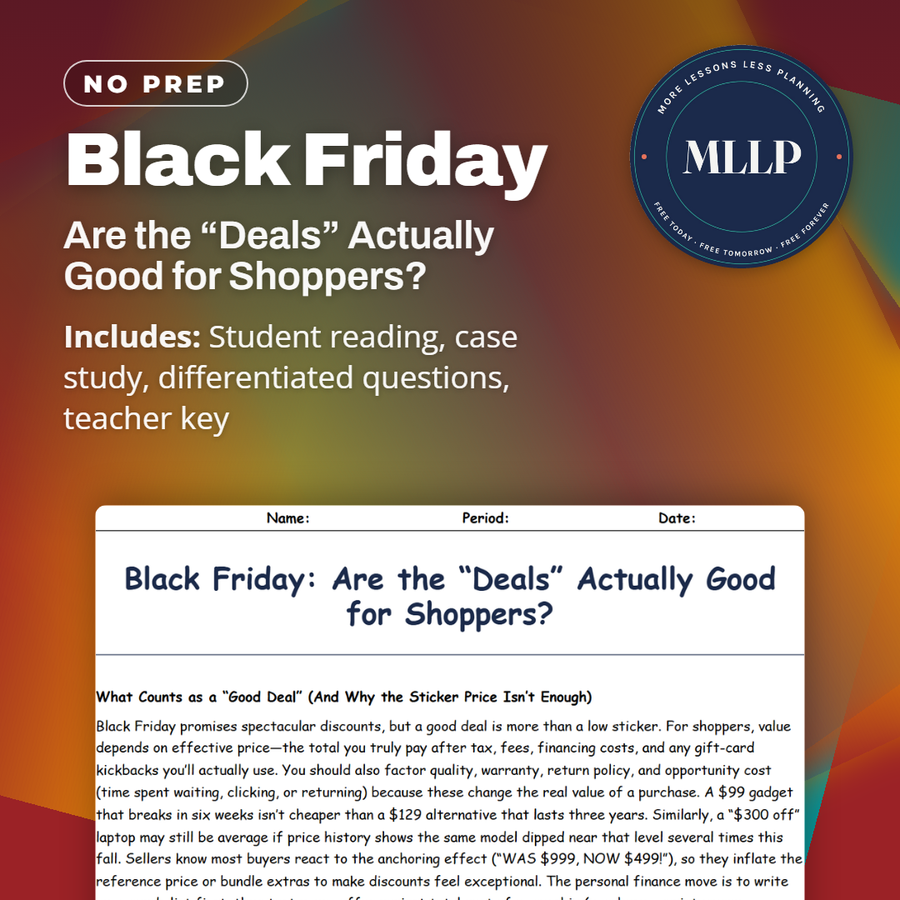
Black Friday: Are the “Deals” Actually Good for Shoppers?
Quality reviewed September 2026
Facts verified September 9, 2026
- Subject
- Career & Life Skills
- Grades
- Grades 9-12
- Length
- 8-page student worksheet
- Time
- About one 50-minute class period
- Great for
- Sub plans and independent work
- Includes
- Reading passage, comprehension questions + full answer key
- Format
- Print-and-go PDF
What students do
- Calculate effective price by including taxes, fees, and financing costs
- Identify anchoring and loss-leader tactics retailers use to shape perception
- Evaluate return friction and warranty terms as hidden costs
- Distinguish between needs and wants when testing a bargain
What it covers
- Consumer economics and pricing psychology
- Personal finance decision-making
- Hidden costs and effective price analysis
Start reading this worksheet
What Counts as a “Good Deal” (And Why the Sticker Price Isn’t Enough)
Black Friday promises spectacular discounts, but a good deal is more than a low sticker. For shoppers, value depends on effective price: the total you truly pay after tax, fees, financing costs, and any gift-card kickbacks you’ll actually use. You should also factor quality, warranty, return policy, and opportunity cost (time spent waiting, clicking, or returning) because these change the real value of a purchase. A $99 gadget that breaks in six weeks isn’t cheaper than a $129 alternative that lasts three years. Similarly, a “$300 off” laptop may still be average if price history shows the same model dipped near that level several times this fall. Sellers know most buyers react to the anchoring effect (“WAS $999, NOW $499!”), so they inflate the reference price or bundle extras to make discounts feel exceptional. The personal finance move is to write your needs list first, then test every offer against total cost of ownership (purchase + maintenance + accessories + power use + time), not just the shelf tag.
Why Retailers Slash Prices: Economics Behind the Hype
For businesses, Black Friday is a tool for demand shaping, inventory clearance, and price discrimination. Loss leaders (below-cost items) pull crowds, who then buy profitable accessories. Time-limited doorbusters and flash sales exploit scarcity to push quick decisions, while bundles raise basket size and hide unit price comparisons. Digital stores add dynamic pricing (“only 5 left,” countdown clocks) to trigger loss aversion. From an econ lens, the “deal” transfers some consumer surplus to shoppers but also captures more revenue by steering you to higher-margin add-ons and financing. Meanwhile, capacity constraints (limited registers, delivery windows, and customer service staff) create friction that shoppers pay in lines, delayed shipping, or difficult returns. A deal that requires a two-hour line plus a paid parking garage and a restocking fee on returns may not beat a quieter, slightly higher Cyber Monday price with free returns. The lesson: a good deal improves your utility without overpaying in hidden costs, time, or future interest.
How to Test a Deal: Effective Price, Price History, and Return Friction
Before you click “buy,” translate the ad into numbers. Effective price equals sale price minus rebates/gift cards you’ll truly use, plus sales tax, shipping, setup, and likely accessories (e.g., a case, HDMI cable). Check price history: if the item regularly sells within 5 to 10% of the “deal,” waiting might save time and reduce risk. Next, evaluate return friction: free returns to store vs. mail-only with postage, restocking, or short windows. For electronics, verify warranty terms and whether you must activate a store card or BNPL plan to get the headline price. Those can add interest or late fees that erase savings. For apparel, factor fit risk: if a retailer has poor sizing consistency or charges return shipping, a slightly higher price at a store with easy in-person returns may be smarter. Finally, think substitutes: if the exact TV model sells out, a comparable brand with the same panel and ports may offer equal value without the hype premium.
Like what you read? The full reading, the case study, and every question set are in the free download below, along with the answer key.
Why this matters
Thirty percent interest on a store credit card can erase a headline discount before the first payment is due, and most shoppers never run the math to catch it. The gap between sticker price and effective price, what a purchase costs once tax, fees, and financing are added, is where real money disappears every November.
The biggest number on a sign is the one shoppers trust by instinct, and I watch that trust break the moment students learn to spot the "WAS $999" anchoring trick, a habit that carries past the holidays. Calculating effective price on three messy offers teaches them to ask what a deal costs later, not just today.
From one teacher to another
I use this worksheet when teaching kids that "biggest discount" doesn't mean "best deal." The case study walks students through a real scenario where a store card offer with 30% APR destroys the headline savings, and a budget decision matters more than the sticker price. They work through effective price calculations, the total paid after tax, fees, and realistic rebates, and then apply that lens to three messy Black Friday offers. By the end, they're skeptical of anchoring (the "WAS $999" trick), they can spot loss leaders, and they've built a mental checklist for when financing actually costs more than savings. It's personal finance that sticks because it hits them right before the holidays.
What you get
Download
Where should I send the next one?
Everything here is free and it stays that way. Leave your email and I'll send you the new lessons as they go up. You can unsubscribe from any one of them.
Related resources
Black Friday Forensics: Shoplifting, Organized Theft, and Crowd Violence
Black Friday Smart Shopper: Economics and Personal Finance in Action
Black Friday’s Economic Impact: Who Gains, Who Pays, and What It Means for the Economy
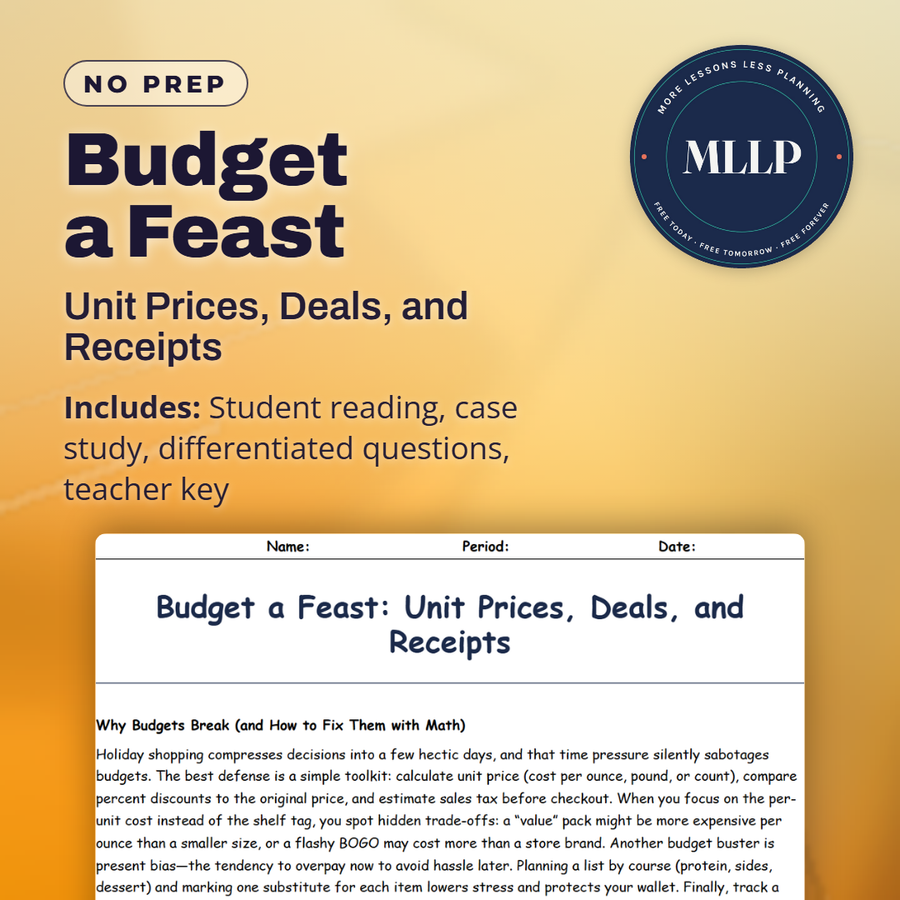
Budget a Feast: Unit Prices, Deals, and Receipts
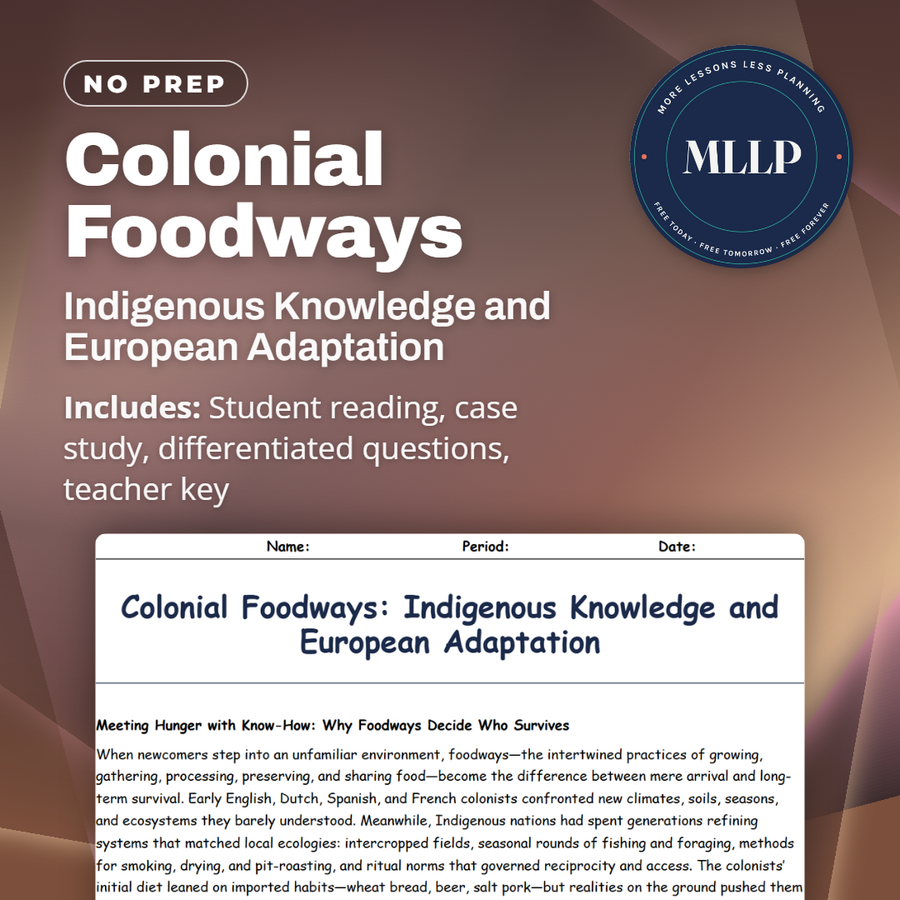
Colonial Foodways: Indigenous Knowledge and European Adaptation
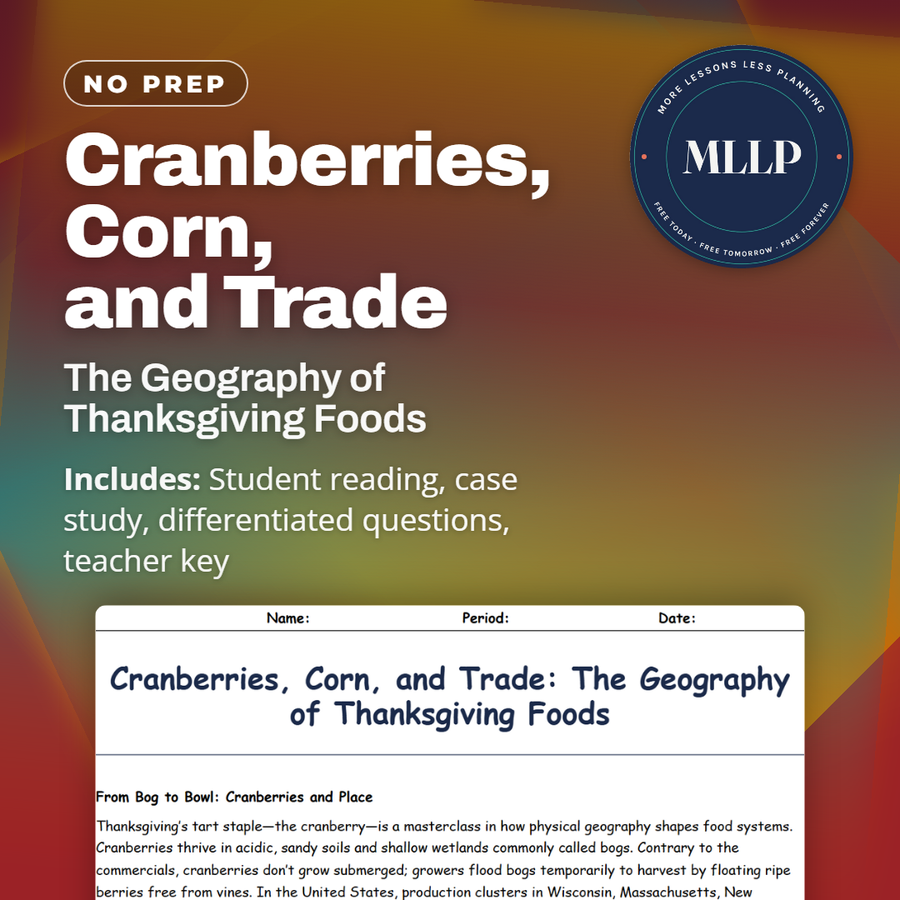
Cranberries, Corn, and Trade: The Geography of Thanksgiving Foods
Every lesson on this site is free to download and use. If one of them saved you a prep period, you can chip in a few bucks toward my three kids' daycare fund. That's genuinely where tips go.