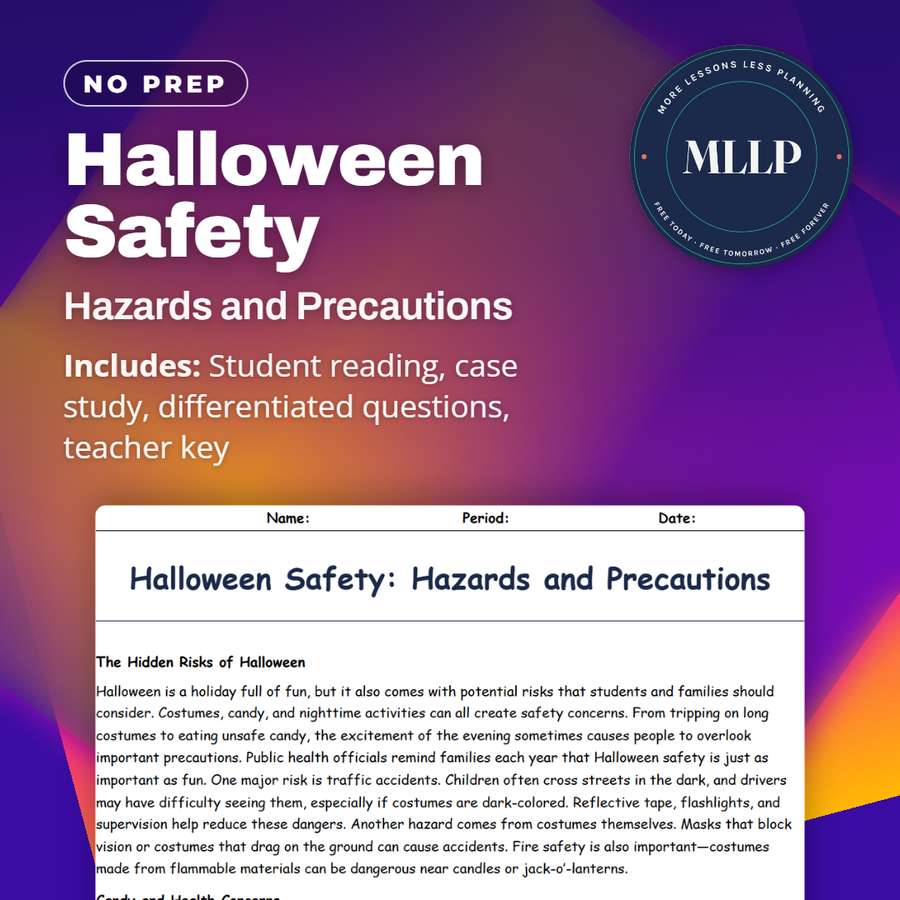
Halloween Safety: Hazards and Precautions
Quality reviewed September 2026
Facts verified September 9, 2026
- Subject
- Health & PE
- Grades
- Grades 9-12
- Length
- 6-page student worksheet
- Time
- About one 50-minute class period
- Great for
- Sub plans and independent work
- Includes
- Reading passage, comprehension questions + full answer key
- Format
- Print-and-go PDF
What students do
- Identify traffic hazards and safety measures for trick-or-treating
- Evaluate costume risks that can cause accidents
- Analyze how public health campaigns reduced Halloween injuries
- Explain why the Teal Pumpkin Project benefits children with food allergies
What it covers
- Halloween traffic safety
- Costume and fire hazards
- Food allergies and inclusive celebration
Start reading this worksheet
The Hidden Risks of Halloween
Halloween is a holiday full of fun, but it also comes with potential risks that students and families should consider. Costumes, candy, and nighttime activities can all create safety concerns. From tripping on long costumes to eating unsafe candy, the excitement of the evening sometimes causes people to overlook important precautions. Public health officials remind families each year that Halloween safety is just as important as fun. One major risk is traffic accidents. Children often cross streets in the dark, and drivers may have difficulty seeing them, especially if costumes are dark-colored. Reflective tape, flashlights, and supervision help reduce these dangers. Another hazard comes from costumes themselves. Masks that block vision or costumes that drag on the ground can cause accidents. Fire safety is also important—costumes made from flammable materials can be dangerous near candles or jack-o’-lanterns.
Candy and Health Concerns
Candy is a highlight of Halloween, but it also presents risks. Parents are often warned about the possibility of tampered candy, though most cases are rare or based on urban legends. The more common danger is simply overeating sugar, which can cause stomachaches and long-term health issues if it becomes a habit. For children with food allergies, Halloween candy poses an even greater risk, as many treats contain peanuts, dairy, or gluten. To reduce these risks, families can inspect candy before eating it, encourage moderation, and provide allergy-safe alternatives. Public health campaigns often emphasize the “Teal Pumpkin Project,” which promotes non-food treats like small toys for children with allergies. By preparing ahead, families can make Halloween safe and enjoyable for all.
Like what you read? The full reading, the case study, and every question set are in the free download below, along with the answer key.
Why this matters
A strip of reflective tape is a small object, easy to miss how much safety data sits behind it. Public health campaigns in the 1990s targeted exactly this kind of low cost fix and measurably cut Halloween accidents. The Teal Pumpkin Project applies that same instinct to food allergies instead of traffic.
This section earns its place right before Halloween, when precautions still feel like nagging instead of information worth acting on. Pairing the traffic story with the allergy story shows students that inclusion and physical safety get solved with the same kind of thinking: notice the hazard, build a simple fix, make it visible.
From one teacher to another
I use this one because students discover how a simple piece of reflective tape saves lives. The worksheet walks through the actual 1990s public health campaigns that cut Halloween accidents, then connects that to the Teal Pumpkin Project, showing how safety measures evolve. By case study's end, students see that protecting everyone means thinking about allergies alongside traffic.
What you get
Download
Where should I send the next one?
Everything here is free and it stays that way. Leave your email and I'll send you the new lessons as they go up. You can unsubscribe from any one of them.
Related resources
Every lesson on this site is free to download and use. If one of them saved you a prep period, you can chip in a few bucks toward my three kids' daycare fund. That's genuinely where tips go.