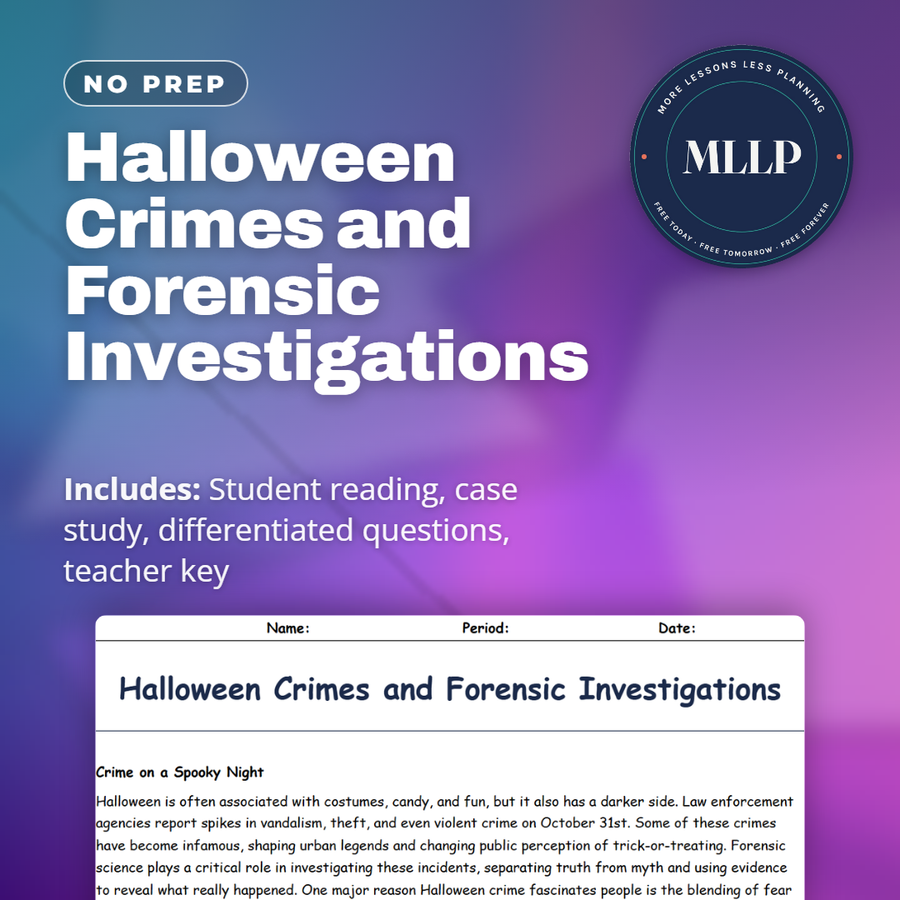
Halloween Crimes and Forensic Investigations
Quality reviewed September 2026
Facts verified September 9, 2026
- Subject
- Science
- Grades
- Grades 9-12
- Length
- 6-page student worksheet
- Time
- About one 50-minute class period
- Great for
- Sub plans and independent work
- Includes
- Reading passage, comprehension questions + full answer key
- Format
- Print-and-go PDF
What students do
- Examine forensic methods used to solve Halloween-related crimes and investigate poisonings
- Analyze how the 1974 Candyman case shaped public fears about Halloween safety for decades
- Evaluate the role of toxicology, fingerprinting, and financial evidence in solving crimes
- Compare myths about Halloween dangers with evidence-based findings from forensic investigations
What it covers
- Forensic investigation methods and laboratory tools
- Crime scene evidence collection and analysis
- Myths versus facts about Halloween crimes
Start reading this worksheet
Crime on a Spooky Night
Halloween is often associated with costumes, candy, and fun, but it also has a darker side. Law enforcement agencies report spikes in vandalism, theft, and even violent crime on October 31st. Some of these crimes have become infamous, shaping urban legends and changing public perception of trick-or-treating. Forensic science plays a critical role in investigating these incidents, separating truth from myth and using evidence to reveal what really happened. One major reason Halloween crime fascinates people is the blending of fear and reality. When individuals are disguised in costumes, identifying suspects becomes harder. Crowds, darkness, and distractions provide cover for mischief or worse. Forensic investigators must look past the holiday chaos and focus on scientific methods such as fingerprinting, toxicology, DNA analysis, and ballistics to uncover the truth. These cases highlight the importance of evidence-based reasoning in criminal justice.
The Science of Investigation
Forensic science applies biology, chemistry, and physics to solve crimes. Investigators often use toxicology tests to determine whether harmful substances were involved, especially in cases where tainted candy is suspected. Fingerprint analysis and DNA profiling help link suspects to evidence, even when masks or costumes hide identities. Ballistics experts study the physics of bullets and firearms when violent crimes occur. Even the psychology of fear and rumor matters, since false stories about “poisoned candy” have spread far more widely than actual incidents. Forensic scientists also use methods to disprove myths. By carefully analyzing evidence, they often reveal that rumors are exaggerated. This is particularly important around Halloween, where stories spread quickly. For example, the myth that strangers regularly poison candy has been debunked by decades of forensic investigation, but one real case in the 1970s helped cement the fear.
Like what you read? The full reading, the case study, and every question set are in the free download below, along with the answer key.
Why this matters
One poisoned bag of Pixy Stix is the entire origin of a fear that has outlived everyone involved. Ronald O'Bryan killed his own son with cyanide hidden in the candy in 1974 for insurance money, and that single crime became the story parents still repeat about strangers poisoning trick or treaters.
I ask a class why Halloween candy still gets inspected and most say strangers poison it every year, a fear this one case created. Toxicology, fingerprinting, and financial records together built the case against O'Bryan, not a single dramatic clue. What starts as a scary story becomes a lesson in why evidence beats speculation.
From one teacher to another
The poisoned candy myth shaped parental behavior for decades, but it stems from one real case: Ronald O'Bryan poisoned his own son's Pixy Stix with cyanide in 1974 for insurance money. Forensic toxicology revealed the poison, fingerprint analysis connected him to the candy, and financial records established motive. Yet this isolated crime spawned a national fear that has never fully disappeared. This worksheet shows students how forensic evidence reveals truth while myths multiply, and why critical thinking matters.
What you get
Download
Where should I send the next one?
Everything here is free and it stays that way. Leave your email and I'll send you the new lessons as they go up. You can unsubscribe from any one of them.
Related resources
Every lesson on this site is free to download and use. If one of them saved you a prep period, you can chip in a few bucks toward my three kids' daycare fund. That's genuinely where tips go.