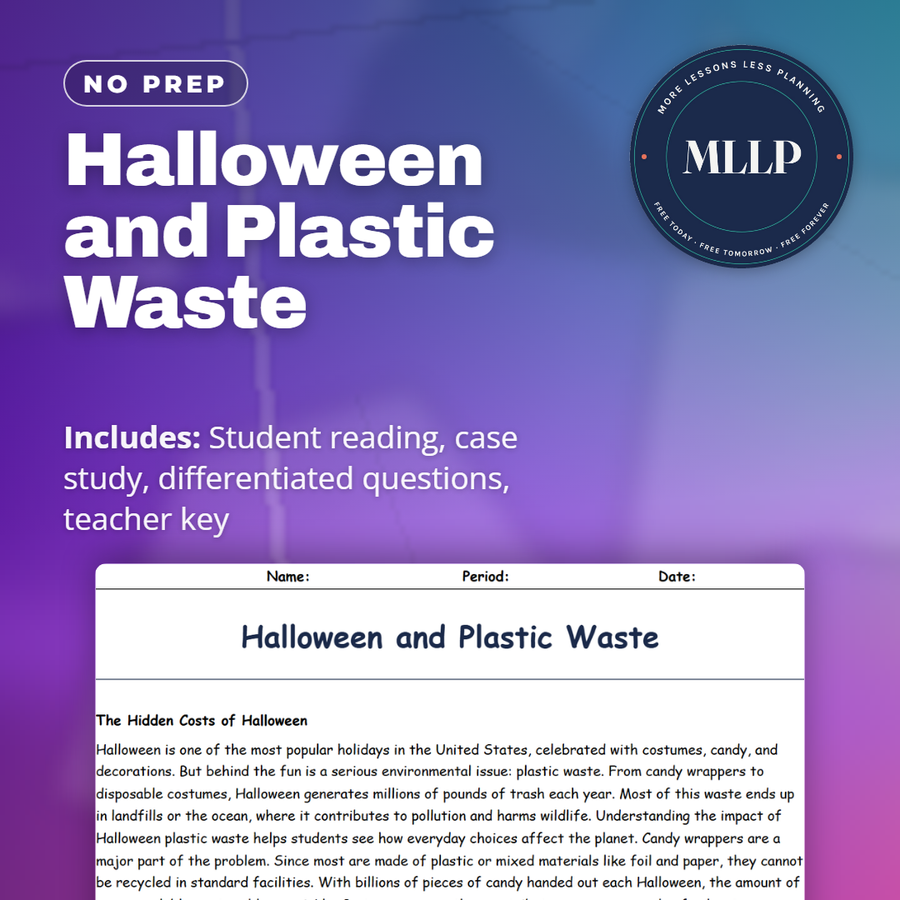
Halloween and Plastic Waste
Quality reviewed September 2026
Facts verified September 9, 2026
- Subject
- Science
- Grades
- Grades 9-12
- Length
- 6-page student worksheet
- Time
- About one 50-minute class period
- Great for
- Sub plans and independent work
- Includes
- Reading passage, comprehension questions + full answer key
- Format
- Print-and-go PDF
What students do
- Analyze the environmental impact of single-use costumes, candy wrappers, and decorations
- Evaluate strategies communities use to reduce Halloween plastic waste and promote sustainability
- Trace how microplastics from Halloween discards harm ecosystems, wildlife, and food chains
- Propose eco-friendly alternatives to typical Halloween consumption patterns and behaviors
What it covers
- Plastic pollution and waste management challenges
- Microplastics and environmental impact on ecosystems
- Sustainable holiday practices and community solutions
Start reading this worksheet
The Hidden Costs of Halloween
Halloween is one of the most popular holidays in the United States, celebrated with costumes, candy, and decorations. But behind the fun is a serious environmental issue: plastic waste. From candy wrappers to disposable costumes, Halloween generates millions of pounds of trash each year. Most of this waste ends up in landfills or the ocean, where it contributes to pollution and harms wildlife. Understanding the impact of Halloween plastic waste helps students see how everyday choices affect the planet. Candy wrappers are a major part of the problem. Since most are made of plastic or mixed materials like foil and paper, they cannot be recycled in standard facilities. With billions of pieces of candy handed out each Halloween, the amount of non-recyclable waste adds up quickly. Costumes are another contributor—many are made of polyester or other plastics and are worn only once. After the holiday, these costumes are often thrown away, adding to the growing issue of textile and plastic pollution.
The Environmental Impact of Plastic
Plastic is durable, which makes it useful but also dangerous. It does not break down quickly; instead, it turns into tiny particles called microplastics. These microplastics spread through soil, water, and even the air. Animals can mistake them for food, leading to serious health problems. For humans, plastic waste creates indirect risks by contaminating food chains and contributing to climate change through production and disposal processes. Halloween magnifies these issues because it encourages mass consumption in a short period of time. Millions of plastic decorations, candy buckets, and treat bags are purchased each year. When people throw them away after the holiday, the environmental burden grows. This cycle of buying, using, and discarding makes Halloween one of the most environmentally costly holidays.
Like what you read? The full reading, the case study, and every question set are in the free download below, along with the answer key.
Why this matters
Where does a candy wrapper go after Halloween night ends? Most students never trace it past the trash can, yet billions of wrappers, single use costumes, and decorations get discarded within days, breaking down eventually into microplastics that move through soil, water, and food chains.
The room shifts once alternatives stop being hypothetical: costume swaps and recycling challenges already running in real communities. Seeing waste and solution side by side moves the conversation from guilt to a real question, which of these could actually happen here.
From one teacher to another
Halloween creates a perfect storm of waste: billions of non-recyclable candy wrappers, single-use plastic costumes, and disposable decorations all discarded within days. Most students never connect their October fun to March landfill overflow. Some communities have built costume swaps and recycling challenges. Actual solutions happening now. When students learn that they can maintain the celebration while cutting waste, something shifts. This worksheet provides the numbers and cases to make that argument real.
What you get
Download
Where should I send the next one?
Everything here is free and it stays that way. Leave your email and I'll send you the new lessons as they go up. You can unsubscribe from any one of them.
Related resources
Every lesson on this site is free to download and use. If one of them saved you a prep period, you can chip in a few bucks toward my three kids' daycare fund. That's genuinely where tips go.