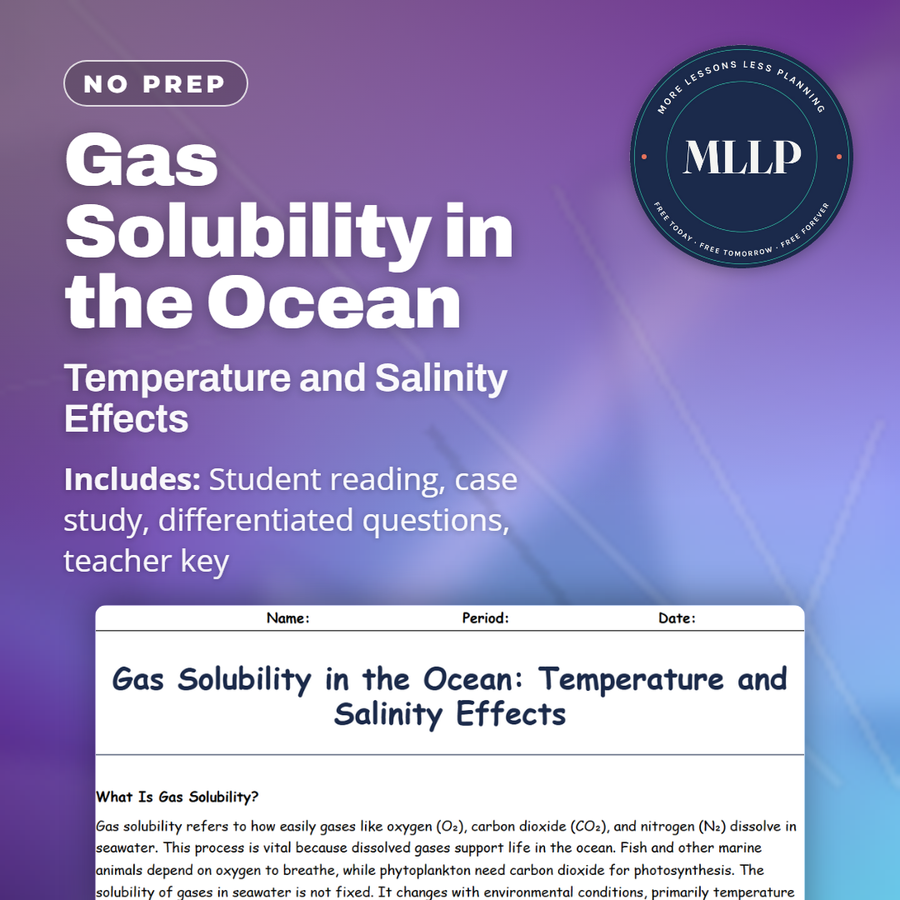
Gas Solubility in the Ocean: Temperature and Salinity Effects
Quality reviewed September 2026
Facts verified September 14, 2026
- Subject
- Science
- Grades
- Grades 9-12
- Length
- 6-page student worksheet
- Time
- About one 50-minute class period
- Great for
- Sub plans and independent work
- Includes
- Reading passage, comprehension questions + full answer key
- Format
- Print-and-go PDF
What students do
- Match terms like the Red Sea, the tropics, polar oceans, warm salty water, and nighttime to what each one shows about gas solubility
- Fill in the blank sentences on what gas solubility means, whether warm water holds more or less oxygen, and how salinity affects gas levels
- Answer multiple choice questions on which water holds the most dissolved gas, how stratification affects oxygen, and why salinity lowers solubility
- Write short answers and case study questions on the double stress warming creates for marine life, why polar oceans matter for gas exchange, and how temperature and salinity work together
What it covers
- How temperature controls gas solubility, with cold water holding more oxygen and carbon dioxide than warm water
- How salinity affects gas solubility, with examples like the Red Sea's high salinity and river outflows' low salinity
- A case study on how warming seas create oxygen stress for coral reefs, especially during nighttime respiration
Start reading this worksheet
What Is Gas Solubility?
Gas solubility refers to how easily gases like oxygen (O₂), carbon dioxide (CO₂), and nitrogen (N₂) dissolve in seawater. This process is vital because dissolved gases support life in the ocean. Fish and other marine animals depend on oxygen to breathe, while phytoplankton need carbon dioxide for photosynthesis. The solubility of gases in seawater is not fixed. It changes with environmental conditions, primarily temperature and salinity. These two factors determine how much gas water can hold at any given time. Cold, fresh water holds the most gas, while warm, salty water holds the least. This explains why polar oceans are often rich in oxygen compared to tropical seas. Gas solubility is also linked to global climate. As Earth warms, ocean temperatures rise, reducing oxygen levels. This creates additional stress for marine life and affects global cycles of carbon storage and release.
The Effect of Temperature
Temperature is one of the strongest controls on gas solubility. In general, the colder the water, the more gas it can hold. This is why polar oceans, despite their harsh climate, often have some of the highest oxygen levels on Earth. Conversely, tropical waters, though biologically diverse, often struggle with lower oxygen levels due to reduced solubility. Warming also accelerates metabolism in marine organisms, increasing oxygen demand at the same time that oxygen availability decreases. This “double stress” can create dangerous conditions for fish and other species. Additionally, warmer waters strengthen stratification, or layering in the ocean, which reduces mixing between oxygen-rich surface waters and deeper layers. These interactions make temperature a central factor not only in local ecosystems but also in large-scale ocean circulation and the global carbon cycle.
Like what you read? The full reading, the case study, and every question set are in the free download below, along with the answer key.
Why this matters
Cold, fresh water holds more dissolved gas than warm, salty water, a rule that decides which parts of the ocean stay oxygen-rich. Temperature and salinity push solubility in opposite directions, shown through the Red Sea's high salinity and polar water's cold temperatures as opposite ends of the same scale.
Solubility rules stop being abstract once I have students apply them to coral reefs already stressed by warming water. Oxygen drops right when coral metabolism speeds up and needs more oxygen, not less, and that double stress is the detail that outlasts the solubility rules in most students' memory.
From one teacher to another
Cold, fresh water holds the most gas, and warm, salty water holds the least. This worksheet covers gas solubility and the two biggest factors behind it, temperature and salinity, using examples from polar oceans to the Red Sea. The case study on coral reefs shows what happens when warming water lowers oxygen levels right as coral metabolism speeds up.
What you get
Download
Where should I send the next one?
Everything here is free and it stays that way. Leave your email and I'll send you the new lessons as they go up. You can unsubscribe from any one of them.
Related resources
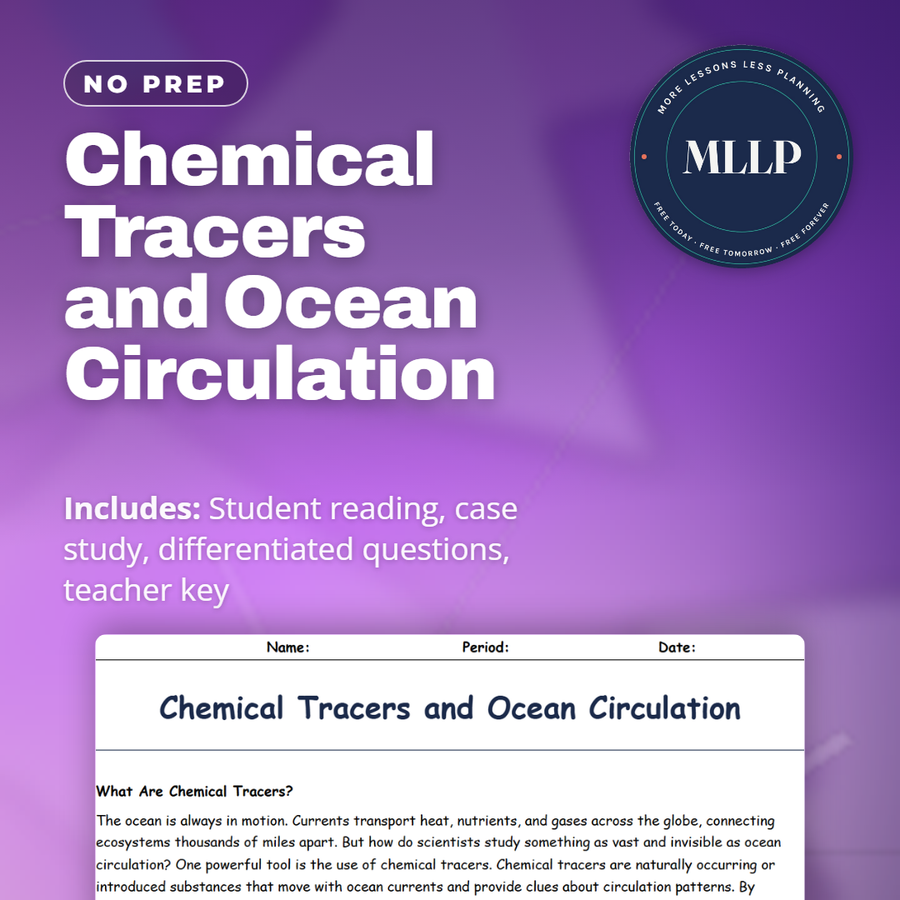
Chemical Tracers and Ocean Circulation
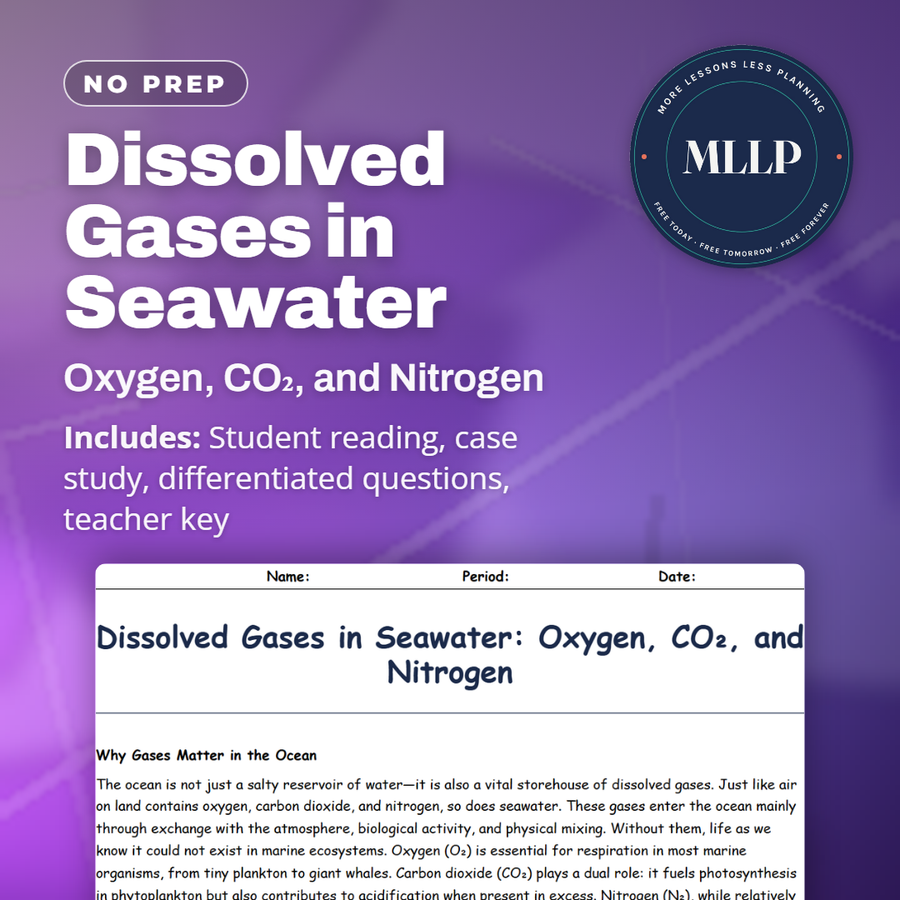
Dissolved Gases in Seawater: Oxygen, CO₂, and Nitrogen
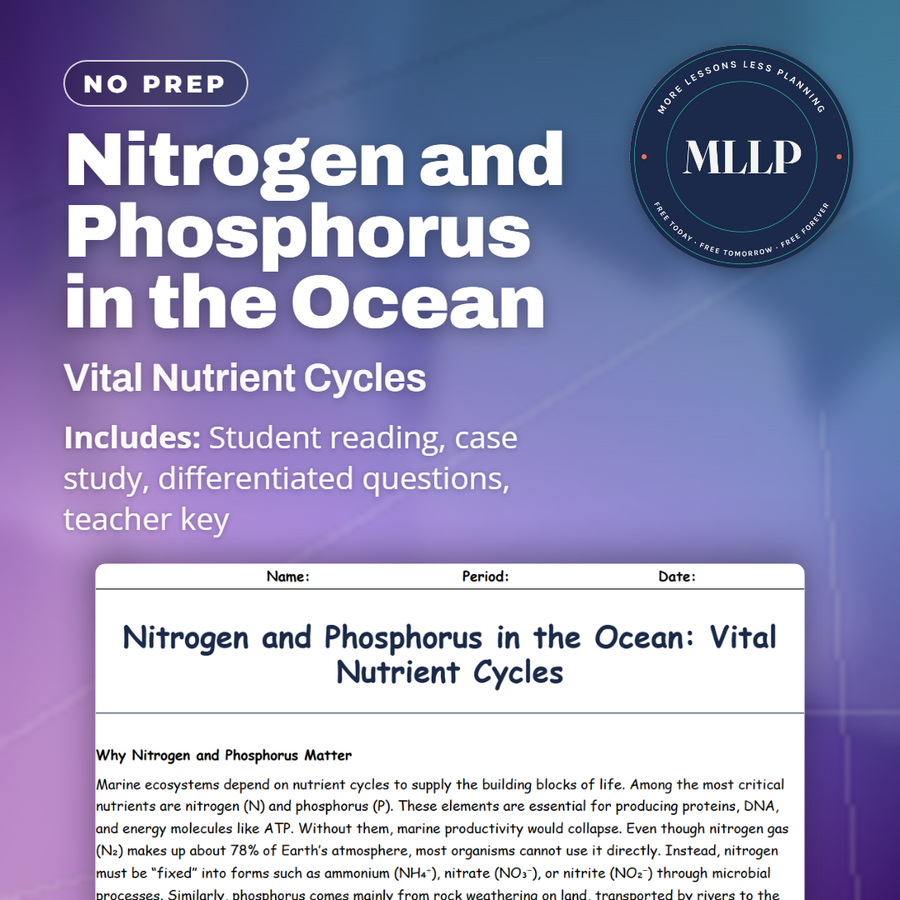
Nitrogen and Phosphorus in the Ocean: Vital Nutrient Cycles
Nutrient Limitation Across Ocean Zones
Ocean Acidification: Threats to Marine Life
Salinity and the Chemical Makeup of Seawater
Every lesson on this site is free to download and use. If one of them saved you a prep period, you can chip in a few bucks toward my three kids' daycare fund. That's genuinely where tips go.