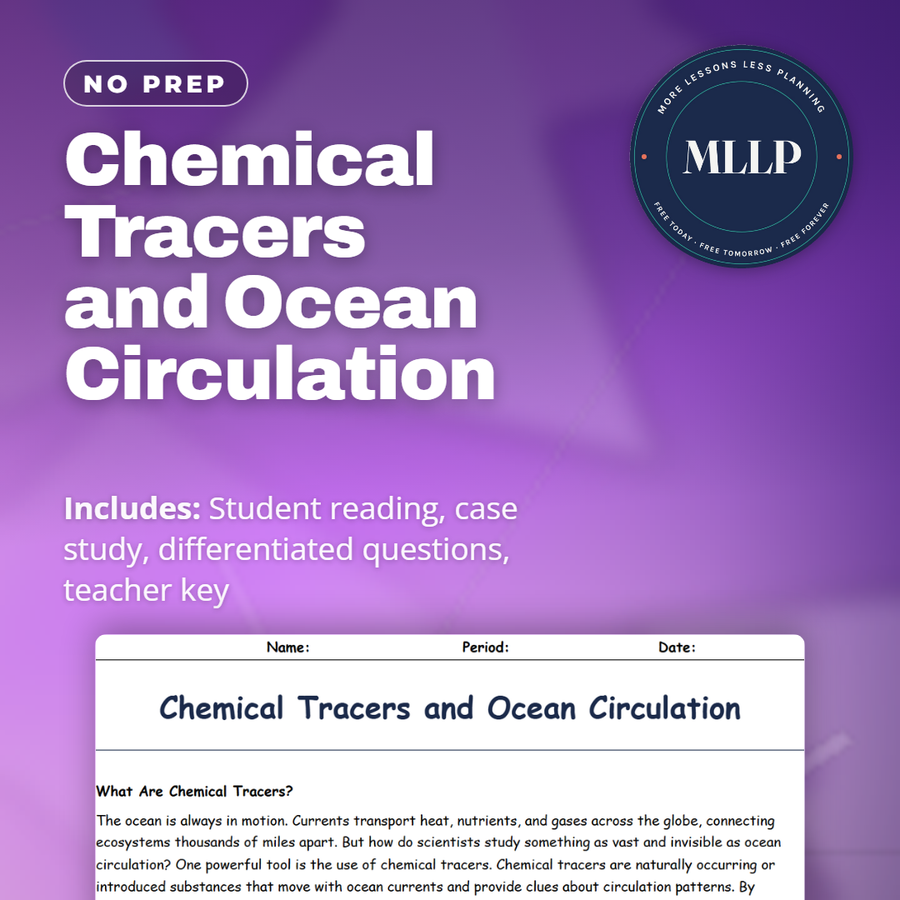
Chemical Tracers and Ocean Circulation
Quality reviewed September 2026
Facts verified September 14, 2026
- Subject
- Science
- Grades
- Grades 9-12
- Length
- 6-page student worksheet
- Time
- About one 50-minute class period
- Great for
- Sub plans and independent work
- Includes
- Reading passage, comprehension questions + full answer key
- Format
- Print-and-go PDF
What students do
- Match terms like CFCs, oxygen, carbon isotopes, and NADW to how each one is used as an ocean circulation tracer
- Fill in the blank sentences on water masses, nutrients, and the abbreviation for North Atlantic Deep Water
- Answer multiple choice questions on the purpose of chemical tracers, which water mass spreads south from the North Atlantic, and why CFCs work so well as tracers
- Write short answers and case study questions on how tracers reveal the age of seawater, why studying ocean circulation matters for climate predictions, and how the banning of CFCs unexpectedly benefited ocean research
What it covers
- How chemical tracers like oxygen, carbon isotopes, and CFCs reveal the origins, pathways, and age of ocean water masses
- Why understanding ocean circulation through tracers matters for predicting climate change, carbon storage, and nutrient distribution
- A case study on how CFCs, once used in refrigeration and aerosols, became a precise tool for tracking modern ocean circulation
Start reading this worksheet
What Are Chemical Tracers?
The ocean is always in motion. Currents transport heat, nutrients, and gases across the globe, connecting ecosystems thousands of miles apart. But how do scientists study something as vast and invisible as ocean circulation? One powerful tool is the use of chemical tracers. Chemical tracers are naturally occurring or introduced substances that move with ocean currents and provide clues about circulation patterns. By measuring their concentrations, scientists can determine the origins, pathways, and timescales of water movement. This helps explain how heat and nutrients are distributed across the planet. Some common tracers include oxygen, carbon isotopes, nutrients, and chlorofluorocarbons (CFCs). Each behaves differently, making them useful for studying different aspects of circulation. For example, oxygen decreases as water masses age, while CFCs, which entered the ocean only in the last century, provide a “time stamp” for modern circulation.
Tracers of Water Masses
One of the main ways tracers are used is to identify water masses—large volumes of water with distinct temperature, salinity, and chemical signatures. For instance, North Atlantic Deep Water (NADW) and Antarctic Bottom Water (AABW) are two major water masses that dominate deep circulation. By tracking tracers like nutrients or carbon isotopes, scientists can follow how these water masses mix and spread. Tracers also reveal the “age” of water. When water sinks at the poles, it is oxygen-rich. As it circulates through the deep ocean, oxygen declines while nutrients increase due to decomposition. Measuring these changes provides an estimate of how long water has been isolated from the surface. This information is critical for understanding how long carbon is stored in the deep ocean before being returned to the atmosphere.
Like what you read? The full reading, the case study, and every question set are in the free download below, along with the answer key.
Why this matters
Nobody can watch a single drop of seawater spread south from the North Atlantic, so scientists needed something that would leave a trail. Oxygen, carbon isotopes, and CFCs each tell a different part of that story, revealing a water mass's age and path down to naming North Atlantic Deep Water.
The strangest part for most students is that CFCs, once common in refrigerators and aerosol cans and later banned outright, became one of the most precise tools for tracking North Atlantic Deep Water. I bring this up whenever a student assumes a banned chemical has no scientific use left.
From one teacher to another
Ocean water doesn't sit still, and chemical tracers give scientists a way to follow where it's been. This worksheet walks through tracers like oxygen, carbon isotopes, and CFCs, and how each one tells a different part of the story of water mass age and movement. The case study on CFCs shows how a chemical once linked to refrigerators and aerosol cans turned into a precise marker for tracking North Atlantic Deep Water.
What you get
Download
Where should I send the next one?
Everything here is free and it stays that way. Leave your email and I'll send you the new lessons as they go up. You can unsubscribe from any one of them.
Related resources
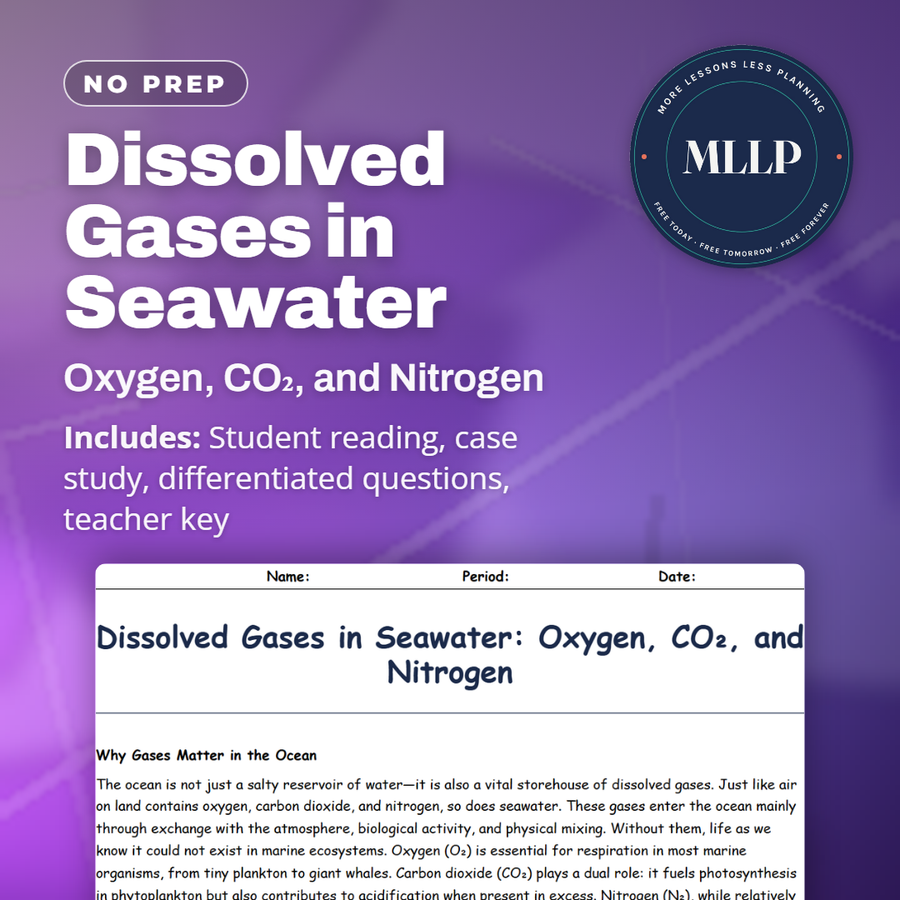
Dissolved Gases in Seawater: Oxygen, CO₂, and Nitrogen
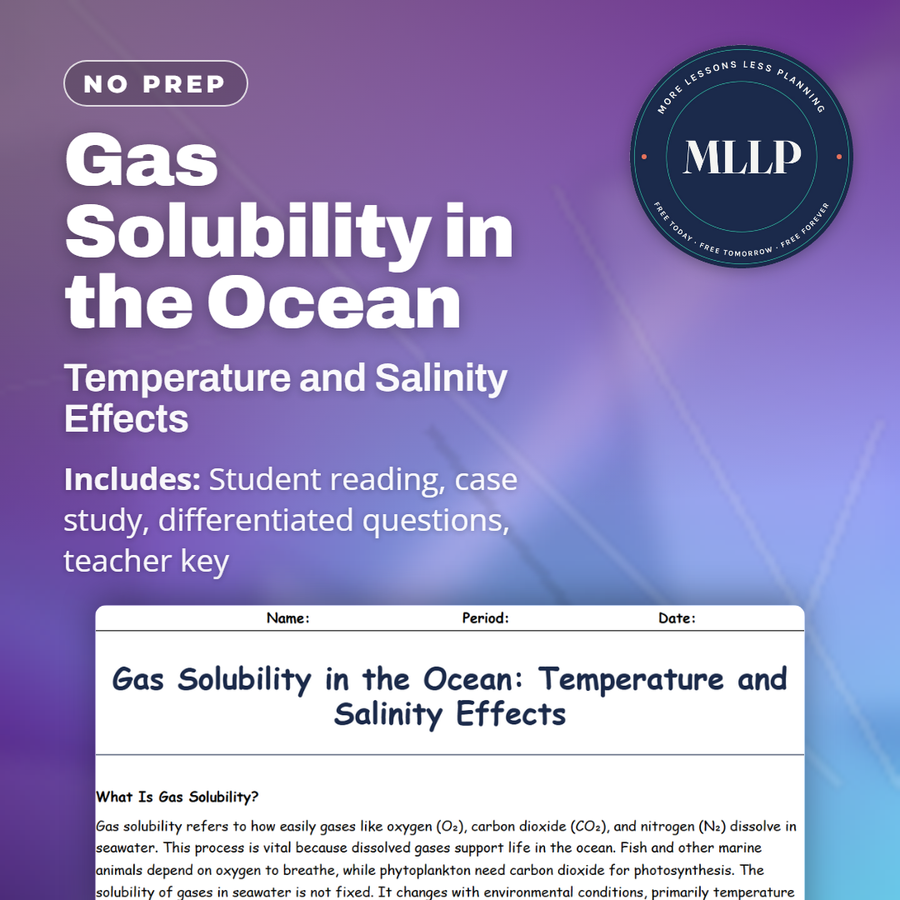
Gas Solubility in the Ocean: Temperature and Salinity Effects
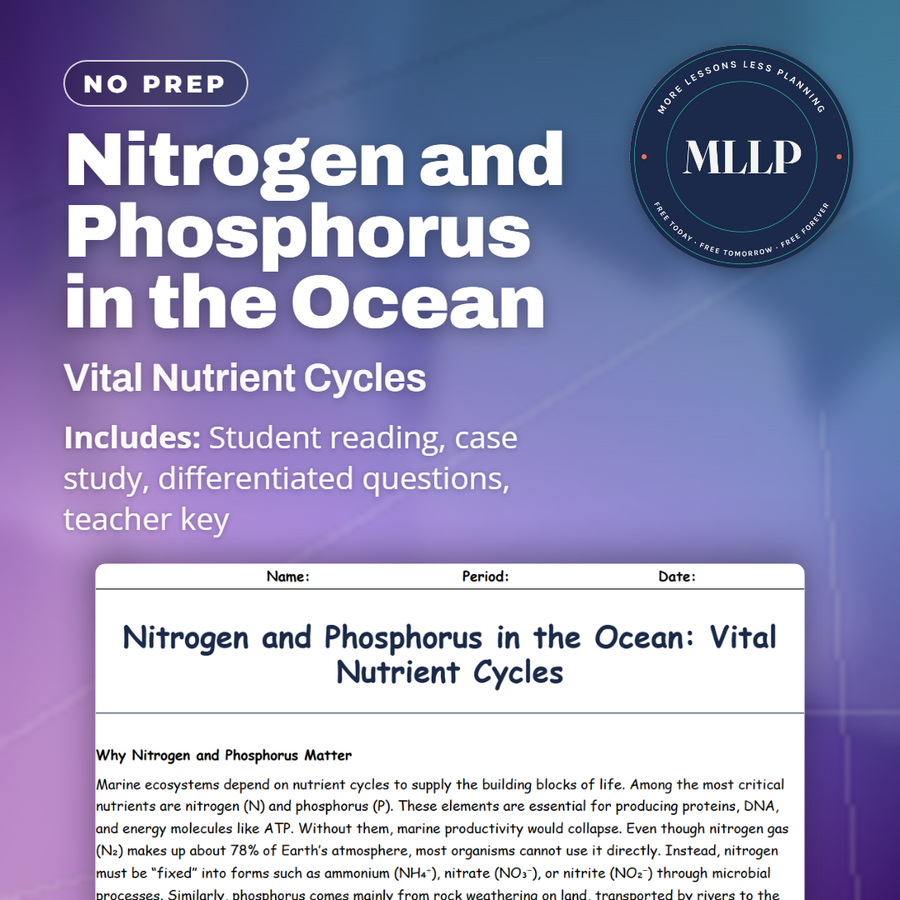
Nitrogen and Phosphorus in the Ocean: Vital Nutrient Cycles
Nutrient Limitation Across Ocean Zones
Ocean Acidification: Threats to Marine Life
Salinity and the Chemical Makeup of Seawater
Every lesson on this site is free to download and use. If one of them saved you a prep period, you can chip in a few bucks toward my three kids' daycare fund. That's genuinely where tips go.