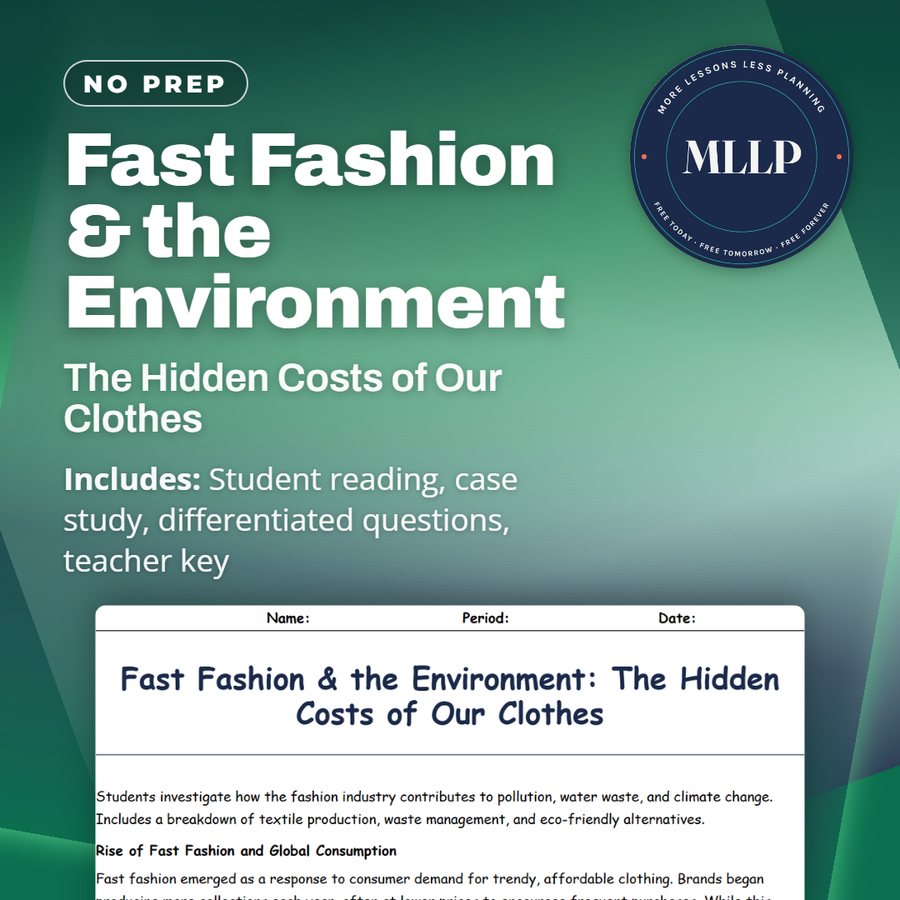
Fast Fashion & the Environment: The Hidden Costs of Our Clothes
Quality reviewed September 2026
Facts verified September 9, 2026
- Subject
- Science
- Grades
- Grades 9-12
- Length
- 8-page student worksheet
- Time
- About one 50-minute class period
- Great for
- Sub plans and independent work
- Includes
- Reading passage, comprehension questions + full answer key
- Format
- Print-and-go PDF
What students do
- Evaluate the environmental costs of different textile fibers from production to disposal
- Compare the carbon footprint of fast fashion to circular and sustainable clothing models
- Analyze how clothing swap programs reduce textile waste and extend garment lifecycles
- Trace the path of synthetic fibers from manufacturing through landfills
What it covers
- Textile production and environmental impact
- Textile waste and landfill degradation
- Sustainable fashion and consumer choice
Start reading this worksheet
Students investigate how the fashion industry contributes to pollution, water waste, and climate change. Includes a breakdown of textile production, waste management, and eco-friendly alternatives.
Rise of Fast Fashion and Global Consumption
Fast fashion emerged as a response to consumer demand for trendy, affordable clothing. Brands began producing more collections each year, often at lower prices to encourage frequent purchases. While this model offers consumers the latest styles at a fraction of traditional costs, it fuels a culture of disposability. Garments might be worn only a handful of times before being tossed out. The global textile production industry has ballooned, consuming enormous quantities of water and energy while producing substantial greenhouse gas emissions. Many factories located in developing nations provide economic opportunities but often at the expense of labor rights and environmental regulations. This system relies on intense resource extraction, from cotton cultivation requiring pesticides to synthetic fibers derived from fossil fuels. With clothing prices so low, consumers often view garments as short-lived items, leading to overflowing closets and landfills. The first step to addressing these hidden costs is recognizing how everyday decisions about wardrobe purchases connect to global environmental impacts.
Textile Production and Pollution
From the moment a seed is planted for cotton or chemicals are processed to create polyester, environmental pollutants enter the equation. Cotton farming can be water-intensive and may involve heavy pesticide use, contaminating local water sources and harming wildlife. Synthetic fibers like polyester, nylon, and acrylic are petrochemical products, contributing to plastic pollution in waterways when microfibers shed during washing. Dyeing processes can also release toxic chemicals into rivers if not properly treated. Factories often discharge untreated wastewater, impacting the health of downstream communities. The carbon footprint of textile production is equally concerning. Heating and running machinery in mills uses significant energy, often derived from coal or natural gas. Without strict oversight, factories may sidestep regulations to cut costs, creating large-scale pollution in areas with limited enforcement. A comprehensive approach to reforming textile production includes stricter pollution controls, investments in water treatment technology, and transitioning to renewable energy sources. Consumers who demand transparency and responsibly sourced fabrics drive market changes, influencing how brands manage their supply chains.
Like what you read? The full reading, the case study, and every question set are in the free download below, along with the answer key.
Why this matters
Most students pull on a cotton shirt or a polyester hoodie every morning without a thought about where either fiber came from. This reading has them calculate the water cost behind that cotton shirt, then trace the polyester one back to petroleum, turning their own clothes into the data set. The Riverside High clothing swap case study shows what a school does once it acts on that.
I watch repair and trading turn into the smart option instead of the desperate one once my students work through the swap case study, a real shift from how most of them used to talk about clothes. They also stop treating a garment as finished the moment it stops feeling new.
From one teacher to another
This one works because students recognize their own habits. They calculate the water cost of a cotton shirt, then learn polyester comes from petroleum. The Riverside High clothing swap case study makes it tangible: students understand why extending a garment's life matters more than buying the newest trend. I've had kids realize that repairing a jacket or swapping with friends beats the waste cycle most retailers push. It's environmental science they live with every day.
What you get
Download
Where should I send the next one?
Everything here is free and it stays that way. Leave your email and I'll send you the new lessons as they go up. You can unsubscribe from any one of them.
Related resources
Earth Day: The 1970 Protest That Changed America
Environmental Crimes: The Forensic Science of Eco-Terrorism
Land Use and Federal vs. State Power: Who Controls Natural Resources?
Oil Spills, Protests, and Policy: The Environmental Legacy of the 20th Century
The Carbon Footprint of Everyday Life: A Data Analysis Challenge
The Government’s Role in Protecting the Environment: A Policy Debate
Every lesson on this site is free to download and use. If one of them saved you a prep period, you can chip in a few bucks toward my three kids' daycare fund. That's genuinely where tips go.