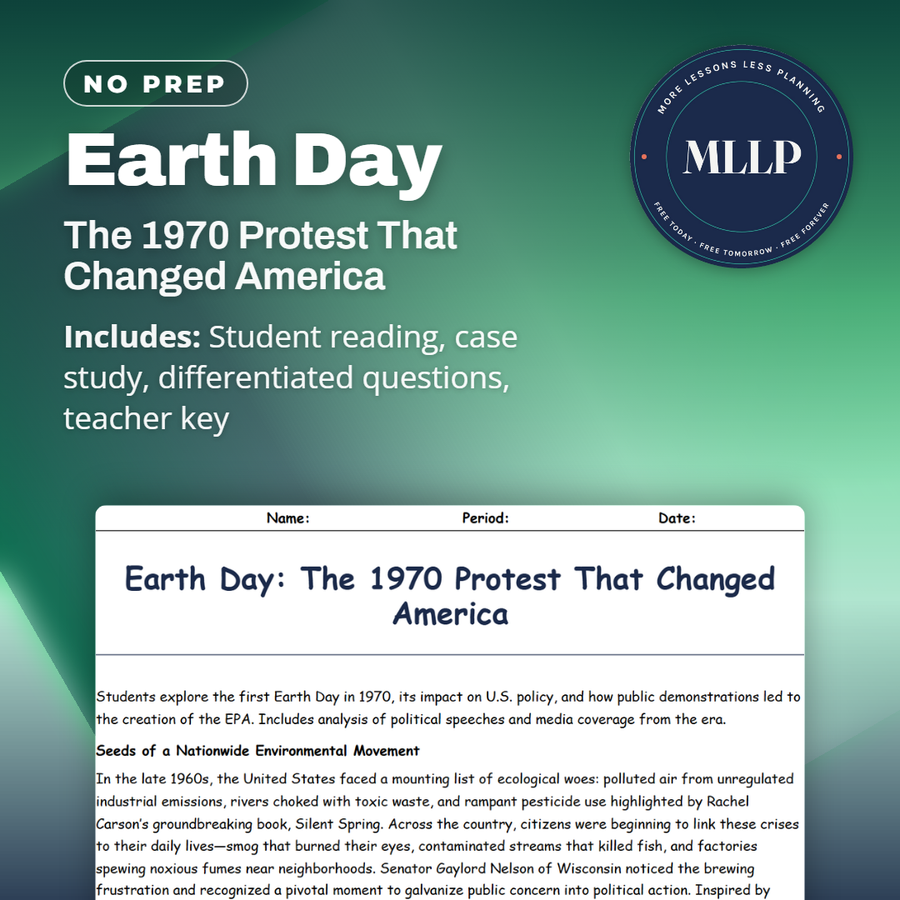
Earth Day: The 1970 Protest That Changed America
Quality reviewed September 2026
Facts verified September 9, 2026
- Subject
- Social Studies
- Grades
- Grades 9-12
- Length
- 8-page student worksheet
- Time
- About one 50-minute class period
- Great for
- Sub plans and independent work
- Includes
- Reading passage, comprehension questions + full answer key
- Format
- Print-and-go PDF
What students do
- Analyze how Senator Nelson's Earth Day campaign transformed public activism into federal policy
- Evaluate the role of media coverage in mobilizing political support for environmental reform
- Trace the connections between grassroots demonstrations and the establishment of the EPA
- Compare Earth Day's decentralized approach with modern civic movements
What it covers
- Environmental activism and protest movements
- EPA creation and federal environmental policy
- Media's role in shaping political opinion
Start reading this worksheet
Students explore the first Earth Day in 1970, its impact on U.S. policy, and how public demonstrations led to the creation of the EPA. Includes analysis of political speeches and media coverage from the era.
Seeds of a Nationwide Environmental Movement
In the late 1960s, the United States faced a mounting list of ecological woes: polluted air from unregulated industrial emissions, rivers choked with toxic waste, and rampant pesticide use highlighted by Rachel Carson’s groundbreaking book, Silent Spring. Across the country, citizens were beginning to link these crises to their daily lives. Smog burned their eyes, contaminated streams killed fish, and factories spewed noxious fumes near neighborhoods. Senator Gaylord Nelson of Wisconsin noticed the brewing frustration and recognized a pivotal moment to galvanize public concern into political action. Inspired by student anti-war protests, he envisioned a “national teach-in” dedicated to environmental awareness. This idea took shape as Earth Day. Organized on April 22, 1970, it brought together activists, students, and ordinary citizens in one of the largest national demonstrations in U.S. history. Millions participated in rallies and educational events, demanding government accountability for pollution and resource mismanagement. Through creative protests and marches, Earth Day thrust environmental issues onto the national stage and signaled that the American public was ready for major change.
Widespread Demonstrations and Media Engagement
Earth Day events in 1970 spanned urban centers and rural communities alike. College campuses hosted lectures and panel discussions on ecology, while towns organized neighborhood cleanups to collect litter and plant trees. Television networks and newspapers, capturing the public’s heightened interest, covered these initiatives extensively. Images of crowds gathering in city parks with signs like “Stop Pollution Now!” and “We Have Only One Earth” dominated the news cycle. This nationwide visibility amplified the urgency of the movement, with reporters delving into the science behind air and water contamination. The momentum of Earth Day also opened doors for collaboration: environmental organizations, faith groups, and civic clubs shared strategies and resources, forging a broad coalition that transcended political affiliation. The event’s success even caught some politicians off guard, prompting them to take stronger stances on environmental policy. For many Americans, Earth Day 1970 marked their first real exposure to comprehensive discussions about habitat destruction, industrial toxins, and the link between public health and pollution.
Like what you read? The full reading, the case study, and every question set are in the free download below, along with the answer key.
Why this matters
A single day of protest does not usually end with a federal agency, but Earth Day 1970 came close to doing exactly that. Senator Nelson framed environmental protection as a duty to future generations, and that speech, paired with decentralized demonstrations happening in cities and towns at once, built pressure Congress could not ignore for long.
Once my students see how images of polluted rivers and dead fish turned public frustration into political pressure, they stop treating media coverage as background noise and start reading it as a cause of the policy change itself. That connection is what makes this a civics lesson as much as a history one.
From one teacher to another
I use this one when I want students to see how student-led activism actually changed government policy. The reading pulls in Senator Nelson's speech, where he frames environmental protection as a moral duty to future generations. Students latch onto that. They analyze the role media played, watching how images of polluted rivers and dead fish created the political pressure needed for Congress to act. It's a powerful lesson in how collective action can reshape policy within months, not years.
What you get
Download
Where should I send the next one?
Everything here is free and it stays that way. Leave your email and I'll send you the new lessons as they go up. You can unsubscribe from any one of them.
Related resources

Environmental Crimes: The Forensic Science of Eco-Terrorism

Fast Fashion & the Environment: The Hidden Costs of Our Clothes
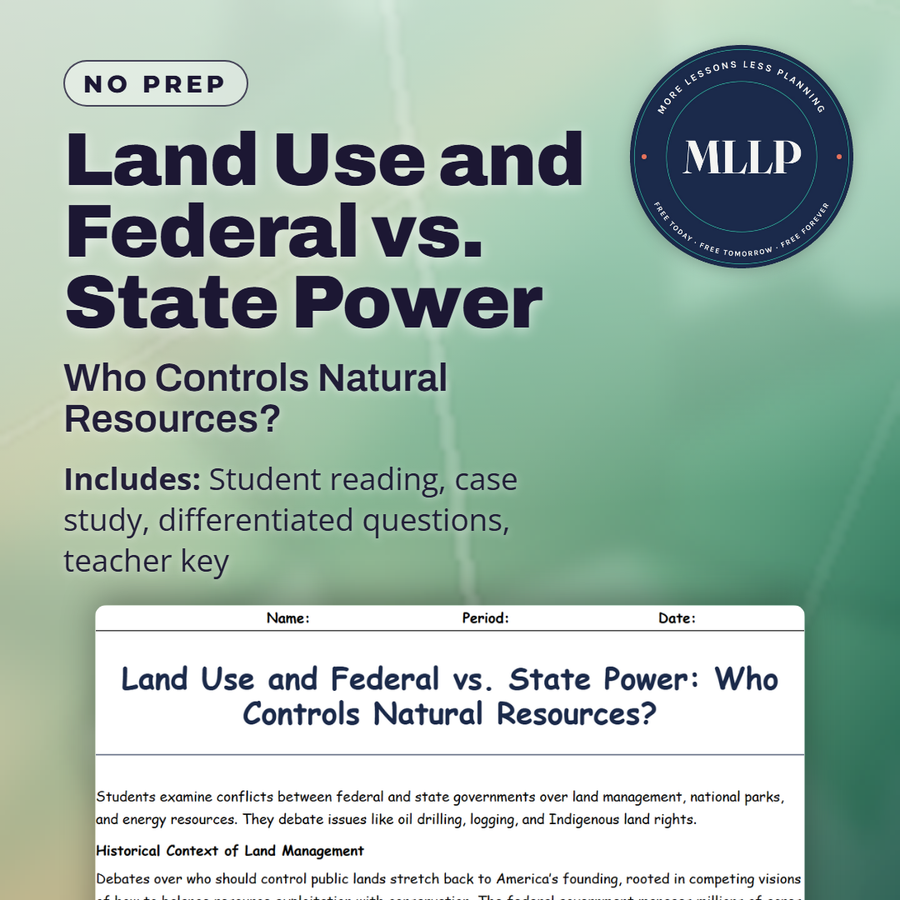
Land Use and Federal vs. State Power: Who Controls Natural Resources?
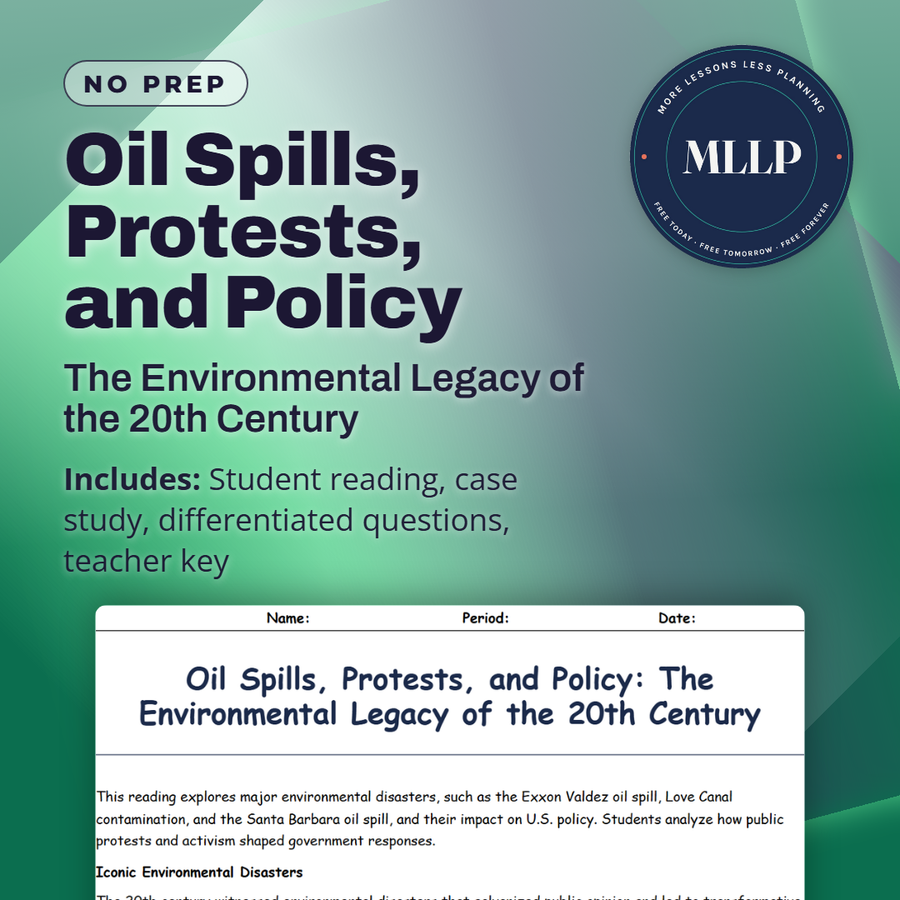
Oil Spills, Protests, and Policy: The Environmental Legacy of the 20th Century
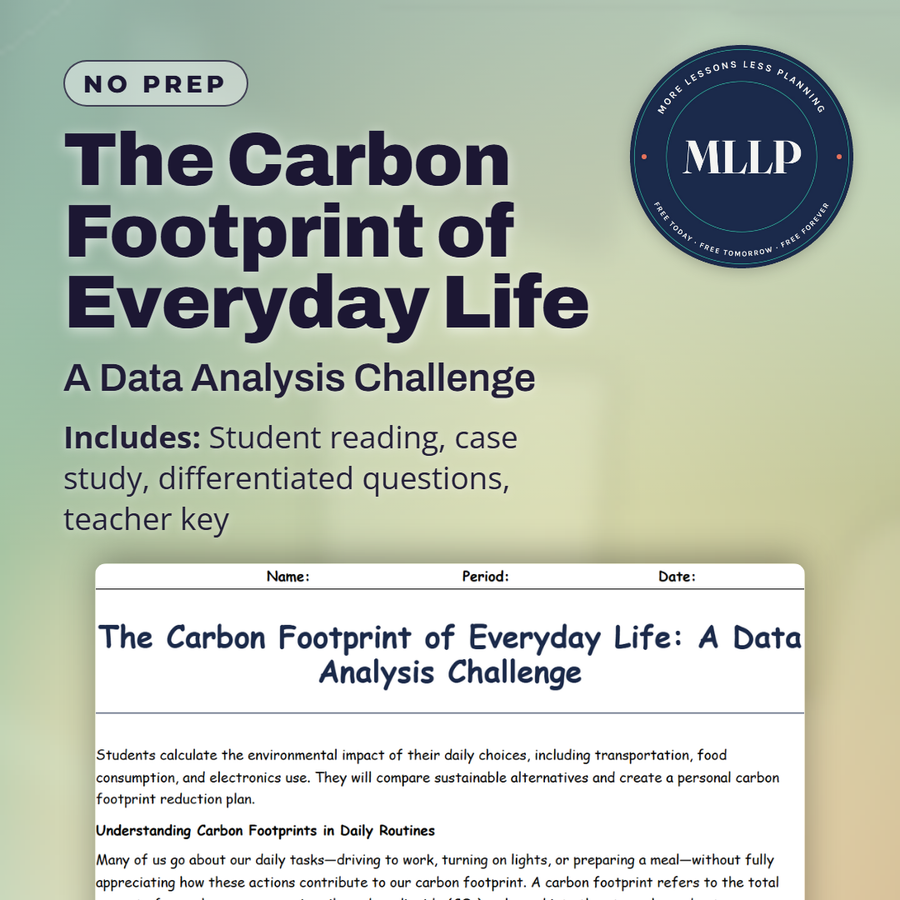
The Carbon Footprint of Everyday Life: A Data Analysis Challenge
The Government’s Role in Protecting the Environment: A Policy Debate
Every lesson on this site is free to download and use. If one of them saved you a prep period, you can chip in a few bucks toward my three kids' daycare fund. That's genuinely where tips go.