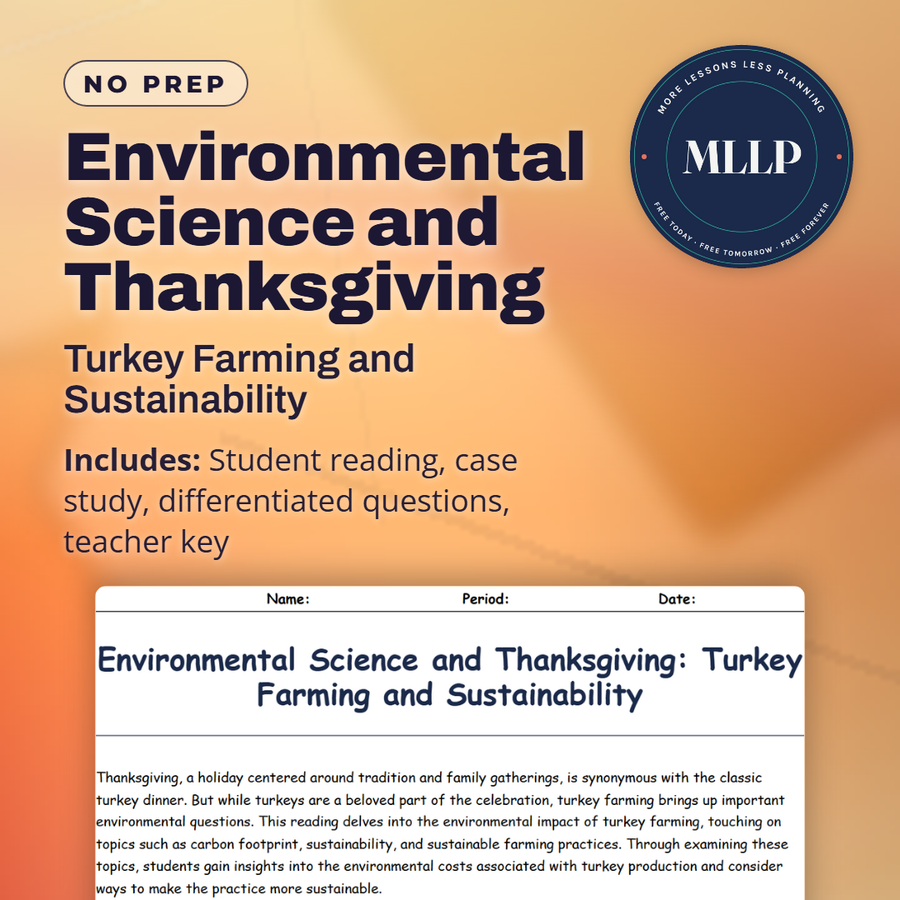
Environmental Science and Thanksgiving: Turkey Farming and Sustainability
Quality reviewed September 2026
Facts verified September 9, 2026
- Subject
- Science
- Grades
- Grades 9-12
- Length
- 8-page student worksheet
- Time
- About one 50-minute class period
- Great for
- Sub plans and independent work
- Includes
- Reading passage, comprehension questions + full answer key
- Format
- Print-and-go PDF
What students do
- Calculate carbon emissions across feed production, transportation, farm operations, and waste management
- Analyze how waste nitrogen and phosphorus from concentrated operations pollute water and trigger algal blooms
- Compare environmental costs of grain-based feeding versus rotational grazing for resource use and emissions
- Propose sustainable practices with realistic cost-benefit tradeoffs for large-scale farms
What it covers
- Agricultural carbon footprint and life-cycle analysis
- Waste management and water pollution
- Sustainable farming practices and constraints
Start reading this worksheet
Thanksgiving, a holiday centered around tradition and family gatherings, is synonymous with the classic turkey dinner. But while turkeys are a beloved part of the celebration, turkey farming brings up important environmental questions. This reading covers the environmental impact of turkey farming, touching on topics such as carbon footprint, sustainability, and sustainable farming practices. Through examining these topics, students gain insights into the environmental costs associated with turkey production and consider ways to make the practice more sustainable.
The Environmental Impact of Turkey Farming
In the United States, over 46 million turkeys are consumed on Thanksgiving alone. This high demand results in a significant environmental footprint, particularly in terms of carbon emissions, land use, and water consumption. Commercial turkey farming involves raising large numbers of turkeys in concentrated areas, which contributes to pollution, requires extensive feed, and generates waste that can impact the environment. While turkeys are omnivores in the wild, they are usually fed a grain-based diet in farming settings. Corn and soybeans are common feed ingredients, and the environmental cost of growing and transporting this feed is substantial. Additionally, turkey farms require large amounts of water, not only for the turkeys to drink but also for maintaining sanitary conditions in the facilities. The carbon footprint associated with turkey production is influenced by factors such as feed production, methane emissions from waste, and the energy used to operate large-scale farming facilities.
Sustainability Challenges
Turkey farming on a commercial scale raises several sustainability concerns. Waste management is one of the most pressing issues. Waste from turkey farms contains high levels of nitrogen and phosphorus, which, if not managed properly, can enter local water sources, leading to algal blooms and harming aquatic ecosystems. Another concern is the reliance on non-renewable resources. Many large-scale farms rely on synthetic fertilizers to grow the corn and soybeans needed for turkey feed, which impacts soil health over time. Pesticides used on these crops can also negatively affect biodiversity. Sustainable practices, like using organic feed and managing waste responsibly, could mitigate some of these environmental impacts, but these changes are not yet widely adopted across the industry.
Like what you read? The full reading, the case study, and every question set are in the free download below, along with the answer key.
Why this matters
Forty-six million turkeys get eaten in a single week every November, turning a holiday plate into a chemistry problem. Feed alone runs 3.2 kilograms of carbon dioxide per bird, and the total climbs past 8.5 kilograms once transportation and farm operations are counted. Multiply either figure by forty-six million and dinner looks like an industry.
Sustainable farming costs more before it saves anything, the real lesson under the carbon math. The case study farm that composts waste and lets turkeys forage yields less and emits less, and only labor, land, and profit margin keep other farms from doing the same. That tradeoff is what makes the methane math feel real.
From one teacher to another
I pull this out when teaching environmental impacts and it hits different because 46 million turkeys consumed in one week means the math scales instantly. Feed production (corn and soybeans) accounts for 3.2 kg CO2 per turkey, and when you multiply that across millions, students see why agriculture is a major emissions source. But it's not preachy: we show real data (8.5 kg CO2 per bird) and ask what rotational grazing actually does. The case study walks through a small sustainable farm that composts waste and lets turkeys forage, producing smaller yields but lower emissions. Students then face the hard question: why don't all farms do this? The answer is labor, space, and profit margin, sustainable practices are more expensive upfront. By the end, they've done the math on methane from waste, understood why synthetic fertilizer for grain is a hidden cost, and built respect for what it takes to reduce a footprint when scale matters.
What you get
Download
Where should I send the next one?
Everything here is free and it stays that way. Leave your email and I'll send you the new lessons as they go up. You can unsubscribe from any one of them.
Related resources

Black Friday Forensics: Shoplifting, Organized Theft, and Crowd Violence
Black Friday Smart Shopper: Economics and Personal Finance in Action

Black Friday: Are the “Deals” Actually Good for Shoppers?
Black Friday’s Economic Impact: Who Gains, Who Pays, and What It Means for the Economy
Budget a Feast: Unit Prices, Deals, and Receipts
Colonial Foodways: Indigenous Knowledge and European Adaptation
Every lesson on this site is free to download and use. If one of them saved you a prep period, you can chip in a few bucks toward my three kids' daycare fund. That's genuinely where tips go.