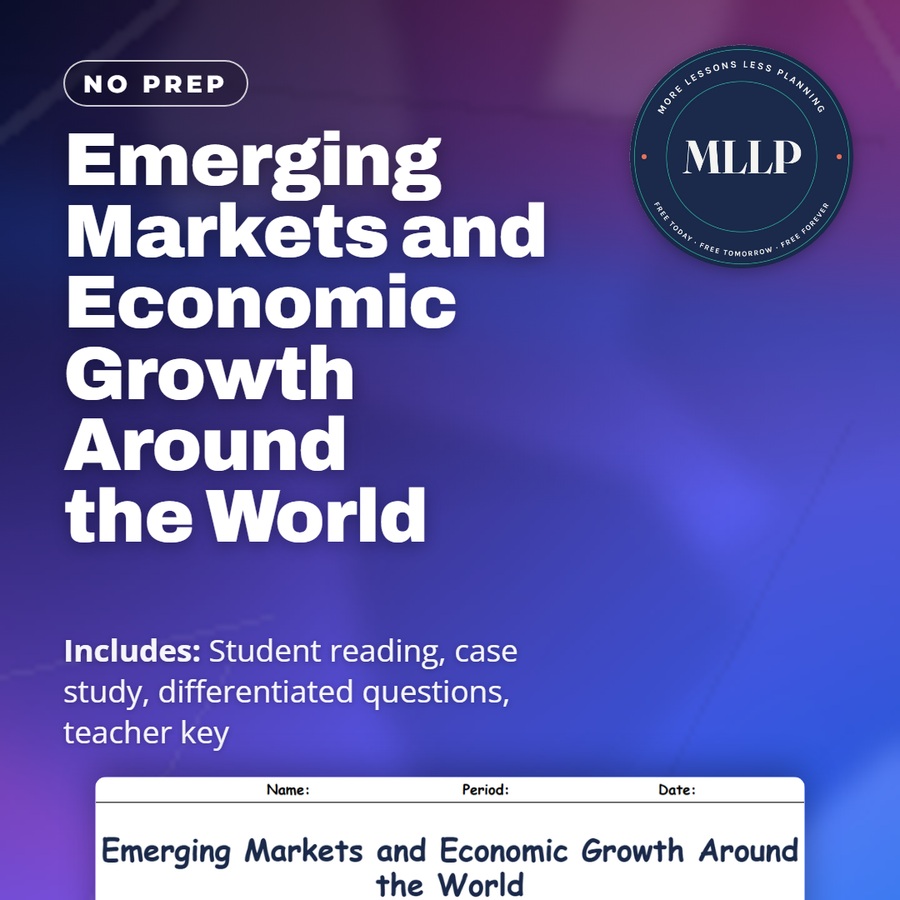
Emerging Markets and Economic Growth Around the World
Quality reviewed September 2026
Facts verified September 8, 2026
- Grades
- Grades 9-12
- Length
- 7-page student worksheet
- Time
- About one 50-minute class period
- Great for
- Sub plans and independent work
- Includes
- Reading passage, comprehension questions + full answer key
- Format
- Print-and-go PDF
What students do
- Analyze China's Belt and Road Initiative case study and explain the trade-offs between rapid infrastructure gains and long-term debt sustainability
- Match emerging market countries like China, India, Brazil, and Indonesia to their growth drivers: infrastructure, services, commodities, or domestic consumption
- Explain why demographic factors, foreign direct investment, and structural reforms support long-term growth in emerging economies
- Fill in sentences about transport connectivity, borrowing costs, and capital flows using key terms from the passage
What it covers
- Growth patterns in BRICS economies and the "Next Eleven," including China's export-led model and India's services sector
- Export-led growth, import-substitution strategies, and infrastructure investment as paths to economic development
- How emerging markets attract capital through credit-rating upgrades and stable macroeconomic policies
Start reading this worksheet
The Rise of Emerging Economies
Over the past few decades, a group of countries once labeled “developing” has redefined itself as emerging markets. These are nations experiencing rapid economic growth, structural transformation, and increasing integration into global trade and finance. Prominent examples include the BRICS (Brazil, Russia, India, China, South Africa), as well as “Next Eleven” economies like Indonesia and Mexico. These countries combine growing labor forces, expanding middle classes, and improving institutions, making them attractive destinations for foreign investment. Between 2000 and 2020, emerging markets contributed over 60 percent of global GDP growth, reshaping global economic dynamics. Emerging markets typically transition from resource- or agriculture-based economies toward manufacturing and services. In China, for example, industrial output soared as government-led infrastructure investment and export-oriented policies propelled its “factory of the world” status. India followed a different path, leveraging a skilled, English-speaking workforce to build a world-class services sector, particularly in information technology and business process outsourcing. Brazil capitalized on abundant natural resources, becoming a top exporter of soybeans, iron ore, and oil, while diversifying into aerospace and renewable energy.
Drivers of Rapid Growth
Several factors underlie emerging-market success: Demographics: Young, expanding populations provide both labor and consumption markets. Capital Inflows: Foreign direct investment (FDI) and portfolio flows finance infrastructure and enterprise. Structural Reforms: Liberalization of trade, privatization of state enterprises, and improvements in the legal environment boost productivity. Technology Adoption: Leapfrogging technologies (mobile banking in Kenya or digital payments in India) spur innovation. However, high growth often coexists with challenges: volatile capital flows can trigger currency crises, as seen in the 1997 Asian Financial Crisis; unequal wealth distribution fuels political unrest; and dependence on commodity exports leaves economies vulnerable to price swings.
Like what you read? The full reading, the case study, and every question set are in the free download below, along with the answer key.
Why this matters
China built roads, ports, and railways across dozens of countries under the Belt and Road Initiative, and some of those countries are still paying off the loans that built them. Infrastructure investment powered China's exports, India's IT services, and Brazil's push into aerospace and renewables, but it can also leave a country owing money.
The debate my students have every year is whether infrastructure loans are generosity or leverage, and I never settle it for them. Matching China, India, and Brazil to their different growth engines shows there is no single formula for becoming an emerging market, only trade-offs specific to what a country already has.
From one teacher to another
I use this reading to introduce students to how countries move from developing to emerging-market status. The passage grounds growth stories in real economies: China building its "factory of the world" status through industrial output and exports, India leveraging IT services, Brazil diversifying into aerospace and renewables. Students see how demographics, technology adoption, and strategic investment create competitive advantages. The Belt and Road case study raises a critical tension my students debate every year: Can infrastructure loans drive growth without creating debt distress? My students fill in vocabulary about sovereign risk, capital flows, and debt sustainability, then work through multiple-choice questions that ask them to distinguish between growth drivers and vulnerabilities. The matching section lets them connect terms like export-led growth and public-private partnerships to actual development models.
What you get
- Answer Key
-
Student Worksheet
China's Belt and Road program, the BRI, has financed more than $1 trillion in projects, from Pakistani highways to Kenyan rail lines, but it also left some borrowers exposed. Sri Lanka ceded control of its Hambantota Port in 2017 after it could not keep up loan payments, and Malaysia renegotiated its East Coast Rail Link in 2018, pushing completion to 2026 for better financing terms.
Download
Where should I send the next one?
Everything here is free and it stays that way. Leave your email and I'll send you the new lessons as they go up. You can unsubscribe from any one of them.
Related resources
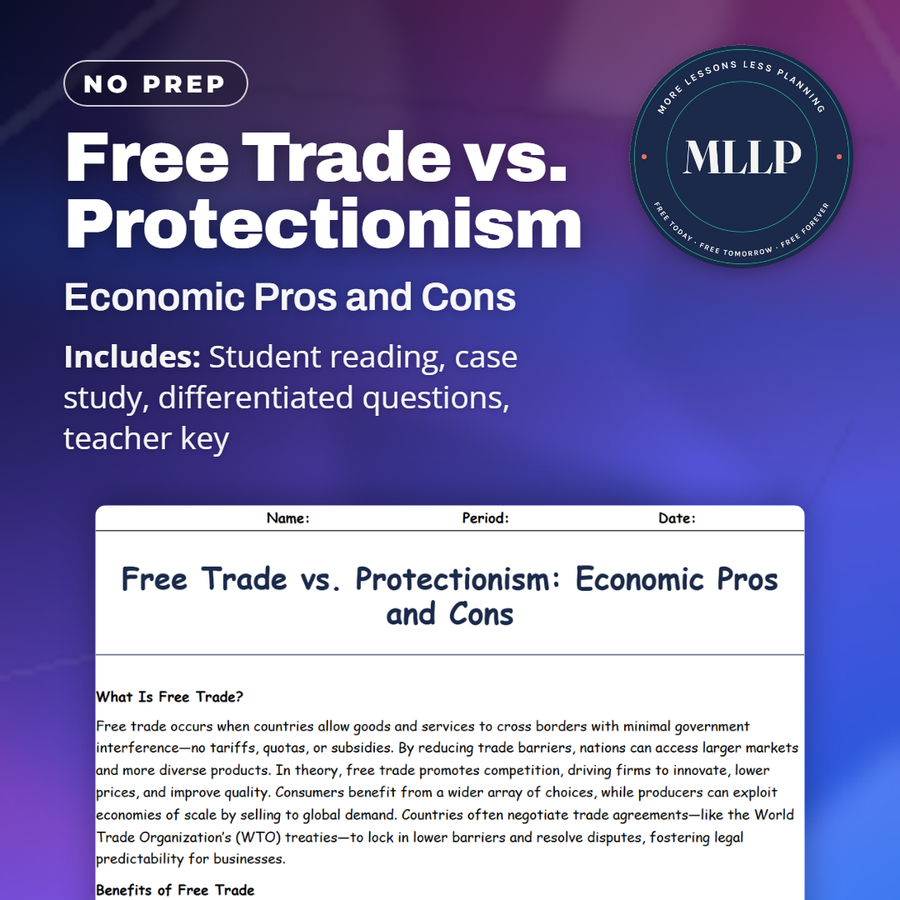
Free Trade vs. Protectionism: Economic Pros and Cons
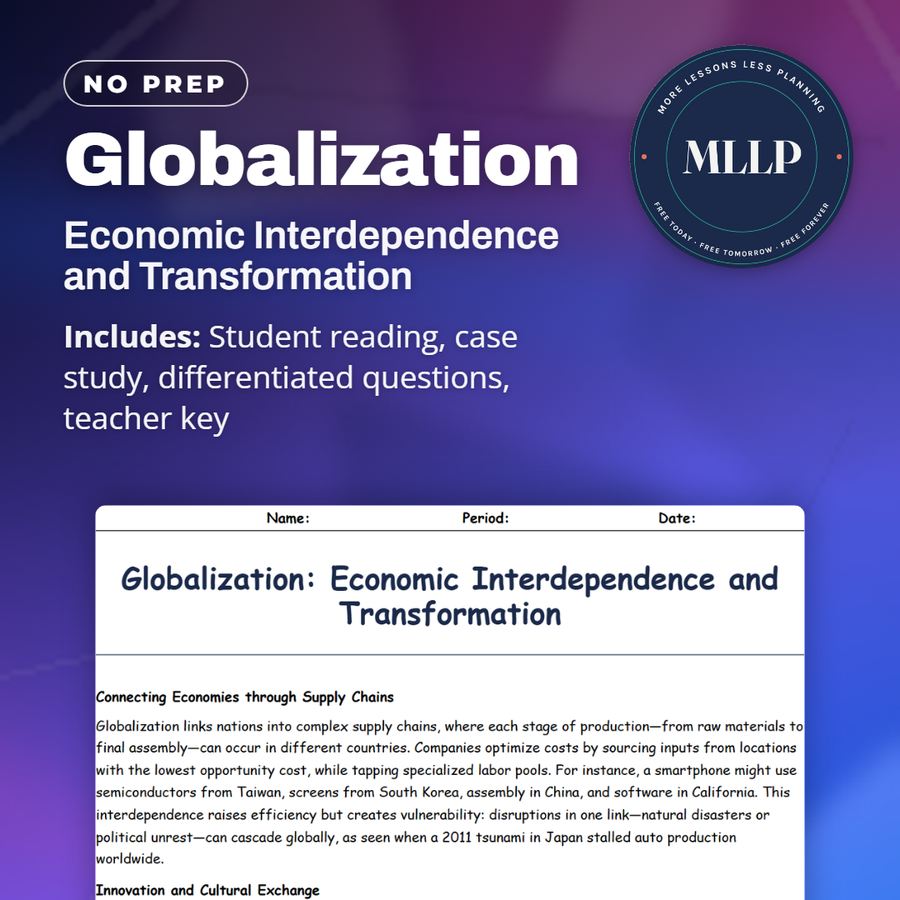
Globalization: Economic Interdependence and Transformation
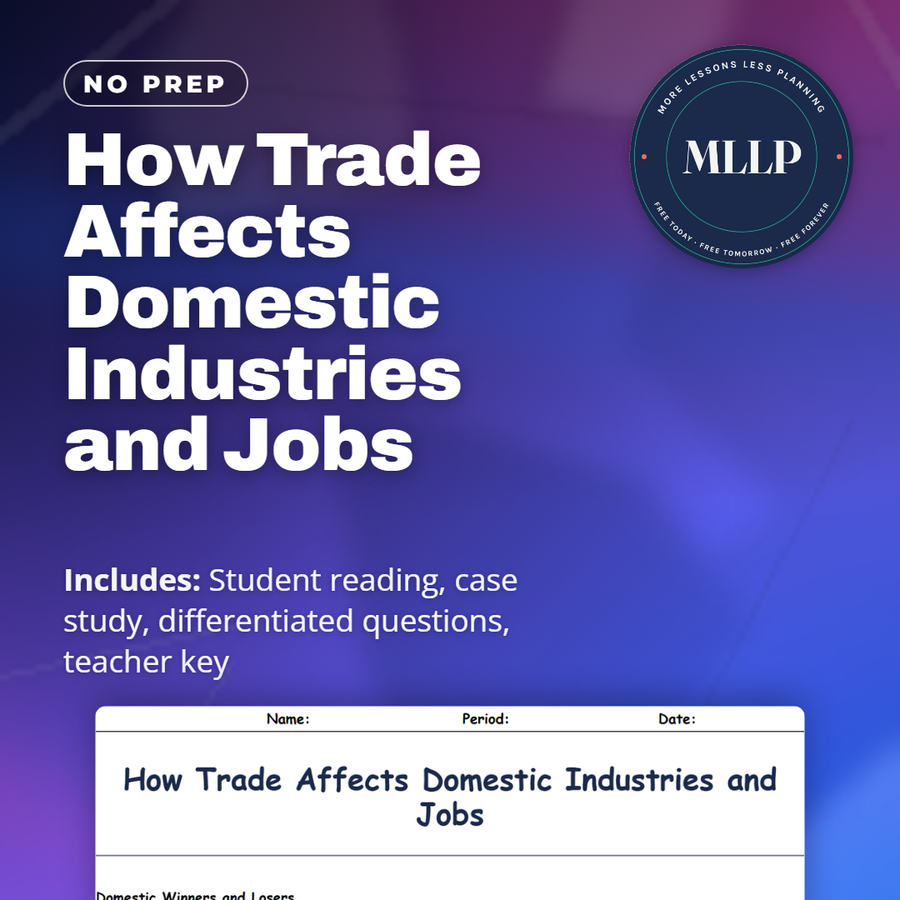
How Trade Affects Domestic Industries and Jobs
Multinational Corporations and the Global Marketplace
The Balance of Payments: Tracking Global Money Flow
Trade Agreements: NAFTA, WTO, and Global Cooperation
Every lesson on this site is free to download and use. If one of them saved you a prep period, you can chip in a few bucks toward my three kids' daycare fund. That's genuinely where tips go.