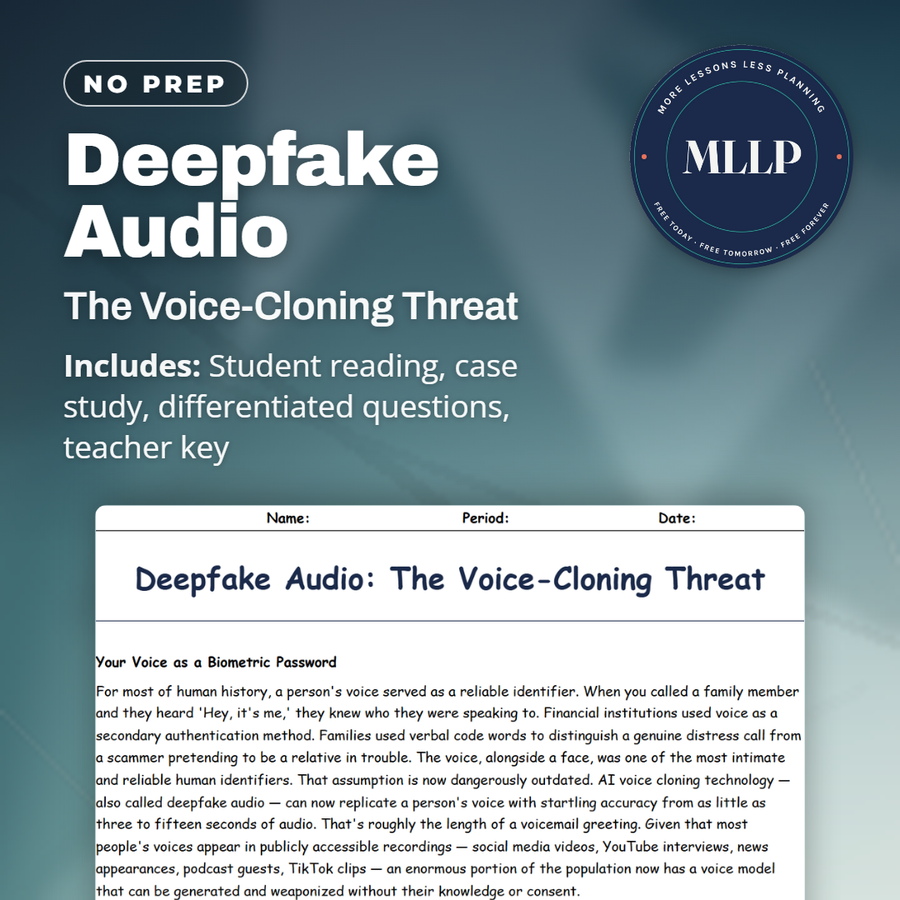
Deepfake Audio: The Voice-Cloning Threat
Quality reviewed September 2026
Facts verified September 20, 2026
- Subject
- Career & Life Skills
- Grades
- Grades 9-12
- Length
- 9-page student worksheet
- Time
- About one 50-minute class period
- Great for
- Sub plans and independent work
- Includes
- Reading passage, comprehension questions + full answer key
- Format
- Print-and-go PDF
What students do
- Diane's case study follows a cloned grandson's voice asking for gift cards over the phone
- Explain why three to fifteen seconds of audio is enough to build a working voice clone
- Sort family and business defenses like safe words and dual authorization by what each one stops
- A comparison of voice calls versus visual deepfakes traces the emotional pressure each one exploits
What it covers
- How voice cloning technology works from a few seconds of audio to a full voice model
- The 2019 German CEO wire fraud case and the 2024 Biden robocall in New Hampshire
- Why safe words and dual authorization work even when a clone is impossible to tell apart from the original
Start reading this worksheet
Your Voice as a Biometric Password
For most of human history, a person's voice served as a reliable identifier. When you called a family member and they heard 'Hey, it's me,' they knew who they were speaking to. Financial institutions used voice as a secondary authentication method. Families used verbal code words to distinguish a genuine distress call from a scammer pretending to be a relative in trouble. The voice, alongside a face, was one of the most intimate and reliable human identifiers. That assumption is now dangerously outdated. AI voice cloning technology (also called deepfake audio) can now replicate a person's voice with startling accuracy from as little as three to fifteen seconds of audio. That's roughly the length of a voicemail greeting. Given that most people's voices appear in publicly accessible recordings (social media videos, YouTube interviews, news appearances, podcast guests, TikTok clips), an enormous portion of the population now has a voice model that can be generated and weaponized without their knowledge or consent.
How Voice Cloning Works
Voice cloning systems use deep learning to analyze the acoustic characteristics of a target voice: the fundamental frequency, the way the voice resonates in the throat and nasal cavity, the patterns of emphasis and rhythm that are unique to each speaker, the specific way consonants and vowels are shaped. From this analysis, the system builds a voice model, essentially a mathematical description of what makes that voice sound like that particular person. New audio can then be generated using that model, with any content the attacker desires. Early voice cloning systems required hours of clean audio recordings and produced results that were noticeably robotic, useful for fraud but detectable on close listening. The technology has improved with remarkable speed. By 2024, commercial voice cloning services with subscription pricing were available to anyone with a credit card, and the results were indistinguishable from the real voice to most human listeners, even those very familiar with the target person. The acoustic quality that distinguishes real from fake has essentially closed for typical listening conditions.
The Grandparent Scam Goes High-Tech
One of the most documented and damaging uses of voice cloning technology is in what law enforcement calls 'virtual kidnapping' scams, a high-tech evolution of older phone fraud. In the classic version, a scammer would call an elderly person, claim to be a grandchild in serious trouble ('Grandma, I've been in an accident, please don't tell Mom and Dad'), and request money via wire transfer or gift cards before the family could verify the situation. This scam relied on emotional pressure, panic, and the natural confusion of voice recognition in stressful conditions. With voice cloning, attackers can now make the call using an actual clone of the grandchild's voice, generated from publicly available social media recordings. Families who have experienced these calls report that the voice sounded completely authentic, not 'kind of like' their relative, but indistinguishable. The Federal Trade Commission has documented significant losses from these scams, with victims often losing tens of thousands of dollars before realizing the call was fraudulent. The emotional aftermath (the feeling of having been manipulated through something as intimate as a loved one's voice) can be deeply traumatic.
Like what you read? The full reading, the case study, and every question set are in the free download below, along with the answer key.
Why this matters
A worksheet on deepfake audio is not abstract for a teenager whose own voice sits in dozens of public videos, ready to be lifted and cloned by anyone with three seconds of clean audio and a subscription service. The reading gives students a concrete, low-tech defense, a private family safe word, that works regardless of how convincing the fake sounds, which matters because the reading is honest that human listeners cannot reliably tell a clone from the real thing. That is a rare kind of practical safety lesson, one a family can set up in five minutes at dinner tonight.
From one teacher to another
A phone call from a shaking, familiar voice is the scenario this reading builds around, then it explains exactly how that voice got cloned in the first place. Students learn how voice cloning systems model frequency, resonance, and rhythm from as little as three seconds of audio, pulled from a public Instagram video or a voicemail greeting. The case study follows Diane, who nearly sent $3,200 in gift cards to save a grandson who was never actually in danger, and asks what specific defense would have stopped the call cold. A closing passage on the legal landscape shows how far the law lags behind the technology.
What you get
Download
Where should I send the next one?
Everything here is free and it stays that way. Leave your email and I'll send you the new lessons as they go up. You can unsubscribe from any one of them.
Related resources
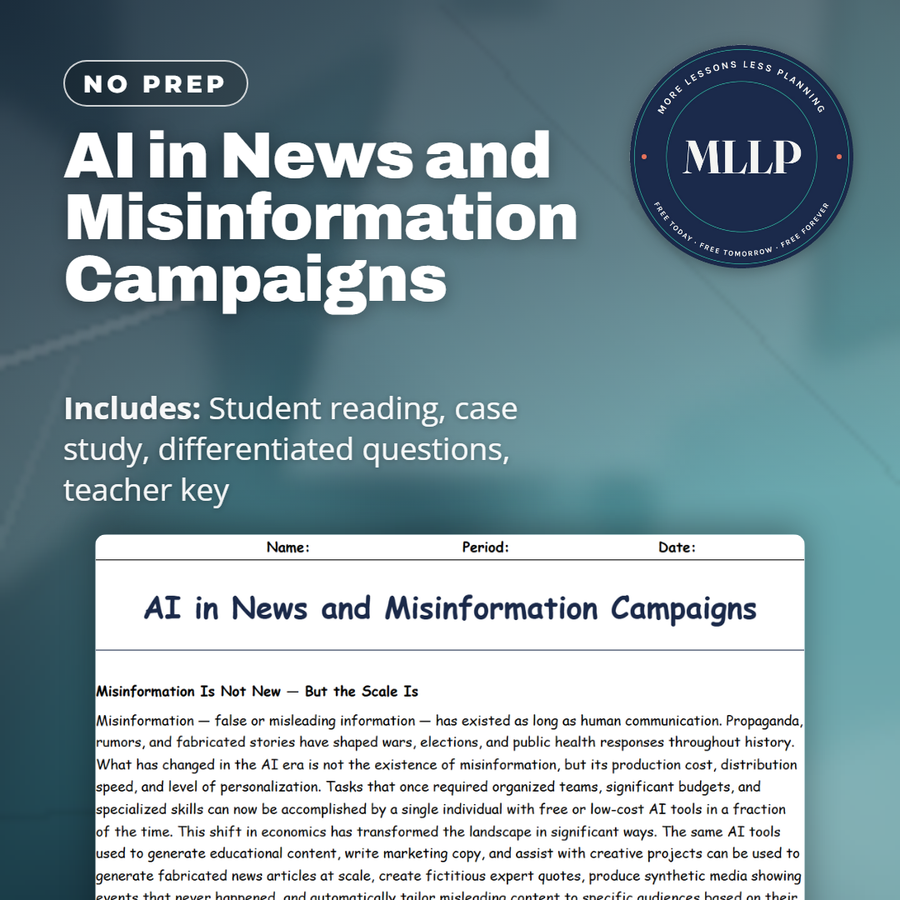
AI in News and Misinformation Campaigns
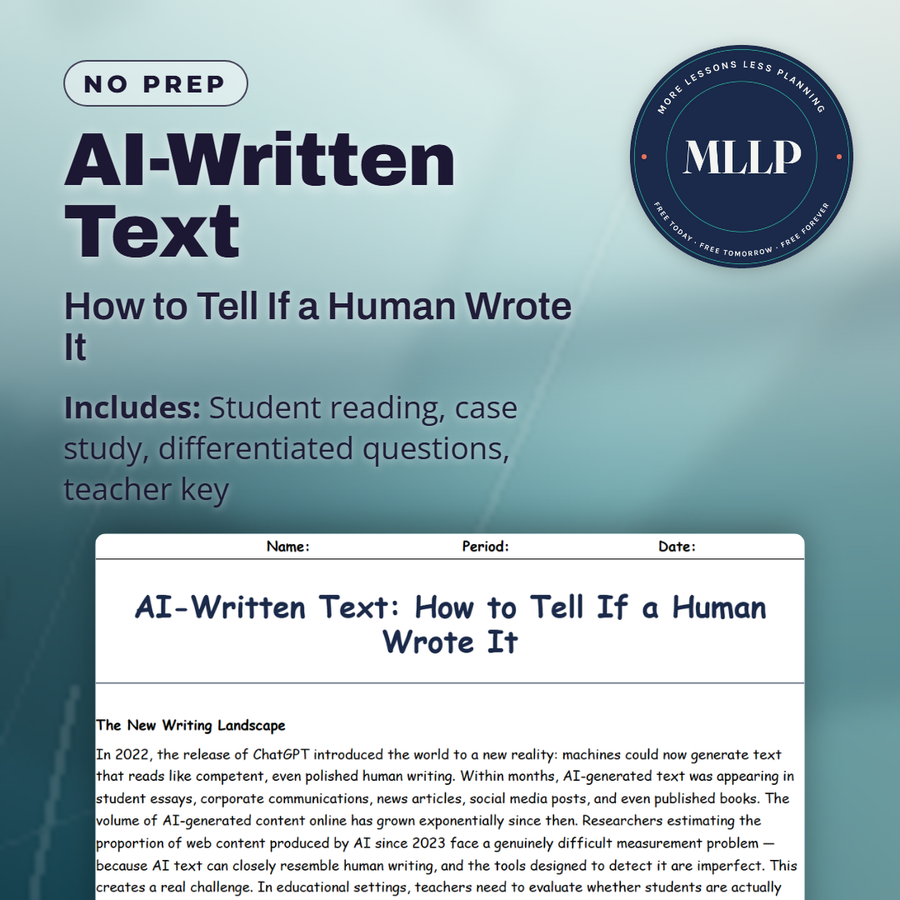
AI-Written Text: How to Tell If a Human Wrote It
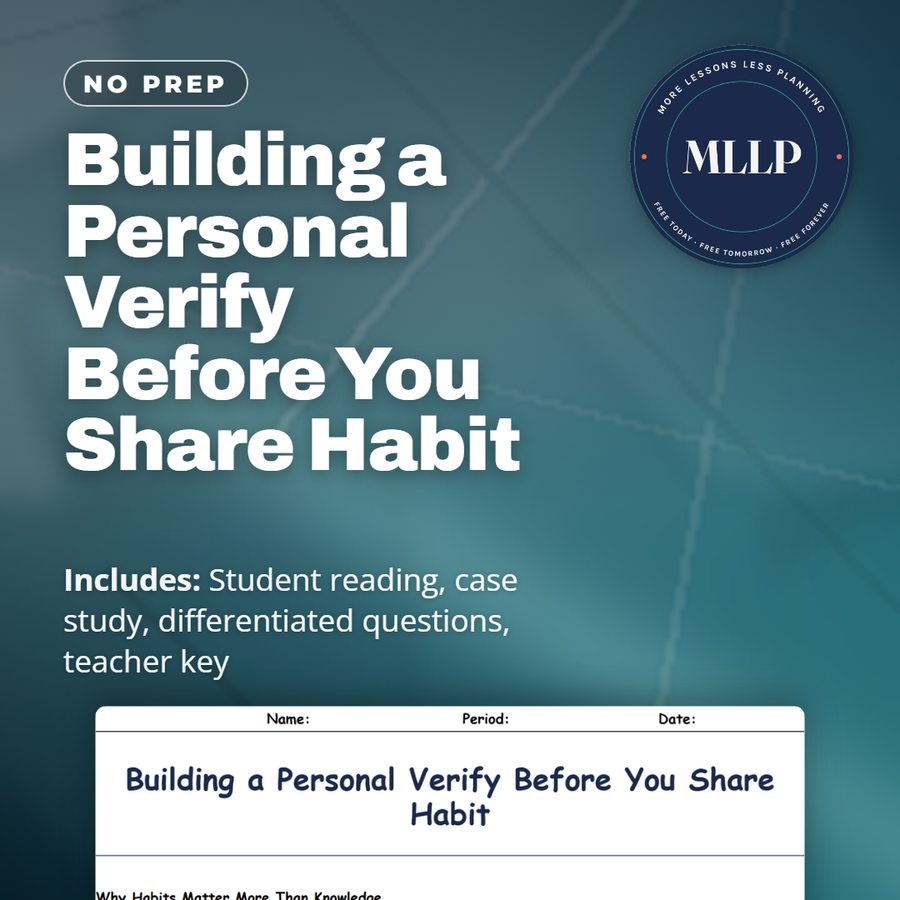
Building a Personal Verify Before You Share Habit
Lateral Reading: Verifying What You See Online
Reverse Image Search and Other Detection Tools
Spotting AI-Generated Images: 7 Telltale Signs
Every lesson on this site is free to download and use. If one of them saved you a prep period, you can chip in a few bucks toward my three kids' daycare fund. That's genuinely where tips go.