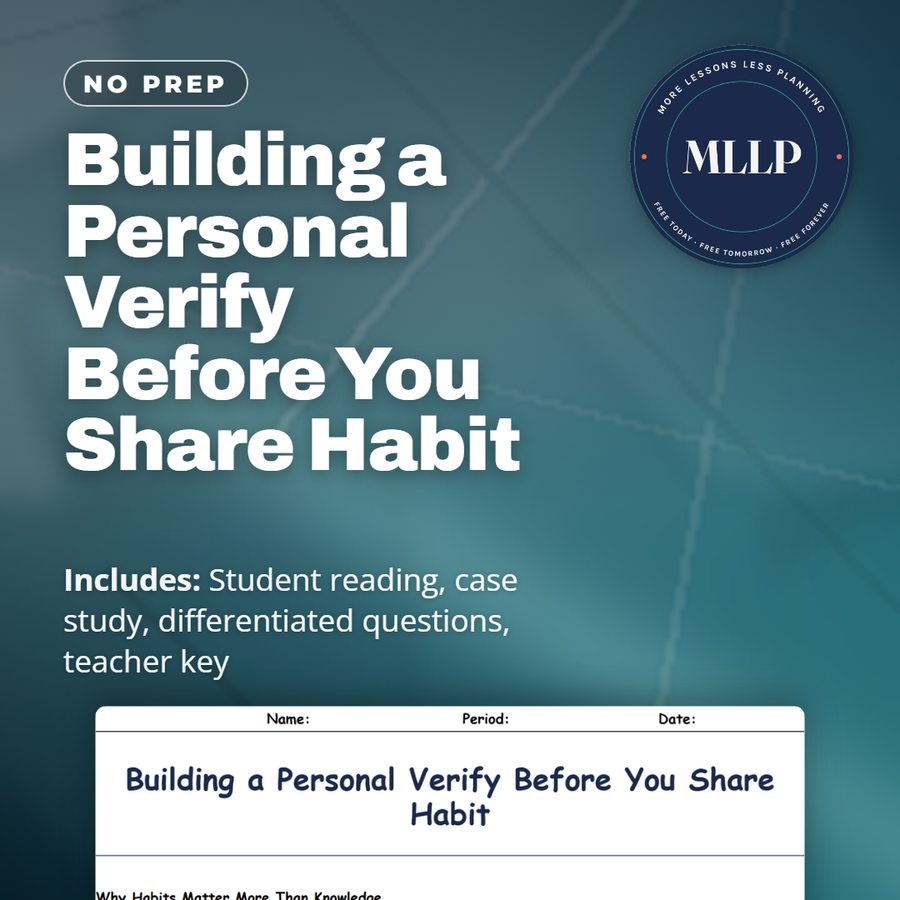
Building a Personal Verify Before You Share Habit
Quality reviewed September 2026
Facts verified September 20, 2026
- Subject
- Career & Life Skills
- Grades
- Grades 9-12
- Length
- 10-page student worksheet
- Time
- About one 50-minute class period
- Great for
- Sub plans and independent work
- Includes
- Reading passage, comprehension questions + full answer key
- Format
- Print-and-go PDF
What students do
- Five terms from cue-routine-reward loops to confirmation bias get matched to definitions
- A 24-person family group chat case study tracks what happened when Tariq stopped correcting and started modeling verification
- Trace the SIFT method's four steps from stopping before a share to tracing a claim to its source
- Fill in blanks naming Mike Caulfield's university and the word that completes the correction protocol
What it covers
- The cue-routine-reward loop behind why knowing the facts about misinformation does not change sharing behavior
- The SIFT method developed by Mike Caulfield at Washington State University
- Why treating "this confirms what I already believe" as a warning sign corrects for confirmation bias
Start reading this worksheet
Why Habits Matter More Than Knowledge
Most people who share misinformation are not stupid, gullible, or poorly educated. Studies of misinformation spread consistently show that it travels across all education levels, all political affiliations, all age groups, and all income brackets, though with different patterns and preferences for different types of misinformation in different communities. The primary driver of misinformation sharing is not ignorance. It's inattention. Most false information is shared not because people believe it after careful evaluation but because they never evaluated it at all. The share happened on autopilot, driven by a quick emotional response, before deliberate thinking had a chance to engage. This has an important implication: the most effective intervention against misinformation sharing is not education alone; it's habit formation. Knowing the theory of deepfakes, lateral reading, and AI image tells does not automatically change behavior, any more than knowing the theory of nutrition changes what you eat for breakfast. The knowledge needs to be translated into automatic behavioral routines, habits, that fire consistently in the relevant contexts without requiring conscious deliberation. This is the domain of behavioral psychology, and it applies directly to information hygiene.
The Architecture of a Verification Habit
Behavioral psychologists describe habits as 'cue-routine-reward' loops. A cue triggers the habit; a routine executes; a reward reinforces the loop. For a verification habit, the cue is anything that signals 'this content might not be what it seems': strong emotional response, a claim that seems too perfectly aligned with what you already believe, a source you've never heard of, a video or image that provokes outrage or strong admiration. The routine is the verification behavior: pausing, checking the source, running a reverse image search, opening a new tab for lateral reading. The reward is the satisfaction of knowing, including the satisfaction of either confirming that something is genuine or catching a fake before it spreads through you. Building this habit requires deliberate practice in low-stakes situations before it becomes automatic in high-stakes ones. Media literacy educators recommend spending a few minutes each day practicing verification on content you're genuinely curious about: not just the obviously suspicious content, but ordinary news, interesting images, surprising statistics. Each verification you complete builds the neural pathway for the behavior and makes it slightly more automatic the next time. Over weeks and months, this practice consolidates into a habit that fires automatically when the cue appears.
The SIFT Method: A Practical Framework
The most widely taught verification framework in current media literacy education is the SIFT method, developed by Mike Caulfield at Washington State University. SIFT stands for Stop, Investigate the Source, Find Better Coverage, and Trace Claims to Their Origin. It was developed specifically to be practical under real-world time constraints; each step can be done in seconds to minutes rather than requiring extended research sessions. Stop means pausing before sharing, reacting, or acting on any piece of information. This pause is the cue-recognition step of the habit loop. Investigate the Source means quickly lateral-reading the source: who made this, what do other credible sources say about them? Find Better Coverage means looking for whether other credible outlets have reported the same story or claim. Trace Claims to Their Origin means following links and references back to their original source; a statistic cited in an article may come from a study, and checking that study often reveals that the statistic has been taken out of context, misquoted, or fabricated. The SIFT method doesn't guarantee accuracy, but it catches the most common forms of misinformation efficiently.
Like what you read? The full reading, the case study, and every question set are in the free download below, along with the answer key.
Why this matters
Every student in this room already forwards things without checking them, not because they are lazy but because sharing on impulse is the default setting for how attention works online. Teaching the SIFT method and the cue-routine-reward loop gives them a concrete, repeatable habit instead of a vague warning to "be careful," and the correction protocol at the end gives them a script for the moment they get it wrong, which is going to happen to every one of them eventually.
From one teacher to another
Most people who share misinformation are not careless readers, they are inattentive sharers, and this reading walks through why knowledge alone rarely changes that. Students meet the cue-routine-reward structure behind habit formation, then apply it to Mike Caulfield's SIFT method: stop, investigate the source, find better coverage, trace claims to their origin. A case study follows Tariq through a 24-person family group chat, where correcting relatives after the fact backfired until he started narrating his own verification process instead. The reading closes on what to do when you get it wrong, correcting quickly, clearly, and humbly.
What you get
Download
Where should I send the next one?
Everything here is free and it stays that way. Leave your email and I'll send you the new lessons as they go up. You can unsubscribe from any one of them.
Related resources
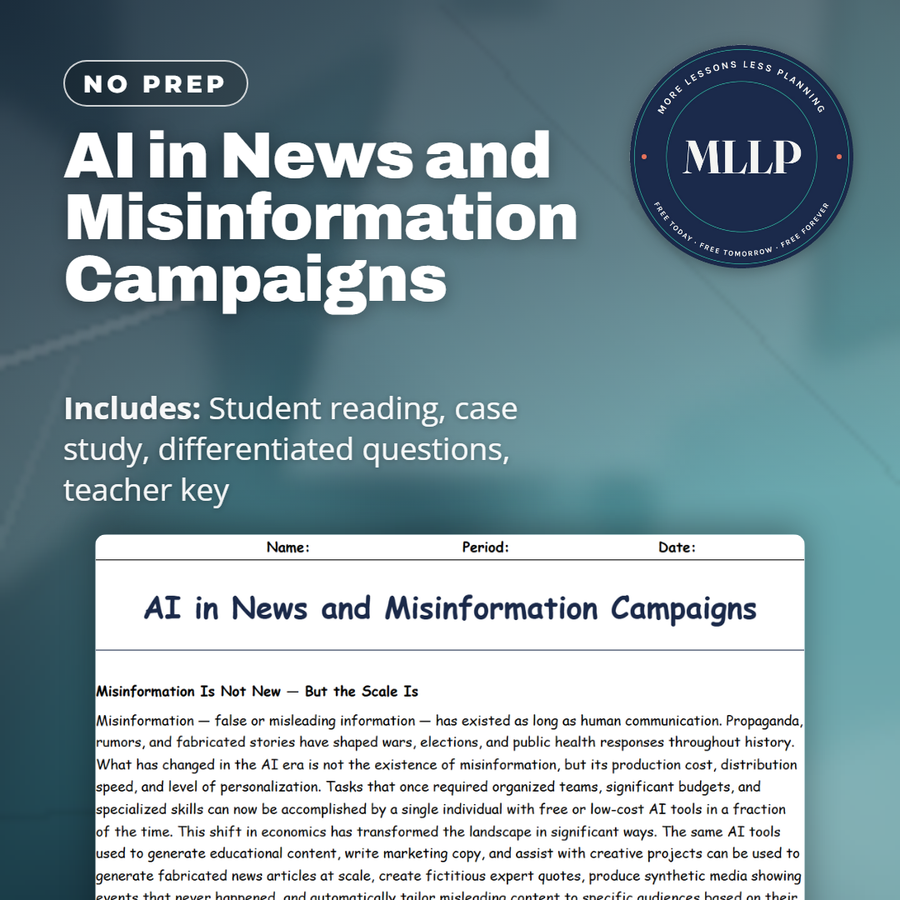
AI in News and Misinformation Campaigns
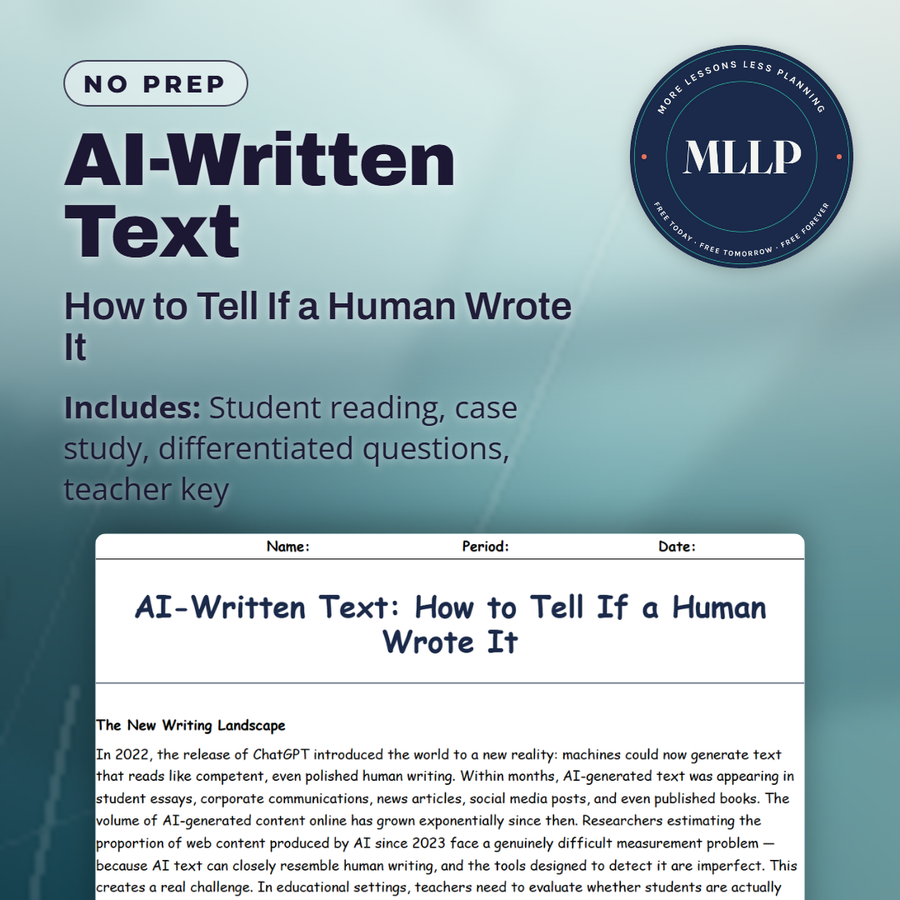
AI-Written Text: How to Tell If a Human Wrote It
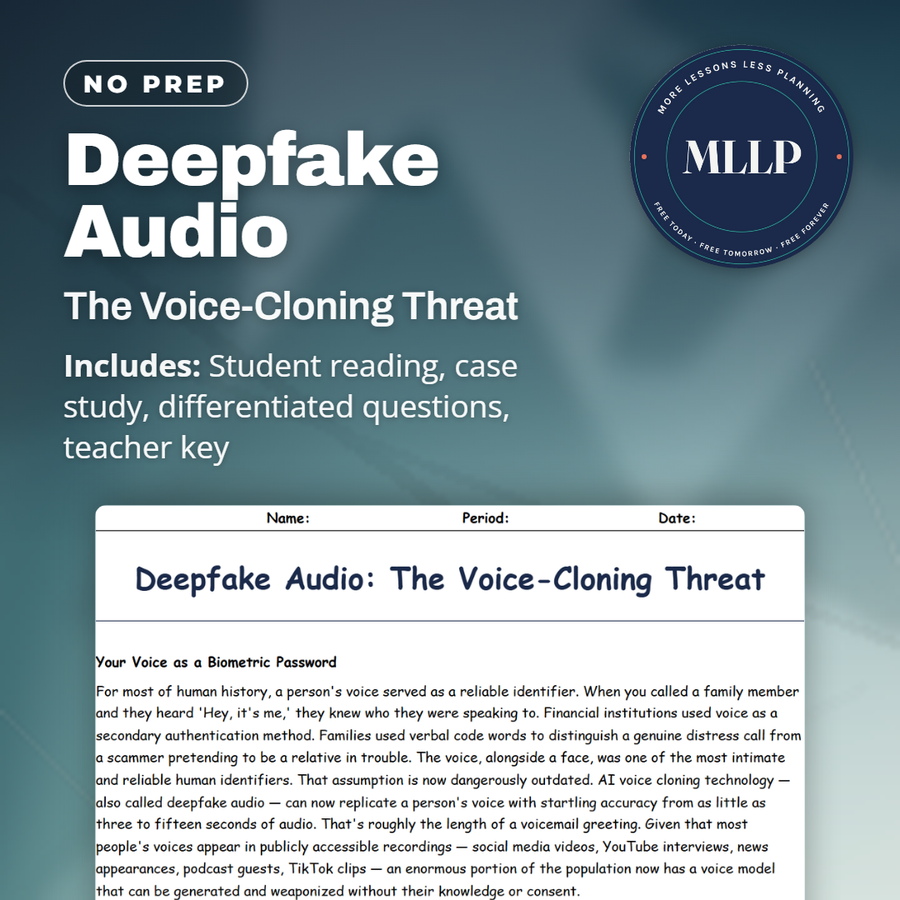
Deepfake Audio: The Voice-Cloning Threat
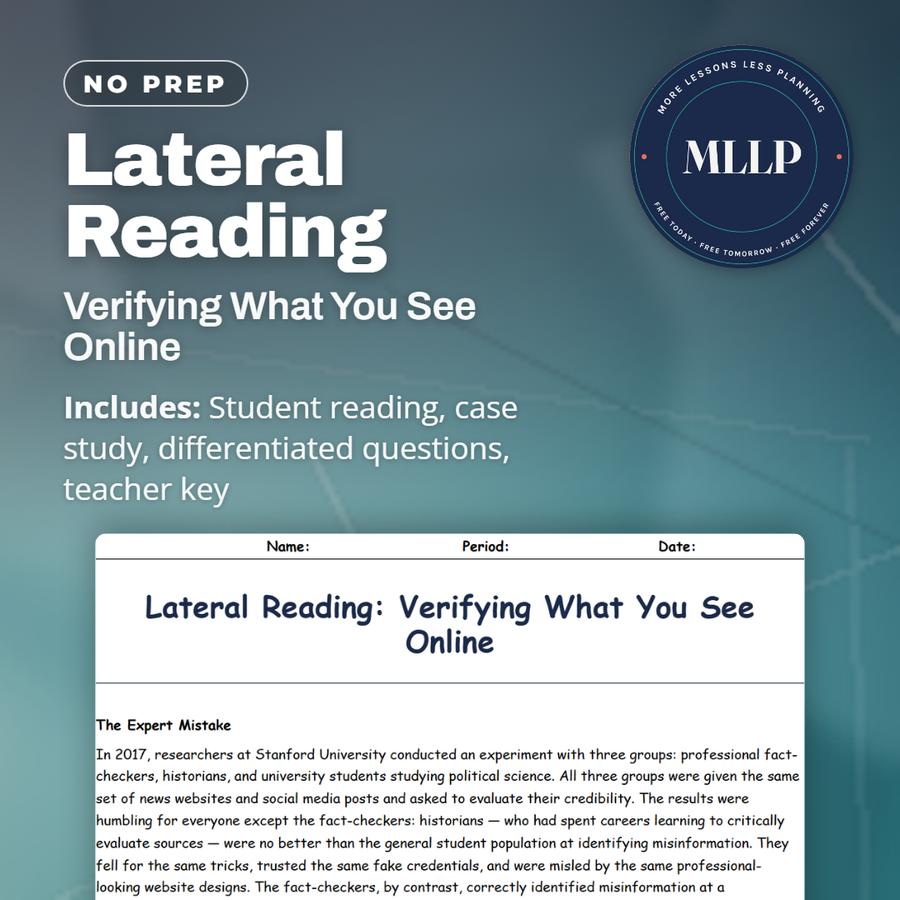
Lateral Reading: Verifying What You See Online
Reverse Image Search and Other Detection Tools
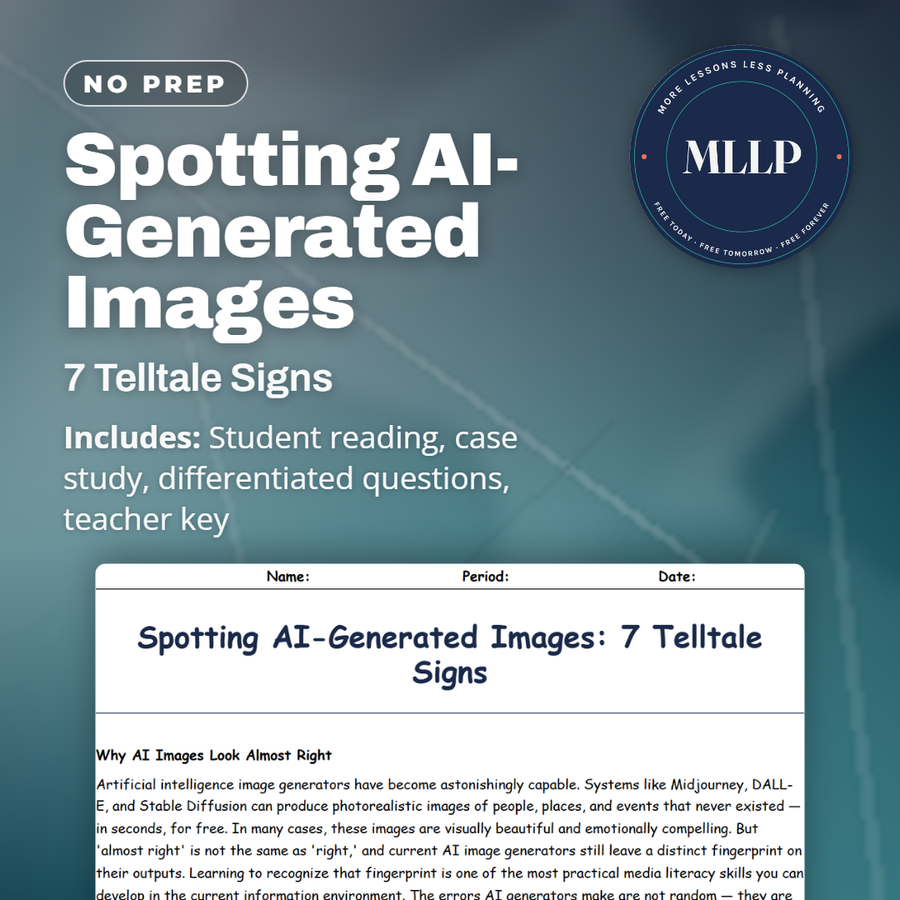
Spotting AI-Generated Images: 7 Telltale Signs
Every lesson on this site is free to download and use. If one of them saved you a prep period, you can chip in a few bucks toward my three kids' daycare fund. That's genuinely where tips go.