


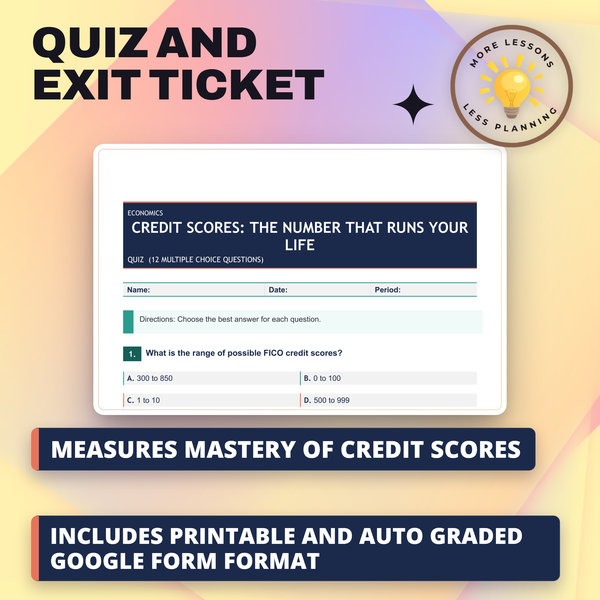
Credit Scores: The Number That Runs Your Life
- Slide deck
- Guided notes
- Guided notes teacher key
- Activity + answer key
- Quiz + answer key
- Exit ticket + answer key
- Teacher guide
- Teacher presentation notes
Where should I send the next one?
Everything here is free and it stays that way. Leave your email and I'll send you the new lessons as they go up. You can unsubscribe from any one of them.
Every file in this toolkit
Related resources

Big Tech Antitrust - Google Apple Amazon Meta
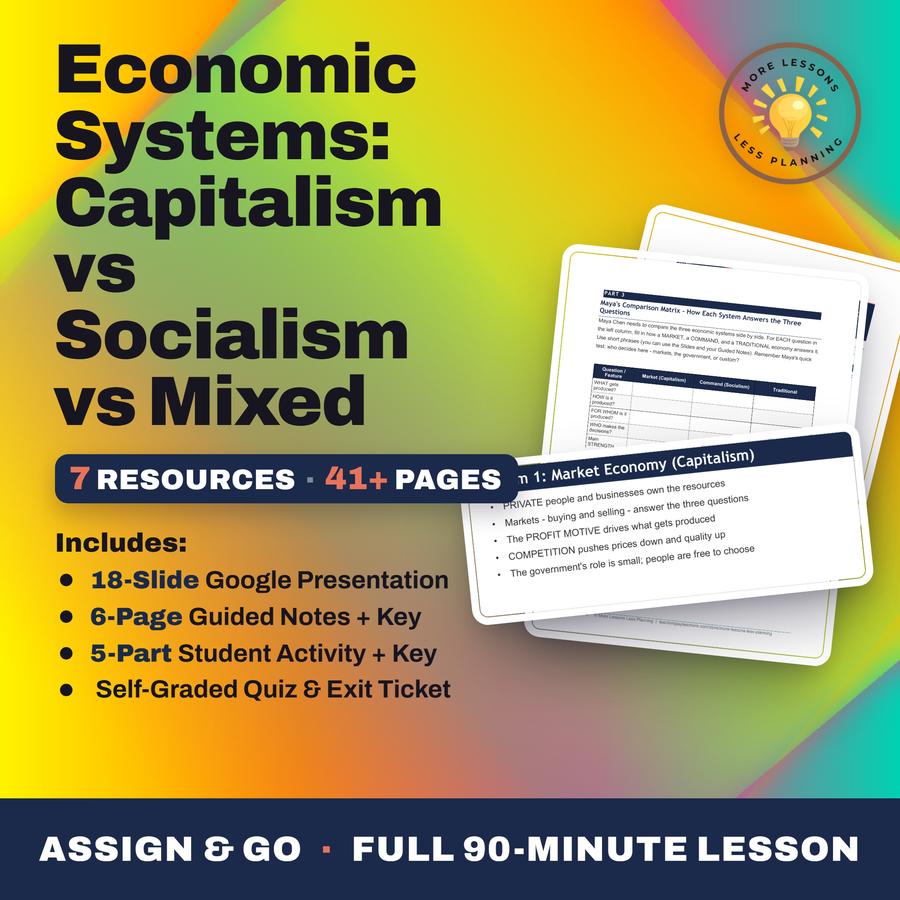
Economic Systems - Capitalism vs Socialism vs Mixed
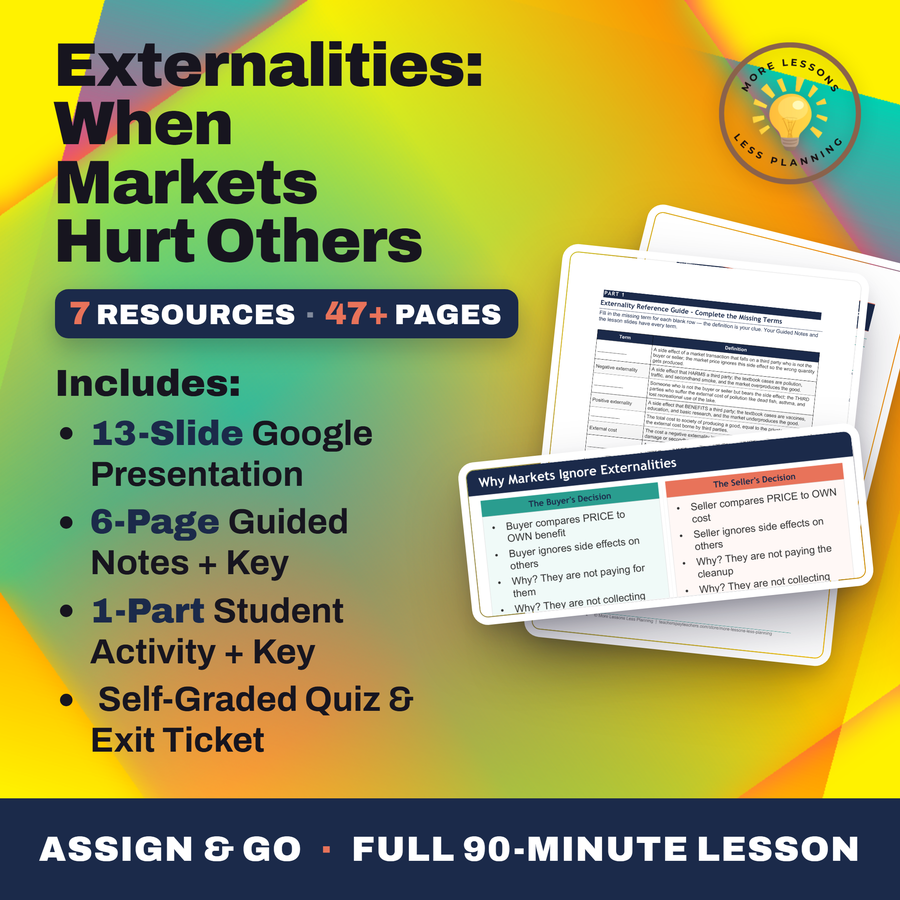
Externalities When Markets Hurt Others

Factors of Production - Land, Labor, Capital, and Entrepreneurship

Interest Rates: The Fed's Main Tool

Law of Demand - Why Price Matters
What students do
- Rank the five FICO score factors by weight, from Payment History at 35 percent down to New Credit at 10 percent
- Distinguish a hard inquiry from a soft inquiry and predict which one dings a score
- Apply credit-building strategies, a secured card, authorized-user status, or a credit-builder loan, to a young adult with no credit history
- Interpret a credit score range and explain how it changes a real lending decision
What it covers
- The five FICO factors and their exact weights, Payment History, Credit Utilization, Length of Credit History, Credit Mix, and New Credit
- The difference between hard and soft credit inquiries and how each affects a score
- Concrete credit-building tools for a young adult starting from zero, secured cards, authorized user status, and credit-builder loans
Learning targets
- Identify the FIVE factors of a FICO credit score (Payment History, Credit Utilization, Length of History, Credit Mix, New Credit) and their weights (35%, 30%, 15%, 10%, 10%).
- Explain how each of the five factors MOVES a credit score - what hurts it, what helps it, and why.
- Apply credit-building strategies a young adult with no credit history can use to build a score from scratch (secured cards, authorized user, credit-builder loans, on-time payments, low utilization).
From one teacher to another
By the end of this one, a student can look at their own future credit report and know exactly which lever to pull first, the one that actually moves a FICO score instead of a rumor about what does. I rank the five factors by their real weight, from Payment History at 35 percent down to New Credit at 10 percent, so students stop guessing and start reading the number the way a lender actually does. They leave with a real roadmap for getting credit built up as a young adult starting from nothing, a secured card, an authorized-user spot, or a credit-builder loan, since a warning to be responsible doesn't tell anyone what to actually do.
Every lesson on this site is free to download and use. If one of them saved you a prep period, you can chip in a few bucks toward my three kids' daycare fund. That's genuinely where tips go.