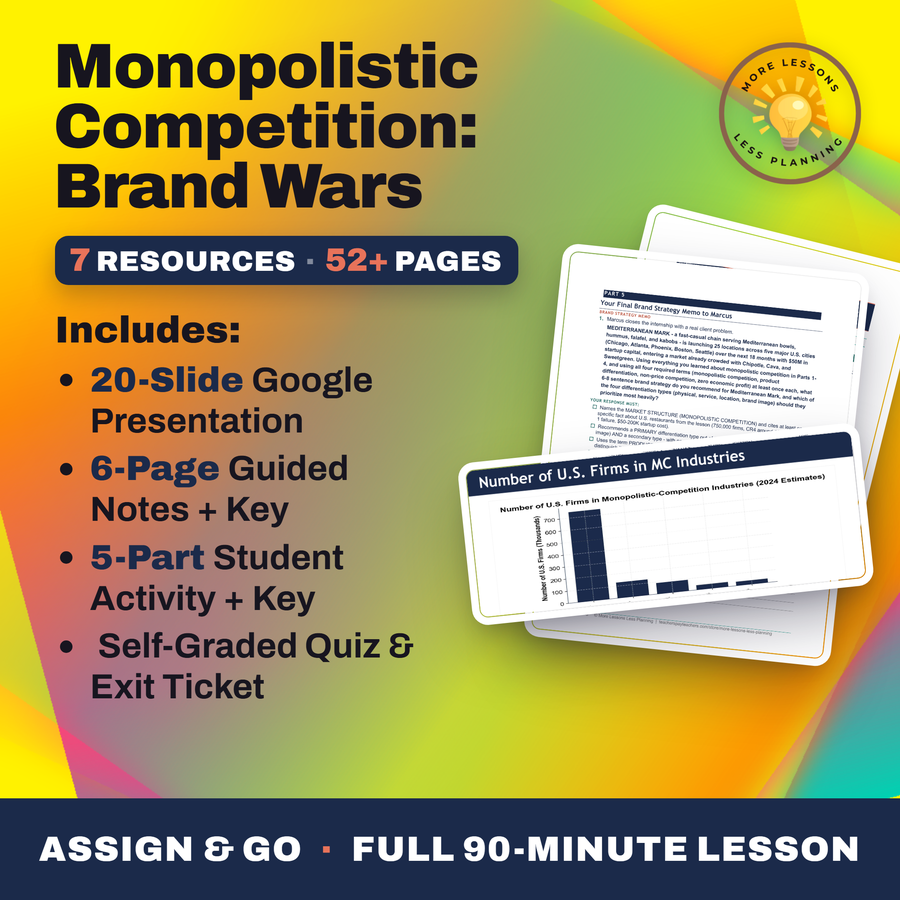
Monopolistic Competition: Brand Wars
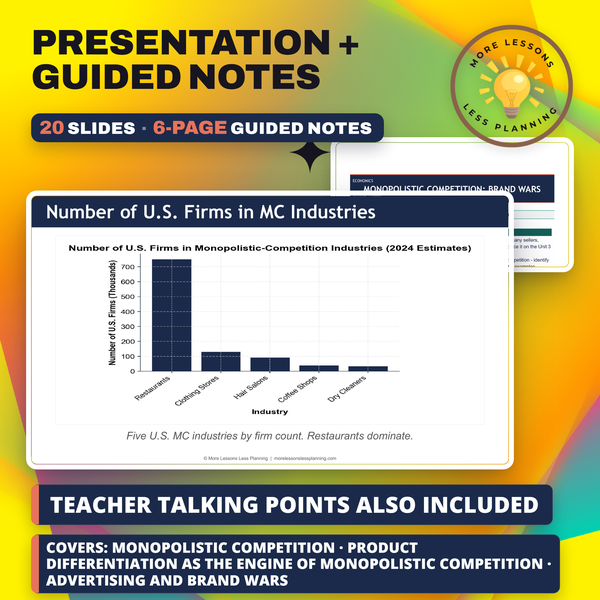
- Slide deck
- Guided notes
- Guided notes teacher key
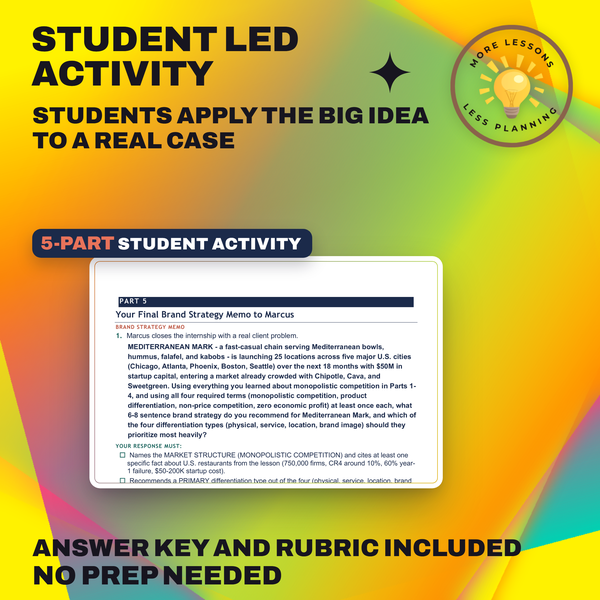
- Activity + answer key
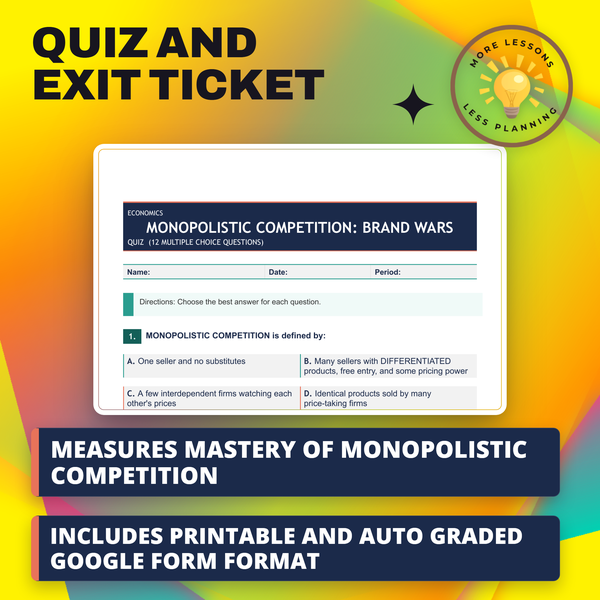
- Quiz + answer key
- Exit ticket + answer key
- Teacher guide
- Teacher presentation notes
Where should I send the next one?
Everything here is free and it stays that way. Leave your email and I'll send you the new lessons as they go up. You can unsubscribe from any one of them.
Every file in this toolkit
Related resources
Big Tech Antitrust - Google Apple Amazon Meta
Monopoly: One Seller, All the Power

Why Your Internet Only Has One Provider

Credit Scores: The Number That Runs Your Life
Economic Systems - Capitalism vs Socialism vs Mixed
Externalities When Markets Hurt Others
What students do
- Define monopolistic competition using its four features and place it on the spectrum between perfect competition and oligopoly
- Sort real businesses, restaurants, coffee shops, sneakers, salons, into the four types of product differentiation
- Explain why a monopolistically competitive firm's demand curve slopes downward but stays relatively elastic
- Argue why Starbucks and Nike still earn close to zero long-run economic profit despite strong brand loyalty
What it covers
- The four types of product differentiation, physical, service, location, and brand image
- Why firms in this market structure compete mainly through advertising and branding instead of price
- Why free entry drives long-run economic profit toward zero even for the strongest brands
Learning targets
- Define MONOPOLISTIC COMPETITION using its four defining features (many sellers, differentiated products, free entry and exit, some price-setting power) and place it on the Unit 3 spectrum between Perfect Competition (TK 21) and Oligopoly (TK 23)
- Explain PRODUCT DIFFERENTIATION as the engine of monopolistic competition - identify the four types (physical, service, location, brand image) and use real industry examples (restaurants, clothing, coffee shops, hair salons) to show how differentiation creates SOME pricing power without crossing into oligopoly territory
- Analyze ADVERTISING and BRAND WARS - explain why monopolistically competitive firms spend heavily on advertising, evaluate the difference between informative and persuasive ads, and identify why this structure produces ZERO LONG-RUN ECONOMIC PROFIT despite short-run pricing power
From one teacher to another
Big brands like Starbucks and Nike must be swimming in profit since practically everyone buys their stuff, or so nearly every class guesses before we run the free-entry math. The real answer cuts against that guess: those same brands still end up earning almost no long-run economic profit, even once enough rivals copy the playbook, and that's the twist that makes the unit worth teaching. I have students sort a stack of real businesses into the four types of differentiation before they ever see that number, so the surprise only lands after they've done the sorting themselves.
Every lesson on this site is free to download and use. If one of them saved you a prep period, you can chip in a few bucks toward my three kids' daycare fund. That's genuinely where tips go.