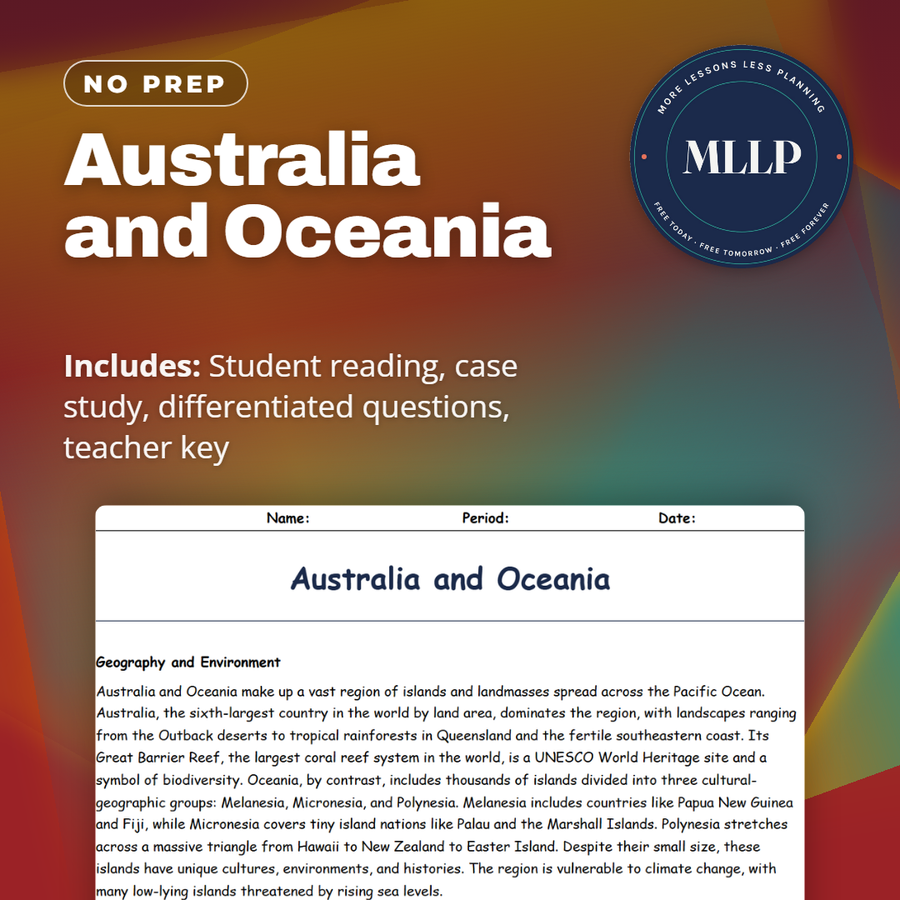
Australia and Oceania
Quality reviewed September 2026
Facts verified September 14, 2026
- Subject
- Social Studies
- Grades
- Grades 9-12
- Length
- 7-page student worksheet
- Time
- About one 50-minute class period
- Great for
- Sub plans and independent work
- Includes
- Reading passage, comprehension questions + full answer key
- Format
- Print-and-go PDF
What students do
- Match terms like the Outback, Kiribati, and the Great Barrier Reef to their correct definitions
- Fill in the blank sentences on Aboriginal Australians, the three Pacific regions, and New Zealand's Māori
- Answer multiple choice questions on Polynesia, the Great Barrier Reef, and why Kiribati bought land in Fiji
- Write short answers on how colonization shaped the region, why island nations are vulnerable to climate change, and what role tourism plays in Oceania's economies
What it covers
- The geography of Australia and Oceania, including the Outback, the Great Barrier Reef, and the island groups of Melanesia, Micronesia, and Polynesia
- The cultures of the region, including Aboriginal Australians, the concept of Dreamtime, and New Zealand's Māori
- A case study on climate change and Kiribati, a Pacific island nation planning for rising seas
Start reading this worksheet
Geography and Environment
Australia and Oceania make up a vast region of islands and landmasses spread across the Pacific Ocean. Australia, the sixth-largest country in the world by land area, dominates the region, with landscapes ranging from the Outback deserts to tropical rainforests in Queensland and the fertile southeastern coast. Its Great Barrier Reef, the largest coral reef system in the world, is a UNESCO World Heritage site and a symbol of biodiversity. Oceania, by contrast, includes thousands of islands divided into three cultural-geographic groups: Melanesia, Micronesia, and Polynesia. Melanesia includes countries like Papua New Guinea and Fiji, while Micronesia covers tiny island nations like Palau and the Marshall Islands. Polynesia stretches across a massive triangle from Hawaii to New Zealand to Easter Island. Despite their small size, these islands have unique cultures, environments, and histories. The region is vulnerable to climate change, with many low-lying islands threatened by rising sea levels.
Culture and Peoples
Australia’s Indigenous peoples, known as Aboriginal Australians, have lived on the continent for over 60,000 years, making them one of the oldest continuous cultures in the world. Their traditions emphasize a deep connection to the land, expressed through the concept of Dreamtime, which explains creation and spiritual relationships with nature. In Oceania, traditional cultures remain strong, with oral histories, navigation skills, and community rituals playing central roles. European colonization reshaped the region. Britain established penal colonies in Australia in the late 1700s, eventually building cities such as Sydney and Melbourne. In New Zealand, British settlement displaced the Māori, though today the Māori play an important role in national identity. Across Oceania, colonial powers like Britain, France, and the United States left lasting cultural and political influences. Today, the region is a blend of Indigenous traditions, European influence, and global culture.
Economy and Global Connections
Australia is one of the wealthiest nations in the region, with a strong economy based on mining, agriculture, and services. It exports coal, iron ore, and natural gas, as well as agricultural products like wheat and beef. Its cities, including Sydney and Melbourne, are financial hubs that connect the Pacific with the global economy. New Zealand is known for agriculture, tourism, and renewable energy, while the smaller island nations of Oceania often rely on fishing, remittances, and foreign aid. The region faces economic challenges due to its distance from major markets and the vulnerability of island nations to natural disasters. At the same time, tourism provides opportunity—Fiji, Hawaii, and Tahiti attract millions of visitors yearly. Global issues such as climate change, overfishing, and rising seas threaten the region’s long-term sustainability. International organizations and agreements, such as the Pacific Islands Forum, seek to strengthen cooperation among small island nations facing common challenges.
Like what you read? The full reading, the case study, and every question set are in the free download below, along with the answer key.
Why this matters
Kiribati has already bought land in Fiji in case rising seas force its people to relocate. That single decision says more about climate change than any definition, and it sits beside the Great Barrier Reef and the Outback, two landscapes with very different ties to the ocean.
I want students to see how land and identity connect for Aboriginal Australians and Māori through ideas like Dreamtime, then carry that lens into Oceania's island nations. Once culture is tied to place that closely, a country buying land abroad to survive stops sounding abstract.
From one teacher to another
This reading pairs Australia's landscapes with the wider Pacific region, from the Outback to the small island nations of Oceania. I like that it puts Aboriginal Australian and Māori culture right alongside the physical geography, so students see the connection between land and identity. The case study on Kiribati brings climate change down to one country's decisions, including buying land in Fiji for possible relocation. This works well alongside a unit on climate change or human-environment interaction.
What you get
Download
Where should I send the next one?
Everything here is free and it stays that way. Leave your email and I'll send you the new lessons as they go up. You can unsubscribe from any one of them.
Related resources
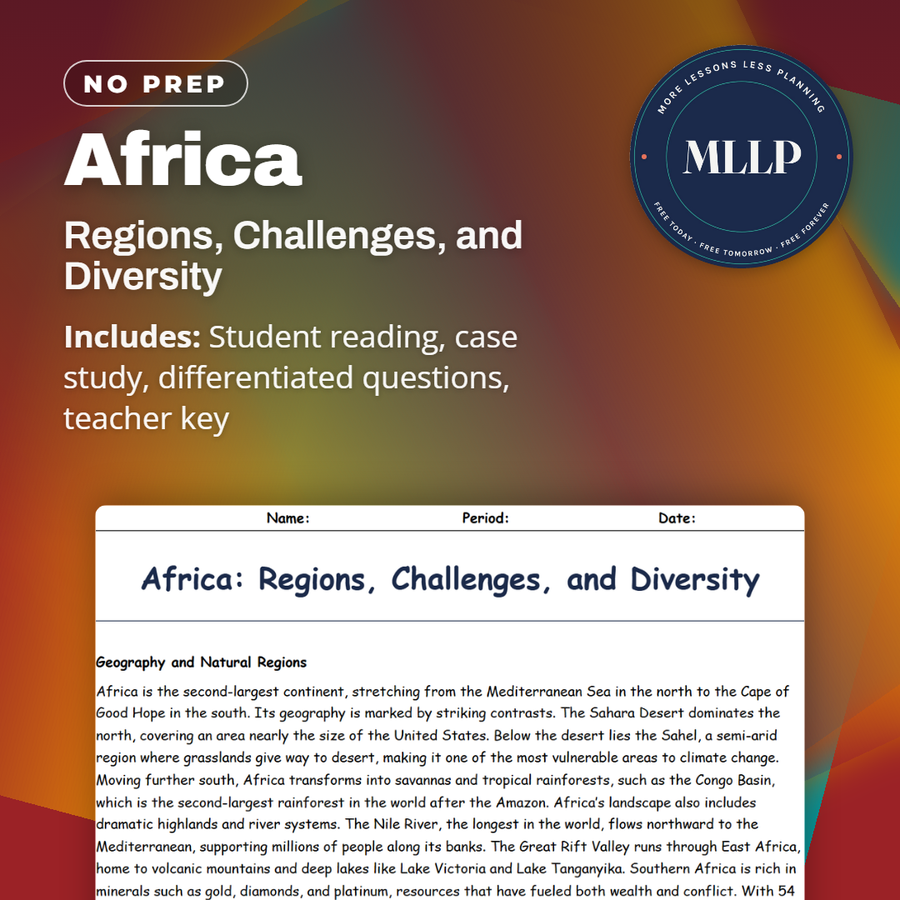
Africa: Regions, Challenges, and Diversity
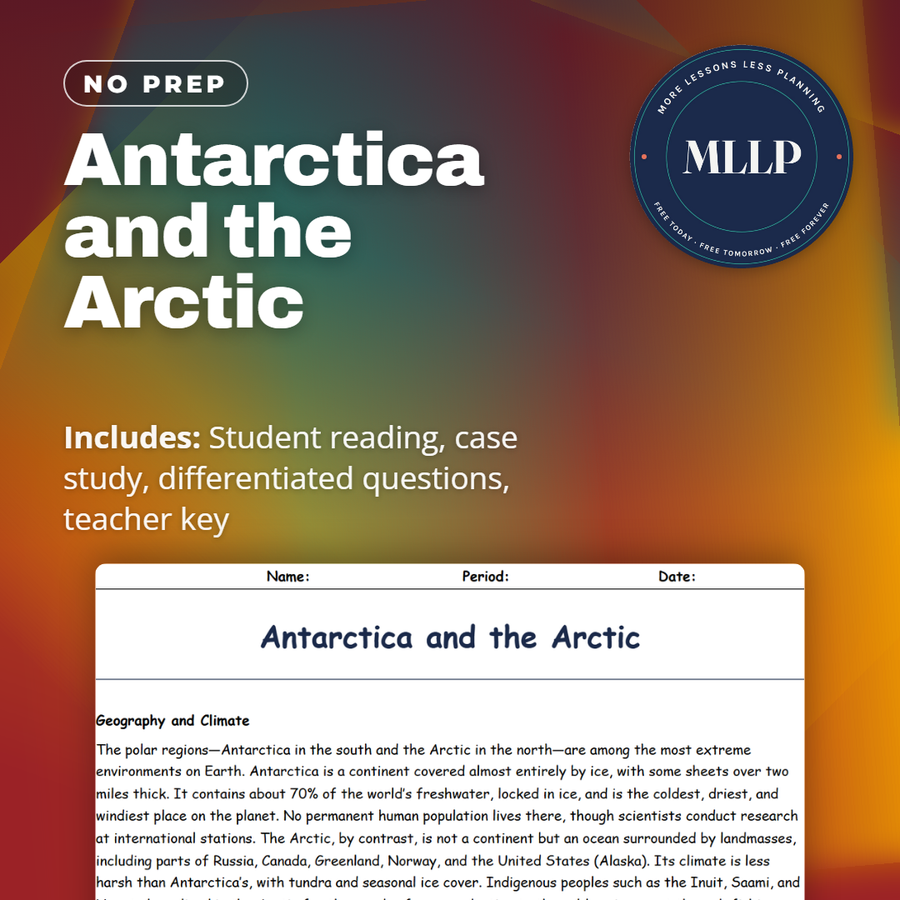
Antarctica and the Arctic
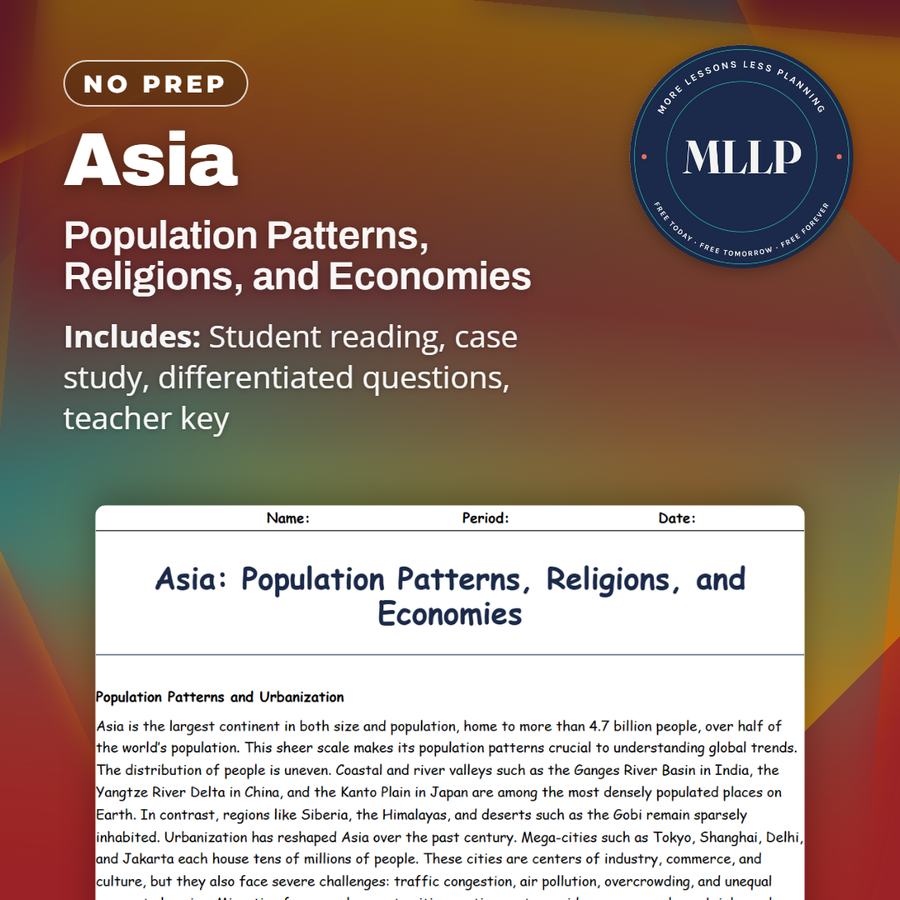
Asia: Population Patterns, Religions, and Economies
Comparative Regional Analysis
Europe: Political Boundaries and Economic Influence
Latin America: Physical Features and Cultural Diversity
Every lesson on this site is free to download and use. If one of them saved you a prep period, you can chip in a few bucks toward my three kids' daycare fund. That's genuinely where tips go.