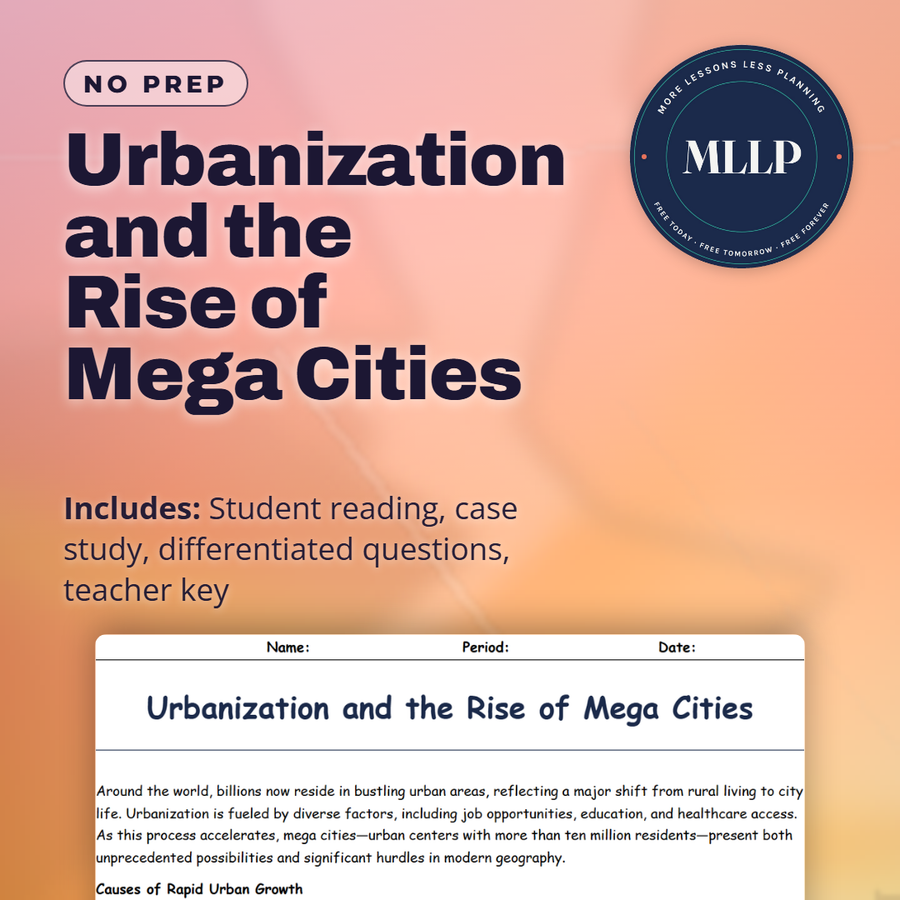
Urbanization and the Rise of Mega Cities
Quality reviewed September 2026
Facts verified September 14, 2026
- Subject
- Social Studies
- Grades
- Grades 9-12
- Length
- 6-page student worksheet
- Time
- About one 50-minute class period
- Great for
- Sub plans and independent work
- Includes
- Reading passage, comprehension questions + full answer key
- Format
- Print-and-go PDF
What students do
- Match terms like Urban Sprawl, Slum, and Satellite City to their correct definitions
- Fill in the blank sentences on urbanization, infrastructure, and smart growth
- Answer multiple choice questions on the definition of a mega city, environmental issues linked to urbanization, and what smart growth emphasizes
- Write short answers on how economic opportunity drives urbanization, how governments can address environmental strain, and why slum redevelopment can be controversial
What it covers
- What drives rapid urban growth and why mega cities attract millions of new residents
- Infrastructure and environmental challenges cities face, along with smart growth solutions like public transit and mixed-use zoning
- A case study on Mumbai's growth, including the Dharavi neighborhood and its informal economy
Start reading this worksheet
Around the world, billions now reside in bustling urban areas, reflecting a major shift from rural living to city life. Urbanization is fueled by diverse factors, including job opportunities, education, and healthcare access. As this process accelerates, mega cities (urban centers with more than ten million residents) present both unprecedented possibilities and significant hurdles in modern geography.
Causes of Rapid Urban Growth
Rural-urban migration drives much of the world’s urban expansion. People leave farms or small villages in search of better wages and living standards. Industrialization and the proliferation of service-sector jobs add to the pull. Additionally, population growth itself (high birth rates) can boost city populations. Government policies and international investments often favor cities, building roads, universities, and hospitals that become magnets for migration. Over time, this concentration of resources and infrastructure can widen the gap between urban centers and rural areas, further propelling people toward urban life.
The Lure of Cities: Jobs, Education, and Opportunity
Cities typically house diverse industries (technology, finance, manufacturing) and tend to offer higher salaries. Students flock to urban universities, hoping to improve their career prospects. Cultural attractions, from museums to vibrant nightlife, also draw young populations eager for new experiences. While many find success in cities, not everyone benefits equally. Competition is fierce, and newcomers may struggle with finding affordable housing or stable employment. Nonetheless, the promise of growth and the chance to climb the socio-economic ladder continues to fuel the urban wave worldwide.
Like what you read? The full reading, the case study, and every question set are in the free download below, along with the answer key.
Why this matters
Dharavi is not what most students picture when they hear the word slum. That Mumbai neighborhood runs a textile and recycling economy that generates real income even as residents go without reliable sanitation or secure housing, which is the contradiction at the center of mega city growth.
Redevelopment is where the discussion gets interesting, since redeveloping a place like Dharavi would also put a functioning economy at risk. I ask students to weigh urban sprawl and smart growth ideas like public transit and mixed-use zoning against what a neighborhood like Dharavi would actually lose in the process.
From one teacher to another
This reading covers what pulls people toward mega cities and the strain that rapid growth puts on housing, traffic, and the environment once they arrive. I like that the case study on Mumbai uses Dharavi to show both sides of that strain, a neighborhood that generates real income through textiles and recycling while still lacking basic sanitation and housing security. Students match terms like urban sprawl and satellite city, fill in blanks about infrastructure and smart growth, and then answer questions about what drives urbanization and why redevelopment plans can be so contentious. This pairs well with a unit on cities and urban planning.
What you get
Download
Where should I send the next one?
Everything here is free and it stays that way. Leave your email and I'll send you the new lessons as they go up. You can unsubscribe from any one of them.
Related resources
Birth Rates, Death Rates, and Life Expectancy Explained
Global Population Growth: Trends and Impacts
How Governments Shape Population Policies
Immigration vs. Emigration: What’s the Difference?
Mapping Population Density and Distribution Patterns
Overpopulation and Earth’s Carrying Capacity
Every lesson on this site is free to download and use. If one of them saved you a prep period, you can chip in a few bucks toward my three kids' daycare fund. That's genuinely where tips go.