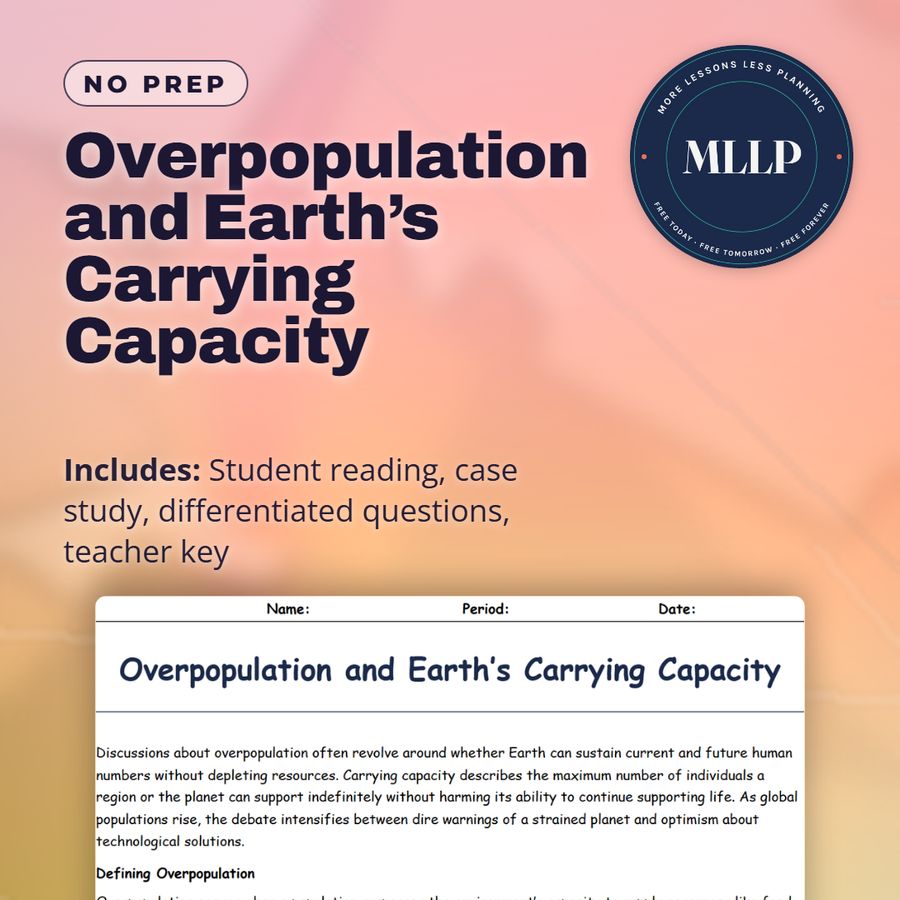
Overpopulation and Earth’s Carrying Capacity
Quality reviewed September 2026
Facts verified September 14, 2026
- Subject
- Social Studies
- Grades
- Grades 9-12
- Length
- 7-page student worksheet
- Time
- About one 50-minute class period
- Great for
- Sub plans and independent work
- Includes
- Reading passage, comprehension questions + full answer key
- Format
- Print-and-go PDF
What students do
- Match terms like Overconsumption, Malthusian Theory, and Carrying Capacity to their correct definitions
- Fill in the blank sentences on technological optimism, China's One-Child Policy, and ecological footprints
- Answer multiple choice questions on the definition of carrying capacity, what Malthusian theory warns about, and why fertility rates decline
- Write short answers on how developed nations' consumption affects overpopulation debates, how climate change intersects with population growth, and why educating women lowers birth rates
What it covers
- What carrying capacity and ecological footprint mean and how they measure human impact on the planet
- Malthusian theory compared with technological optimism about feeding a growing population
- A case study on how China has balanced population policy, industrial growth, and environmental strain
Start reading this worksheet
Discussions about overpopulation often revolve around whether Earth can sustain current and future human numbers without depleting resources. Carrying capacity describes the maximum number of individuals a region or the planet can support indefinitely without harming its ability to continue supporting life. As global populations rise, the debate intensifies between dire warnings of a strained planet and optimism about technological solutions.
Defining Overpopulation
Overpopulation occurs when a population surpasses the environment’s capacity to supply resources like food, water, or energy. It’s not strictly about headcounts; rather, it’s about resource use and environmental impact. Even a smaller population can be “overpopulated” if consumption rates are excessively high. Some experts argue that technology (from high-yield crops to renewable energy) can expand carrying capacity, while others warn that ecological limits, such as water scarcity and soil degradation, place firm boundaries on growth.
Ecological Footprint and Resource Limits
A useful way to measure human impact is the ecological footprint, which calculates how much land and water area a person (or population) requires to produce the resources they consume and absorb the waste they generate. Nations with high consumption patterns can exceed their local resource base, effectively outsourcing environmental impact to other regions. As more people adopt resource-intensive lifestyles, concerns about climate change, habitat loss, and pollution mount. Rainforests are cut down for agriculture, oceans are overfished, and fossil fuel consumption accelerates global warming. These environmental consequences suggest a limit to how many humans the planet can support sustainably.
Like what you read? The full reading, the case study, and every question set are in the free download below, along with the answer key.
Why this matters
China's One-Child Policy did not just change family size, it became a case study in how far a government will go to manage a population against the planet's carrying capacity. Malthusian theory predicts disaster once population outruns resources, while technological optimism argues that farming and energy can keep expanding to meet demand.
My students usually pick a side fast, either the planet is doomed or technology will fix everything, and the ecological footprint idea is what slows them down. Once they see a footprint measures consumption, not just headcount, they start asking whether the real strain comes from how many people exist or how much each one uses.
From one teacher to another
This reading introduces carrying capacity and ecological footprint, then sets Malthusian theory against modern arguments that technology can keep expanding what the planet can support. I like that the case study on China connects the One-Child Policy to the country's industrial growth and its more recent push into renewable energy, so students see how population and environmental policy stay linked over decades. The matching and fill-in-the-blank sections build vocabulary before the short answer questions ask students to weigh consumption, climate change, and education as pieces of the overpopulation debate. This pairs well with a unit on sustainability.
What you get
Download
Where should I send the next one?
Everything here is free and it stays that way. Leave your email and I'll send you the new lessons as they go up. You can unsubscribe from any one of them.
Related resources
Birth Rates, Death Rates, and Life Expectancy Explained
Global Population Growth: Trends and Impacts
How Governments Shape Population Policies
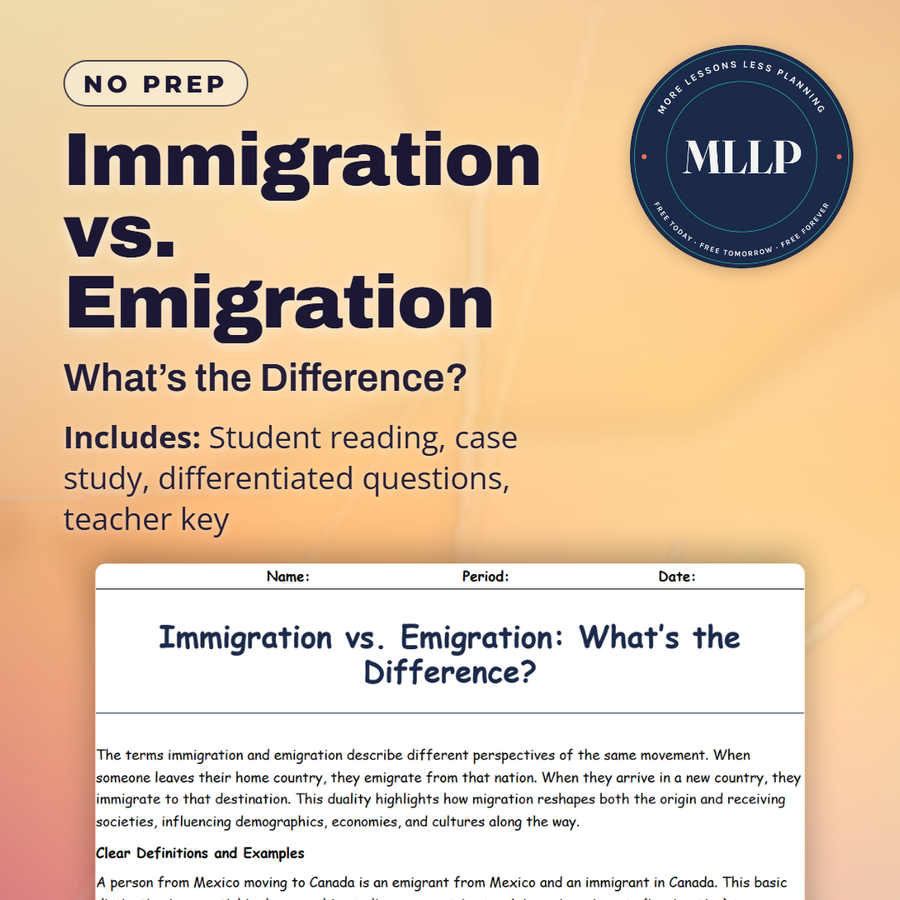
Immigration vs. Emigration: What’s the Difference?
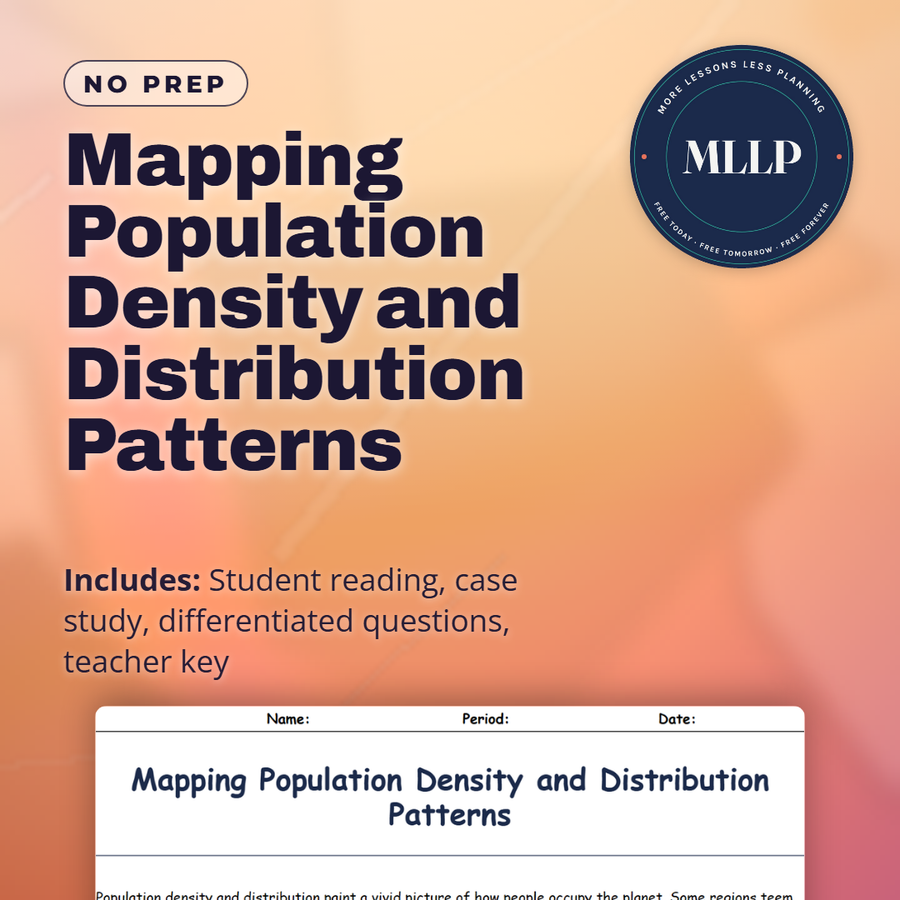
Mapping Population Density and Distribution Patterns
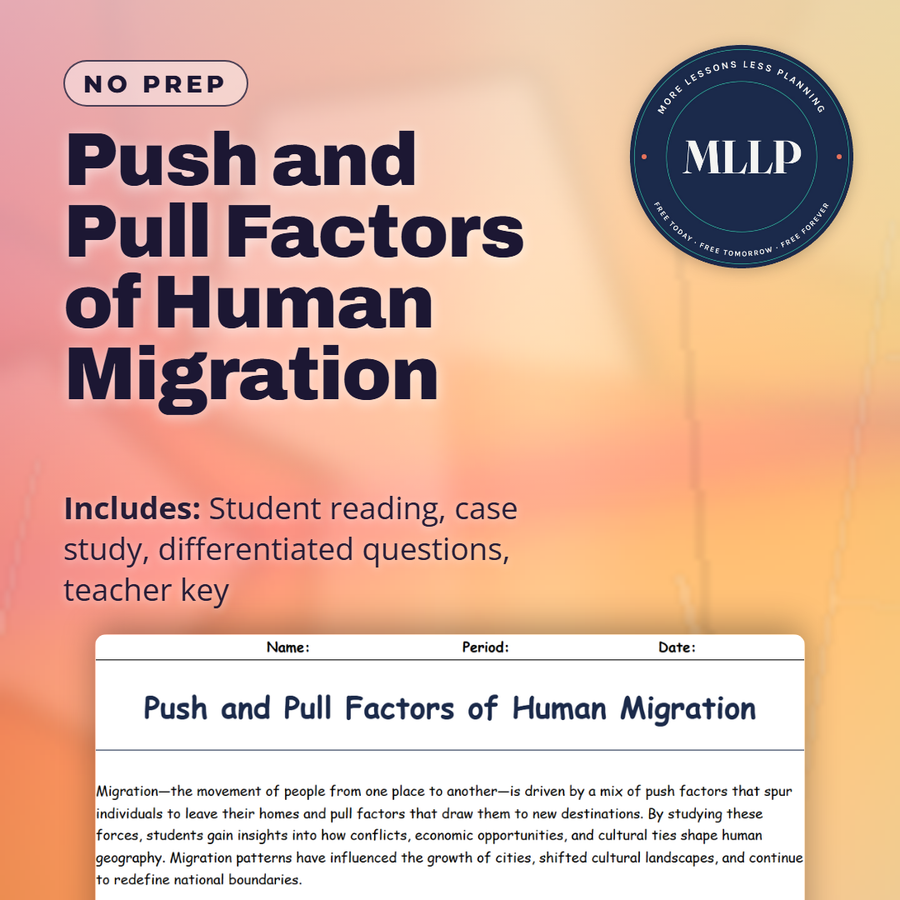
Push and Pull Factors of Human Migration
Every lesson on this site is free to download and use. If one of them saved you a prep period, you can chip in a few bucks toward my three kids' daycare fund. That's genuinely where tips go.