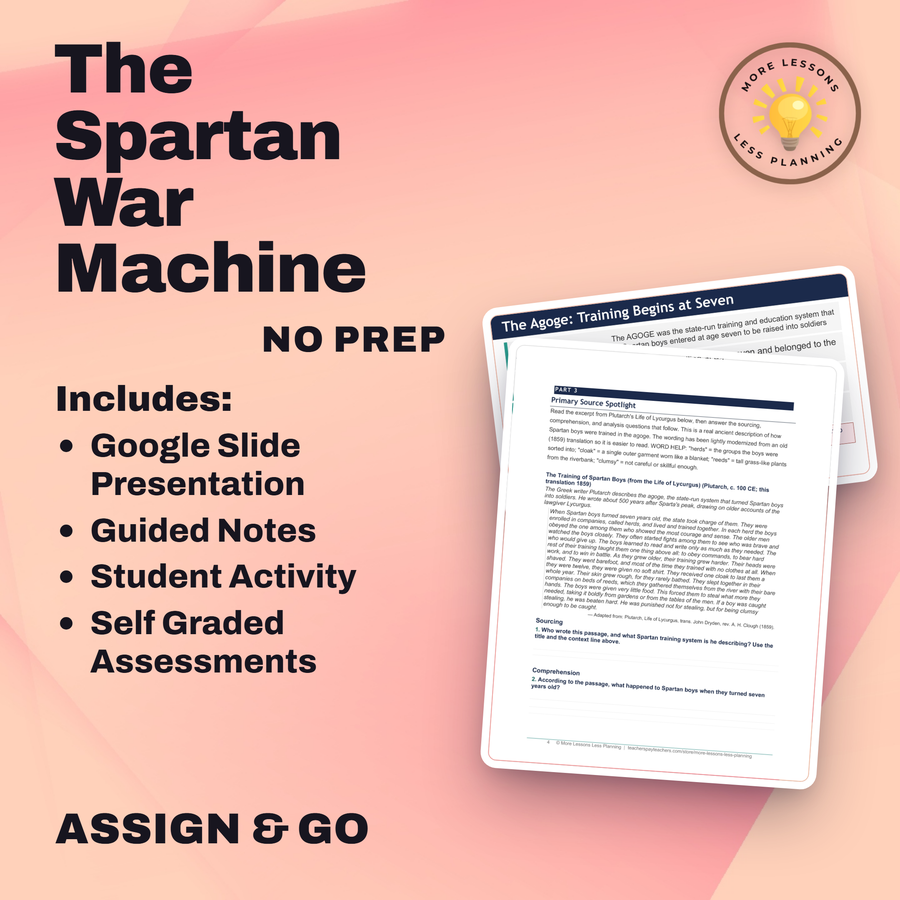
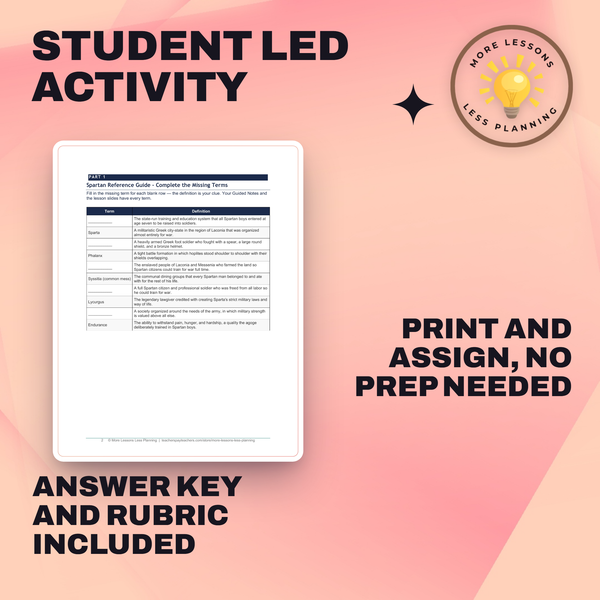

The Spartan War Machine
Quality reviewed September 2026
- Subject
- World History
- Grades
- Grades 9-12
- Time
- About two 50-minute class periods
- Includes
- 11 ready-to-teach files
- Format
- Word (.docx) · PowerPoint (.pptx)
- Slide deck
- Guided notes
- Guided notes teacher key
- Activity + answer key
- Quiz + answer key
- Exit ticket + answer key
- Teacher guide
- Teacher presentation notes
What students do
- Explain how the enslaved helots, who outnumbered Spartiates roughly seven to one, freed citizens to train full time
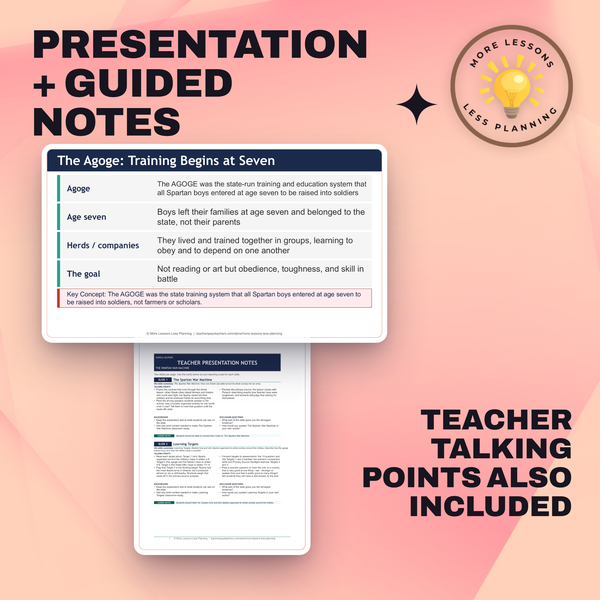
- Describe the agoge, the training system Spartan boys entered at age seven, and what it deliberately took away from them
- Analyze why the phalanx rewarded discipline over individual heroics and what that meant for how boys were raised
- Read Plutarch's description of the agoge and weigh what a militaristic society gained against what it gave up
What it covers
- The social pyramid of Spartiates, perioikoi, and helots that supported the army
- The agoge's deliberate hardships - boys barefoot, underfed, and beaten only for getting caught stealing
- The phalanx and why one soldier's discipline protected the man standing beside him
- The trade-offs of a war society: military dominance against almost no art, philosophy, or literature
Learning targets
- Explain how and why Sparta organized its entire society around the military
- Describe how the agoge trained Spartan boys and how the helots made full-time soldiering possible
- Analyze the trade-offs of a militaristic society - what Sparta gained and what it gave up
Peek inside
A Militaristic Society
SPARTA: a Greek city-state in the region of Laconia
A MILITARISTIC SOCIETY organized around the army
Military strength was valued above all else
Organized almost entirely for war, not trade or art
1. Who wrote this passage, and what Spartan training system is he describing? Use the title and the context line above.
Why this matters
Seven helots for every Spartiate citizen is the ratio that makes the rest of Spartan society possible, since an army training full time needs someone else growing the food and running the households back home. That number turns the agoge from a strange custom into a system with a clear economic engine underneath it.
What gets missed is how much Sparta gave up to win that trade: a city that produced almost no art, philosophy, or literature, on purpose, because every resource pointed at the phalanx instead. Weighing that cost against Sparta's military record matters more than memorizing the agoge's hardships alone.
From one teacher to another
Most Greek city-states raised farmers and traders who could also fight; Sparta raised soldiers first and let the enslaved helots do everything else. I make the age-seven detail land before anything: Spartan boys left their families to enter the agoge, where they went barefoot, were deliberately underfed, and were beaten not for stealing food but for getting caught doing it. Students trace how that training fed directly into the phalanx, where one man's discipline protected the shield of the man beside him, and then I hand them the honest ledger - the most feared infantry in Greece, bought with almost no art, no philosophy, and a system built entirely on the forced labor of people Sparta never stopped fearing. They read Plutarch's own account of the agoge and decide for themselves whether that trade was worth what it cost.
Every file in this toolkit
Download
Where should I send the next one?
Everything here is free and it stays that way. Leave your email and I'll send you the new lessons as they go up. You can unsubscribe from any one of them.
Related resources

Alexander the Great and His Empire
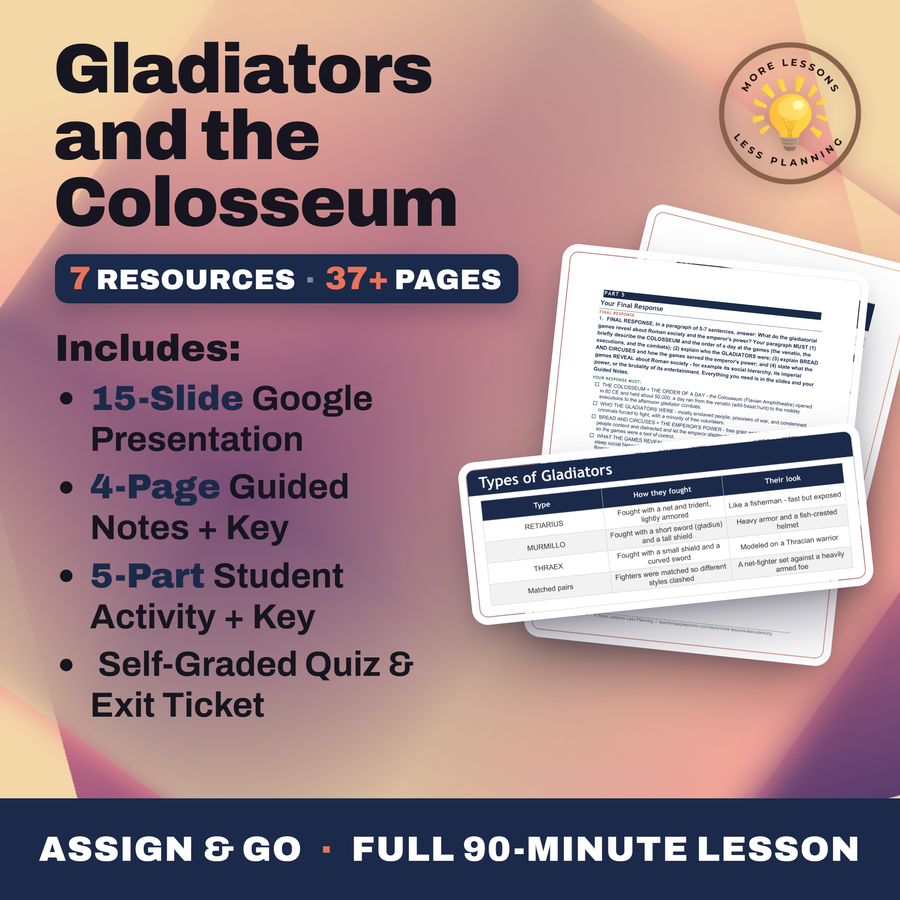
Gladiators and the Colosseum

Pompeii Frozen in Time
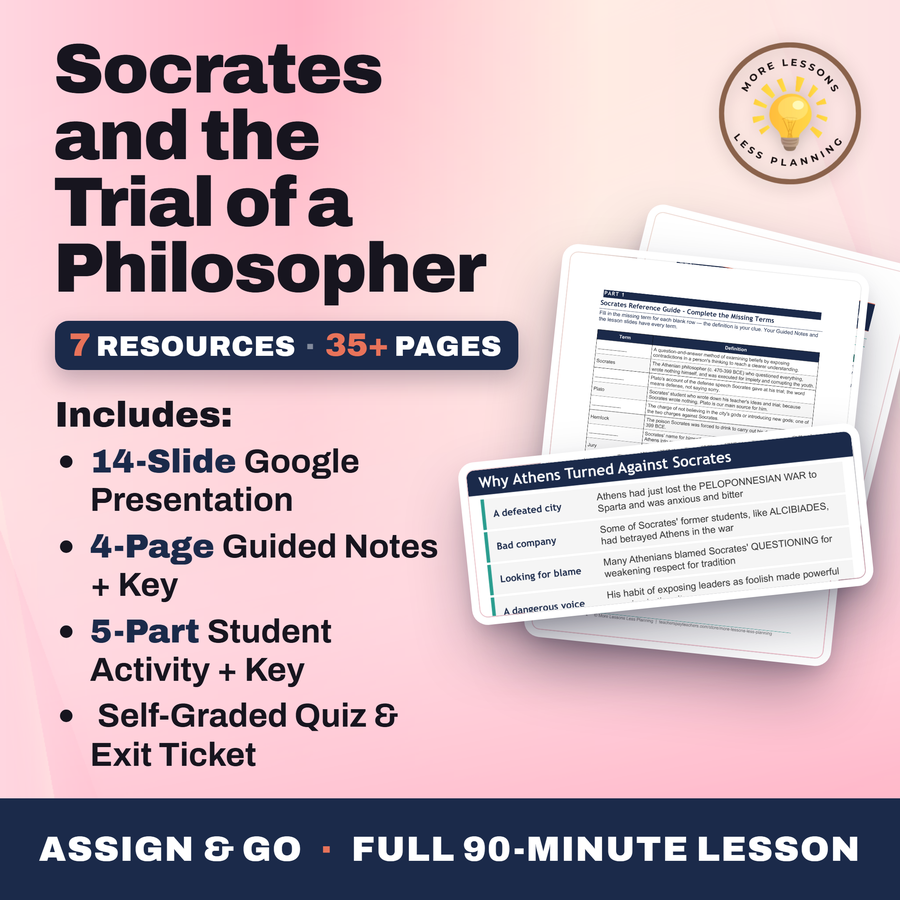
Socrates and the Trial of a Philosopher
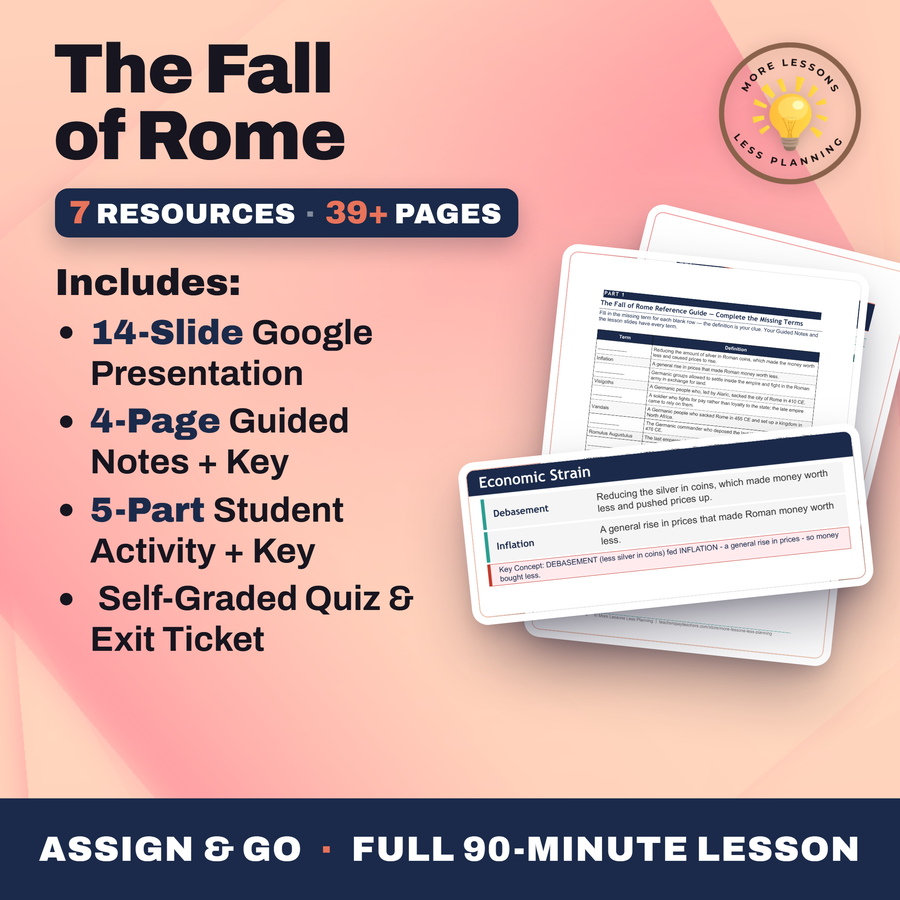
The Fall of Rome
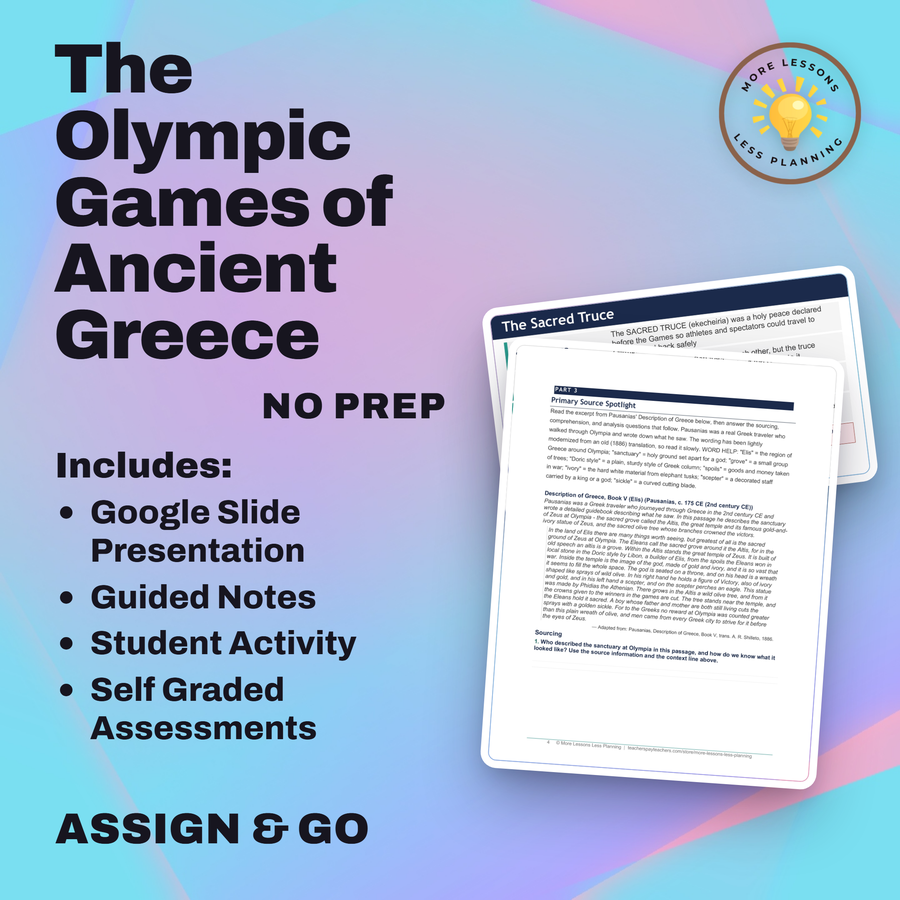
The Olympic Games of Ancient Greece
Every lesson on this site is free to download and use. If one of them saved you a prep period, you can chip in a few bucks toward my three kids' daycare fund. That's genuinely where tips go.