
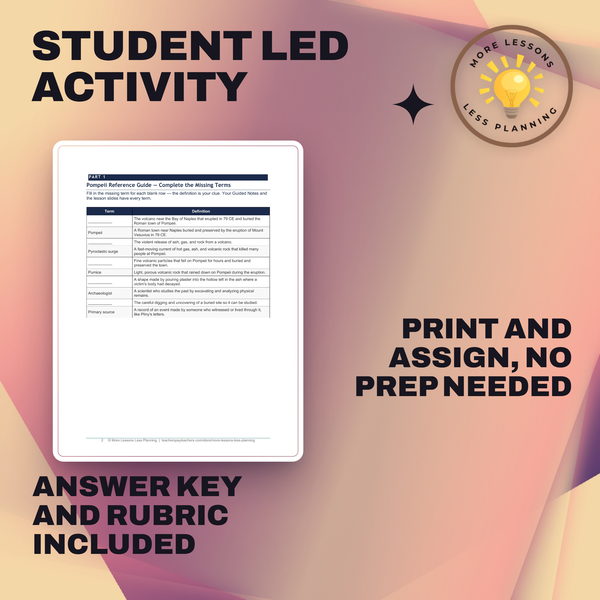


Pompeii Frozen in Time
Quality reviewed September 2026
- Subject
- World History
- Grades
- Grades 9-12
- Time
- About two 50-minute class periods
- Includes
- 11 ready-to-teach files
- Format
- Word (.docx) · PowerPoint (.pptx)
- Slide deck
- Guided notes
- Guided notes teacher key
- Activity + answer key
- Quiz + answer key
- Exit ticket + answer key
- Teacher guide
- Teacher presentation notes
What students do
- Sequence the eruption of Vesuvius using the layers of pumice and ash found on Pompeii's streets
- Read an excerpt of Pliny the Younger's eyewitness letter and match his account to the physical evidence in the ruins
- Explain how the plaster-cast technique recorded the final positions of victims
- Describe what preserved shops, homes, bakeries, and graffiti reveal about ordinary daily life in a Roman town
What it covers
- How Pliny the Younger's letters describe the eruption cloud and darkness, and how that matches the ash layers found on-site
- What the plaster casts of victims show about the human toll of the disaster
- Core vocabulary: Vesuvius, pyroclastic surge, pumice, ash, plaster cast, excavation, primary source
- Preserved shops, homes, bakeries, and graffiti as evidence of everyday life in a Roman town before the eruption
Learning targets
- Describe the sequence of the 79 CE eruption of Mount Vesuvius using an eyewitness account.
- Explain how volcanic ash and pumice preserved Pompeii and what archaeologists learn from the remains.
- Analyze how historians combine an eyewitness primary source with archaeology to reconstruct the past.
- Describe daily life in a Roman town based on the evidence uncovered at Pompeii.
Peek inside
1. Which volcano near the Bay of Naples erupted in 79 CE and buried Pompeii? (one word)
Why this matters
Graffiti scratched onto a wall by someone who never expected to become historical evidence is a strange kind of survival, and Pompeii preserved plenty of it alongside the shops and bakeries that make the town readable as a place people actually lived, not just a disaster site.
Sequencing the ash and pumice layers the way archaeologists actually did teaches a kind of patience most classes haven't practiced before: the eruption has to be reconstructed layer by layer from physical evidence, and skipping one means losing the order events actually happened in.
From one teacher to another
This lesson covers a real disaster, and I built it to keep the register factual rather than dramatic. The core move is matching an eyewitness account to the physical record: Pliny the Younger wrote to Tacitus describing the ash cloud and the darkness that fell over the region, and students set his words next to the actual layers of pumice and ash archaeologists have excavated at the site. From there the lesson moves into what preservation makes visible - not just the plaster casts of victims in their final positions, but the ordinary stuff, shops, bakeries, homes, even graffiti on the walls, that lets historians reconstruct daily life in a Roman town in a way few other sites allow. It's built as a field-archaeologist persona working through the evidence layer by layer, so students are doing the same kind of sourcing and sequencing work a real excavation team would do.
Every file in this toolkit
Download
Where should I send the next one?
Everything here is free and it stays that way. Leave your email and I'll send you the new lessons as they go up. You can unsubscribe from any one of them.
Related resources
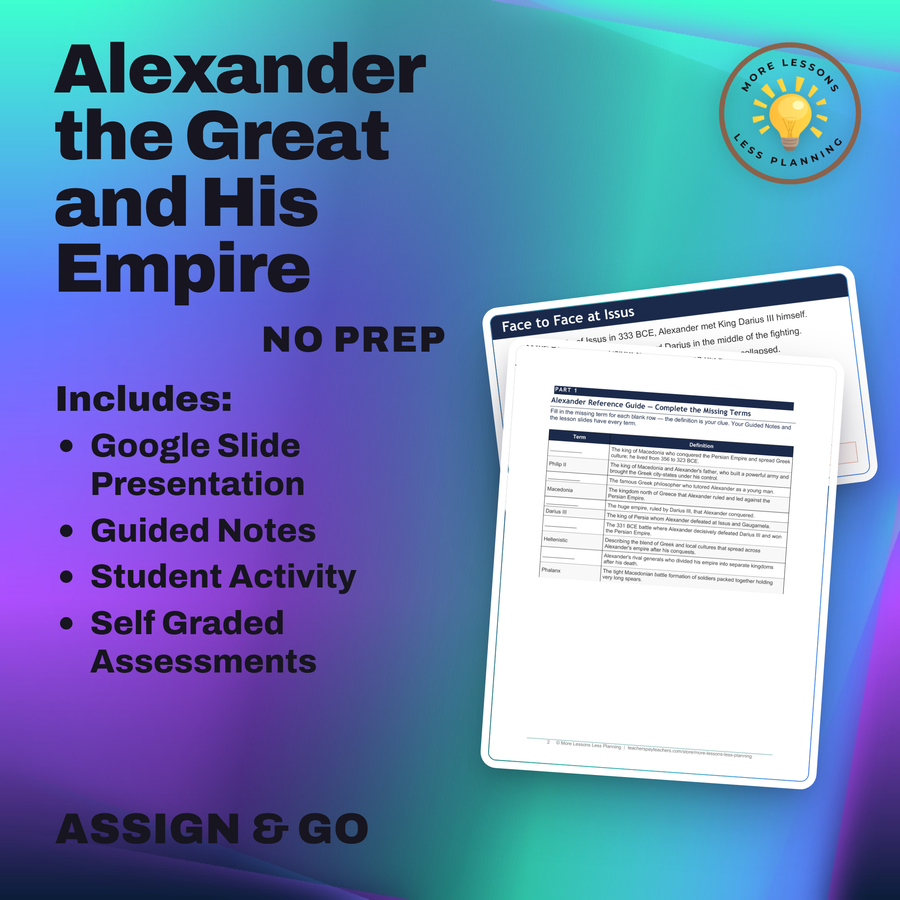
Alexander the Great and His Empire
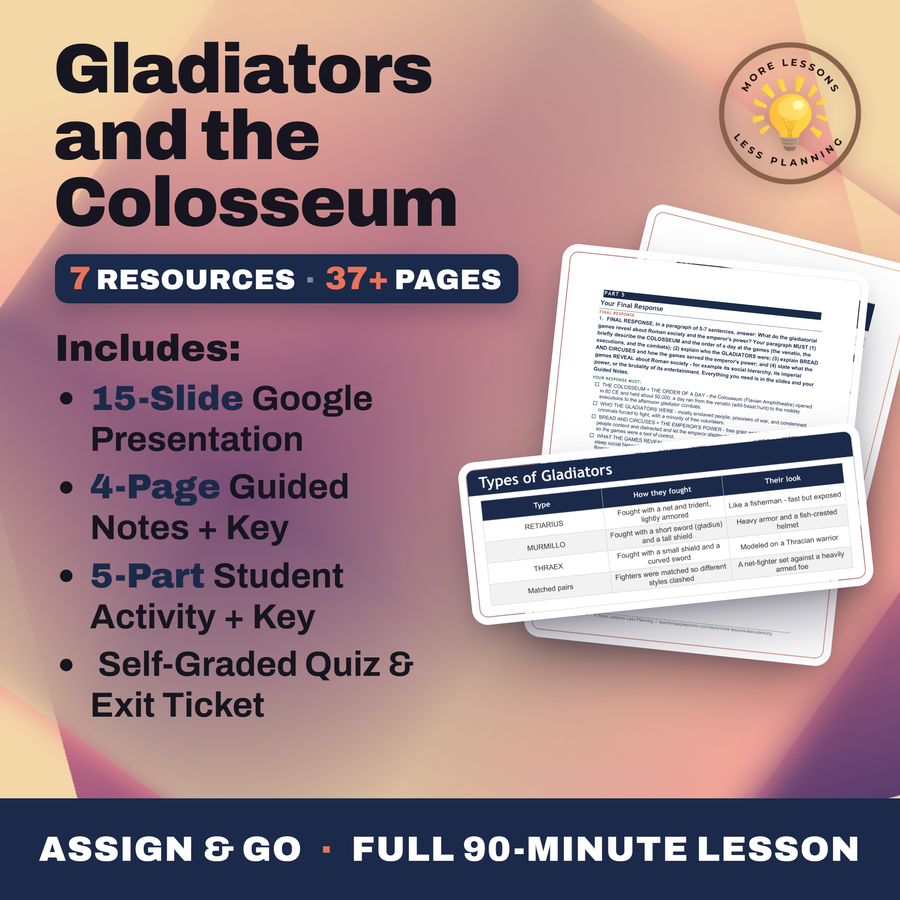
Gladiators and the Colosseum

Socrates and the Trial of a Philosopher

The Fall of Rome
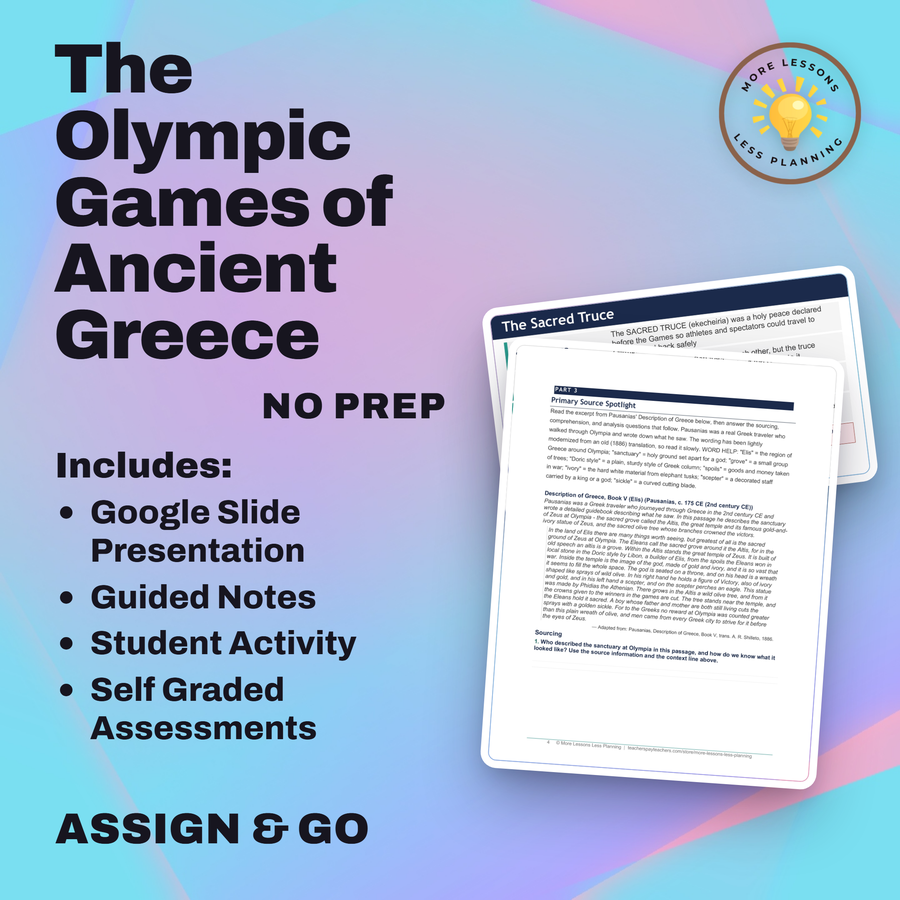
The Olympic Games of Ancient Greece

The Persian Wars and Marathon
Every lesson on this site is free to download and use. If one of them saved you a prep period, you can chip in a few bucks toward my three kids' daycare fund. That's genuinely where tips go.