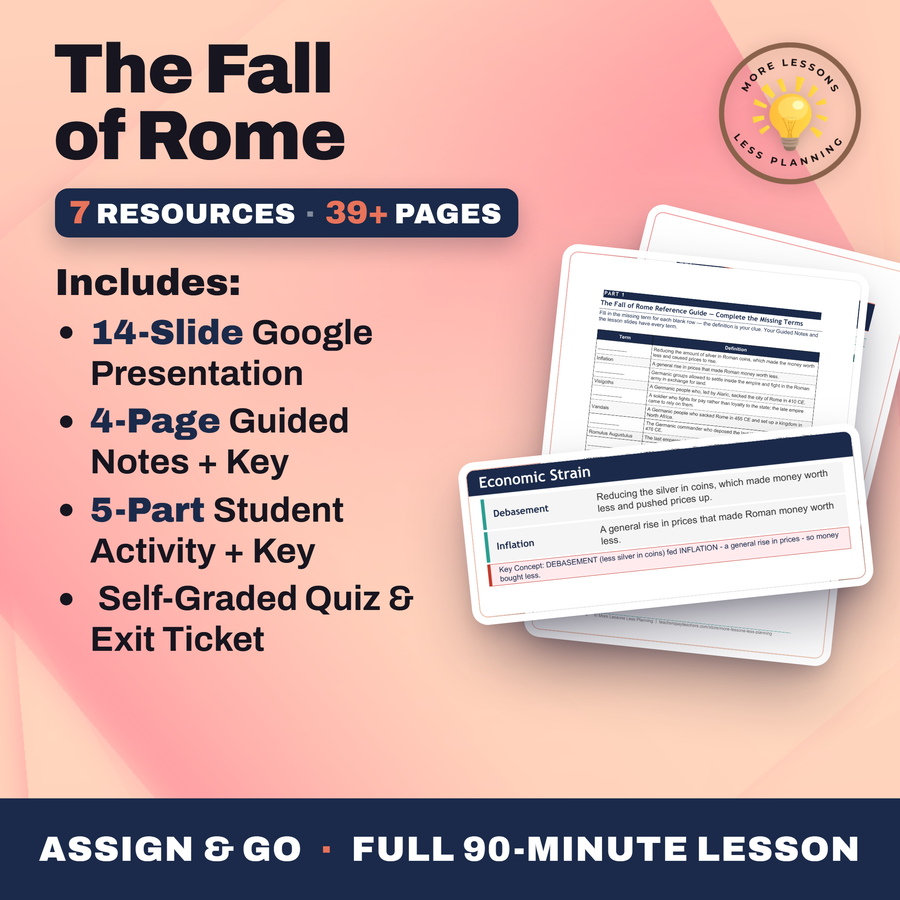

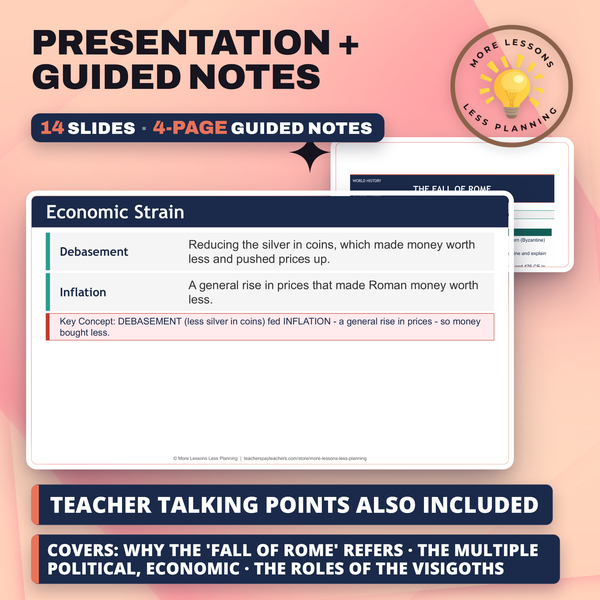
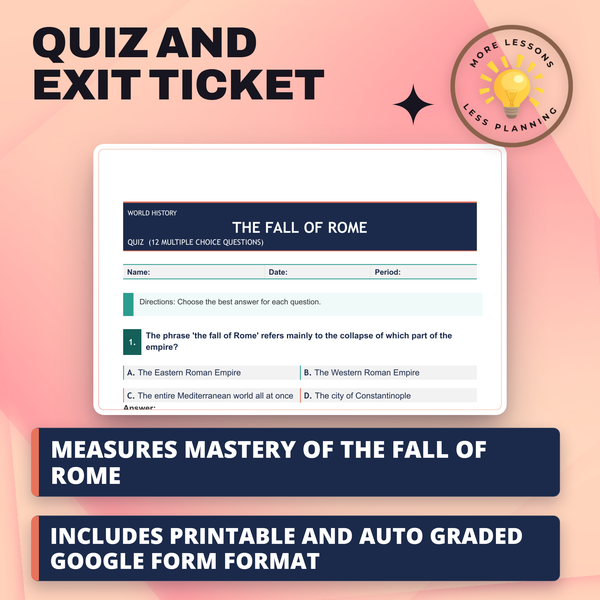
The Fall of Rome
Quality reviewed September 2026
- Subject
- World History
- Grades
- Grades 9-12
- Time
- About two 50-minute class periods
- Includes
- 11 ready-to-teach files
- Format
- Word (.docx) · PowerPoint (.pptx)
- Slide deck
- Guided notes
- Guided notes teacher key
- Activity + answer key
- Quiz + answer key
- Exit ticket + answer key
- Teacher guide
- Teacher presentation notes
What students do
- Sort Rome's decline into political, economic, and military causes instead of one big reason
- Explain how debasing Roman coins triggered inflation that hurt soldiers and ordinary Romans
- Read Jordanes's account of the 410 sack and judge it as a source written 140 years later
- Explain why the Eastern, Byzantine half of the empire survived nearly 1,000 more years
What it covers
- Debasement and inflation, and how they weakened the late Western economy
- The Visigoths and Vandals, and why "barbarian invasion" oversimplifies who they were
- Jordanes's account of Alaric sparing Rome's holy places during the 410 sack
- Why 476 CE is a convenient marker, not the day the empire actually ended
Learning targets
- Explain why the 'fall of Rome' refers to the Western empire, while the Eastern (Byzantine) empire survived nearly 1,000 more years.
- Identify the multiple political, economic, and military causes of Rome's decline and explain why no single cause is enough.
- Describe the roles of the Visigoths, the Vandals, and the key events of 410 and 476 CE in Rome's decline.
- Analyze a primary source and judge its reliability by considering when it was written and whose side it favored.
Peek inside
Western, Not the Whole Roman World
The FALL OF ROME refers to the collapse of the Roman Empire, not the entire Roman world.
The BYZANTINE EMPIRE was the Eastern Roman Empire, which survived nearly 1,000 more years, until .
Rome's fall was a gradual over centuries, not a single catastrophic day.
1. Q1. What word names the practice of reducing the silver in Roman coins, which made the money worth less? (one word)
Why this matters
Debasing Roman coins to pay soldiers solved one problem by creating a bigger one: the inflation that followed hurt the same ordinary Romans and soldiers the government needed most. Money losing value quietly is a less dramatic cause than an invasion, but it did real damage long before any Gothic army reached the city gates.
Rome didn't actually end in 476 CE, and getting my students comfortable with that fact takes some doing, since the Eastern half of the empire kept functioning as the Byzantine world for close to another thousand years after the west went down. The fall stops looking like a clean ending once that half survives it entirely.
From one teacher to another
Somebody always wants a single villain for the fall of Rome, and I spend most of this lesson taking that away from them. We sort the causes into political, economic, and military buckets first, then I hand them Jordanes's account of the 410 sack, written by a Gothic-descended historian nearly a century and a half after the fact, so they have to weigh the source instead of just reading it. By the time they get to 476 CE, they've already learned that the fall was western-only, gradual, and about as messy as history actually gets.
Every file in this toolkit
Download
Where should I send the next one?
Everything here is free and it stays that way. Leave your email and I'll send you the new lessons as they go up. You can unsubscribe from any one of them.
Related resources
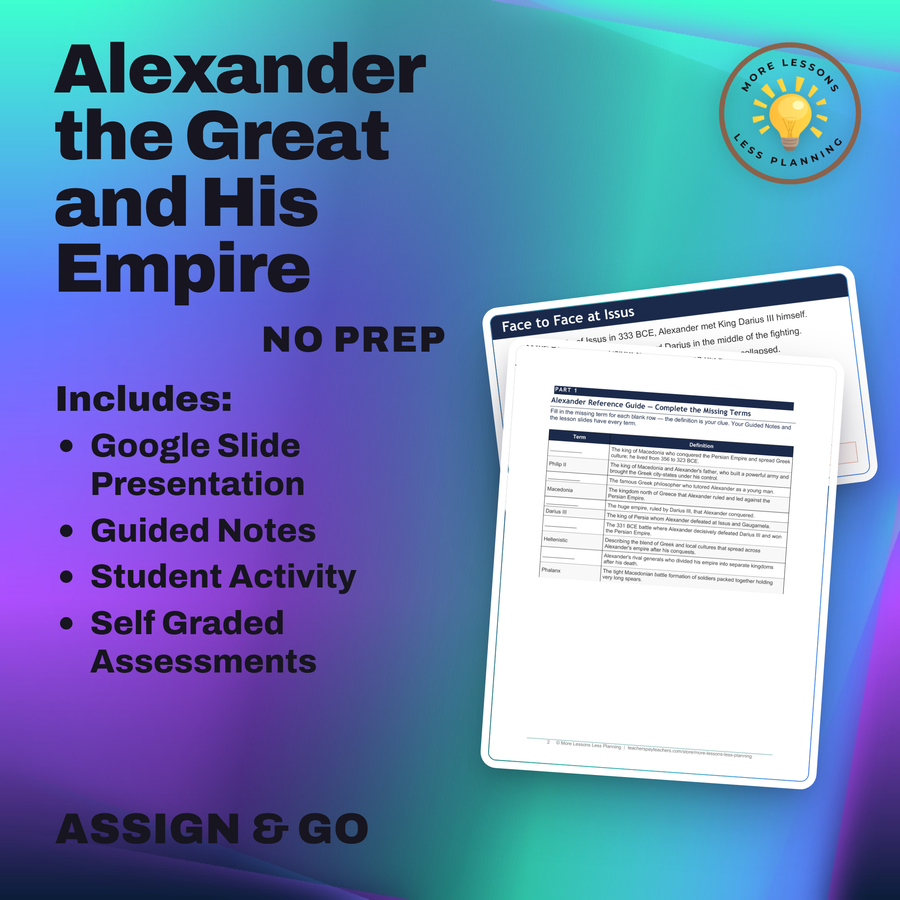
Alexander the Great and His Empire
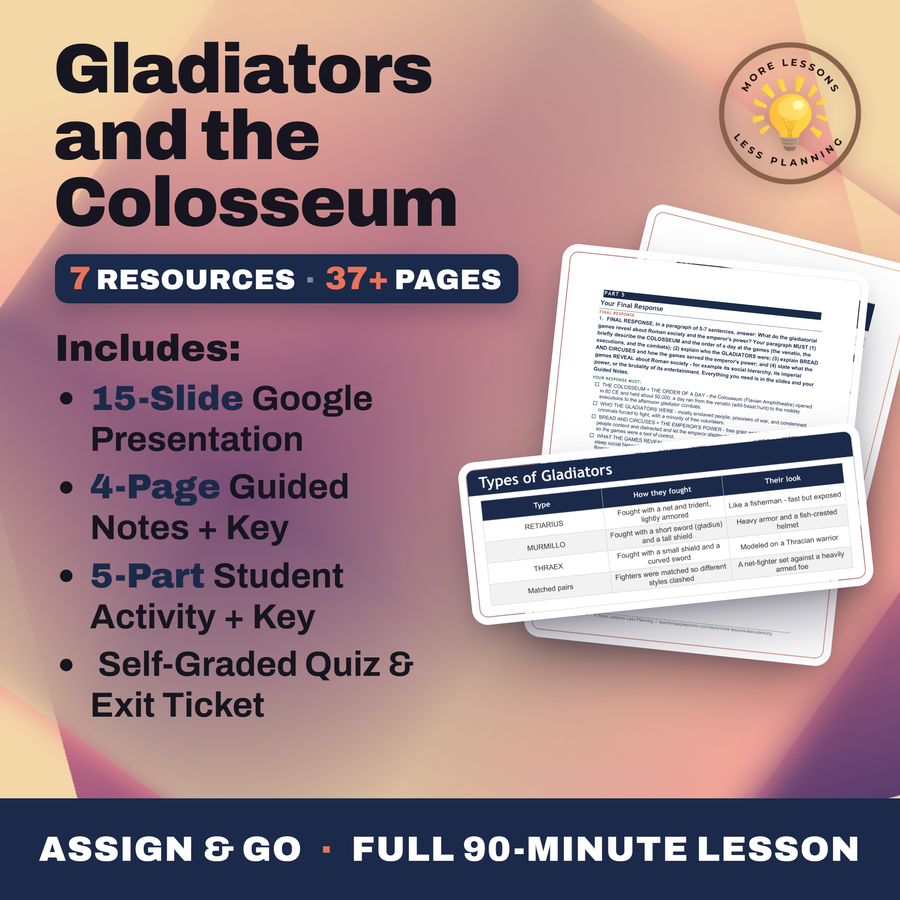
Gladiators and the Colosseum

Pompeii Frozen in Time

Socrates and the Trial of a Philosopher
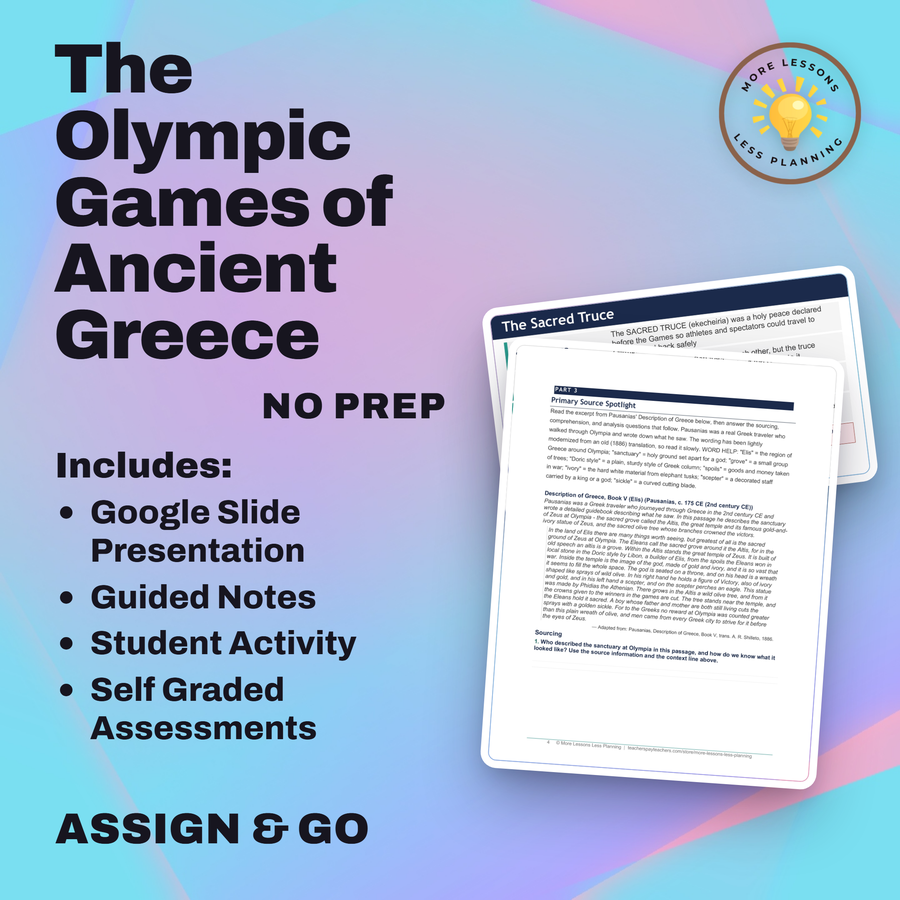
The Olympic Games of Ancient Greece
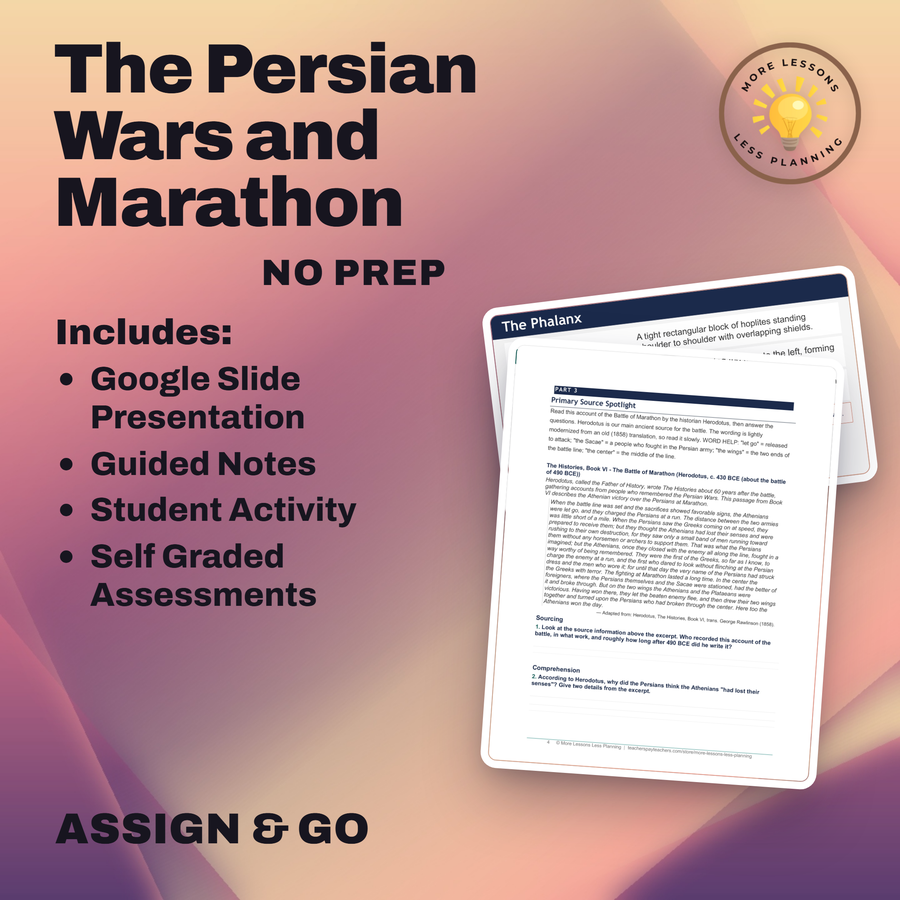
The Persian Wars and Marathon
Every lesson on this site is free to download and use. If one of them saved you a prep period, you can chip in a few bucks toward my three kids' daycare fund. That's genuinely where tips go.