Gladiators and the Colosseum
Quality reviewed September 2026
- Subject
- World History
- Grades
- Grades 9-12
- Time
- About two 50-minute class periods
- Includes
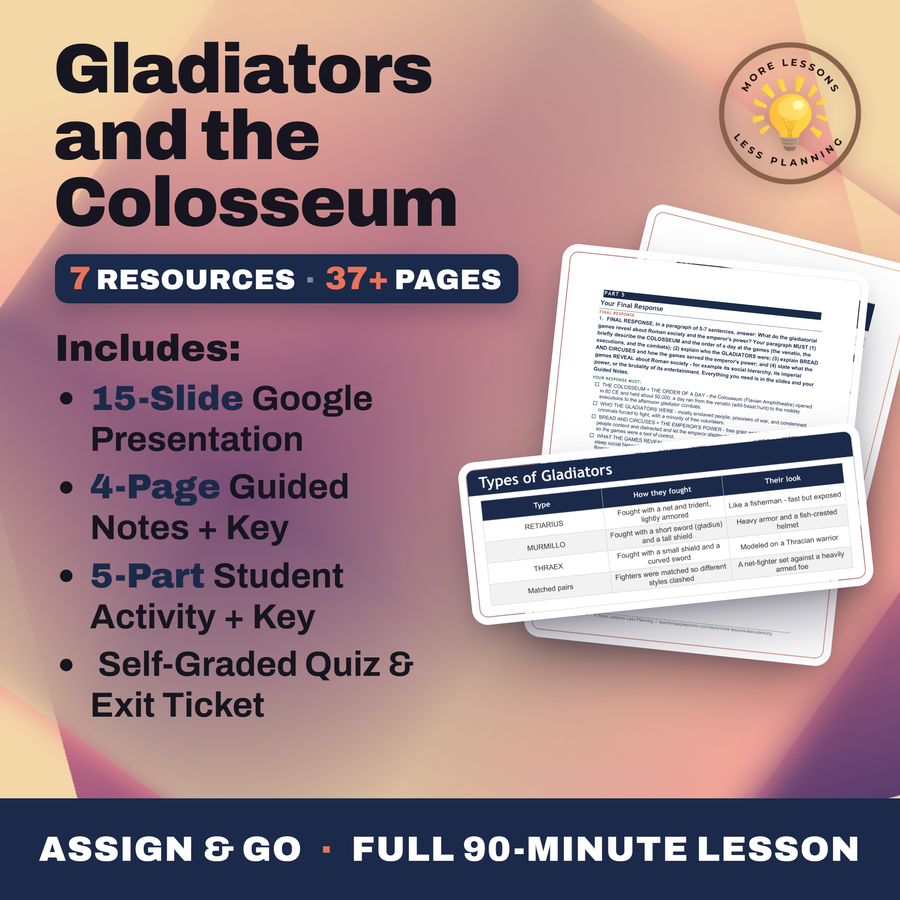
- 11 ready-to-teach files
- Format
- Word (.docx) · PowerPoint (.pptx)
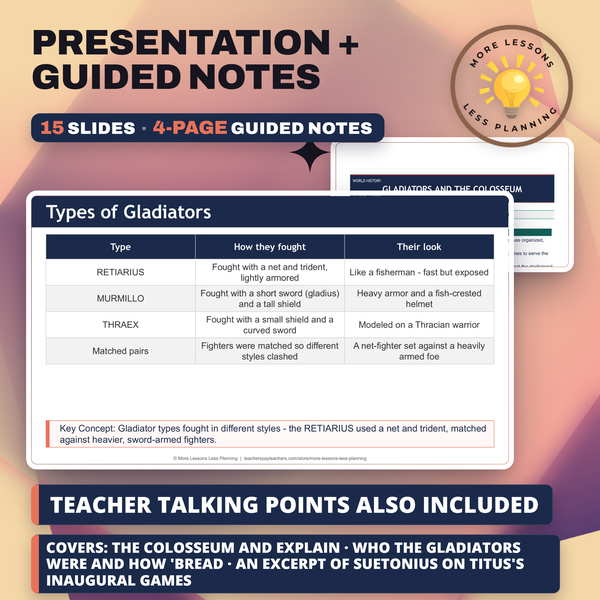
- Slide deck
- Guided notes
- Guided notes teacher key
- Activity + answer key
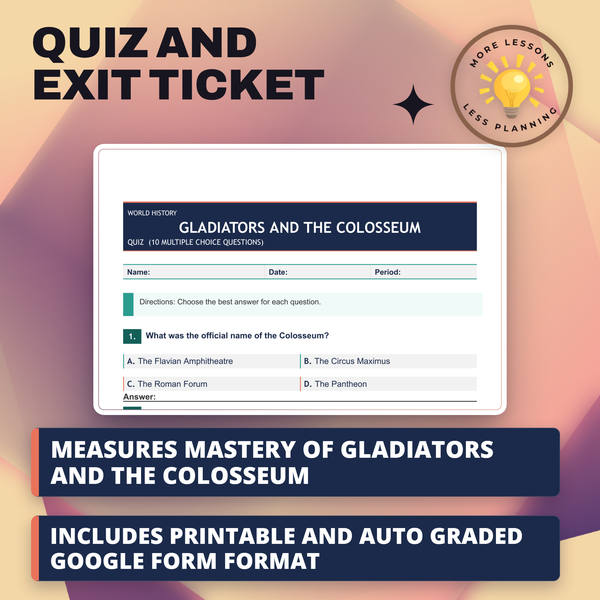
- Quiz + answer key
- Exit ticket + answer key
- Teacher guide
- Teacher presentation notes
What students do
- Describe how a full day at the games was organized, from the morning wild-beast hunts to the afternoon combats
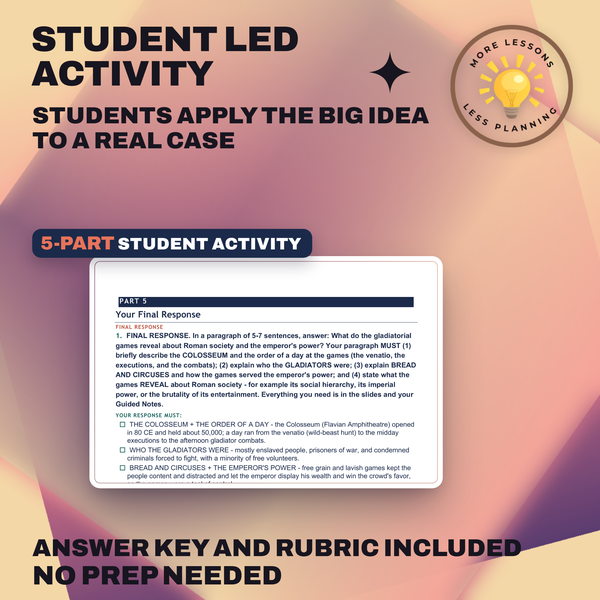
- Explain who most gladiators actually were and how "bread and circuses" served the emperor's power
- Read Suetonius's account of Titus's inaugural games and explain what it reveals about Roman society
- Compare the morning, midday, and afternoon events across five features in a three-column matrix
What it covers
- The Colosseum's construction, the velarium awning, and the hypogeum tunnels beneath the arena floor
- Who gladiators actually were, usually enslaved people, prisoners of war, or condemned criminals, not volunteers
- The editor's power to grant missio and how "bread and circuses" kept the crowd content
- Suetonius's Life of Titus (Thomson 1796 translation) and its account of the 100-day inaugural games in 80 CE
Learning targets
- Describe the Colosseum and explain how a day at the gladiatorial games was organized, from the wild-beast hunts to the afternoon combats
- Explain who the gladiators were and how 'bread and circuses' used the games to serve the emperor's power
- Analyze an excerpt of Suetonius on Titus's inaugural games and explain what the gladiatorial games reveal about Roman society
Peek inside
1. Look at the information above the excerpt. Who wrote this passage, about when did he live, and which emperor and building is he describing? When was the translation you are reading made?
Why this matters
A hundred days of games to open one building is a scale that's hard to picture next to anything modern, and the hypogeum tunnels running beneath the arena floor, with the velarium awning stretched overhead, show how much engineering went into staging that much spectacle without a single day going wrong.
The editor deciding a defeated gladiator's fate with a single gesture reframes the whole arena as a power display rather than a sport, since the emperor or sponsor footing the bill got to perform mercy or cruelty in front of a packed crowd whenever he chose.
From one teacher to another
My students' idea of a gladiator comes straight from the movies, so I start by asking who they think was actually fighting down in that arena, and the real answer, mostly enslaved people, prisoners of war, and condemned criminals, resets the whole conversation before we even get to the games themselves. Suetonius's account of Titus's inaugural games in 80 CE gives them a source close to the event, and I make them read it as evidence of how the editor controlled the crowd, not just a highlight reel of combat. By the time they're comparing the morning beast hunts against the afternoon fights in the matrix, "bread and circuses" has turned from two vocabulary words into a real explanation of how an emperor kept a city entertained and quiet at the same time.
Every file in this toolkit
Download
Where should I send the next one?
Everything here is free and it stays that way. Leave your email and I'll send you the new lessons as they go up. You can unsubscribe from any one of them.
Related resources
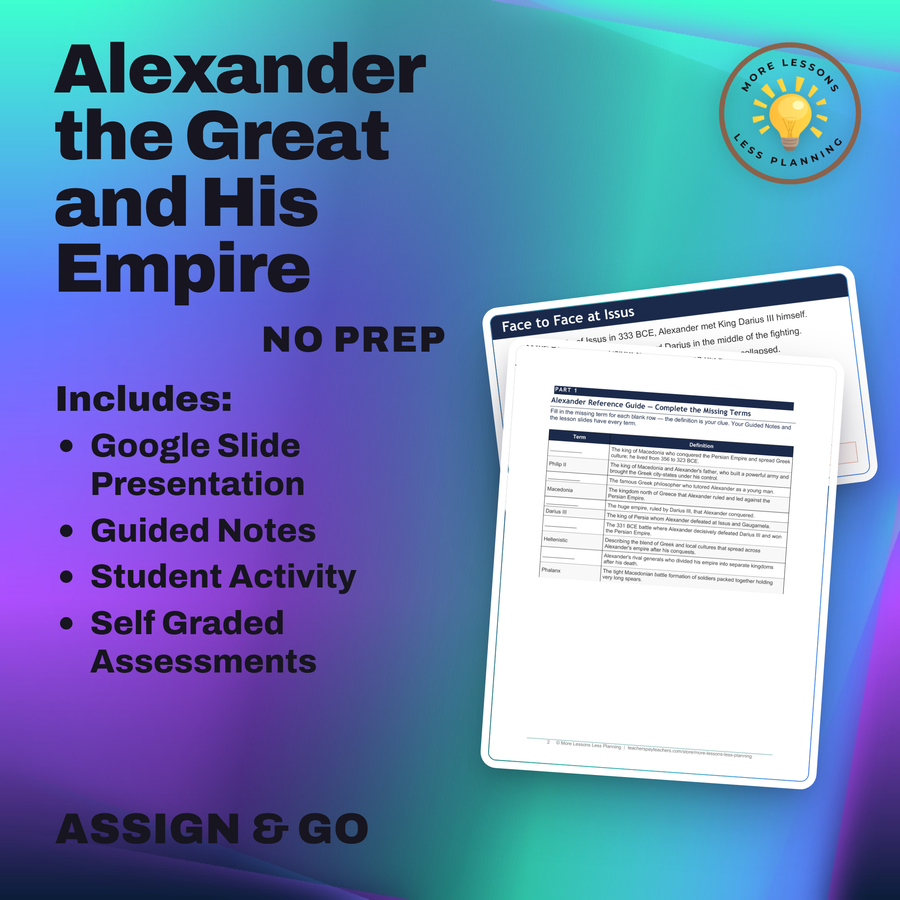
Alexander the Great and His Empire
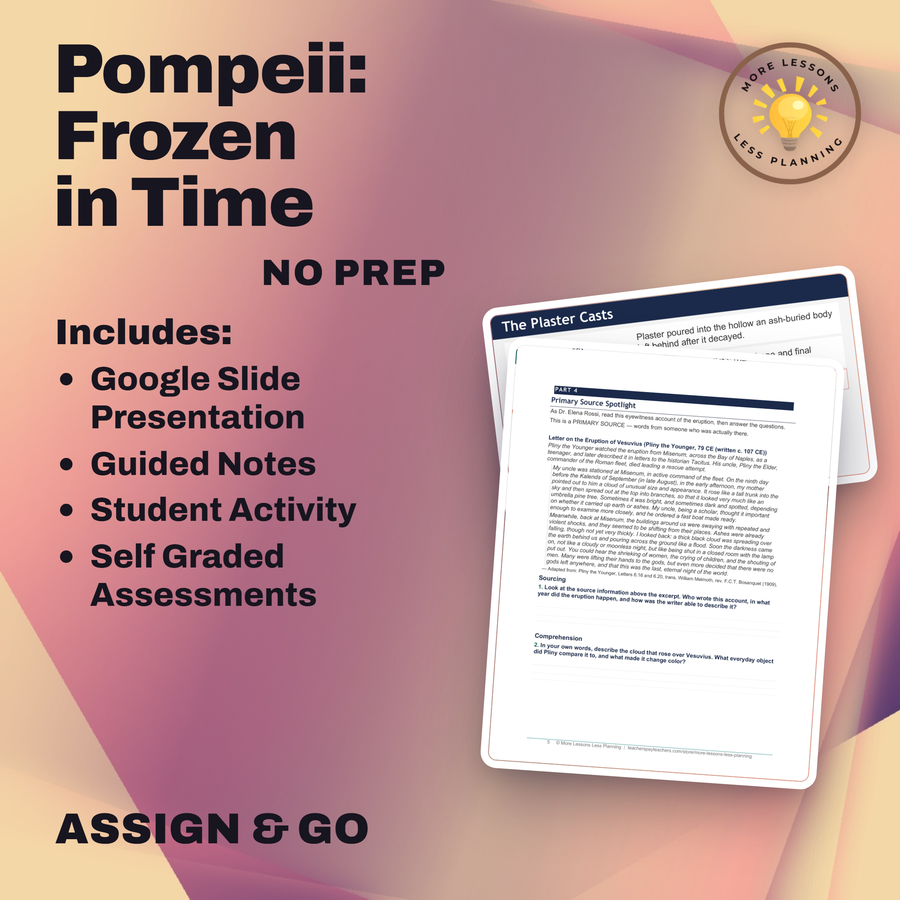
Pompeii Frozen in Time
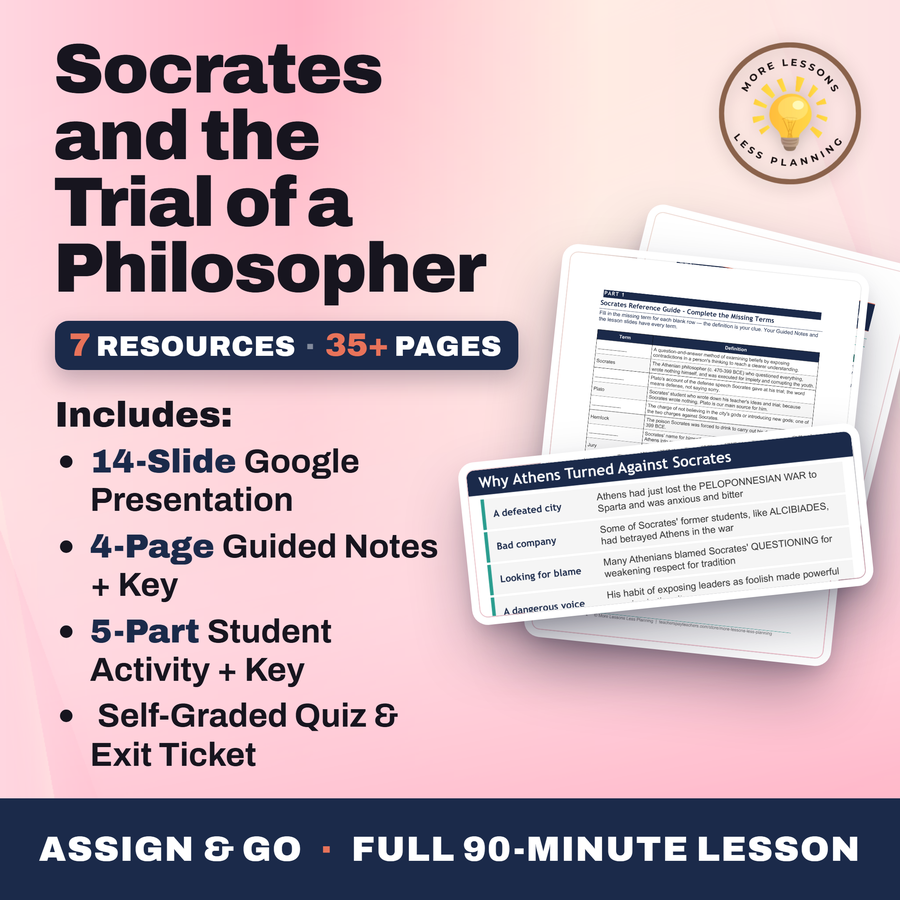
Socrates and the Trial of a Philosopher
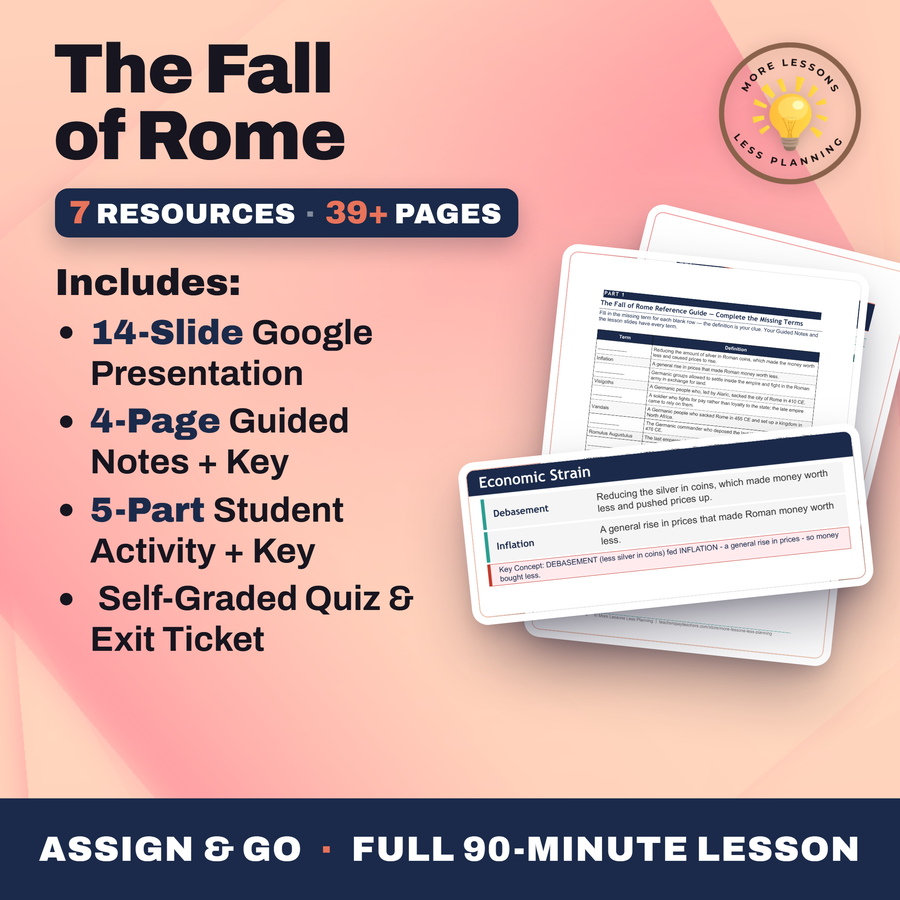
The Fall of Rome
The Olympic Games of Ancient Greece
The Persian Wars and Marathon
Every lesson on this site is free to download and use. If one of them saved you a prep period, you can chip in a few bucks toward my three kids' daycare fund. That's genuinely where tips go.