

The Samurai Warrior Code
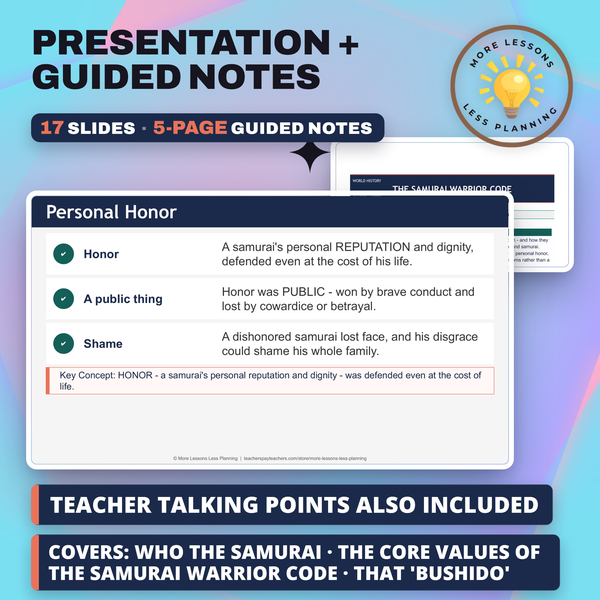
- Slide deck
- Guided notes
- Guided notes teacher key
- Activity + answer key
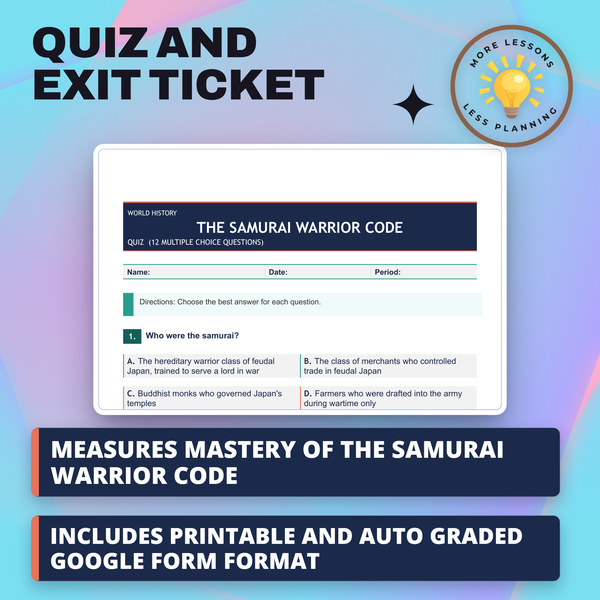
- Quiz + answer key
- Exit ticket + answer key
- Teacher guide
- Teacher presentation notes
Where should I send the next one?
Everything here is free and it stays that way. Leave your email and I'll send you the new lessons as they go up. You can unsubscribe from any one of them.
Every file in this toolkit
Related resources

Feudalism and the Manor System

Knights and Samurai

The Crusades
The Kamakura Shogunate

Aggression and Appeasement

Alliances and the Causes of WWI
What students do
- Explain how a samurai served a daimyo within Japan's feudal hierarchy of shogun, daimyo, and samurai
- Decode loyalty, honor, and combat skill as the values samurai actually lived by during the Genpei War
- Argue why bushido as a named, written code came centuries later, under the peaceful Tokugawa era and Nitobe Inazo's 1900 book
- Analyze a scene from The Tale of the Heike and separate the ideal it celebrates from documented fact
What it covers
- Seppuku and the samurai's choice to die with honor rather than face capture or disgrace
- The katana as both a weapon and a symbol of a samurai's status
- The Genpei War of 1180-1185 as the setting for the Kumagai and Atsumori episode students read
- Why a war epic can be moving evidence of an ideal without being a factual report
Learning targets
- Explain who the samurai were - the hereditary warrior class of feudal Japan - and how they served a daimyo within Japan's feudal military hierarchy of shogun, daimyo, and samurai.
- Describe the core values of the samurai warrior code - loyalty to one's lord, personal honor, and skill in combat - and explain that in the Genpei era these were lived customs rather than a single written rulebook.
- Explain that 'bushido' as a named, written code was a later codification (the peaceful Tokugawa era and Nitobe Inazo's 1900 book Bushido), not a code samurai read and followed during the Genpei War of 1180-1185.
- Analyze a primary source - a scene from The Tale of the Heike - and explain what a war epic can and cannot reliably tell us about the samurai, distinguishing the ideal it celebrates from documented fact.
From one teacher to another
The honest hook of this lesson is timing: bushido as a named code didn't exist during the Genpei War, it got written down centuries later during the Tokugawa era and popularized again around 1900, so I make students hold that gap the whole period. The Tale of the Heike scene, Kumagai facing the young Atsumori on the beach at Ichi-no-tani, gives them something genuinely moving to analyze, but I push them to name what an epic can tell us about an ideal versus what it can prove actually happened. Loyalty and honor land harder with students when they see the code was lived before it was ever written.
Every lesson on this site is free to download and use. If one of them saved you a prep period, you can chip in a few bucks toward my three kids' daycare fund. That's genuinely where tips go.