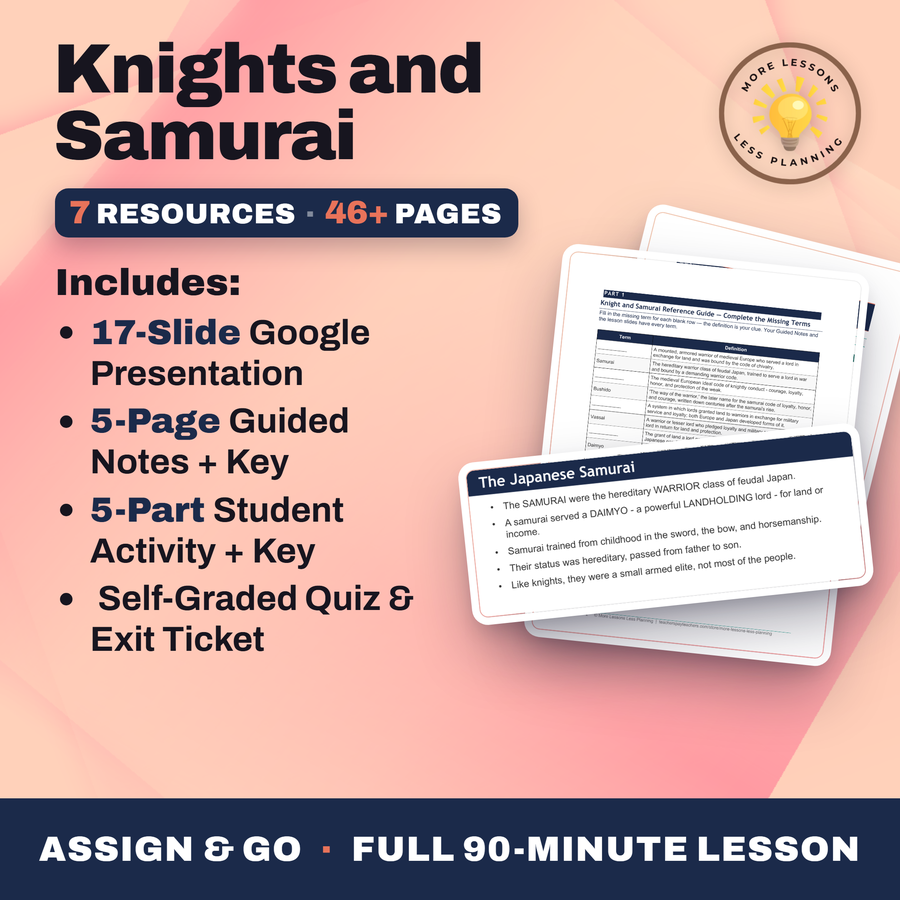

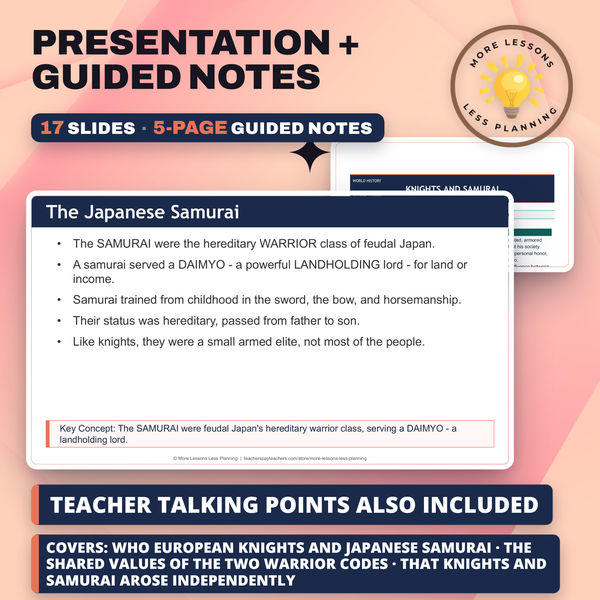
Knights and Samurai
- Slide deck
- Guided notes
- Guided notes teacher key
- Activity + answer key
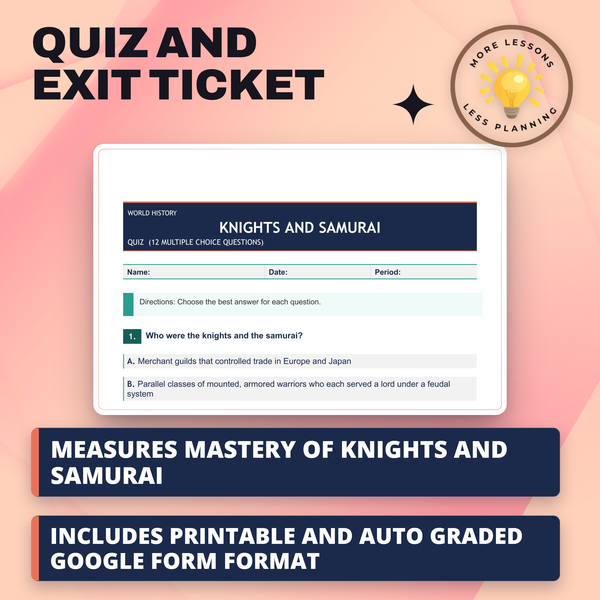
- Quiz + answer key
- Exit ticket + answer key
- Teacher guide
- Teacher presentation notes
Where should I send the next one?
Everything here is free and it stays that way. Leave your email and I'll send you the new lessons as they go up. You can unsubscribe from any one of them.
Every file in this toolkit
Related resources

Feudalism and the Manor System
The Crusades

The Kamakura Shogunate

The Samurai Warrior Code

Aggression and Appeasement
Alliances and the Causes of WWI
What students do
- Compare the European knight and the Japanese samurai as mounted, armored warriors who each served a lord
- Argue that knights and samurai arose independently, with no contact between medieval Europe and feudal Japan
- Analyze Ramon Llull's Book of the Order of Chivalry as a prescriptive ideal, not a record of how every knight actually behaved
- Map the rough parallels between a European fief and a Japanese shoen, and between a lord and a daimyo
What it covers
- Loyalty and honor as values both codes prized, even though chivalry and bushido were written centuries apart
- Skill in combat compared side by side, lance against katana
- Two feudal systems that granted land for military service without ever touching each other
- Why calling two things parallel is different from claiming one copied the other
Learning targets
- Explain who European knights and Japanese samurai were - parallel mounted, armored warrior elites who each served a lord within a feudal system - and how each fit his society.
- Compare the shared values of the two warrior codes - loyalty to one's lord, personal honor, and skill in combat - as expressed in European chivalry and Japanese bushido.
- Explain that knights and samurai arose independently, with no contact or influence between medieval Europe and feudal Japan, so their similarities are genuine parallels rather than one copying the other.
- Analyze a primary source - Ramon Llull's Book of the Order of Chivalry - and explain that chivalry as Llull describes it is a prescriptive ideal of the knight, not a description of how every knight actually behaved.
From one teacher to another
Students almost always assume knights and samurai must be connected somehow, so I built this one specifically to knock that assumption down with evidence instead of just asserting it. The compare-contrast structure does real work here: reading Llull's own description of a knight's duties next to what we know about samurai loyalty lets students find the real similarities without me overselling the connection. What holds the lesson together is a simple, honest claim, that two societies with zero contact independently landed on strikingly similar warrior codes, and it's a more interesting answer than any invented link would be.
Every lesson on this site is free to download and use. If one of them saved you a prep period, you can chip in a few bucks toward my three kids' daycare fund. That's genuinely where tips go.