Feudalism and the Manor System
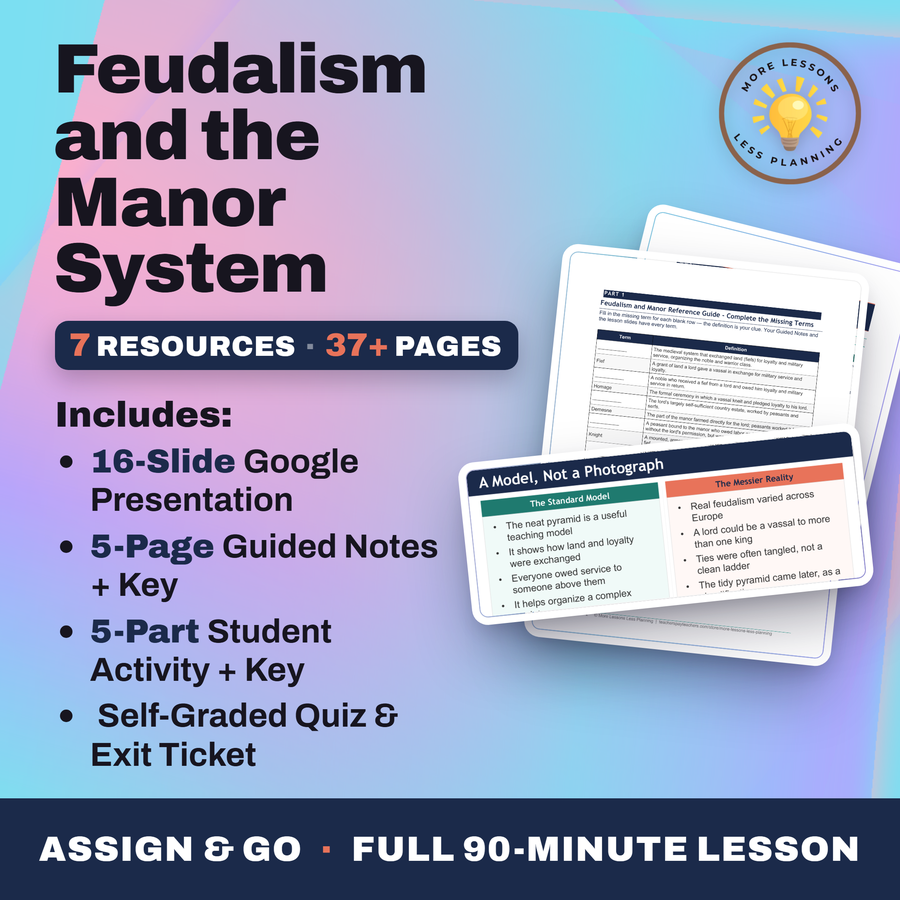
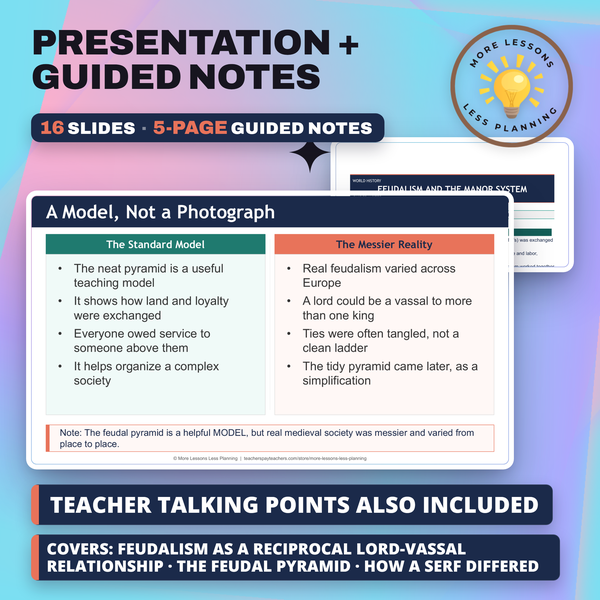
- Slide deck
- Guided notes
- Guided notes teacher key
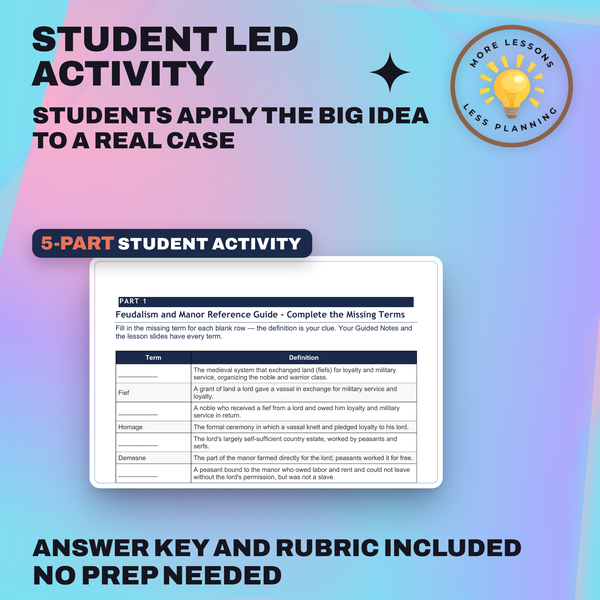
- Activity + answer key
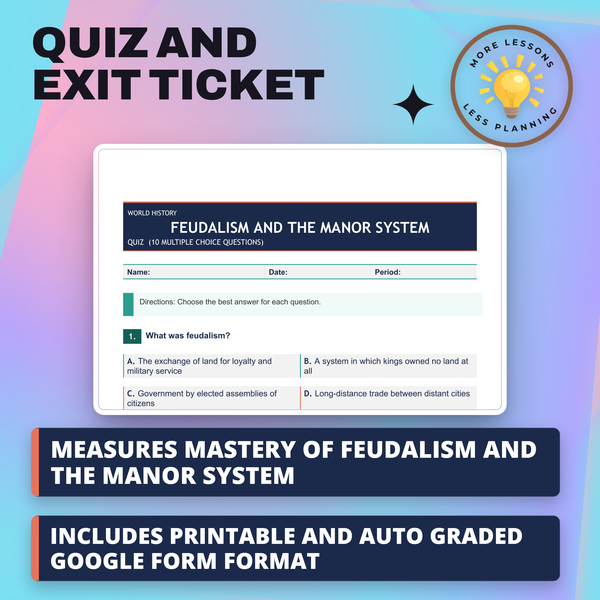
- Quiz + answer key
- Exit ticket + answer key
- Teacher guide
- Teacher presentation notes
Where should I send the next one?
Everything here is free and it stays that way. Leave your email and I'll send you the new lessons as they go up. You can unsubscribe from any one of them.
Every file in this toolkit
Related resources
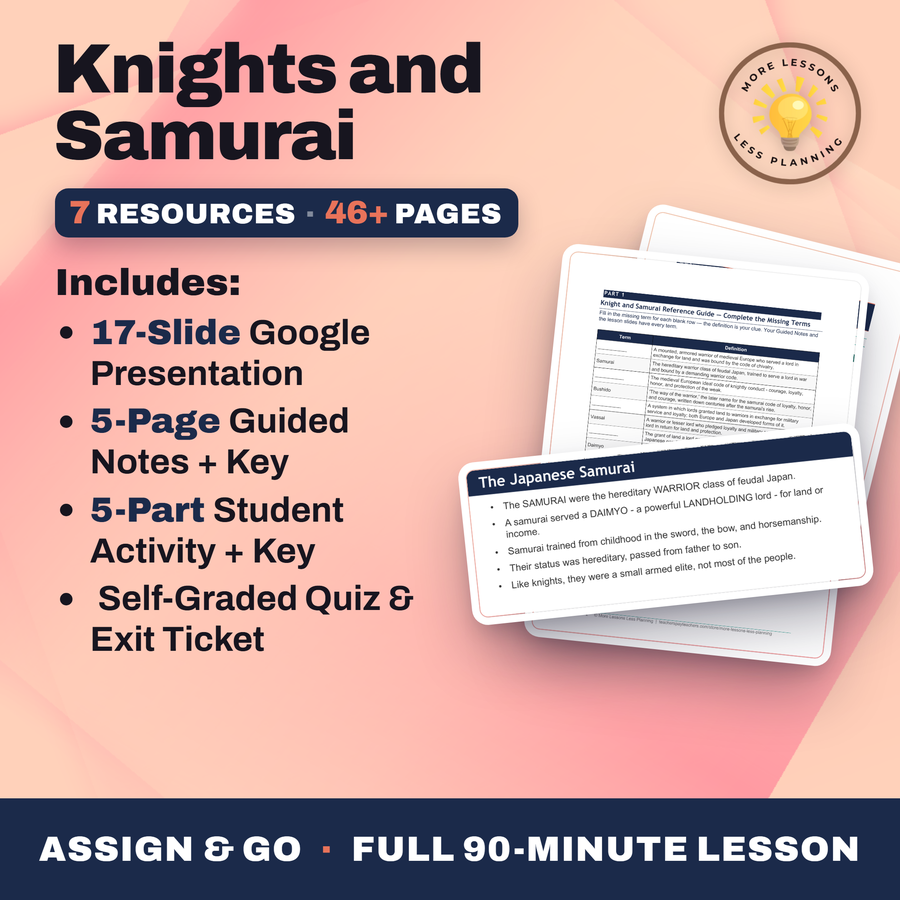
Knights and Samurai
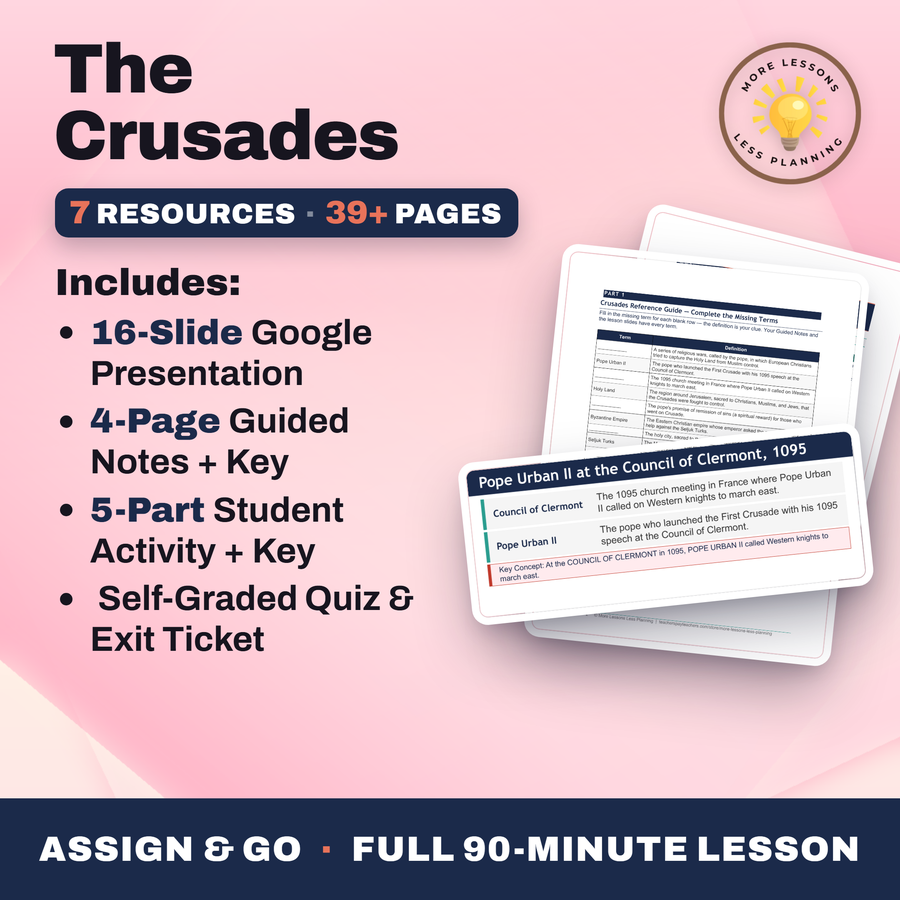
The Crusades
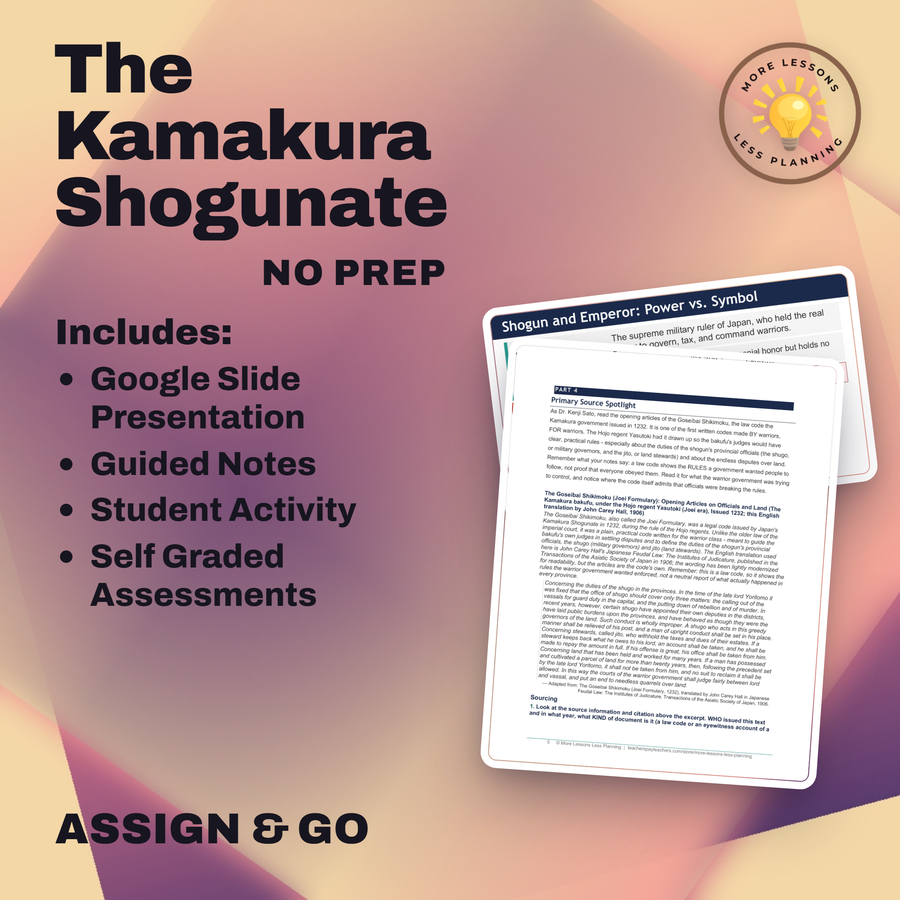
The Kamakura Shogunate
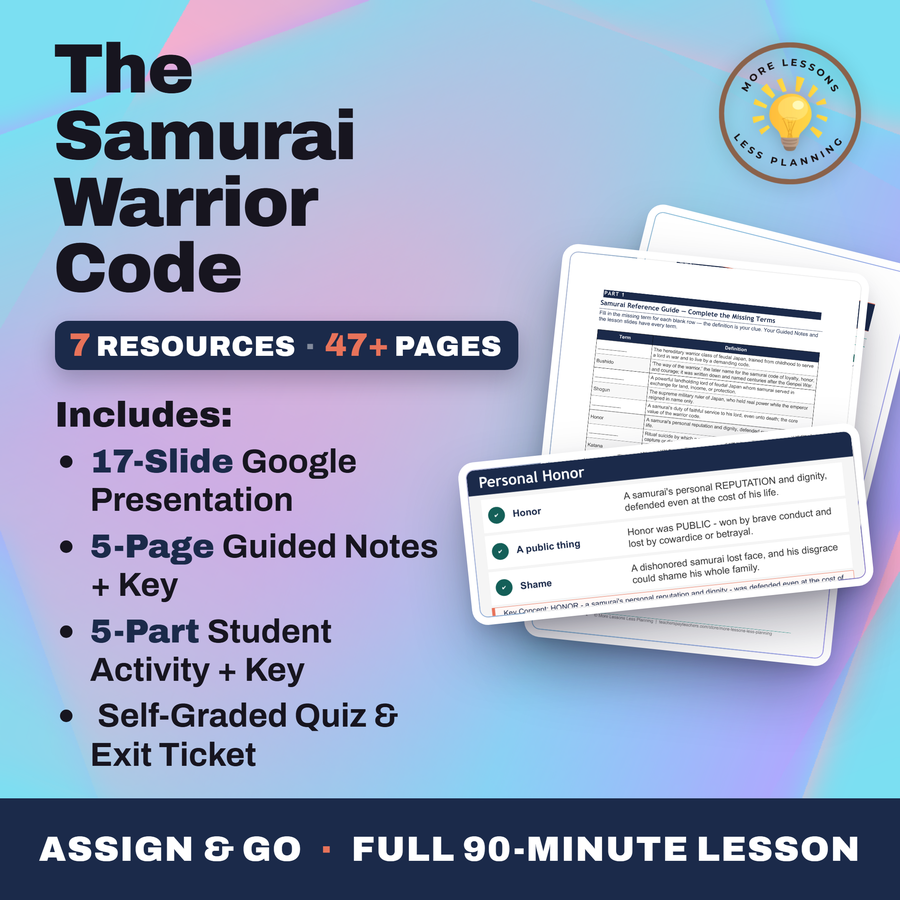
The Samurai Warrior Code
Aggression and Appeasement
Alliances and the Causes of WWI
What students do
- Map the feudal pyramid from king through lords and knights down to serfs
- Explain homage and fealty as the ceremony and oath that bound a vassal to a lord
- Compare a serf's obligations to a slave's to pin down exactly where the line falls
- Analyze a real manor entry from the 1086 Domesday Book to see the system recorded on paper
What it covers
- Fiefs, and how land traded for military service and loyalty up and down the pyramid
- The manor's demesne and the three-field system that kept a self-sufficient estate fed
- Why a serf was bound to the land but was not a slave
- How one Domesday Book entry ties the abstract system to a single English village
Learning targets
- Explain feudalism as a reciprocal lord-vassal relationship in which land (fiefs) was exchanged for military service and loyalty
- Describe the feudal pyramid and how the manor system organized daily life and labor, including the demesne, peasant obligations, and the three-field system
- Analyze how a serf differed from a slave and how feudalism and manorialism worked together to organize medieval European society
From one teacher to another
Students always blur feudalism and manorialism into one vague idea of knights and castles, so I keep them separate on purpose: the land-for-loyalty system among nobles versus the farming economy that actually fed everyone. The Domesday Book entry is what makes it real, since it turns an abstract pyramid into an actual recorded village with real obligations attached to real people. Students usually arrive with the serf-versus-slave line already conflated, and I don't let that slide, so we spend real time getting it right.
Every lesson on this site is free to download and use. If one of them saved you a prep period, you can chip in a few bucks toward my three kids' daycare fund. That's genuinely where tips go.