Genghis Khan and the Mongol Rise
Quality reviewed September 2026
- Subject
- World History
- Grades
- Grades 9-12
- Time
- About two 50-minute class periods
- Includes
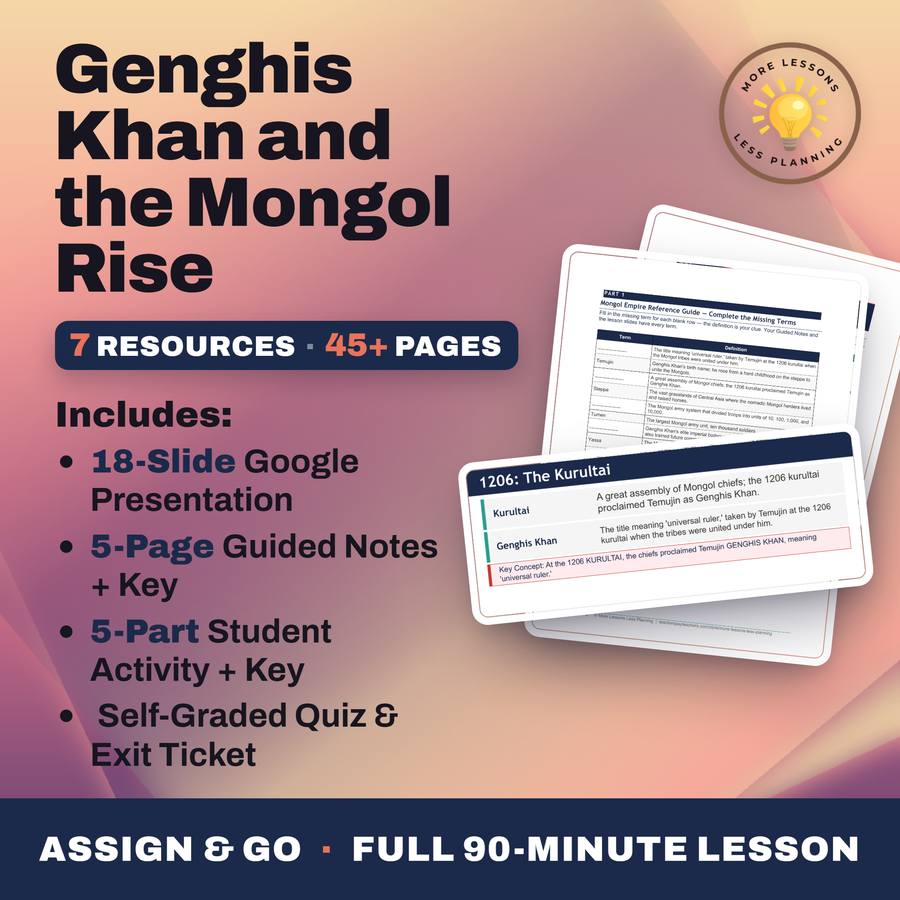
- 11 ready-to-teach files
- Format
- Word (.docx) · PowerPoint (.pptx)
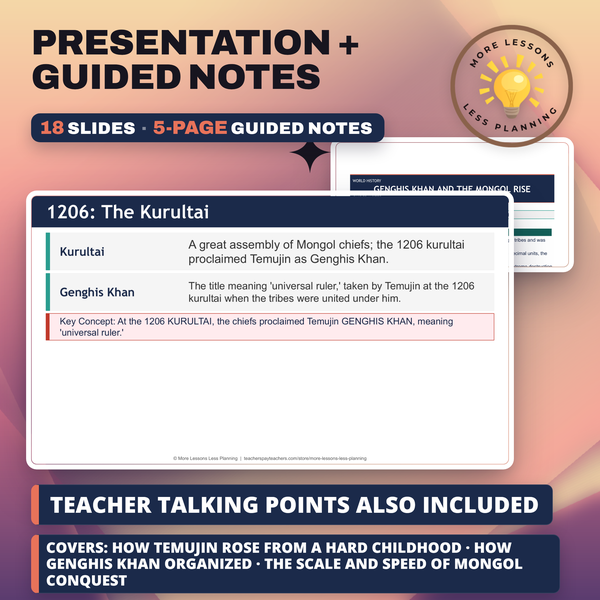
- Slide deck
- Guided notes
- Guided notes teacher key
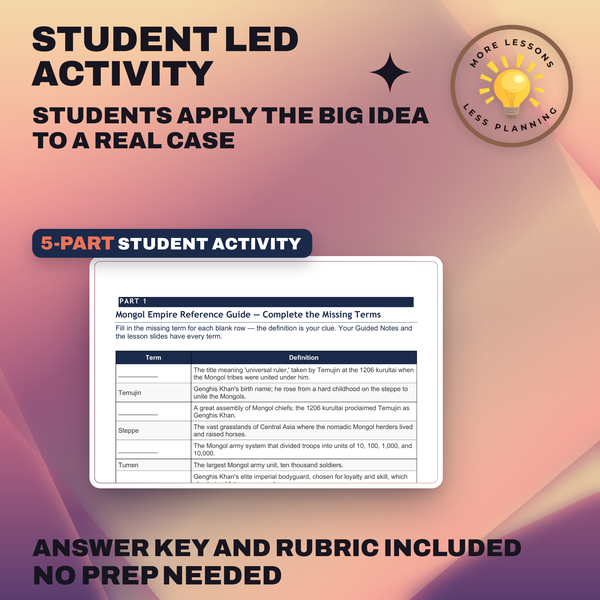
- Activity + answer key
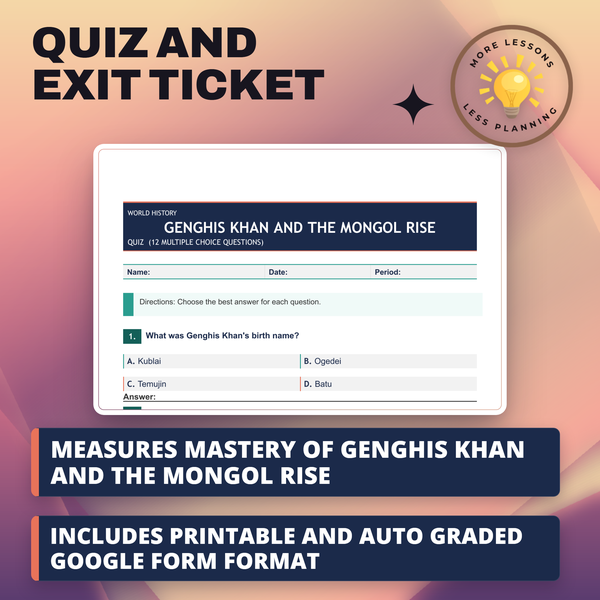
- Quiz + answer key
- Exit ticket + answer key
- Teacher guide
- Teacher presentation notes
What students do
- Trace Temujin's rise from a hard childhood on the steppe to his proclamation as Genghis Khan at the 1206 kurultai
- Explain the decimal army structure, the elite keshig guard, and the Yassa law code that held the empire together
- Read John of Plano Carpini's 1245-47 eyewitness account of Mongol military discipline and match it to specific claims in their notes
- Weigh the empire's mass destruction against the safer Silk Road trade of the Pax Mongolica and write an evidence-based verdict
What it covers
- Temujin's unification of the warring Mongol tribes and his rise to Genghis Khan, "universal ruler"
- The decimal-organized army, the keshig guard, and the Yassa - the structure behind the largest contiguous land empire in history
- A primary source excerpt from John of Plano Carpini, the Franciscan friar who observed the Mongol army a generation after Genghis Khan's death
- The empire's dual legacy: devastating conquest set against the trade security of the Pax Mongolica
Learning targets
- Trace how Temujin rose from a hard childhood to unite the warring Mongol tribes and was proclaimed Genghis Khan at the 1206 kurultai.
- Explain how Genghis Khan organized and disciplined the Mongol army - decimal units, the keshig imperial guard, promotion by merit, and the Yassa law code.
- Describe the scale and speed of Mongol conquest, honestly weighing its extreme destruction against the later Silk Road trade of the Pax Mongolica.
- Analyze a primary source - John of Plano Carpini's eyewitness account of Mongol military organization and discipline - and explain what it reveals about why the Mongols conquered so successfully.
Peek inside
TEMUJIN was the birth name of the boy who became Genghis Khan.
His father was a Mongol tribal chief, poisoned by rivals when Temujin was young.
After that, Temujin's family was abandoned by their clan on the open steppe.
They survived on roots, fish, and small game through brutal winters.
That hard childhood shaped a leader who valued loyalty above birth.
A Hard Beginning
TEMUJIN was the birth name of the boy who became Genghis Khan; his father was a Mongol tribal who was poisoned by rivals.
After his father's death, Temujin's family was by their clan and had to survive alone on the open steppe.
1. Q1. What title, meaning 'universal ruler,' did the Mongol chiefs give Temujin at the 1206 kurultai when the tribes were united under him?
Why this matters
A council called a kurultai crowned a steppe outsider ‘universal ruler’ in 1206, and that single vote created the machinery behind the largest contiguous land empire in history: a decimal-organized army, an elite keshig guard, and one law code, the Yassa, holding all of it together.
What earns this a full class period is the verdict at the end, weighing conquest against the safer trade of the Pax Mongolica. Students want to pick a side fast, and I make them hold the destruction and the trade security in the same paragraph before they are allowed to land anywhere.
From one teacher to another
I like teaching Genghis Khan because the empire itself is proof enough - kids don't need me to sell them on "biggest land empire in history," they just want to know how it actually worked. So the guided notes go straight at the machinery: the decimal army, the keshig guard, the Yassa. The primary source is real and it's a good one - John of Plano Carpini, a friar sent by the pope who reached the Mongol court in 1245-47, describing an army built on strict decimal units and stricter obedience. I have students notice he never met Genghis Khan himself, since Genghis died in 1227, so they have to reason about what an eyewitness twenty years later can and can't tell you. The activity closes by asking students to weigh the destruction of the conquests against the safer trade of the Pax Mongolica, using evidence instead of a gut reaction. Guided notes, activity, quiz, and exit ticket all ship with answer keys, plus a full teacher guide.
Every file in this toolkit
Download
Where should I send the next one?
Everything here is free and it stays that way. Leave your email and I'll send you the new lessons as they go up. You can unsubscribe from any one of them.
Related resources
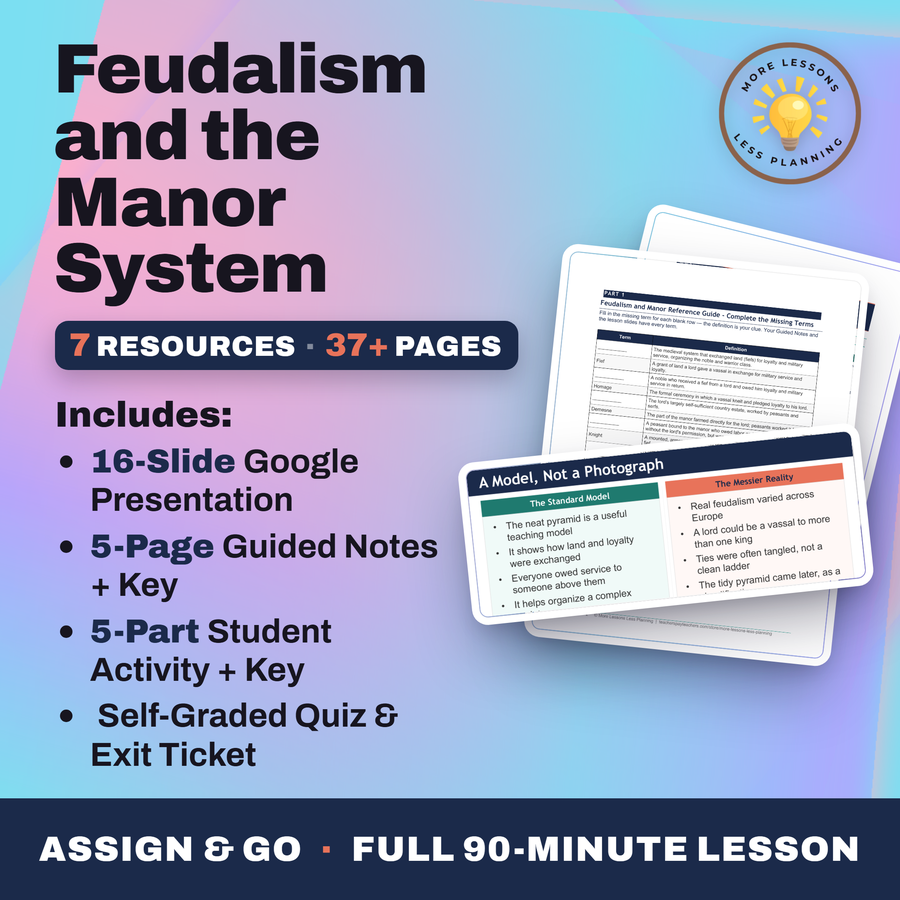
Feudalism and the Manor System
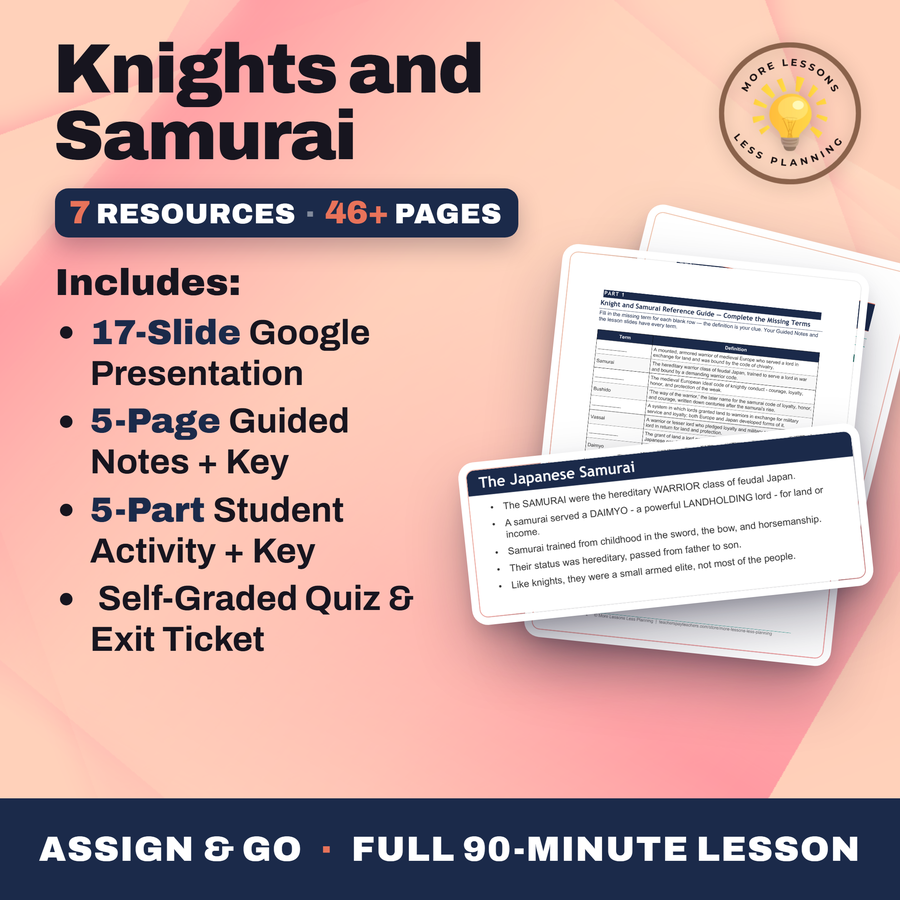
Knights and Samurai
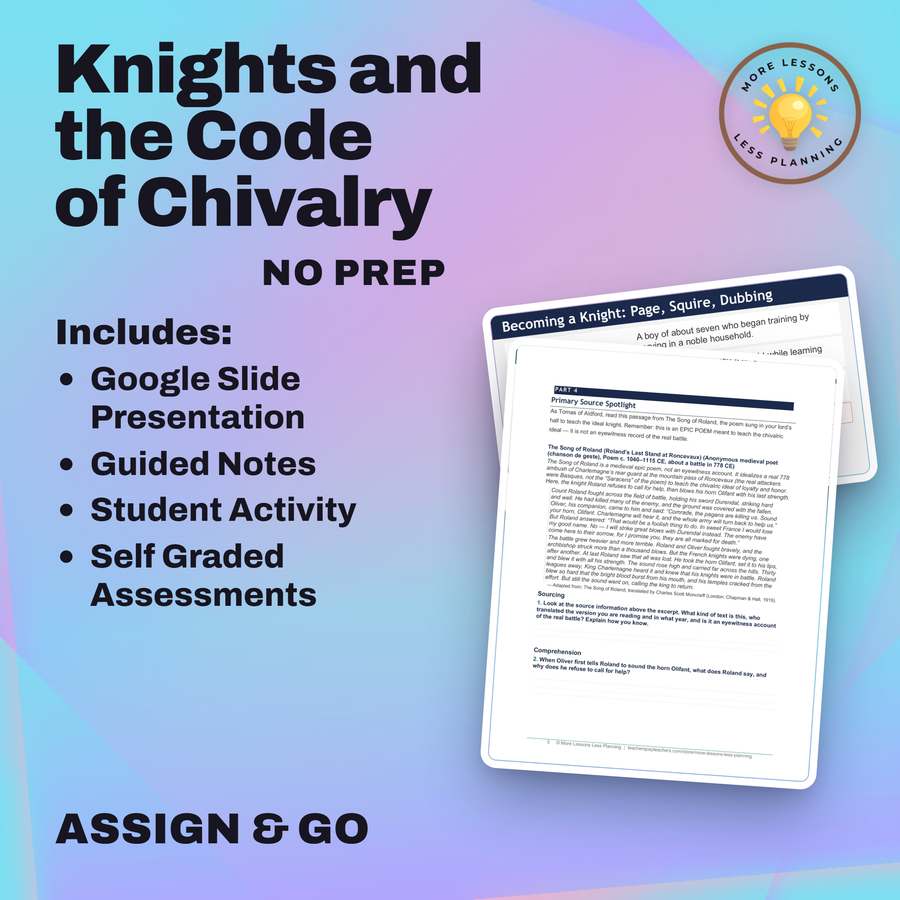
Knights and the Code of Chivalry
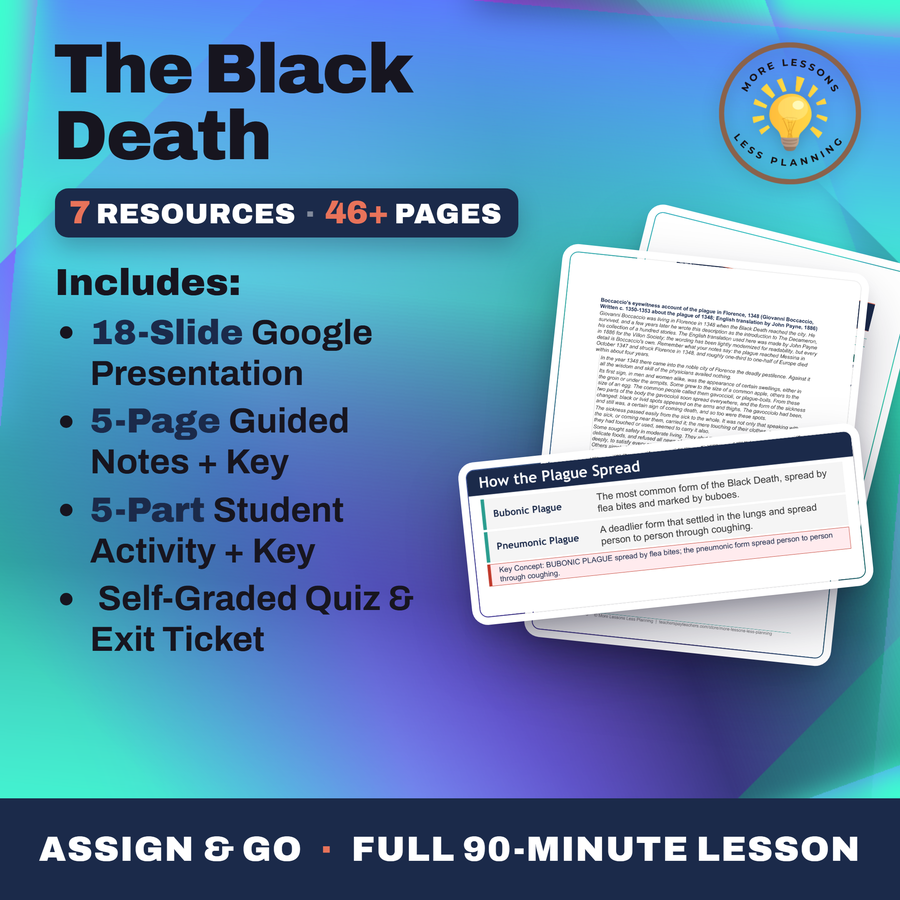
The Black Death
The Crusades
The Kamakura Shogunate
Every lesson on this site is free to download and use. If one of them saved you a prep period, you can chip in a few bucks toward my three kids' daycare fund. That's genuinely where tips go.