The Roman Republic and Its Government
Quality reviewed September 2026
- Subject
- World History
- Grades
- Grades 9-12
- Time
- About two 50-minute class periods
- Includes
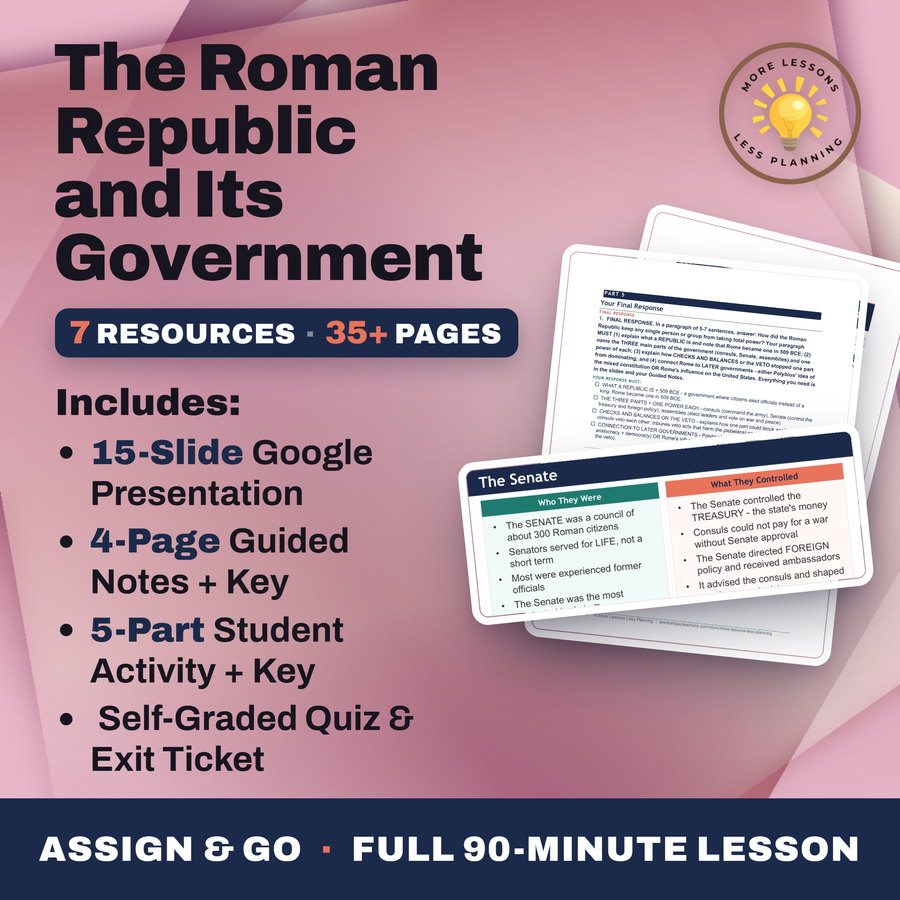
- 11 ready-to-teach files
- Format
- Word (.docx) · PowerPoint (.pptx)
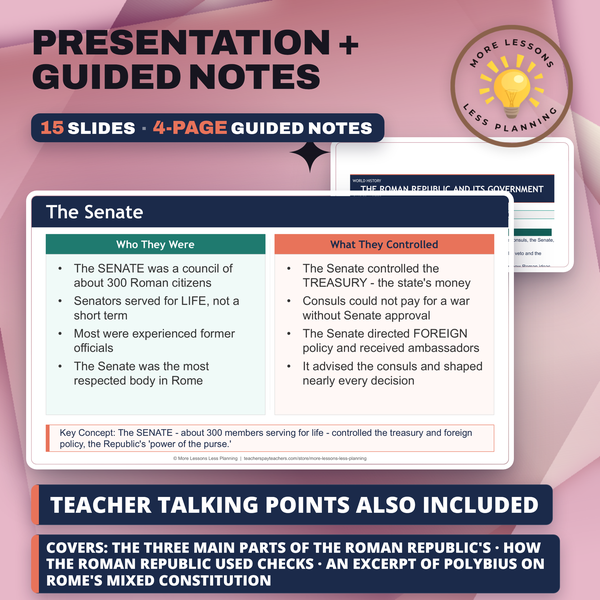
- Slide deck
- Guided notes
- Guided notes teacher key
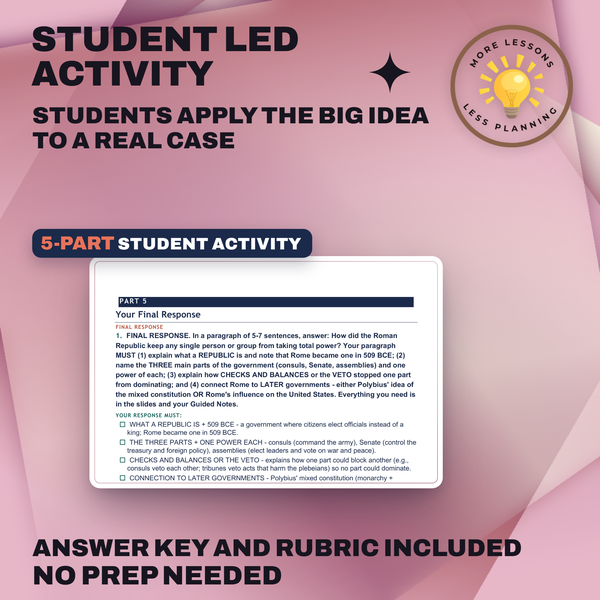
- Activity + answer key
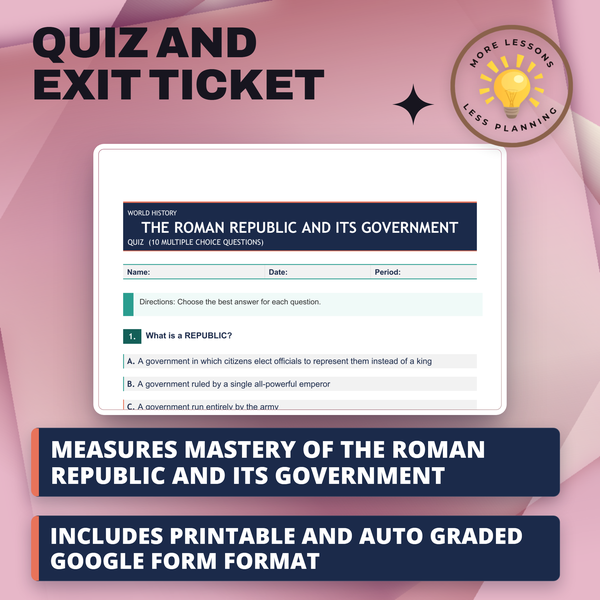
- Quiz + answer key
- Exit ticket + answer key
- Teacher guide
- Teacher presentation notes
What students do
- Explain why Rome swore off one-man rule after overthrowing its last king in 509 BCE
- Describe how two consuls, a life-term Senate, and voting assemblies checked each other's power
- Trace how the plebeians won their own tribunes and a veto during the Conflict of the Orders
- Read Polybius's analysis of Rome's mixed constitution and connect it to the U.S. system of checks and balances
What it covers
- The two consuls, their mutual veto, and their strict one-year term
- The Senate's control of the treasury and foreign policy - Rome's "power of the purse"
- The tribunes of the plebs and their power to veto acts harmful to ordinary Romans
- Polybius's theory of the mixed constitution and its echo, through Montesquieu, in the U.S. Constitution
Learning targets
- Describe the three main parts of the Roman Republic's government - the consuls, the Senate, and the assemblies - and the powers each one held
- Explain how the Roman Republic used checks and balances, including the veto and the tribunes, so that no single part could dominate
- Analyze an excerpt of Polybius on Rome's mixed constitution and explain how Roman ideas influenced later governments, including the United States
Peek inside
The End of the Kings
For its first centuries Rome was ruled by KINGS
In 509 BCE Romans overthrew their last king, Tarquin the Proud
They swore never to let one man hold total power again
In its place they built a REPUBLIC
The End of the Kings
is a form of government in which citizens elect officials to represent them instead of being ruled by a king.
BCE, the Romans overthrew their last king, Tarquin the Proud, and founded the Republic.
stood for 'The Senate and the People of Rome' and appeared on Rome's coins and standards.
1. Look at the information above the excerpt. Who wrote this passage, about when did he live, and whose government is he describing? When was the translation you are reading made?
Why this matters
Ordinary Romans had to fight for their own protection inside the government they lived under, winning the tribunes of the plebs and a veto power only after the Conflict of the Orders forced the aristocracy to share control. Rights like that were negotiated, not handed down from the start alongside the consuls and the Senate.
Calling the Senate's control of the treasury the power of the purse is a phrase my students already half-recognize from current events, and pointing that out usually convinces them Rome's government isn't just an old system, it's the ancestor of language they still hear on the news.
From one teacher to another
I ask students what would stop a leader from grabbing total power, and Rome's answer after 509 BCE was to split executive power between two consuls who could each veto the other and neither could hold office more than a year. From there they map the whole design: the Senate controlling the treasury, the assemblies holding the sole vote on war and peace, and the plebeians' tribunes able to block anything harmful to ordinary Romans. Then Polybius walks in with the payoff - a Greek historian explaining, in his own words, that Rome's strength came from blending monarchy, aristocracy, and democracy into one balanced system. I close by being honest with them: Montesquieu studied that same Roman balance centuries later, and it genuinely shaped the American Constitution, but Rome didn't hand the founders a blueprint - it handed them an idea worth stealing.
Every file in this toolkit
Download
Where should I send the next one?
Everything here is free and it stays that way. Leave your email and I'll send you the new lessons as they go up. You can unsubscribe from any one of them.
Related resources
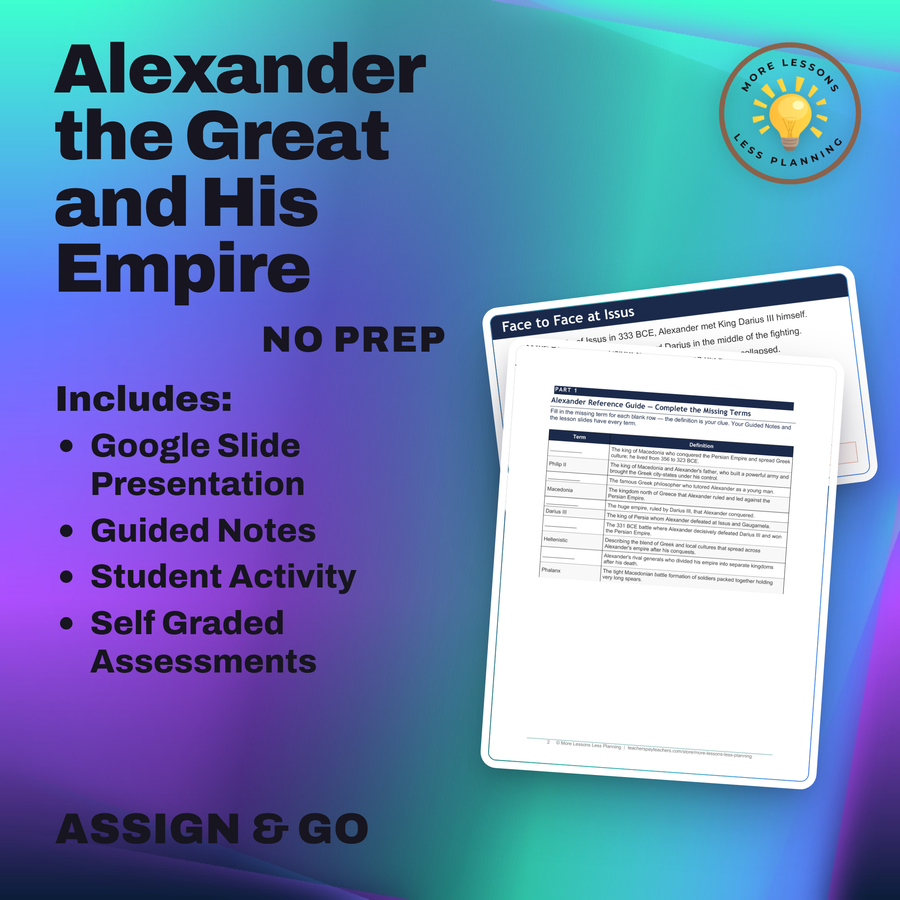
Alexander the Great and His Empire
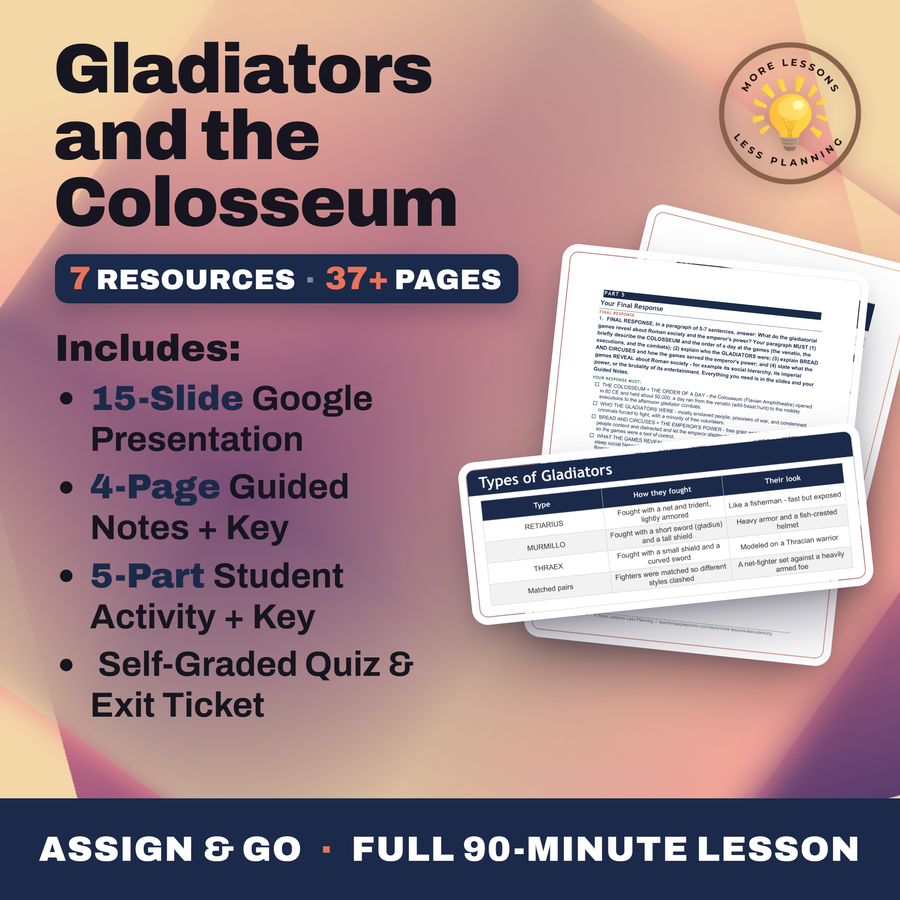
Gladiators and the Colosseum

Pompeii Frozen in Time
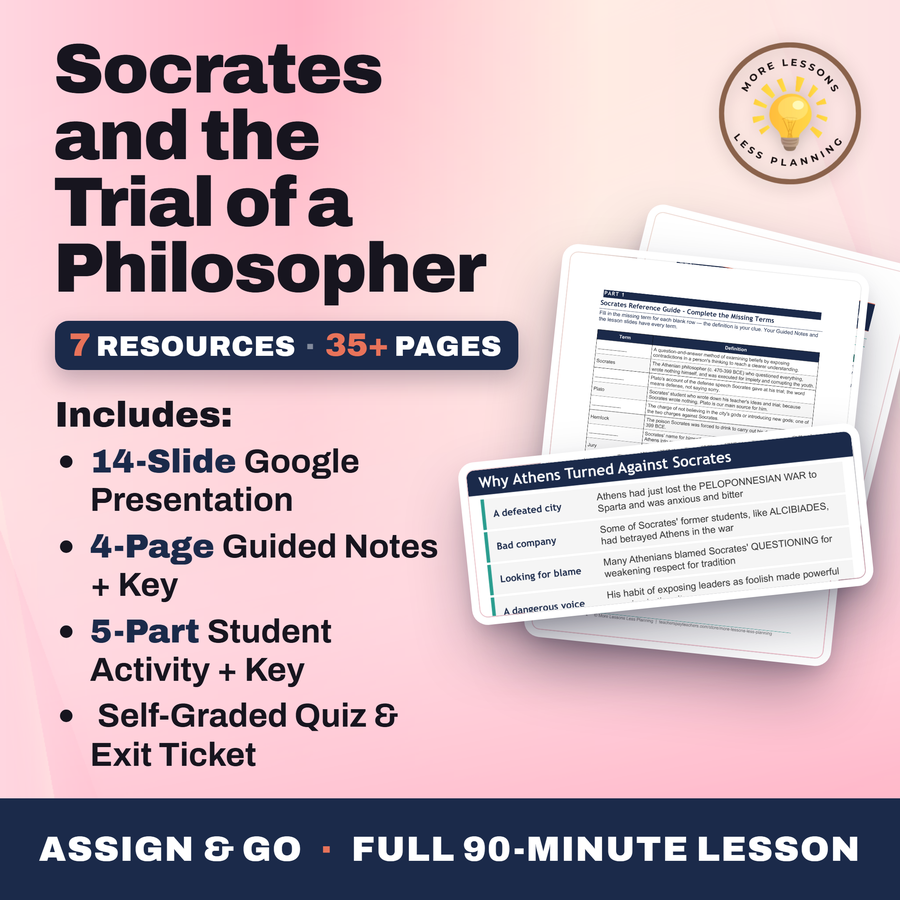
Socrates and the Trial of a Philosopher
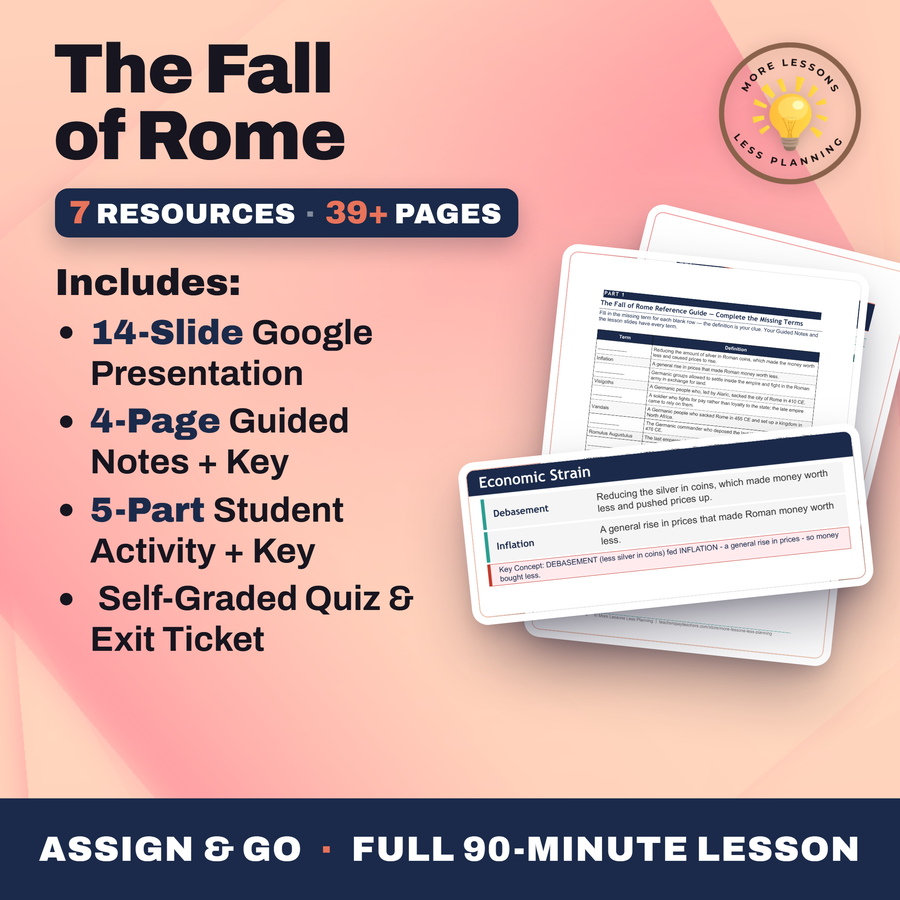
The Fall of Rome
The Olympic Games of Ancient Greece
Every lesson on this site is free to download and use. If one of them saved you a prep period, you can chip in a few bucks toward my three kids' daycare fund. That's genuinely where tips go.