The Kamakura Shogunate
- Slide deck
- Guided notes
- Guided notes teacher key
- Activity + answer key
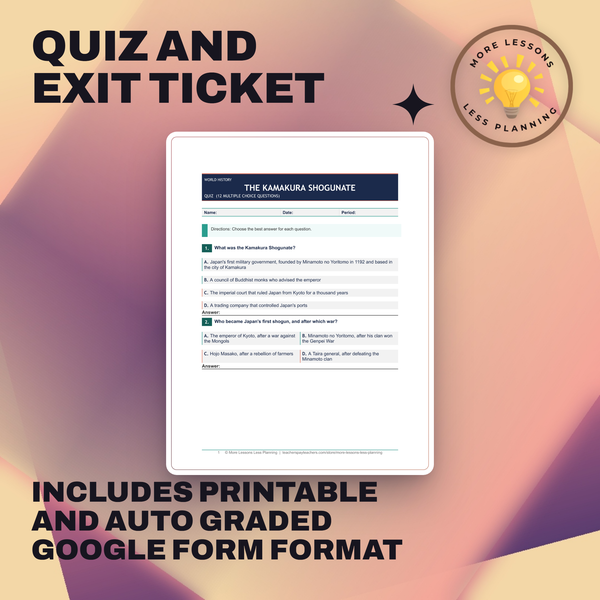
- Quiz + answer key
- Exit ticket + answer key
- Teacher guide
- Teacher presentation notes
Where should I send the next one?
Everything here is free and it stays that way. Leave your email and I'll send you the new lessons as they go up. You can unsubscribe from any one of them.
Every file in this toolkit
Related resources
Feudalism and the Manor System
Knights and Samurai
The Crusades
The Samurai Warrior Code
Aggression and Appeasement
Alliances and the Causes of WWI
What students do
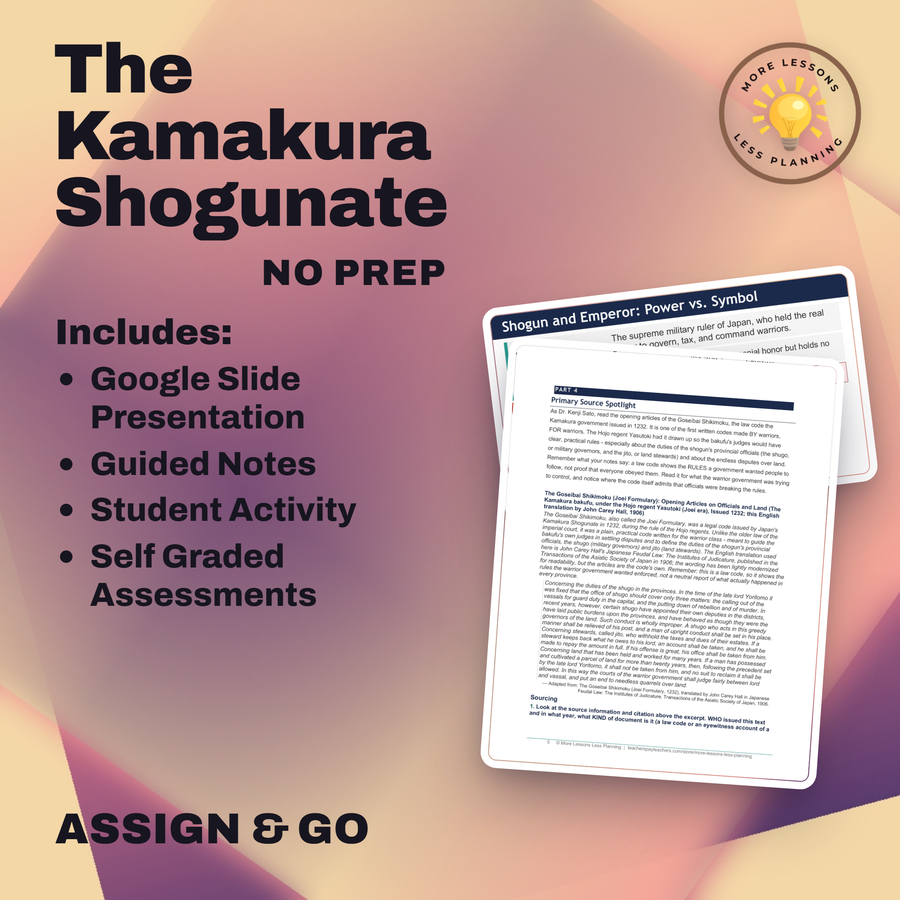
- Trace how Minamoto no Yoritomo became Japan's first shogun in 1192 after winning the Genpei War
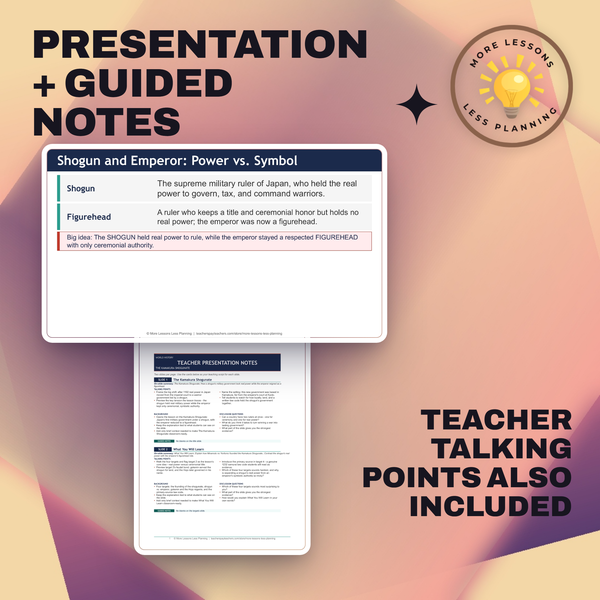
- Contrast the shogun's real military power with the emperor's ceremonial role as a figurehead in Kyoto
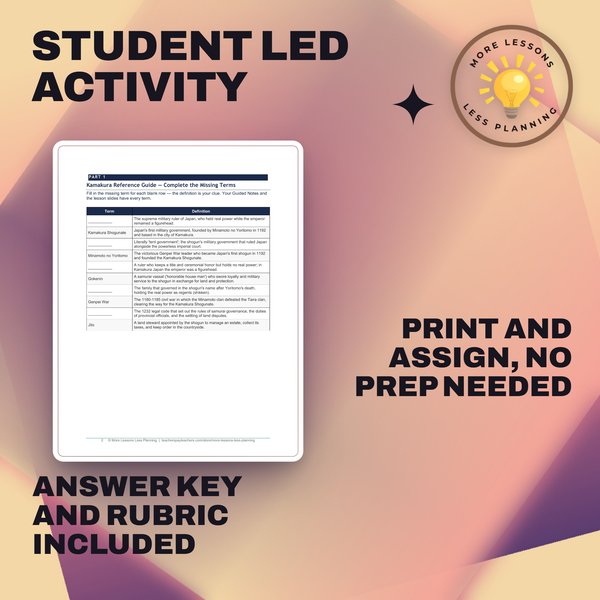
- Explain how gokenin vassals traded loyalty and military service to the shogun for land
- Analyze the opening articles of the 1232 Goseibai Shikimoku for what a law code can and cannot reveal about how government actually ran
What it covers
- The bakufu, or tent government, as the shogun's military administration alongside a powerless imperial court
- The Hojo regents who governed in the shogun's name after Yoritomo's death
- Jito land stewards and how they collected taxes and kept order in the countryside
- Two governments running side by side in one country, one holding power and one holding the crown
Learning targets
- Explain how the Kamakura Shogunate created a military government (bakufu) under a shogun, and how Minamoto no Yoritomo became Japan's first shogun in 1192 after the Genpei War.
- Contrast the real military power of the shogun with the ceremonial, symbolic authority of the emperor, who remained a figurehead in Kyoto.
- Describe the land-based loyalty that bound samurai vassals (gokenin) to the shogun, and explain how the Hojo regents later governed in the shogun's name.
- Analyze a primary source - the opening articles of the 1232 Goseibai Shikimoku - and explain what a law code can and cannot tell us about how samurai government actually worked.
From one teacher to another
What I like about this one is the split it forces students to hold in their heads: a shogun with the actual army and an emperor who keeps the throne and none of the authority. Yoritomo's rise after the Genpei War gives that split a clear origin point, and the Goseibai Shikimoku lets students read an actual 1232 law code instead of just taking my summary of how gokenin loyalty worked. By the end they can explain why Kamakura Japan didn't run on just one government, and what that split meant for who really controlled the countryside.
Every lesson on this site is free to download and use. If one of them saved you a prep period, you can chip in a few bucks toward my three kids' daycare fund. That's genuinely where tips go.