The Encomienda System and Spanish Colonial Control
Quality reviewed September 2026
- Grades
- Grades 9-12
- Time
- About two 50-minute class periods
- Includes
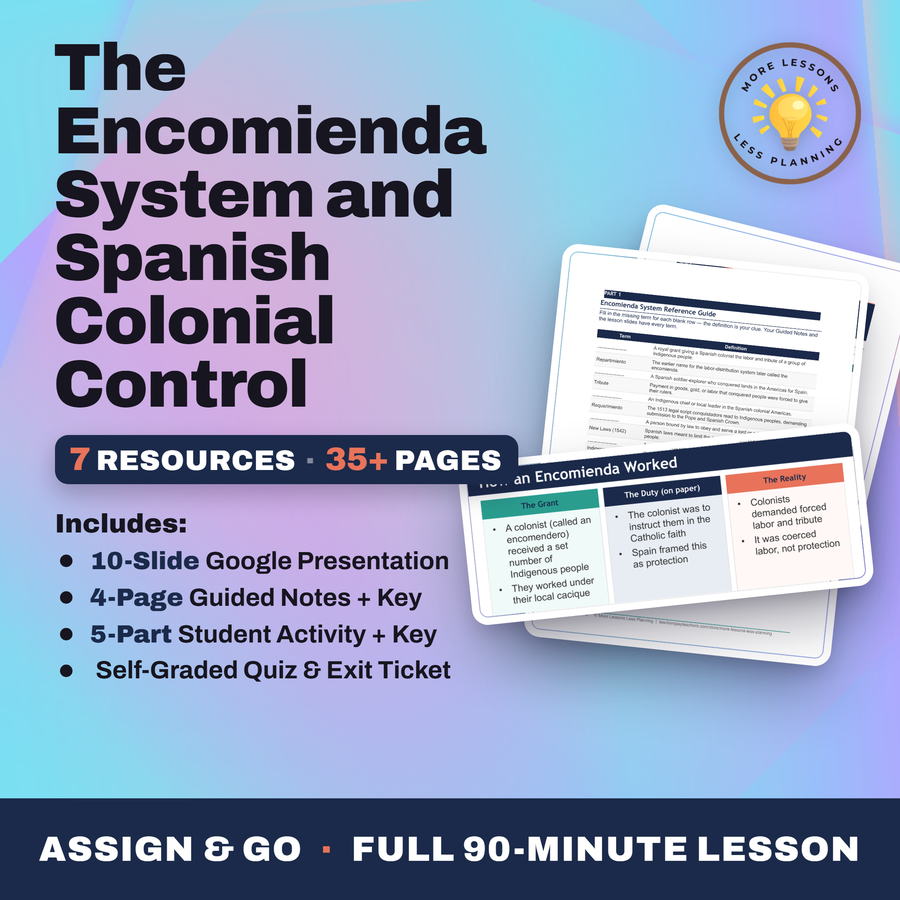
- 11 ready-to-teach files
- Format
- Word (.docx) · PowerPoint (.pptx)
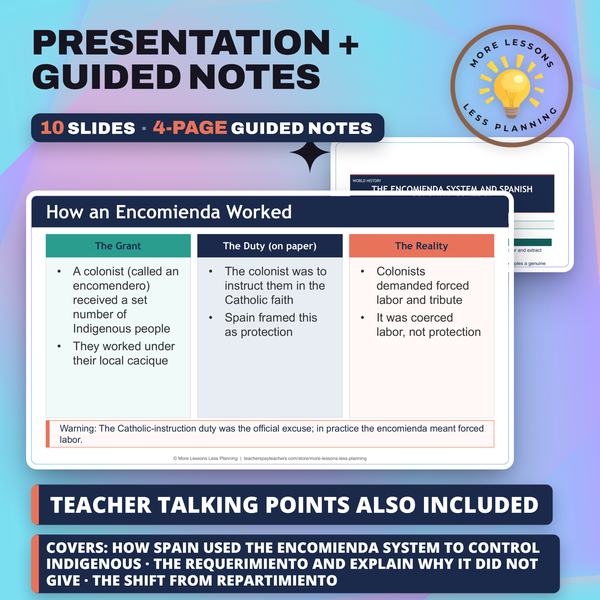
- Slide deck
- Guided notes
- Guided notes teacher key
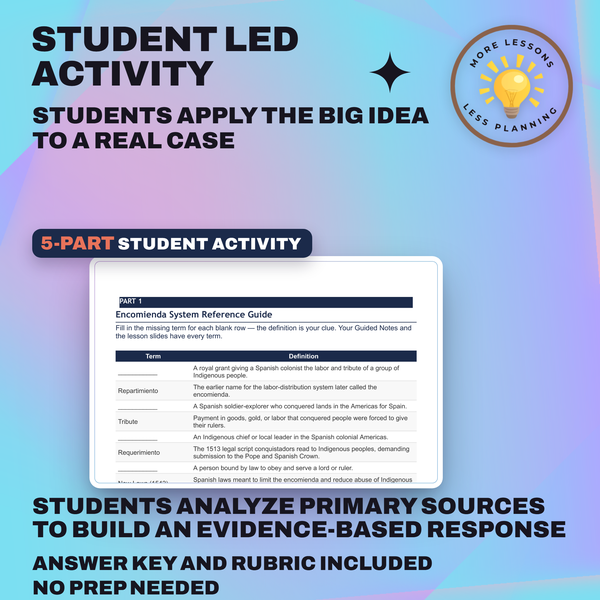
- Activity + answer key
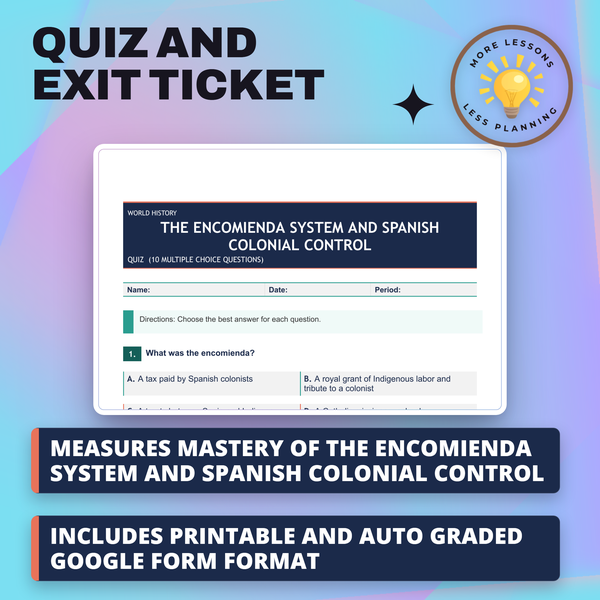
- Quiz + answer key
- Exit ticket + answer key
- Teacher guide
- Teacher presentation notes
What students do
- Explain how the encomienda system granted Spanish colonists Indigenous labor and tribute
- Decode the Requerimiento's legal language to show why it wasn't a genuine choice for Indigenous peoples
- Trace the shift from repartimiento to encomienda and the tribute Indigenous communities were forced to pay
- Evaluate how far the 1542 New Laws actually curbed the encomienda system
What it covers
- How the encomienda system organized forced labor and tribute in Spanish colonial America
- The Requerimiento as a legal document that manufactured consent rather than offering it
- Key vocabulary including encomienda, repartimiento, tribute, cacique, and vassal
Learning targets
- Explain how Spain used the encomienda system to control Indigenous labor and extract wealth.
- Describe the Requerimiento and explain why it did not give Indigenous peoples a genuine choice.
- Trace the shift from repartimiento to encomienda and the tribute Indigenous peoples were forced to pay.
- Analyze how the New Laws of 1542 tried to curb the encomienda.
- Evaluate the Requerimiento as a primary source that shows legal coercion, not fair choice.
Peek inside
1. Spain used the to grant a colonist the forced labor of a group of Indigenous people.
Why this matters
A document read aloud in Spanish to people who spoke no Spanish counted, on paper, as their consent to conquest. The Requerimiento turned that fiction into policy, and the encomienda system built an entire colonial economy on the forced labor and tribute it supposedly authorized.
Legal language can manufacture consent just as easily as it can protect rights, and the Requerimiento is about as bare an example as history offers. Once students decode what the document actually says, they stop treating the 1542 New Laws as a happy ending and start asking how limited a limited reform really was.
From one teacher to another
This one treats the encomienda system as what it was, a legal structure for extracting labor and wealth, and I built it around the Requerimiento so students see how the legal justification actually worked. They read it as a primary source and have to explain why reading a demand aloud in a language nobody understood didn't amount to consent. The 1542 New Laws give the lesson its ending, a real but limited attempt to rein the system in.
Every file in this toolkit
Download
Where should I send the next one?
Everything here is free and it stays that way. Leave your email and I'll send you the new lessons as they go up. You can unsubscribe from any one of them.
Related resources
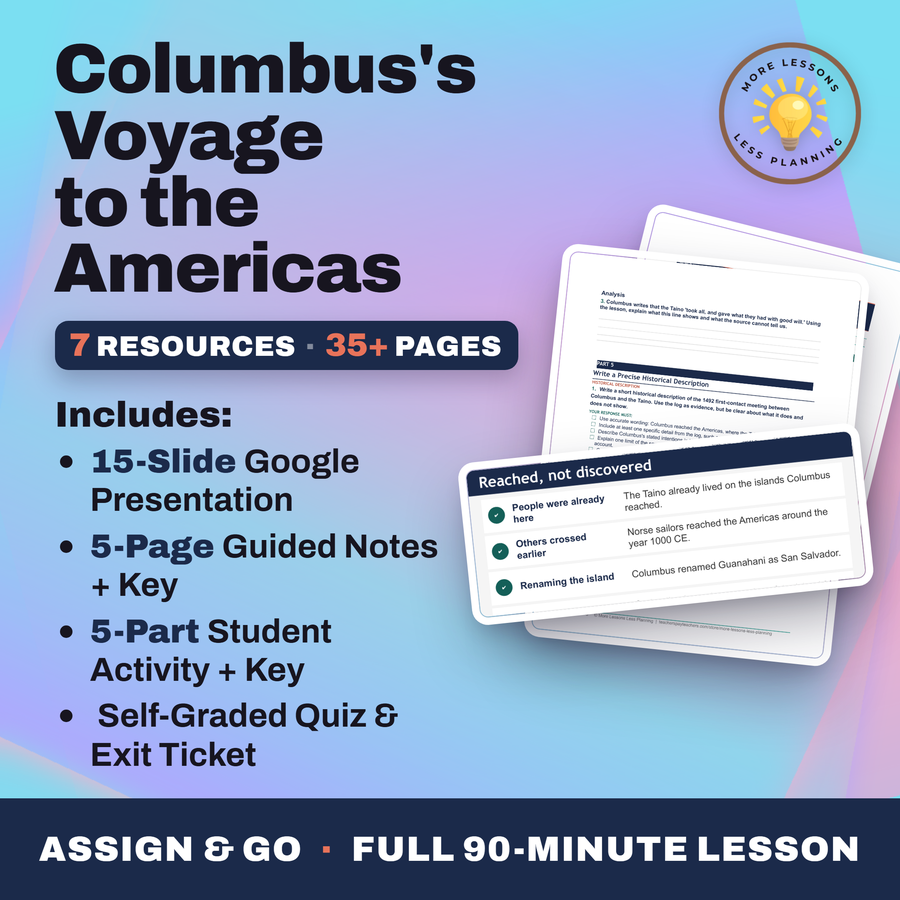
Columbus's Voyage to the Americas
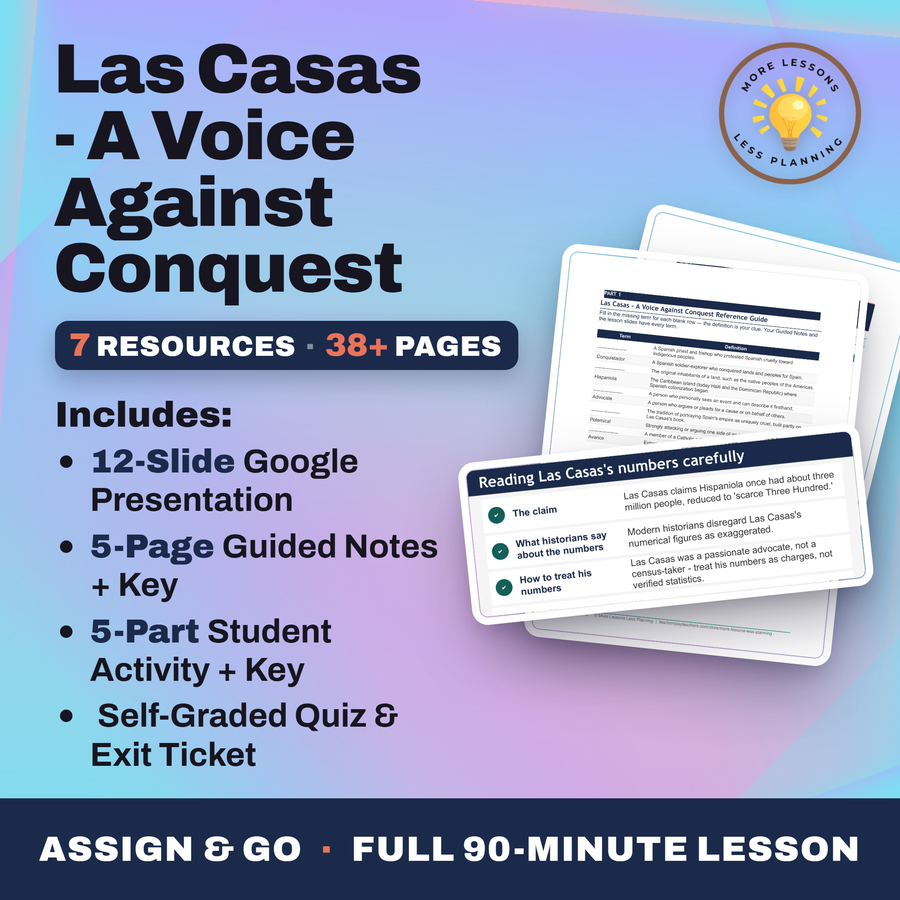
Las Casas - A Voice Against Conquest
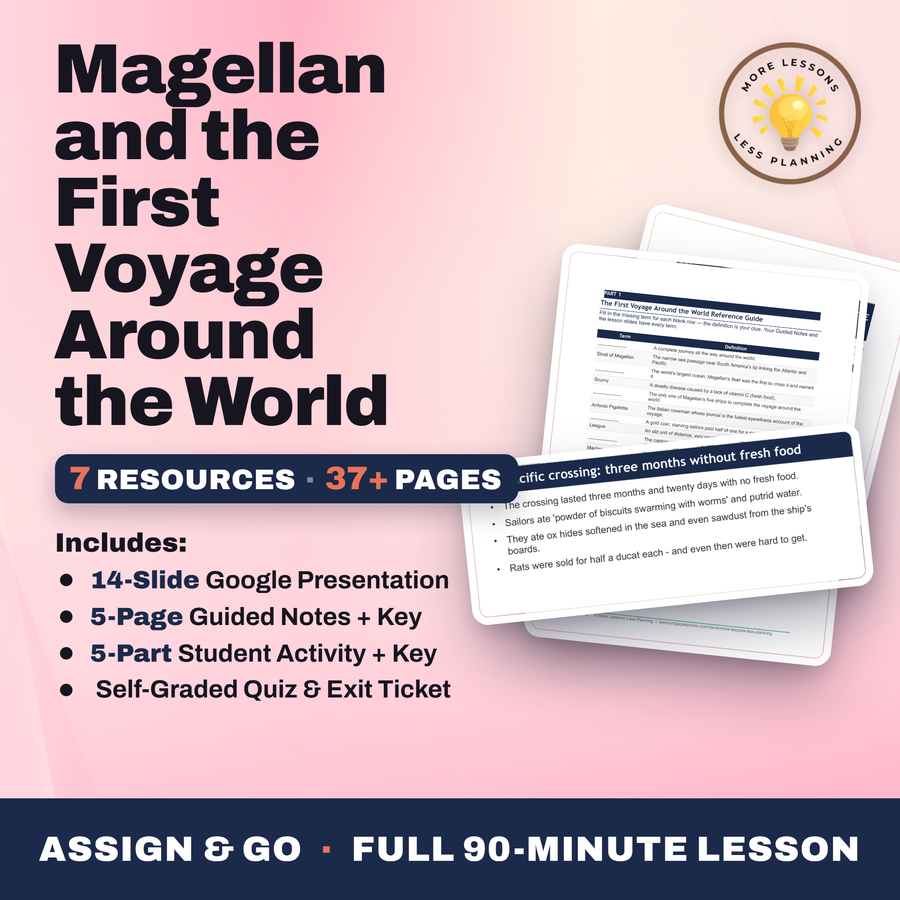
Magellan and the First Voyage Around the World
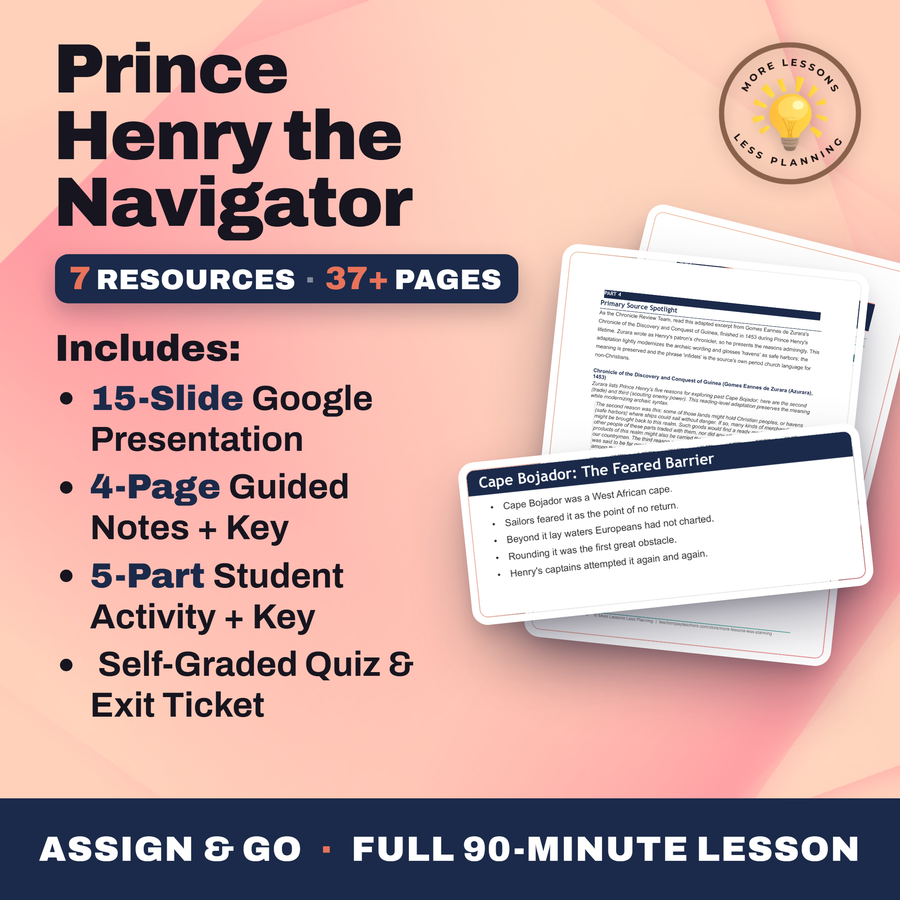
Prince Henry the Navigator
The Capture of Atahualpa
The Columbian Exchange
Every lesson on this site is free to download and use. If one of them saved you a prep period, you can chip in a few bucks toward my three kids' daycare fund. That's genuinely where tips go.