Magellan and the First Voyage Around the World
Quality reviewed September 2026
- Grades
- Grades 9-12
- Time
- About two 50-minute class periods
- Includes
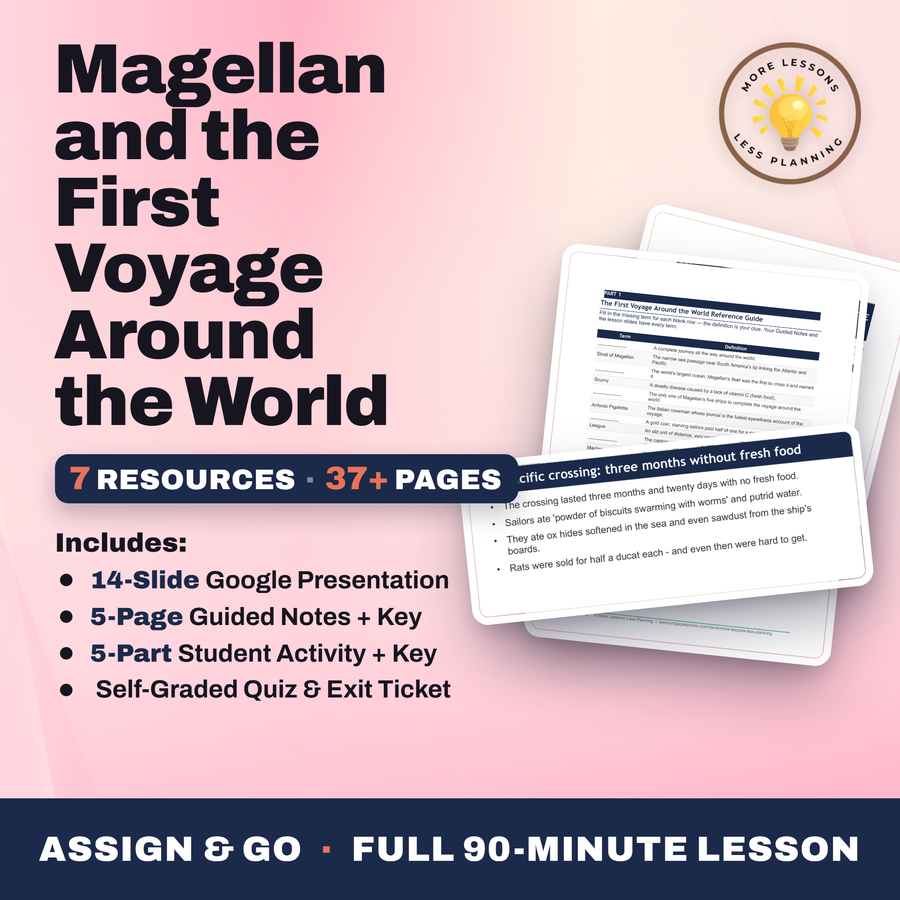
- 11 ready-to-teach files
- Format
- Word (.docx) · PowerPoint (.pptx)
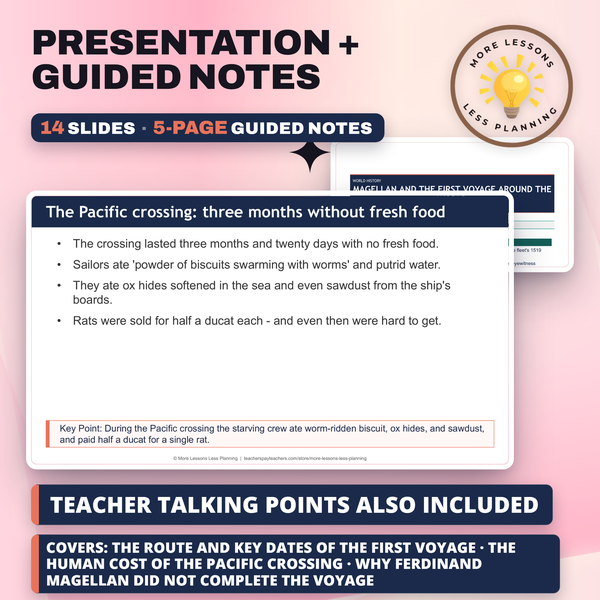
- Slide deck
- Guided notes
- Guided notes teacher key
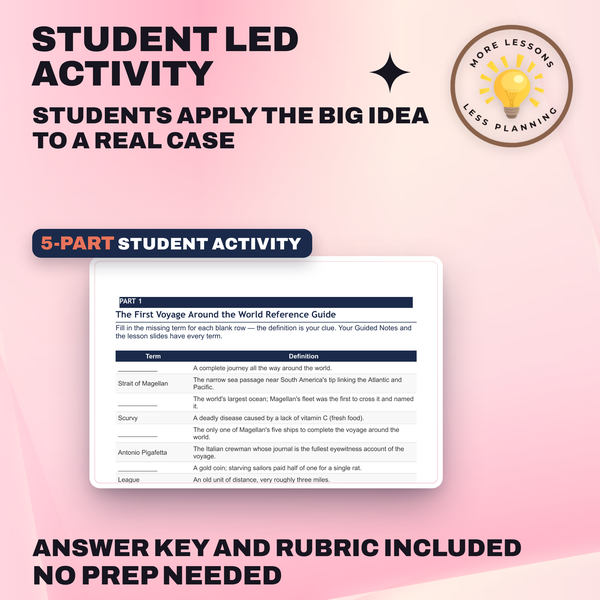
- Activity + answer key
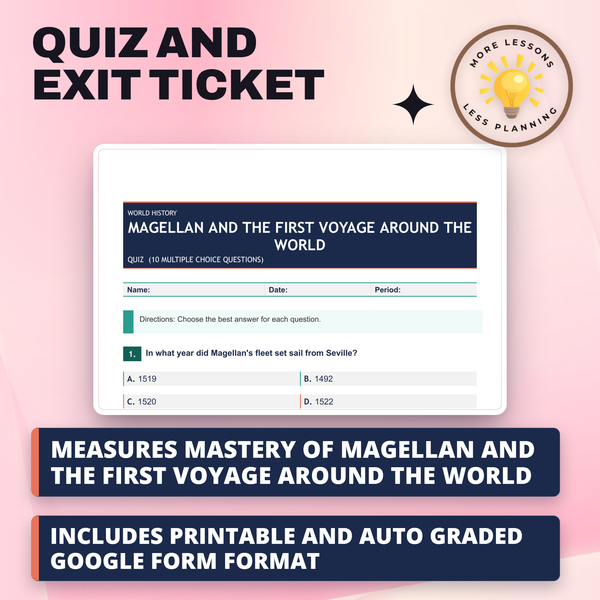
- Quiz + answer key
- Exit ticket + answer key
- Teacher guide
- Teacher presentation notes
What students do
- Trace the voyage's route and dates, from the 1519 departure from Seville to the Victoria's 1522 return
- Read Antonio Pigafetta's eyewitness account of the crew's starvation crossing the Pacific
- Explain why Magellan did not complete the voyage and credit Juan Sebastian Elcano with finishing it
- Write a precise historical account correcting the common myth using specific evidence from the lesson
What it covers
- The scale of the loss, of about 237 men who set out, only about 18 made it back to Spain
- Pigafetta's eyewitness account of the crew eating worm-ridden biscuit, ox hides, and sawdust
- Why nineteen men died of scurvy during the three-month, twenty-day crossing of the Pacific
- Magellan's death at Mactan in 1521, and why Elcano and the Victoria's crew actually completed the voyage
Learning targets
- Trace the route and key dates of the first voyage around the world, from the fleet's 1519 departure from Seville to the Victoria's 1522 return to Spain.
- Describe the human cost of the Pacific crossing using Antonio Pigafetta's eyewitness account, including the crew's starvation and the nineteen scurvy deaths.
- Explain why Ferdinand Magellan did not complete the voyage - he was killed at Mactan in 1521 - and credit Juan Sebastian Elcano and the Victoria's crew with completing the first circumnavigation.
Peek inside
1. A complete journey all the way around the world is called .
Why this matters
Only about eighteen of the roughly two hundred thirty seven men who sailed from Seville in 1519 made it home, and the man whose name the voyage carries was not one of them. Magellan died at Mactan more than a year before the Victoria reached Spain, a detail most retellings quietly drop.
Elcano's name belongs in a student's final answer as much as Magellan's does, and I hold them to both because it changes how they think about credit and survival in history more broadly. Pigafetta's account of eating sawdust and worm-ridden biscuit makes the cost of that voyage concrete before students ever hear how it ends.
From one teacher to another
Of the roughly 237 men who sailed out of Seville in 1519, about 18 came back, and I put that ratio on the board before I even say Magellan's name, because it does more to set up the lesson than any biography could. Students read Antonio Pigafetta's own journal entry from the Pacific crossing, where the crew is eating powdered, worm-ridden biscuit and sawdust and paying half a gold coin for a single rat, and nineteen men die of scurvy before the ships even reach land. The correction I care about most is that Magellan himself never made it around the world. He was killed in a fight on the island of Mactan more than a year before the voyage ended, and it was Juan Sebastian Elcano who actually brought the last surviving ship, the Victoria, home to Spain. Students finish by writing their own precise account of the voyage, and I hold them to naming both men correctly, because getting that distinction right is really the whole point of the lesson.
Every file in this toolkit
Download
Where should I send the next one?
Everything here is free and it stays that way. Leave your email and I'll send you the new lessons as they go up. You can unsubscribe from any one of them.
Related resources
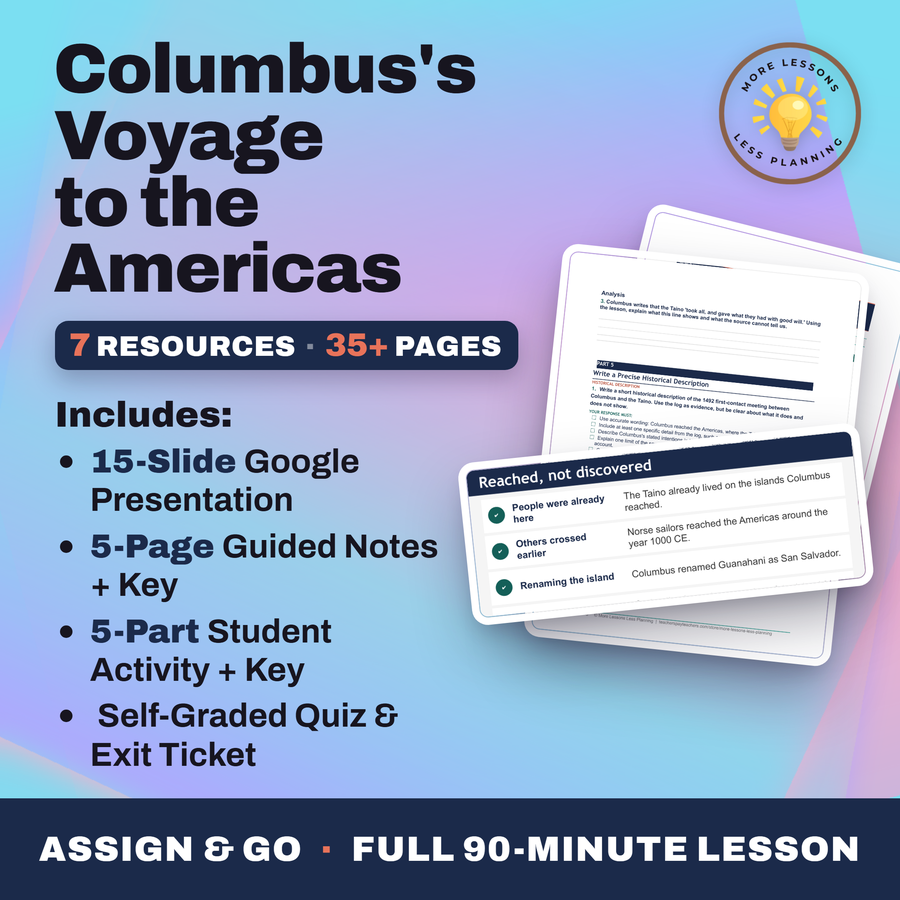
Columbus's Voyage to the Americas
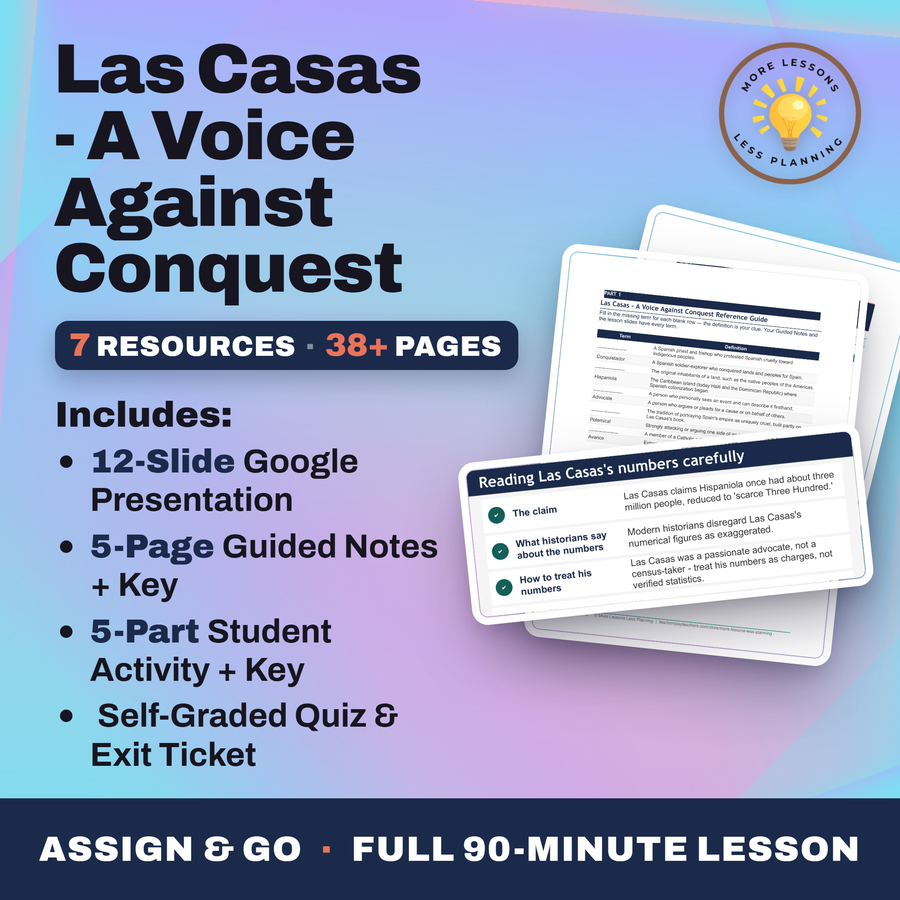
Las Casas - A Voice Against Conquest
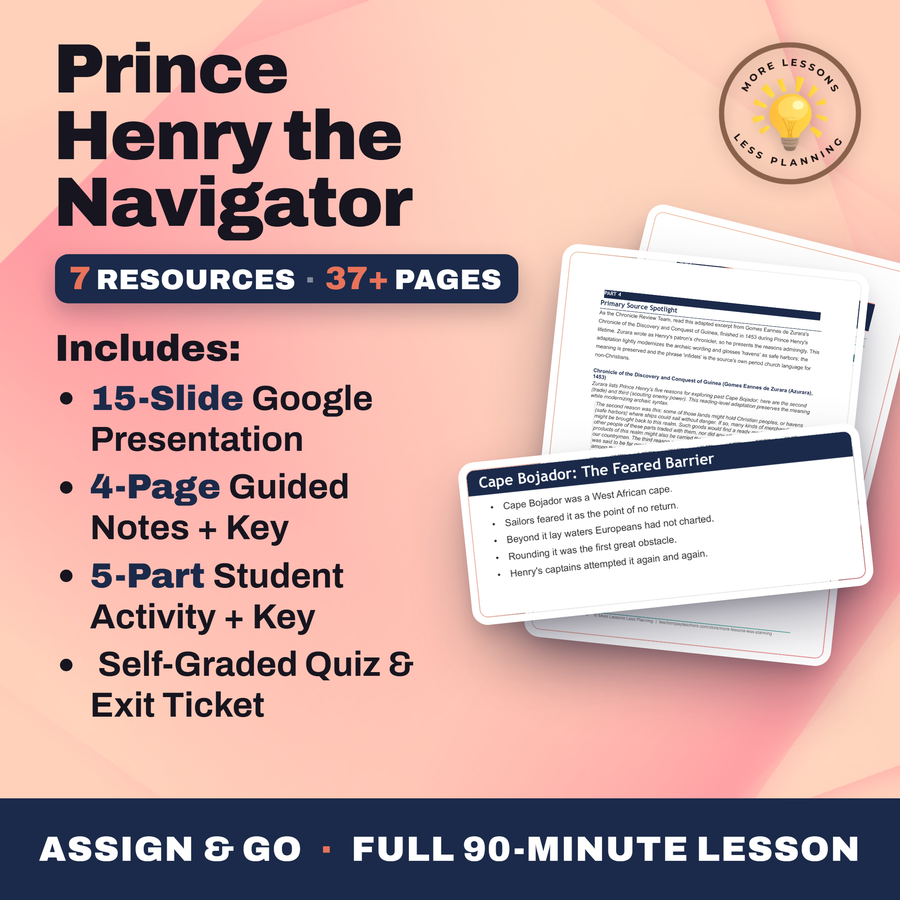
Prince Henry the Navigator
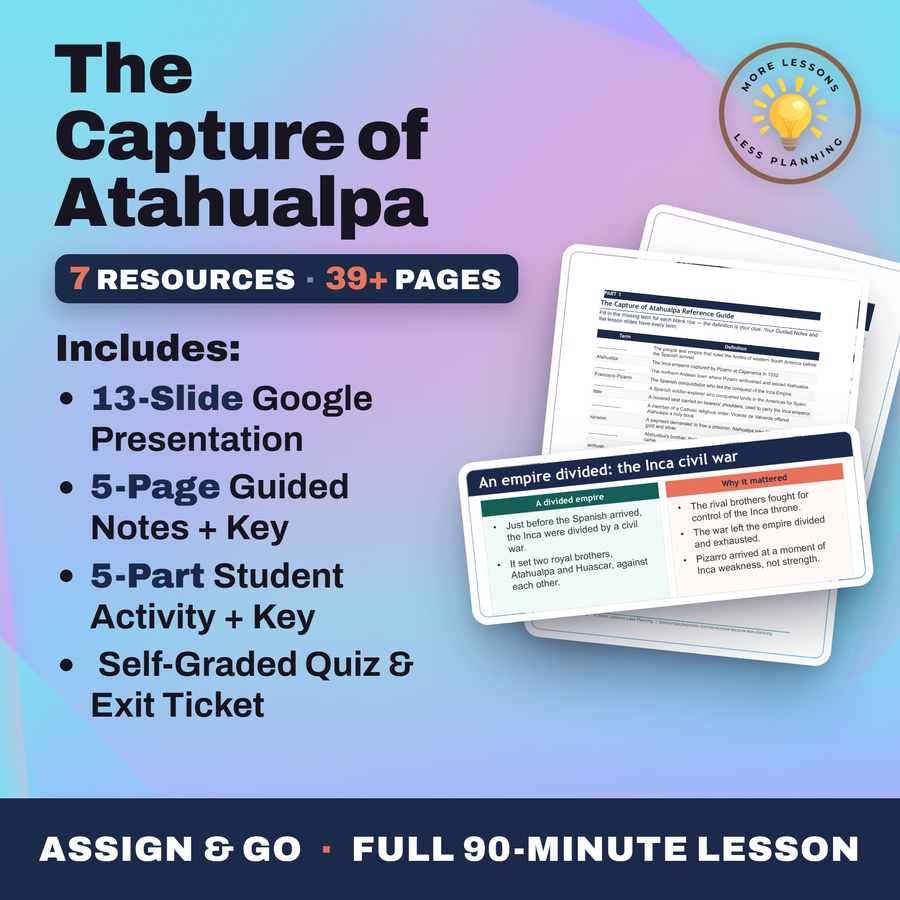
The Capture of Atahualpa
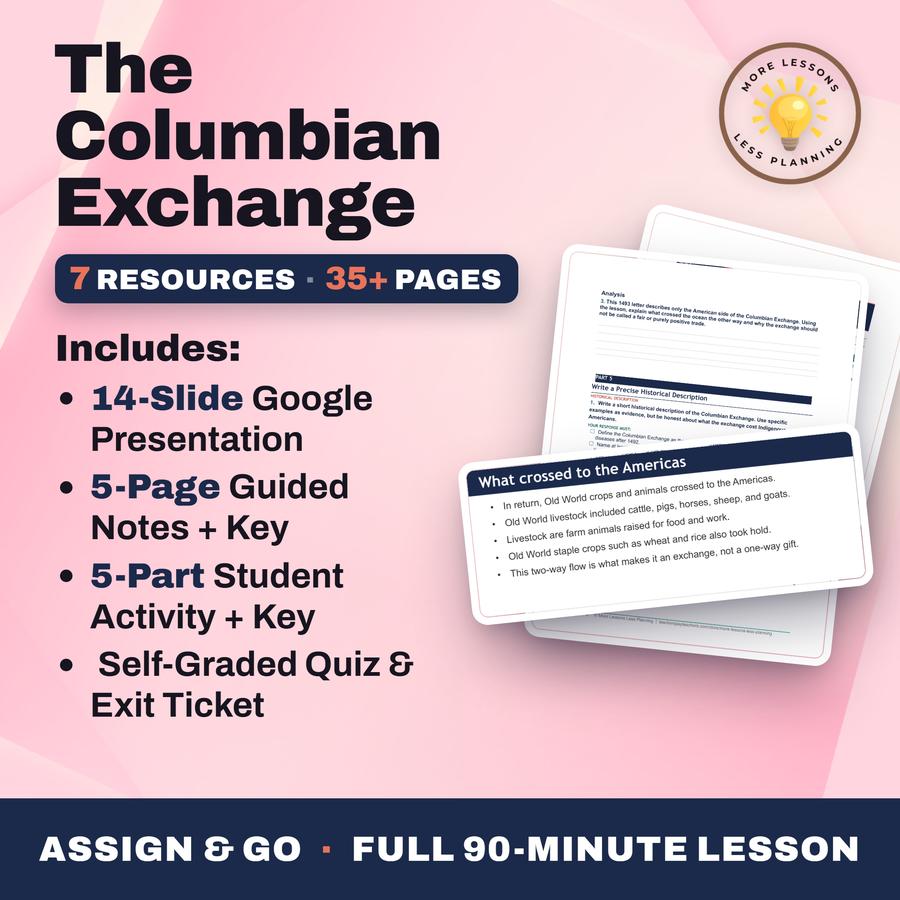
The Columbian Exchange
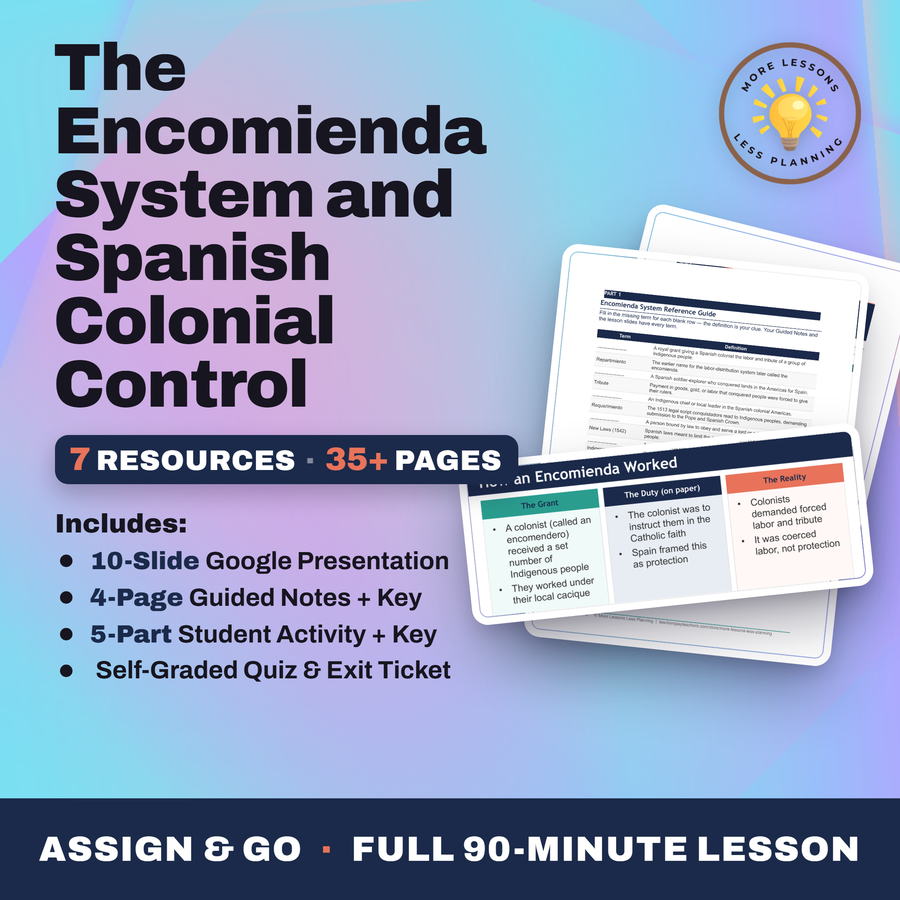
The Encomienda System and Spanish Colonial Control
Every lesson on this site is free to download and use. If one of them saved you a prep period, you can chip in a few bucks toward my three kids' daycare fund. That's genuinely where tips go.