Prince Henry the Navigator
Quality reviewed September 2026
- Grades
- Grades 9-12
- Time
- About two 50-minute class periods
- Includes
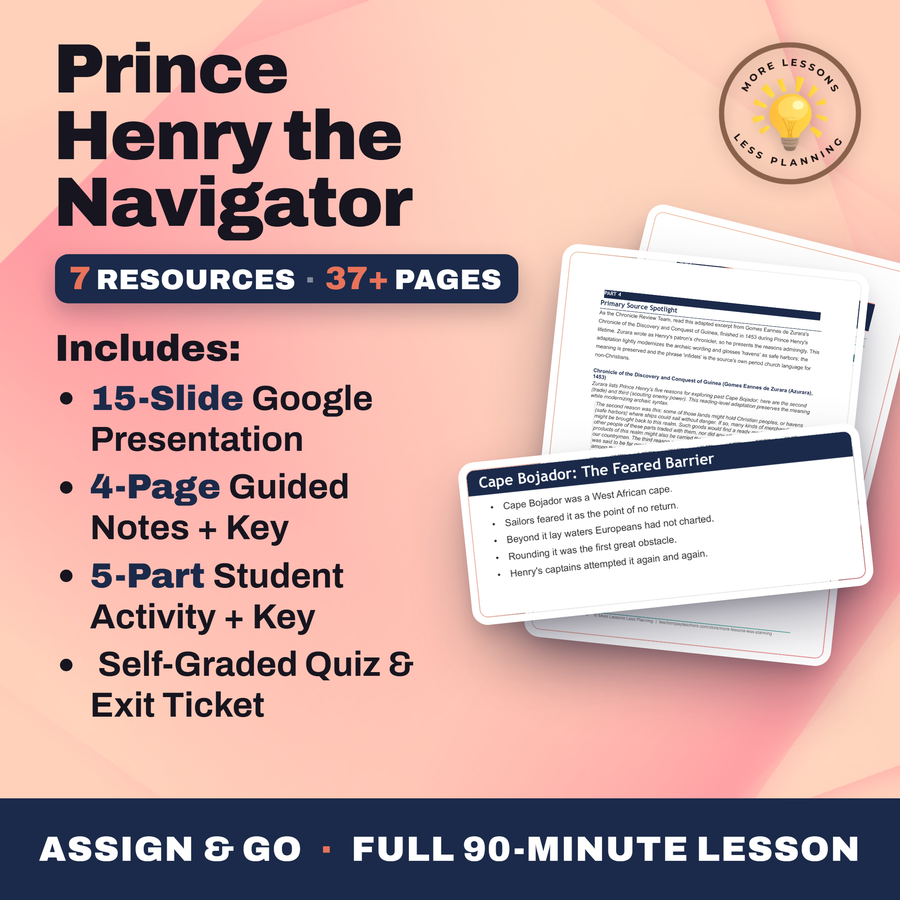
- 11 ready-to-teach files
- Format
- Word (.docx) · PowerPoint (.pptx)
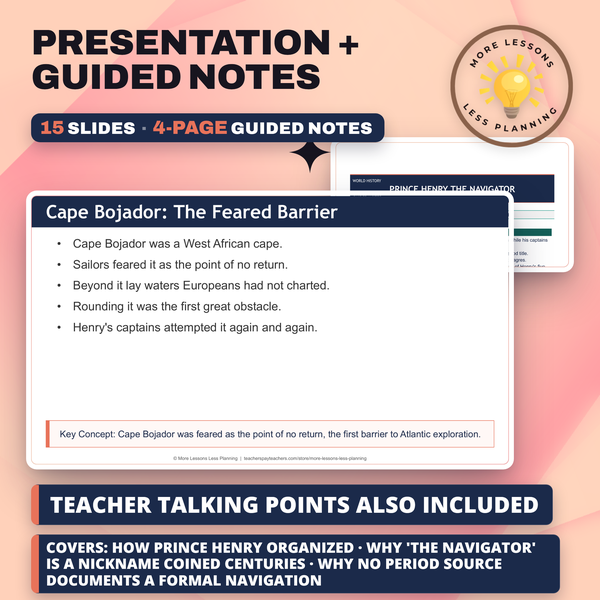
- Slide deck
- Guided notes
- Guided notes teacher key
- Activity + answer key
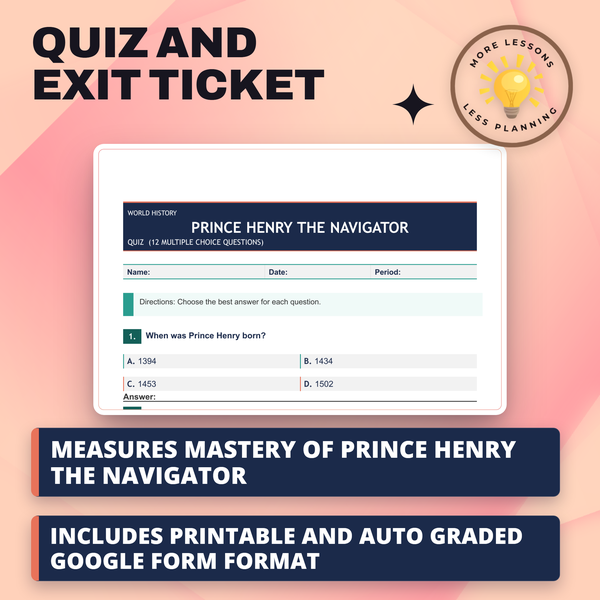
- Quiz + answer key
- Exit ticket + answer key
- Teacher guide
- Teacher presentation notes
What students do
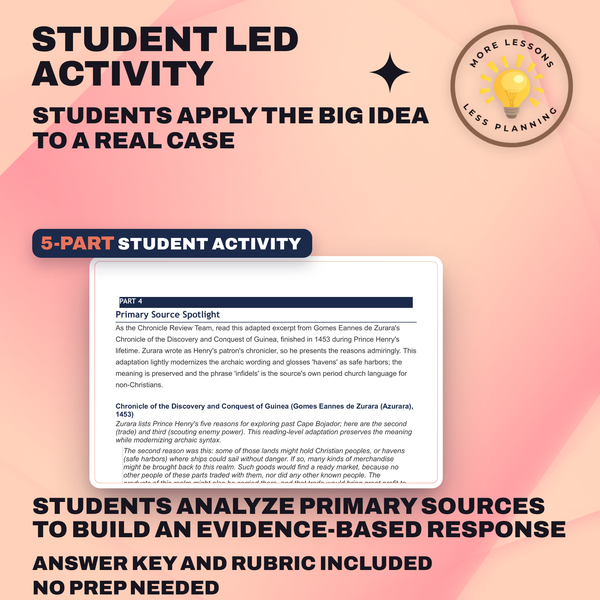
- Read an adapted excerpt from Zurara's 1453 Chronicle of Guinea and identify Henry's trade and strategic motives
- Explain why Prince Henry organized and funded voyages while captains like Gil Eannes did the actual sailing
- Distinguish the Navigator nickname, coined centuries later, from what period sources actually say about Henry
- Evaluate why Zurara's chronicle, written to praise his patron, counts as court praise rather than a neutral record
What it covers
- Prince Henry's role funding and organizing Portuguese exploration past Cape Bojador
- The gap between the Navigator nickname and the absence of any period record of a school at Sagres
- Zurara's 1453 Chronicle of Guinea and its trade and strategic reasons for exploring West Africa
- Exploration vocabulary including chronicle, patron, mariner, expedition, and Cape Bojador
Learning targets
- Explain how Prince Henry organized and funded Portuguese exploration while his captains sailed.
- Explain why 'the Navigator' is a nickname coined centuries later, not a period title.
- Describe why no period source documents a formal navigation school at Sagres.
- Analyze Zurara's 1453 Chronicle of Guinea as a patron's admiring account of Henry's five reasons.
- Use the second and third reasons to explain the trade and strategic motives for exploration.
Peek inside
Prince Henry was born in 1394.
As an Infante, he was a Portuguese prince.
He organized and funded ocean voyages.
He did not sail the voyages himself.
Portuguese captains and mariners did the sailing.
Henry the Organizer
Prince Henry was born in .
As an , Henry was a Portuguese prince.
The title "the Navigator" is a coined centuries later.
Henry organized and the ocean voyages but did not sail them himself.
Why this matters
Zurara wrote his chronicle for the prince who paid him, which makes it closer to a job reference than a history book. That single fact changes how the whole lesson reads, since every claim about why Portugal kept sailing past Cape Bojador comes from a source with an obvious reason to flatter its subject.
Nicknames outlive the evidence behind them, and Henry's is a good case study in that. No period record ever mentions a school at Sagres, yet the title stuck for centuries. Working through Zurara directly is how I get students to draw their own line between what a patron's writer claims and what a prince actually funded and organized.
From one teacher to another
Prince Henry gets flattened into a caption in most textbooks: explorer, navigator, done. I built this one around the actual source instead of the nickname. Students read an adapted excerpt from Gomes Eannes de Zurara's 1453 Chronicle of Guinea, written for Henry's own court, and use it to explain why Portugal kept sailing past Cape Bojador when everyone else thought it was the edge of the world. They separate what Henry actually did, funding and organizing voyages his captains sailed, from the Navigator title historians hung on him centuries later, and they learn to read Zurara's praise as evidence of how Henry's court justified the voyages, not a neutral report. The guided notes track the slides step by step, the activity carries a full reference guide and answer key, and the quiz and exit ticket both come with keys, so you can hand the whole thing off cold.
Every file in this toolkit
Download
Where should I send the next one?
Everything here is free and it stays that way. Leave your email and I'll send you the new lessons as they go up. You can unsubscribe from any one of them.
Related resources
Columbus's Voyage to the Americas
Las Casas - A Voice Against Conquest
Magellan and the First Voyage Around the World
The Capture of Atahualpa
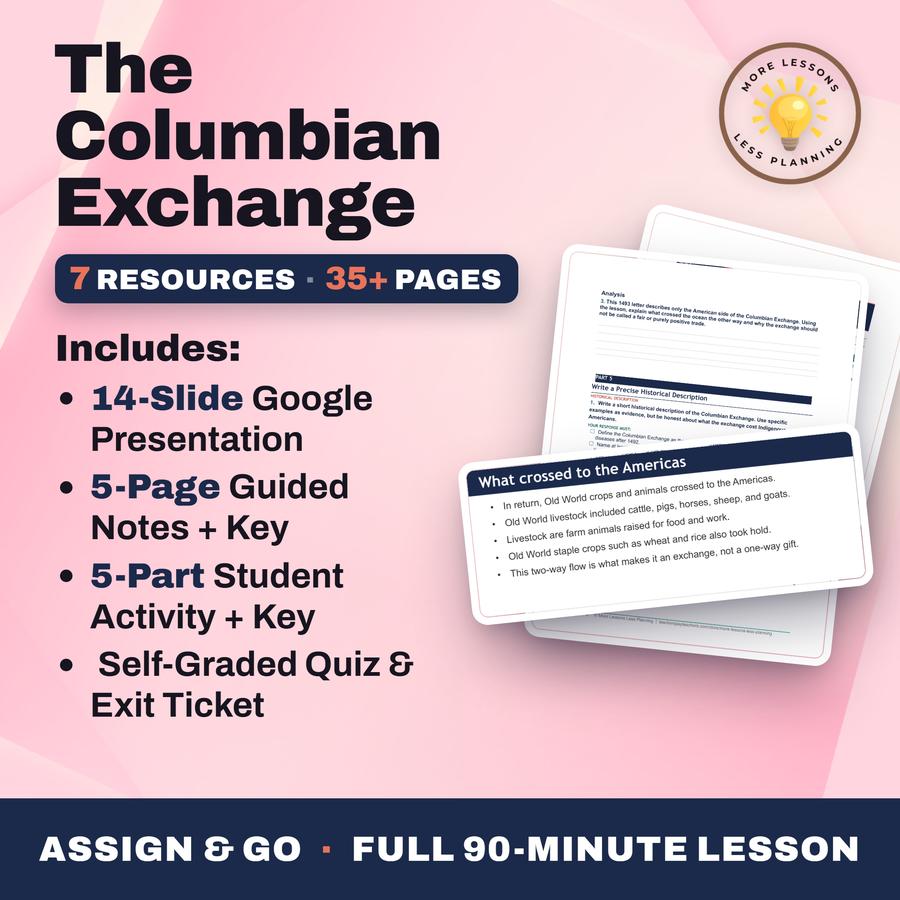
The Columbian Exchange
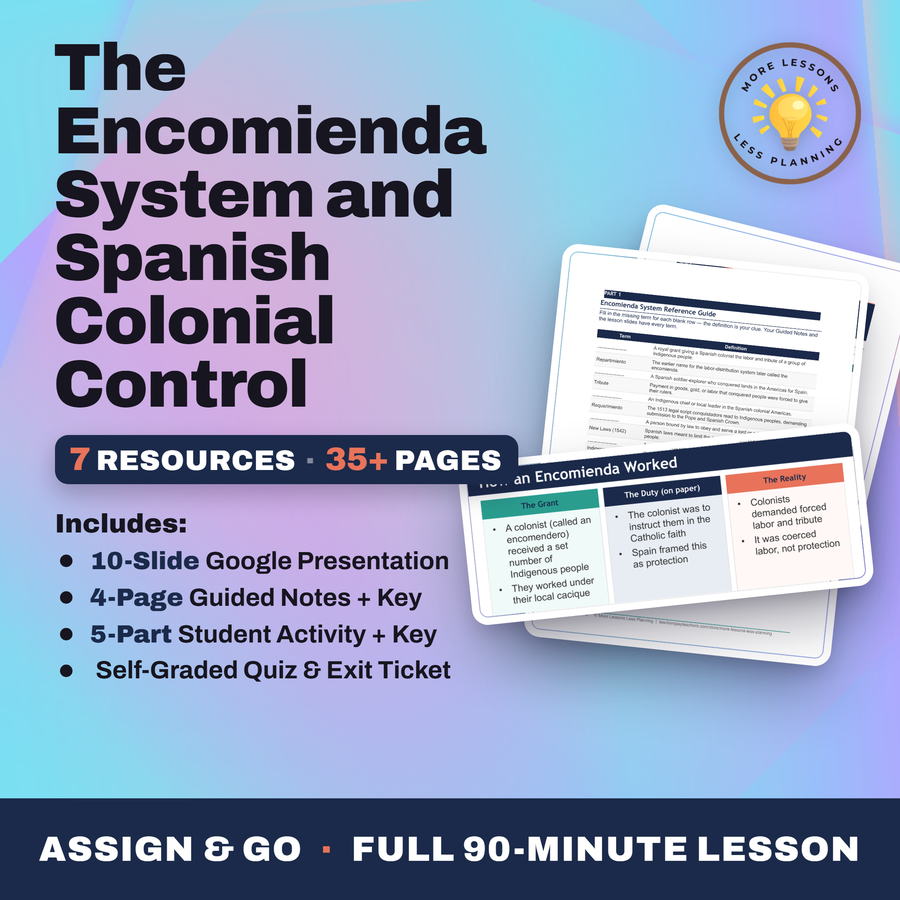
The Encomienda System and Spanish Colonial Control
Every lesson on this site is free to download and use. If one of them saved you a prep period, you can chip in a few bucks toward my three kids' daycare fund. That's genuinely where tips go.