
Las Casas - A Voice Against Conquest
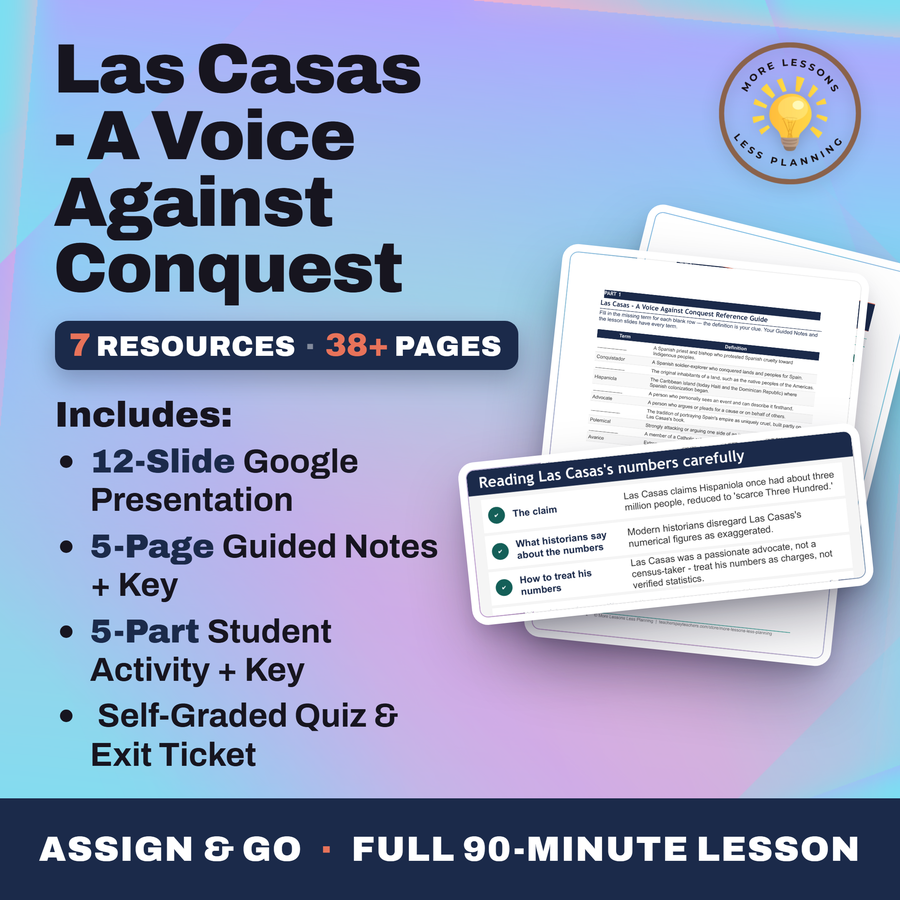
- Slide deck
- Guided notes
- Guided notes teacher key
- Activity + answer key
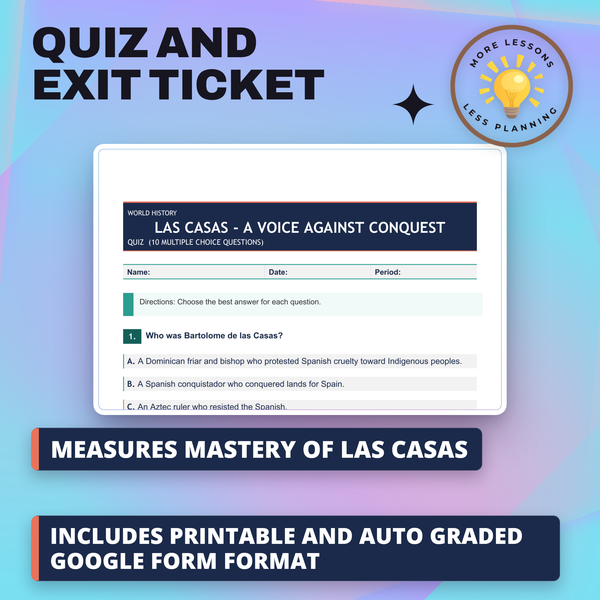
- Quiz + answer key
- Exit ticket + answer key
- Teacher guide
- Teacher presentation notes
Where should I send the next one?
Everything here is free and it stays that way. Leave your email and I'll send you the new lessons as they go up. You can unsubscribe from any one of them.
Every file in this toolkit
Related resources
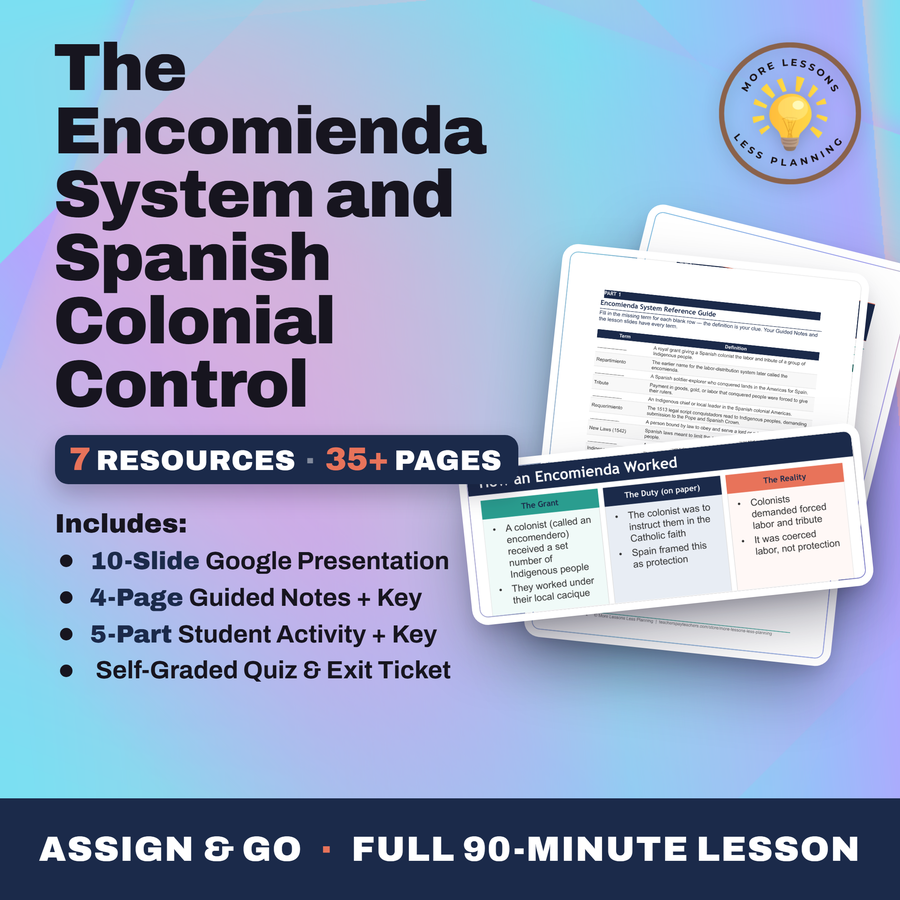
The Encomienda System and Spanish Colonial Control
The Fall of the Aztecs
Aggression and Appeasement
Alliances and the Causes of WWI

Blitzkrieg and the Fall of France
Causes of the French Revolution
What students do
- Read Bartolome de las Casas's own 1552 protest against Spanish treatment of Indigenous peoples
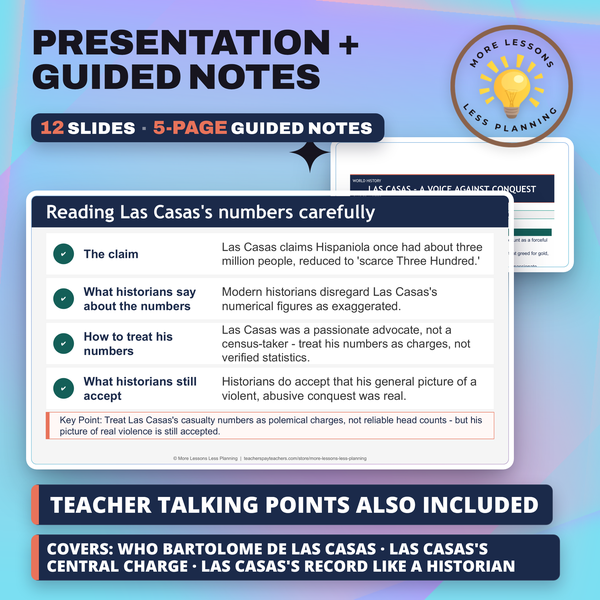
- Evaluate his casualty claims as a passionate advocate's disputed charges rather than verified statistics
- Compare his role as both a participant in and a critic of the conquest
- Explain why his central charge, that greed for gold drove Spanish cruelty, still shapes the historical record
What it covers
- Las Casas's 1552 eyewitness protest and why historians call it polemical
- Why his casualty numbers are disputed even though his broader account of violence is accepted
- Key vocabulary including eyewitness, advocate, polemical, and Black Legend
Learning targets
- Explain who Bartolome de las Casas was and why he wrote his 1552 account as a forceful protest against Spanish treatment of Indigenous peoples in the Americas.
- Analyze Las Casas's central charge - using his own eyewitness words - that greed for gold, not necessity, drove Spanish cruelty in the Indies.
- Evaluate Las Casas's record like a historian: treat his casualty claims as a passionate advocate's disputed charges, not verified statistics, and recognize that his stand against slavery grew over time.
From one teacher to another
The document at the center of this one is a protest Las Casas set down in 1552, accusing Spanish colonizers of cruelty for the sake of gold, and it's the text historians still argue over today. I use it to teach how an eyewitness account can double as an advocate's argument, since Las Casas is genuinely both, and I have students sort his claims into what's documented fact and what's passionate argument. His own record complicates that split too, since his opposition to slavery only grew stronger with time, and that's a detail I don't want students to miss.
Every lesson on this site is free to download and use. If one of them saved you a prep period, you can chip in a few bucks toward my three kids' daycare fund. That's genuinely where tips go.