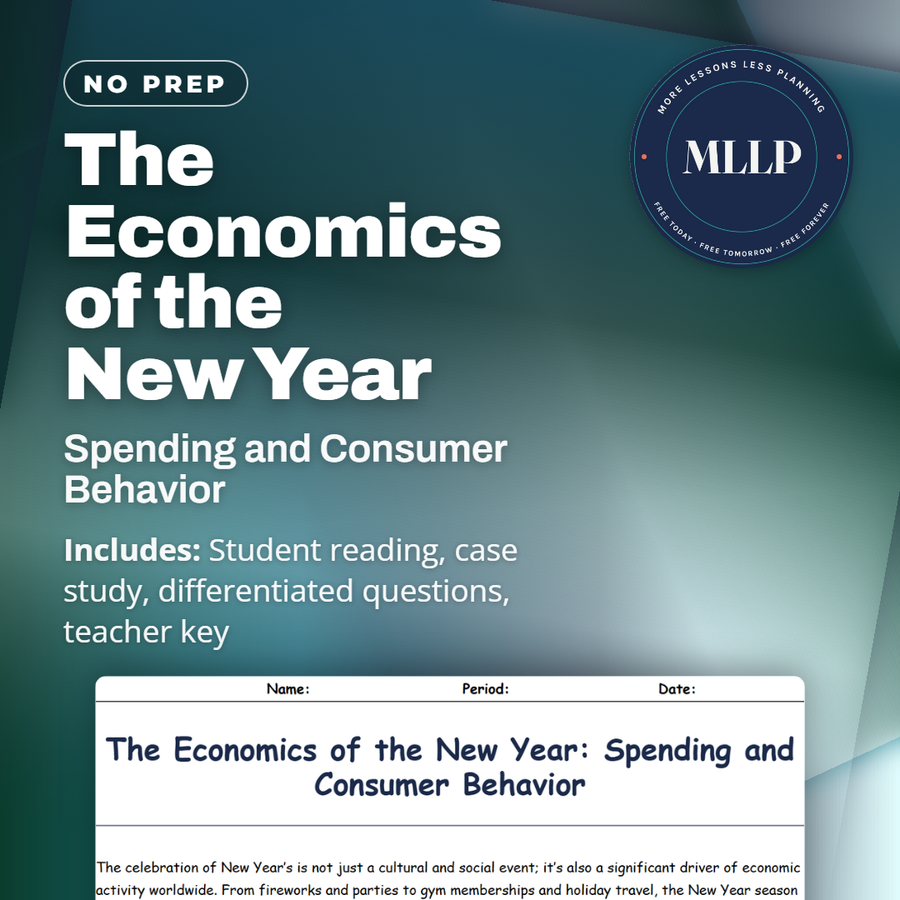
The Economics of the New Year: Spending and Consumer Behavior
Quality reviewed September 2026
Facts verified September 9, 2026
- Subject
- Social Studies
- Grades
- Grades 9-12
- Length
- 8-page student worksheet
- Time
- About one 50-minute class period
- Great for
- Sub plans and independent work
- Includes
- Reading passage, comprehension questions + full answer key
- Format
- Print-and-go PDF
What students do
- Explain how the "fresh start effect" motivates spending on fitness and self-improvement
- Analyze dynamic pricing strategies that gyms use to lock in long-term revenue
- Calculate costs and retention rates using the FitNow case study
- Trace the multiplier effect of January spending through local economies
What it covers
- Seasonal supply and demand in the wellness industry
- Behavioral economics and consumer psychology
- Pricing strategies and customer retention
Start reading this worksheet
The celebration of New Year’s is not just a cultural and social event; it’s also a significant driver of economic activity worldwide. From fireworks and parties to gym memberships and holiday travel, the New Year season is shaped by complex economic principles that influence consumer behavior. Businesses across various industries prepare months in advance to capitalize on the opportunities presented by this festive period, employing strategies rooted in supply and demand, pricing psychology, and targeted marketing.
Understanding Seasonal Supply and Demand
The concept of supply and demand plays a critical role during the New Year season. In economics, demand refers to the quantity of a product or service that consumers are willing and able to purchase at a given price, while supply is the quantity of a product or service that producers are willing to sell. During New Year’s celebrations, demand for specific goods and services often spikes. For example, fireworks, event venues, and catering services experience a sharp increase in demand, leading to higher prices. Businesses respond to this by increasing supply where possible, though production limitations and logistics can sometimes lead to shortages. For instance, the demand for fireworks peaks in late December, especially in countries where large displays are a central part of New Year’s celebrations. This increased demand drives up prices, particularly for premium-quality fireworks. However, the supply chain for fireworks is complex, involving manufacturing, importation, and distribution, which can create bottlenecks. As a result, some consumers may turn to lower-cost alternatives or purchase earlier in the season to avoid price surges.
Pricing Strategies for the New Year
Businesses employ dynamic pricing strategies during the New Year season to maximize profits. Dynamic pricing involves adjusting prices based on real-time market conditions, such as demand fluctuations, competition, and inventory levels. A prime example of this is airline ticket pricing. Travelers planning to celebrate the New Year in popular destinations often face significantly higher airfare due to increased demand. Airlines use sophisticated algorithms to predict consumer behavior and adjust prices accordingly. Another example of pricing strategy is seen in fitness memberships and wellness products. Gyms and fitness centers heavily promote discounted annual memberships in December and January, capitalizing on the surge in demand driven by New Year’s resolutions. While these initial discounts attract customers, businesses often lock them into long-term contracts that ensure steady revenue throughout the year. The psychology of pricing also plays a role—marketers often use strategies like “$9.99” pricing, limited-time offers, or bundling services to create a sense of urgency and value.
Like what you read? The full reading, the case study, and every question set are in the free download below, along with the answer key.
Why this matters
Every January, gyms fill up with people chasing what researchers call the fresh start effect, and by March plenty of them have quietly stopped showing up. Students live this cycle without ever naming it, watching a friend who swore off spending in December compare gym memberships two weeks later.
FitNow's one dollar trial is the detail that hooks my students, and the harder question follows right behind it: what happens once motivation fades and the trial converts to full price by March. I watch them realize that keeping a customer, not landing one, is where the real economics of the wellness industry live, and that question outlasts a lecture on pricing by months.
From one teacher to another
Every January my students live through this cycle, so I bring it into the classroom. They're suddenly hyper-aware of gym ads, budget apps, and "new you" messaging. The worksheet walks them through why FitNow offers a $1 trial and then asks what happens when motivation fades by March. Students see the real tension between attracting customers and keeping them engaged, and that concrete example sticks with them better than a generic lecture on pricing ever would.
What you get
Download
Where should I send the next one?
Everything here is free and it stays that way. Leave your email and I'll send you the new lessons as they go up. You can unsubscribe from any one of them.
Related resources

Biology of Evergreen Plants: The Science Behind Christmas Trees
Body Clocks and Midnight Countdowns: Circadian Rhythms at New Year’s
Calendars, Orbits, and the Science of New Year’s Day
Christmas on the Home Front: WWII Rationing and Resilience

Colorful Chemistry: Holiday Lights, Fireworks, and the Science of Glow
Crowded Skies: Holiday Air Travel and the Environment
Every lesson on this site is free to download and use. If one of them saved you a prep period, you can chip in a few bucks toward my three kids' daycare fund. That's genuinely where tips go.