The Cuban Missile Crisis
- Slide deck
- Guided notes
- Guided notes teacher key
- Activity + answer key
- Quiz + answer key
- Exit ticket + answer key
- Teacher guide
- Teacher presentation notes
Where should I send the next one?
Everything here is free and it stays that way. Leave your email and I'll send you the new lessons as they go up. You can unsubscribe from any one of them.
Every file in this toolkit
Related resources
Decolonization in Africa
Decolonization in Asia
Globalization and the Modern World
Origins of the Cold War
The Berlin Wall
The Korean War
What students do
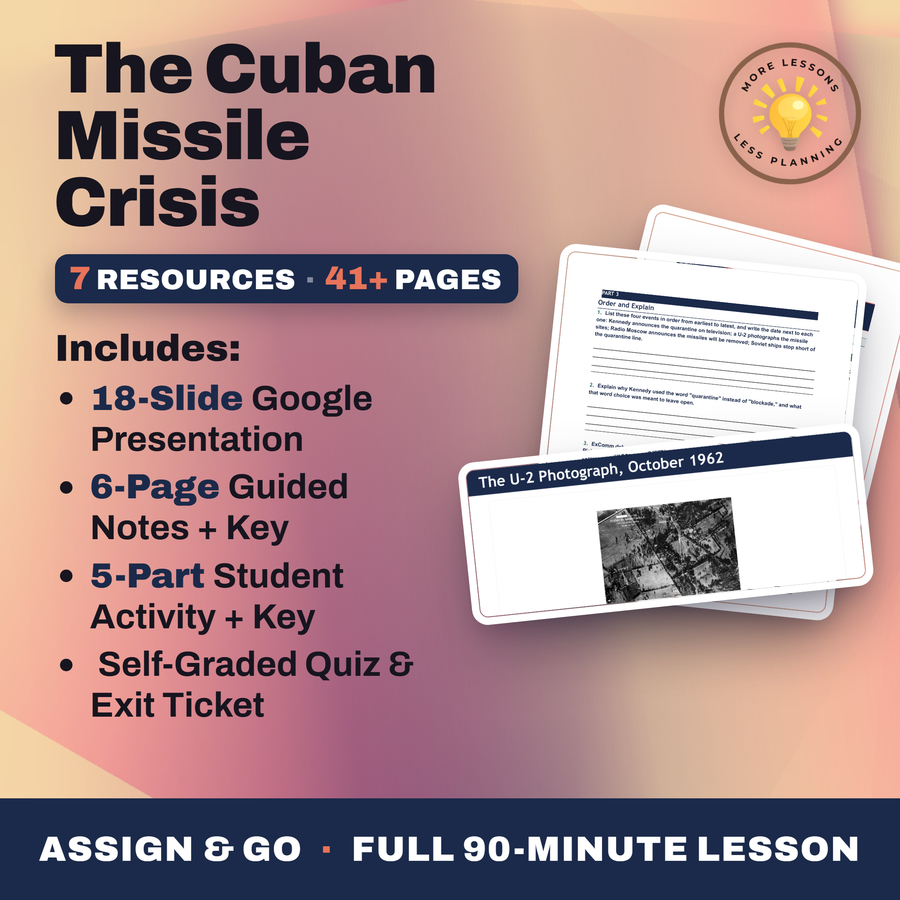
- Analyze President Kennedy's October 22, 1962 address to the nation as a primary source
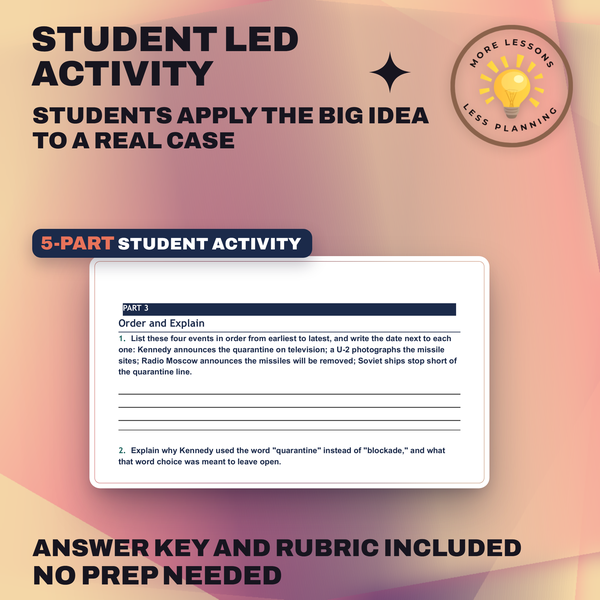
- Compare the options ExComm debated before Kennedy chose a naval quarantine over an airstrike
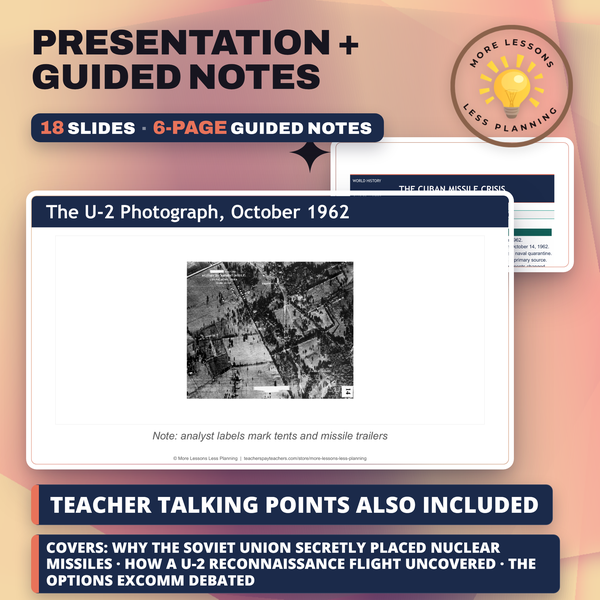
- Examine the U-2 reconnaissance photograph that uncovered the missile sites on October 14
What it covers
- How Cuba became a Soviet ally and why the Soviets placed missiles there in the first place
- The naval quarantine and the standoff at the "line at sea"
- The secret deal that ended the crisis on October 28, and what neither government announced at the time
Learning targets
- Explain why the Soviet Union secretly placed nuclear missiles in Cuba in 1962.
- Describe how a U-2 reconnaissance flight uncovered the missile sites on October 14, 1962.
- Compare the options ExComm debated and explain why Kennedy chose a naval quarantine.
- Analyze President Kennedy's October 22, 1962 address to the nation as a primary source.
- Explain how the crisis was settled on October 28 and what the two governments changed afterward.
From one teacher to another
Every class I've taught this to asks the same thing once they get the stakes: why didn't anyone just back down sooner. That question is the whole lesson, built to get students sitting inside the decision-making instead of just knowing the crisis ended without a war. It's part of the Cold War unit, but built to work as a stand-alone crisis study even for a class that hasn't covered the earlier lessons.
Every lesson on this site is free to download and use. If one of them saved you a prep period, you can chip in a few bucks toward my three kids' daycare fund. That's genuinely where tips go.