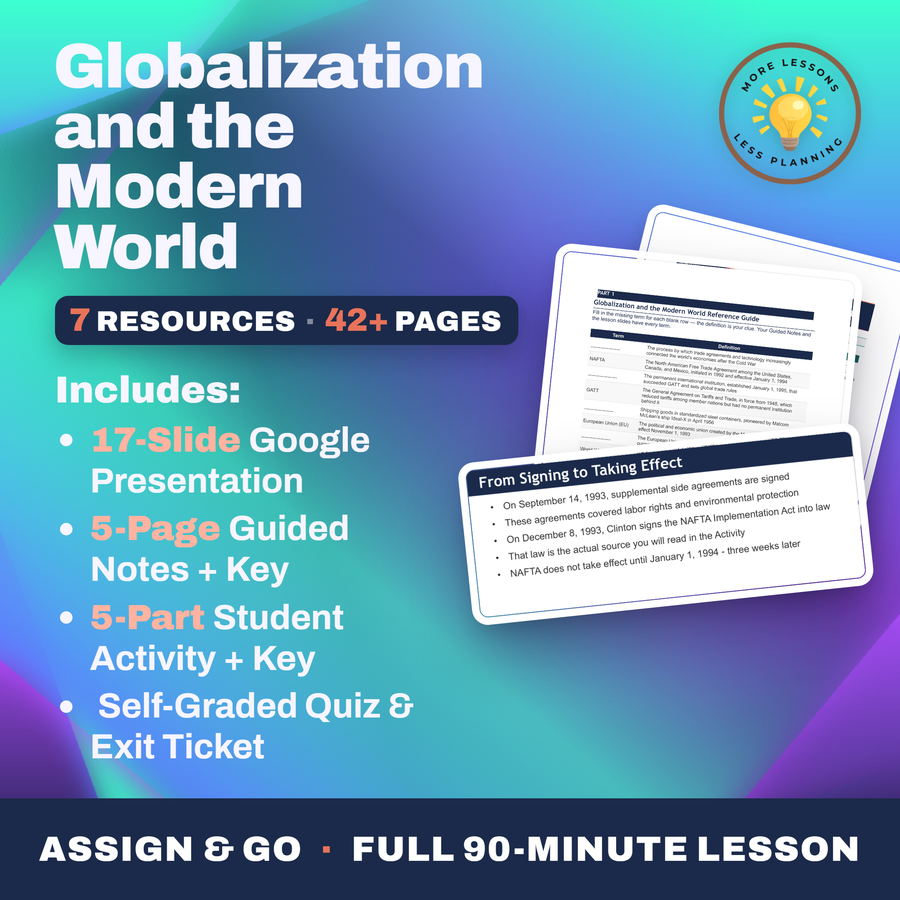

Globalization and the Modern World
- Grades
- Grades 9-12
- Time
- About two 50-minute class periods
- Includes
- 11 ready-to-teach files
- Format
- Word (.docx) · PowerPoint (.pptx)
- Slide deck
- Guided notes
- Guided notes teacher key
- Activity + answer key
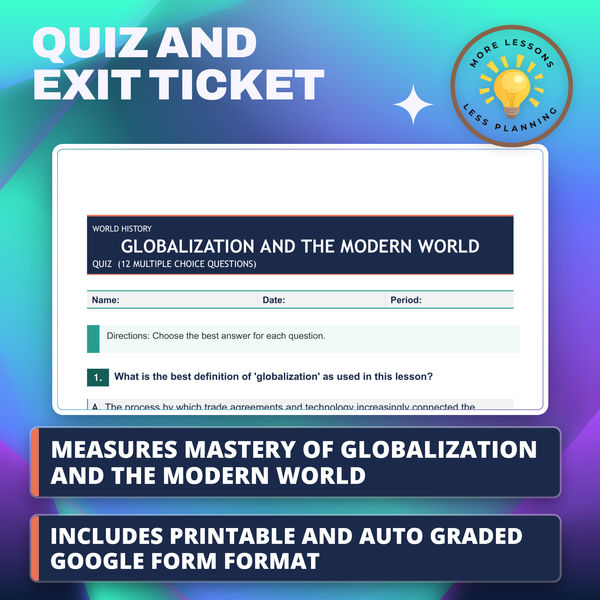
- Quiz + answer key
- Exit ticket + answer key
- Teacher guide
- Teacher presentation notes
What students do
- Explain how NAFTA and the WTO created new rules for global trade after the Cold War
- Trace how the Maastricht Treaty and the euro tied Western Europe's economies together
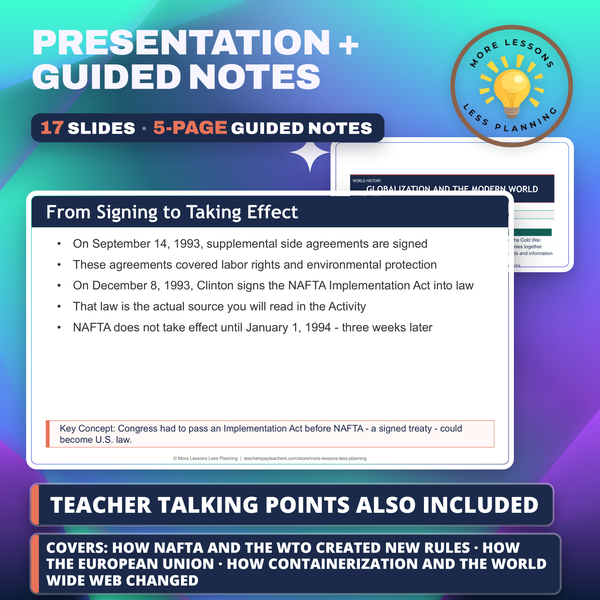
- Read President Clinton's actual December 8, 1993 remarks on signing the NAFTA Implementation Act
- Evaluate globalization's costs and benefits for workers, consumers, and the environment
What it covers
- How containerization and the World Wide Web changed how goods and information move
- The 1999 Seattle WTO protests and the pushback against free trade
- The difference between NAFTA being signed and NAFTA taking effect
Learning targets
- Explain how NAFTA and the WTO created new rules for global trade after the Cold War.
- Trace how the European Union and the euro tied Western Europe's economies together.
- Describe how containerization and the World Wide Web changed how goods and information move.
- Analyze President Clinton's December 8, 1993 remarks on signing the NAFTA Implementation Act as a primary source.
- Evaluate the costs and benefits of globalization for workers, consumers, and the environment.
Peek inside
After the Cold War ended, trade and technology tied economies together
Globalization: trade agreements and technology connecting economies
A tariff is a tax a government places on goods imported from abroad
Lower tariffs and faster technology both accelerated global trade
This lesson asks you to evaluate the results, not just describe them
Trade, Technology, and Tariffs
Trade agreements and technology increasingly connecting the world's economies after the Cold War is called .
A is a tax a government places on goods imported from abroad.
Lower tariffs and faster both accelerated global trade.
This lesson asks you to the results of globalization, not just describe them.
Why this matters
A shipping container looks like nothing more than a metal box, but containerization is one reason a product can now be made in multiple countries before it reaches a shelf. Pair that with the World Wide Web moving information at the same new speed, and the two explain why trade after the Cold War looks nothing like trade before it.
The Maastricht Treaty and the euro answer a question students rarely ask, why European countries would give up their own currencies. I also make students separate NAFTA being signed from NAFTA taking effect, since treating those as the same moment erases how a trade agreement actually becomes policy.
From one teacher to another
I close the course with this one on purpose, because every world history class eventually asks how any of it connects to now. NAFTA and the WTO tie straight back to the empires and wars we've spent the year studying, so globalization doesn't get treated like a topic with no history behind it. Students read Clinton's actual signing remarks and then have to weigh his case against the protesters who showed up in Seattle six years later.
Every file in this toolkit
Download
Where should I send the next one?
Everything here is free and it stays that way. Leave your email and I'll send you the new lessons as they go up. You can unsubscribe from any one of them.
Related resources
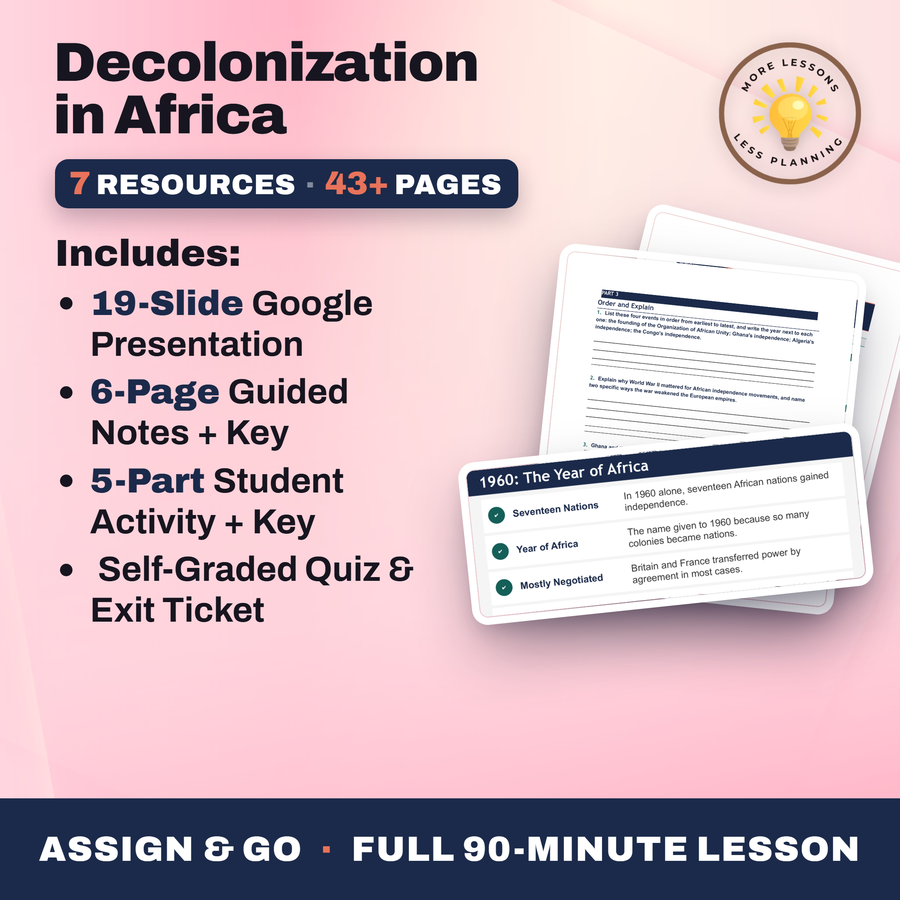
Decolonization in Africa

Decolonization in Asia
Origins of the Cold War
The Berlin Wall
The Cuban Missile Crisis
The Korean War
Every lesson on this site is free to download and use. If one of them saved you a prep period, you can chip in a few bucks toward my three kids' daycare fund. That's genuinely where tips go.