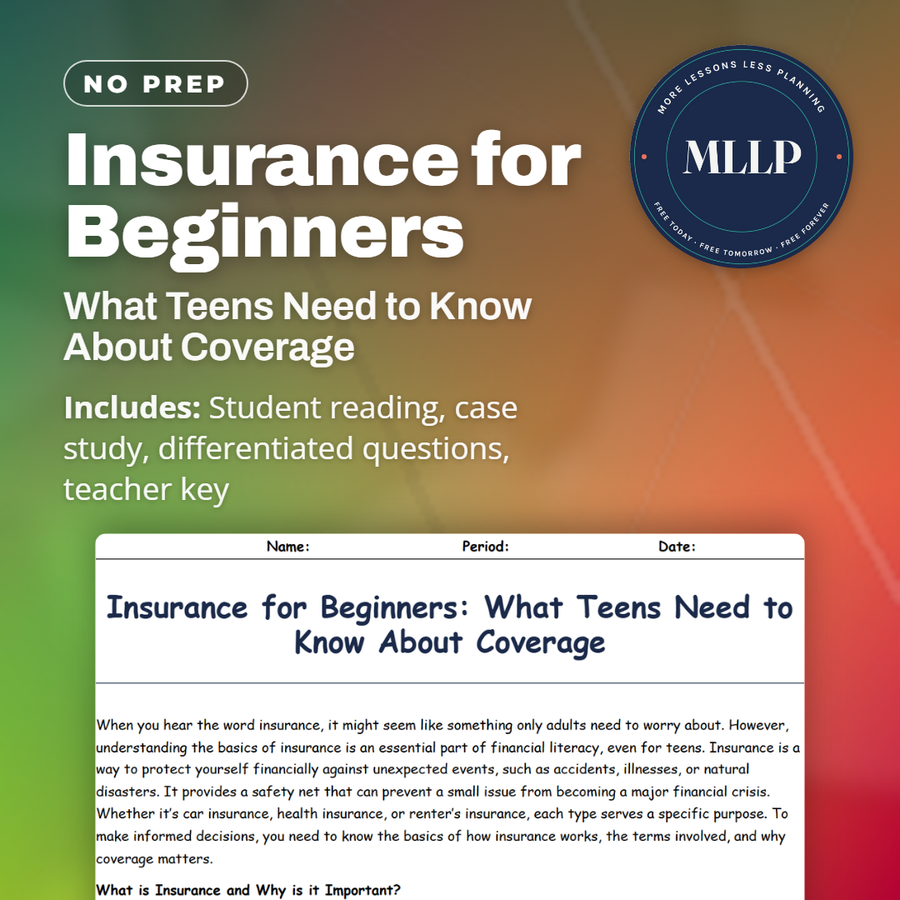
Insurance for Beginners: What Teens Need to Know About Coverage
Quality reviewed September 2026
Facts verified September 24, 2026
- Subject
- Career & Life Skills
- Grades
- Grades 9-12
- Length
- 7-page student worksheet
- Time
- About one 50-minute class period
- Great for
- Sub plans and independent work
- Includes
- Reading passage, comprehension questions + full answer key
- Format
- Print-and-go PDF
What students do
- Match premium and deductible to definitions such as a monthly insurance payment and an out-of-pocket cost before coverage starts, plus renter's insurance, auto insurance, and a claim to their own definitions
- Fill in the blanks on what a premium is, what health insurance helps cover, and what filing a claim actually means
- Answer multiple choice questions on what a deductible is, which type of insurance is legally required for drivers, and what renter's insurance typically doesn't cover
- Write short answers on why the deductible matters when choosing a policy, how discounts make insurance more affordable, and how Mia's $500 deductible kept a parking accident from costing her family $2,000
What it covers
- Key insurance terms like premium, deductible, coverage limit, and claim
- Health, auto, and renter's insurance, including what each one covers and who needs it
- A case study on Mia, who caused $2,000 in damage in a parking accident and paid only her $500 deductible
Start reading this worksheet
When you hear the word insurance, it might seem like something only adults need to worry about. However, understanding the basics of insurance is an essential part of financial literacy, even for teens. Insurance is a way to protect yourself financially against unexpected events, such as accidents, illnesses, or natural disasters. It provides a safety net that can prevent a small issue from becoming a major financial crisis. Whether it’s car insurance, health insurance, or renter’s insurance, each type serves a specific purpose. To make informed decisions, you need to know the basics of how insurance works, the terms involved, and why coverage matters.
What is Insurance and Why is it Important?
Insurance is a contract between you and an insurance company. You agree to pay a premium, a set amount of money at regular intervals (monthly or yearly), and the company agrees to cover specific costs if something unexpected happens. This could be a car accident, a trip to the emergency room, or damage to your personal property. The primary purpose of insurance is to reduce financial risk. Instead of paying thousands of dollars out of pocket for a car repair or medical bill, your insurance company covers most of the cost. While you still have to pay some money upfront (called a deductible), insurance makes big expenses much more manageable. For teens, having insurance might seem unnecessary now, but as you gain more independence (such as driving a car or moving into your first apartment), it becomes a vital part of protecting yourself and your finances.
Common Types of Insurance
While there are many types of insurance, three of the most common for teens and young adults are health insurance, auto insurance, and renter’s insurance. Each serves a different purpose and comes with unique benefits. Health Insurance: This helps cover the cost of medical care, including doctor visits, hospital stays, prescriptions, and preventive services. Without health insurance, a single hospital visit could cost thousands of dollars. Teens may be covered under their parents’ plan until they turn 26, but understanding how it works is important for when they need their own coverage. Auto Insurance: If you drive, you’re legally required to have auto insurance. This covers the cost of car repairs, medical bills, and damages if you’re in an accident. It can also protect you if your car is stolen or damaged by weather. Most policies include liability coverage, which pays for damages to others if you’re at fault, and collision coverage, which pays for repairs to your own car. Renter’s Insurance: When you move out and rent an apartment, renter’s insurance protects your belongings from theft, fire, or water damage. It also provides liability coverage if someone gets injured in your home. While your landlord’s insurance covers the building, it doesn’t cover your personal property, making renter’s insurance a smart investment. Knowing what these policies cover, and what they don’t, is crucial for making the best decisions.
Like what you read? The full reading, the case study, and every question set are in the free download below, along with the answer key.
Why this matters
Most teens haven't had to file a claim or read a policy yet, so terms like deductible and coverage limit can sound like fine print rather than numbers that directly affect their wallet. Mia's accident shows what those numbers mean in a situation a new driver could easily end up in, a $2,000 repair bill cut down to a $500 deductible because the family had coverage. Anyone who's about to start driving, move into a rental, or come off a parent's health plan is about to need this information for something more real than a worksheet.
From one teacher to another
Premium, deductible, coverage limit, and claim are the four terms the reading builds everything else on, since they show up on any insurance policy you'll ever sign. It compares health, auto, and renter's insurance side by side, covering what each one pays for and who actually needs it, then gives tips for choosing coverage like weighing premiums against deductibles and checking for student or bundling discounts. Mia, a new driver, rear-ends another car in the case study, causing $1,200 in damage to it and $800 to her parents' car, and her $500 deductible keeps the family from paying the full $2,000 out of pocket.
What you get
Download
Where should I send the next one?
Everything here is free and it stays that way. Leave your email and I'll send you the new lessons as they go up. You can unsubscribe from any one of them.
Related resources
Debit vs. Credit Cards: How to Choose the Right Payment Method
Financial Scams Teens Should Know: Spotting and Avoiding Fraud
How to Build a Strong Credit Score from Day One
How to Read a Paycheck: Understanding Deductions and Net Pay
How to Start Saving for Retirement as a Teen
Money Myths Debunked: What Teens Get Wrong About Finances
Every lesson on this site is free to download and use. If one of them saved you a prep period, you can chip in a few bucks toward my three kids' daycare fund. That's genuinely where tips go.