How to Read a Paycheck: Understanding Deductions and Net Pay
Quality reviewed September 2026
Facts verified September 24, 2026
- Subject
- Career & Life Skills
- Grades
- Grades 9-12
- Length
- 7-page student worksheet
- Time
- About one 50-minute class period
- Great for
- Sub plans and independent work
- Includes
- Reading passage, comprehension questions + full answer key
- Format
- Print-and-go PDF
What students do
- Match take-home pay and total earnings before taxes to net pay and gross pay, and a Social Security deduction and a deduction for local taxes to Social Security and state income tax, plus a health deduction to a health insurance premium
- Fill in the blanks on what the difference between gross and net pay is called, what category Social Security and Medicare fall under, and which pay figure comes before deductions
- Answer multiple choice questions on what net pay means, which deduction funds retirement benefits for seniors, and how to calculate take-home pay from gross pay and deductions
- Write short answers on why understanding deductions matters, how net pay shapes a budget, and what Maria's roughly $115 in deductions on her first paycheck were made up of
What it covers
- The difference between gross pay and net pay, and how deductions like federal and state tax, Social Security, and Medicare get subtracted
- A sample pay stub breakdown showing $1,000 in gross pay reduced to $703.50 in net pay
- A case study on Maria, whose first paycheck came in $115 lower than she expected once deductions were factored in
Start reading this worksheet
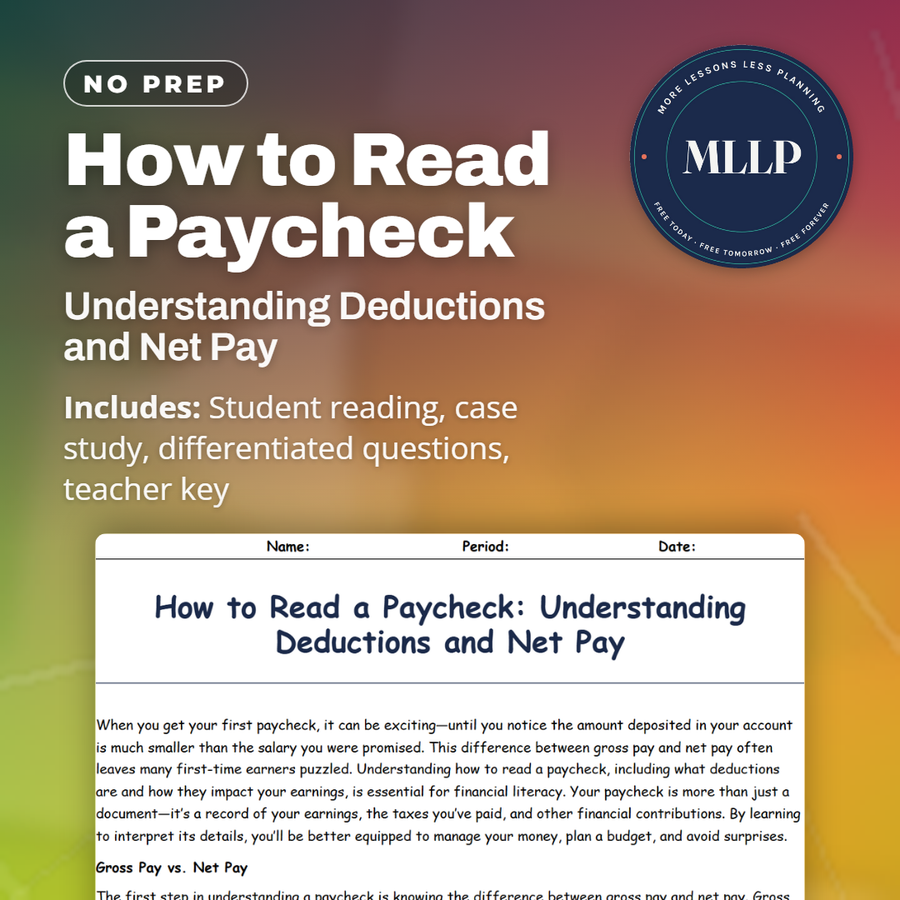
When you get your first paycheck, it can be exciting—until you notice the amount deposited in your account is much smaller than the salary you were promised. This difference between gross pay and net pay often leaves many first-time earners puzzled. Understanding how to read a paycheck, including what deductions are and how they impact your earnings, is essential for financial literacy. Your paycheck is more than just a document—it’s a record of your earnings, the taxes you’ve paid, and other financial contributions. By learning to interpret its details, you’ll be better equipped to manage your money, plan a budget, and avoid surprises.
Gross Pay vs. Net Pay
The first step in understanding a paycheck is knowing the difference between gross pay and net pay. Gross pay is your total earnings before any deductions. This includes your hourly wages or salary, overtime pay, bonuses, and any additional income. For example, if you work 40 hours a week at $15 an hour, your gross pay for one week is $600. Net pay, often referred to as take-home pay, is what’s left after deductions are subtracted from your gross pay. This is the actual amount you’ll receive in your bank account or paycheck. Deductions typically include taxes, Social Security, Medicare, and sometimes retirement contributions or health insurance premiums. If your deductions total $150, your net pay from the $600 gross pay would be $450. Understanding these terms is critical for setting realistic expectations about how much money you’ll actually have to spend or save.
Common Deductions
Deductions are amounts withheld from your paycheck for various purposes. These are categorized into mandatory and voluntary deductions. Let’s break down some of the most common ones: Federal Income Tax: This is based on your earnings and the information you provide on your W-4 form, including your filing status and allowances. The amount varies depending on your income level. State Income Tax: Not all states require this, but many do. The rate depends on where you live. Social Security Tax: A percentage of your earnings (currently 6.2%) is deducted to fund Social Security benefits, which you may access in retirement. Medicare Tax: This funds healthcare for seniors and deducts 1.45% of your earnings. Health Insurance Premiums: If your employer provides health insurance, you might see deductions for your portion of the premium. Retirement Contributions: Some employers offer retirement savings plans like 401(k)s, allowing you to contribute pre-tax dollars toward your future. These deductions may seem like a lot, but they serve important purposes, from funding public services to securing your financial future.
Like what you read? The full reading, the case study, and every question set are in the free download below, along with the answer key.
Why this matters
A first paycheck that comes in smaller than expected is one of the most common surprises for a new worker, and not knowing why makes it hard to trust the number on the check. Building a budget off gross pay instead of net pay is an easy mistake that leaves someone short on rent or bills before the month is even over. Maria's situation is exactly what happens to a lot of first-time earners, and working through her numbers gives students a way to check their own first paycheck against what they were promised.
From one teacher to another
Gross pay and net pay look like they should be close, but the reading shows how deductions pull them apart: federal and state income tax, Social Security at 6.2%, Medicare at 1.45%, and sometimes health insurance or retirement contributions. A sample pay stub shows $1,000 in gross pay reduced step by step to $703.50 in net pay, and the reading covers how to read the earnings, deductions, and year-to-date sections of an actual stub. Then comes Maria, who expected $600 from her first coffee shop paycheck and got $485 once federal tax, state tax, Social Security, Medicare, and a retirement contribution were subtracted.
What you get
Download
Where should I send the next one?
Everything here is free and it stays that way. Leave your email and I'll send you the new lessons as they go up. You can unsubscribe from any one of them.
Related resources
Debit vs. Credit Cards: How to Choose the Right Payment Method

Financial Scams Teens Should Know: Spotting and Avoiding Fraud
How to Build a Strong Credit Score from Day One
How to Start Saving for Retirement as a Teen
Insurance for Beginners: What Teens Need to Know About Coverage
Money Myths Debunked: What Teens Get Wrong About Finances
Every lesson on this site is free to download and use. If one of them saved you a prep period, you can chip in a few bucks toward my three kids' daycare fund. That's genuinely where tips go.