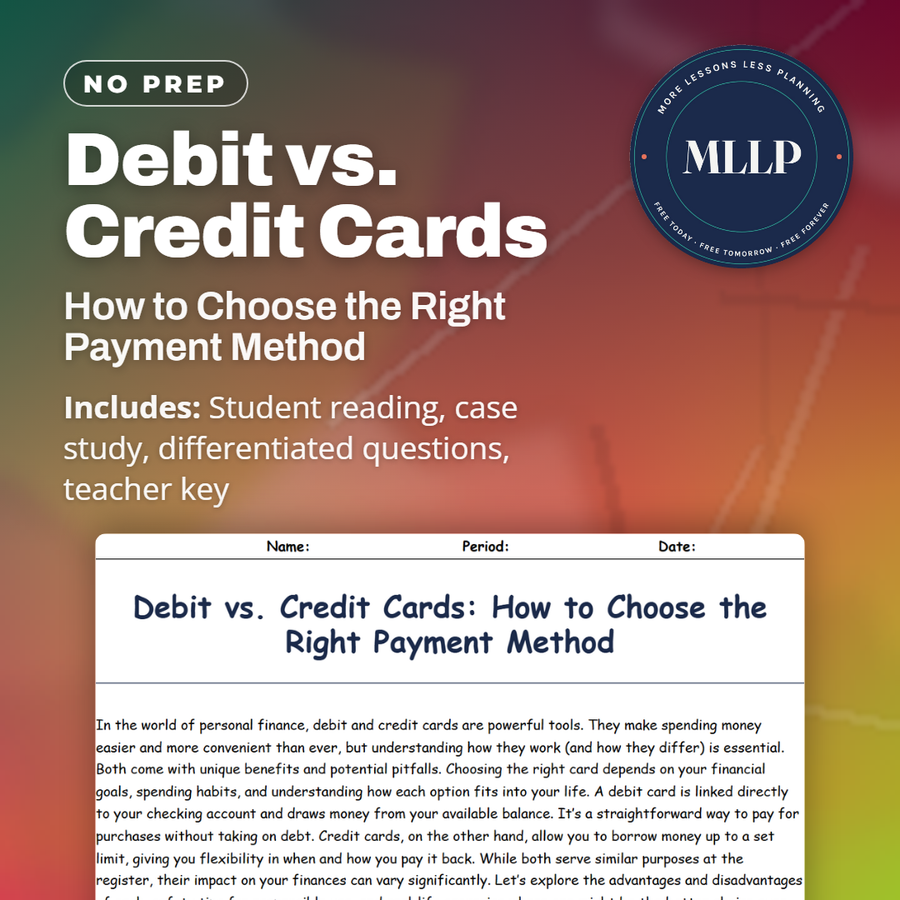
Debit vs. Credit Cards: How to Choose the Right Payment Method
Quality reviewed September 2026
Facts verified September 24, 2026
- Subject
- Career & Life Skills
- Grades
- Grades 9-12
- Length
- 7-page student worksheet
- Time
- About one 50-minute class period
- Great for
- Sub plans and independent work
- Includes
- Reading passage, comprehension questions + full answer key
- Format
- Print-and-go PDF
What students do
- Match five items on building credit history, being linked to a bank, PIN security, credit limits, and interest charges to the right card or concept
- Fill in the blanks on what a credit limit is, where debit cards draw money from, and what responsible credit card use builds
- Answer multiple choice questions on which card links to checking, a benefit of responsible credit use, and which card has stronger fraud protection
- Write short answers on why a credit card can be better for online shopping, how a debit card keeps spending in check, and two benefits of using credit responsibly
What it covers
- How debit cards draw from checking while credit cards let you borrow up to a limit
- Safety tips for both cards, and situations where one works better than the other
- A case study comparing Jaden's debit card fraud and Maya's credit card fraud after online purchases
Start reading this worksheet
In the world of personal finance, debit and credit cards are powerful tools. They make spending money easier and more convenient than ever, but understanding how they work (and how they differ) is essential. Both come with unique benefits and potential pitfalls. Choosing the right card depends on your financial goals, spending habits, and understanding how each option fits into your life. A debit card is linked directly to your checking account and draws money from your available balance. It’s a straightforward way to pay for purchases without taking on debt. Credit cards, on the other hand, allow you to borrow money up to a set limit, giving you flexibility in when and how you pay it back. While both serve similar purposes at the register, their impact on your finances can vary significantly. Let’s explore the advantages and disadvantages of each, safety tips for responsible use, and real-life scenarios where one might be the better choice over the other.
How Debit Cards Work
A debit card is a payment tool connected to your checking account. When you swipe your card or enter your details online, money is immediately deducted from your available balance. Debit cards are popular because they keep spending in check. Once your balance hits zero, transactions will typically be declined unless you have overdraft protection. One of the greatest advantages of using a debit card is that it helps you stay within your budget. You’re only spending money you already have, making it easier to avoid debt. Debit cards also tend to come with fewer fees, especially if you’re not withdrawing cash from out-of-network ATMs. Additionally, they’re widely accepted and offer convenience for day-to-day expenses. However, debit cards have some limitations. They don’t help you build credit history, which is important for major financial goals like buying a house or securing a car loan. Additionally, fraud protection is often weaker than with credit cards. If your debit card is lost or stolen, resolving unauthorized charges may take time and require coordination with your bank.
How Credit Cards Work
Credit cards allow you to borrow money from a bank or financial institution to make purchases. Unlike debit cards, which draw from your checking account, credit cards come with a credit limit: a predetermined amount you can borrow. You’ll receive a monthly bill for the balance owed, and paying it in full each month helps you avoid interest charges. Credit cards offer significant advantages, particularly in building a strong credit history. Your credit score is influenced by factors such as on-time payments, credit utilization, and the length of your credit history. Responsible use of a credit card can open doors to better loan rates, higher credit limits, and other financial opportunities. Additionally, credit cards often come with perks such as cashback rewards, travel benefits, and fraud protection. However, the flexibility of credit cards can also lead to overspending if not managed carefully. Carrying a balance from month to month results in interest charges, which can quickly add up and lead to debt.
Like what you read? The full reading, the case study, and every question set are in the free download below, along with the answer key.
Why this matters
Jaden and Maya bought from the same kind of unfamiliar website, and the card each one used decided whether the fraud cost them weeks of missing grocery money or nothing at all. That's a distinction most students haven't thought about before they start shopping online with their own money. Which card to reach for, debit or credit, ends up being one of the more practical calls a new cardholder makes on a regular basis.
From one teacher to another
Debit and credit cards get compared feature by feature here: a debit card pulls straight from checking the moment you swipe, while a credit card lets you borrow up to a limit and bills you monthly. A table lines the two up on fraud protection, impact on credit score, and fees, showing that credit cards typically offer stronger protection while debit cards carry fewer fees overall. The reading lists safety habits that apply to either card, like monitoring transactions and never sharing a PIN, then splits out situations where each card makes more sense. Jaden buys shoes online with his debit card and loses access to his own money for weeks after a fraudulent charge, while his sister Maya's credit card company reverses a similar charge immediately.
What you get
Download
Where should I send the next one?
Everything here is free and it stays that way. Leave your email and I'll send you the new lessons as they go up. You can unsubscribe from any one of them.
Related resources
Financial Scams Teens Should Know: Spotting and Avoiding Fraud
How to Build a Strong Credit Score from Day One
How to Read a Paycheck: Understanding Deductions and Net Pay
How to Start Saving for Retirement as a Teen
Insurance for Beginners: What Teens Need to Know About Coverage
Money Myths Debunked: What Teens Get Wrong About Finances
Every lesson on this site is free to download and use. If one of them saved you a prep period, you can chip in a few bucks toward my three kids' daycare fund. That's genuinely where tips go.