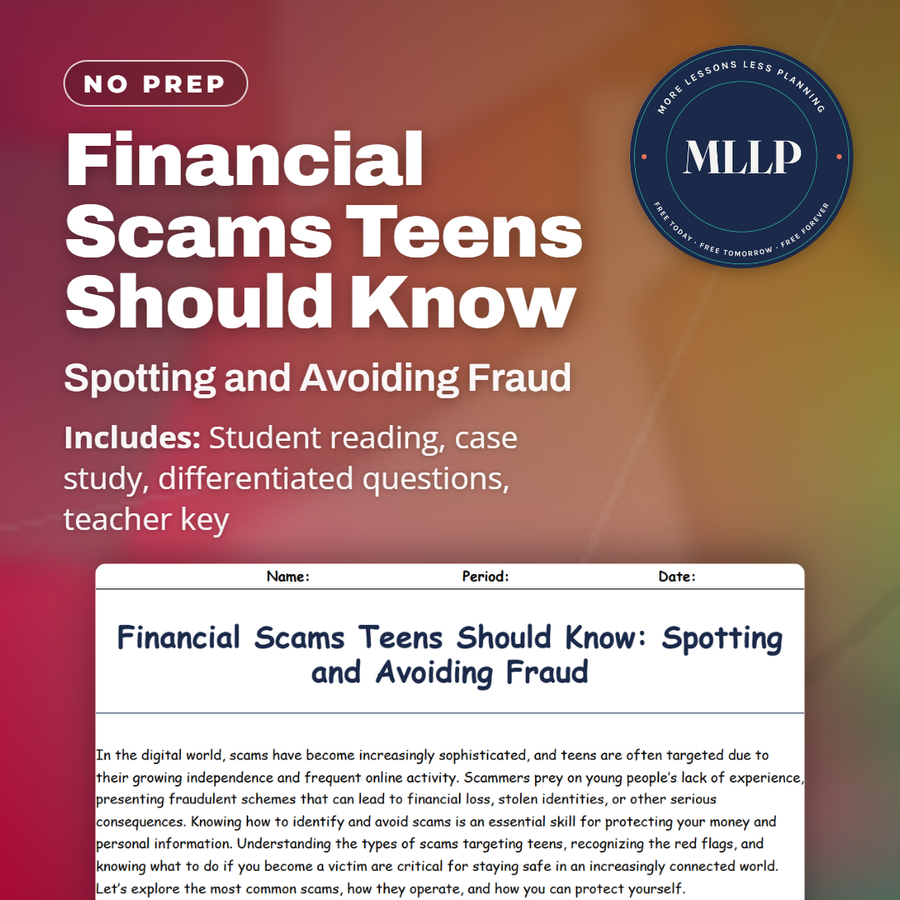
Financial Scams Teens Should Know: Spotting and Avoiding Fraud
Quality reviewed September 2026
Facts verified September 24, 2026
- Subject
- Career & Life Skills
- Grades
- Grades 9-12
- Length
- 7-page student worksheet
- Time
- About one 50-minute class period
- Great for
- Sub plans and independent work
- Includes
- Reading passage, comprehension questions + full answer key
- Format
- Print-and-go PDF
What students do
- Match phishing emails, fake job offers, scholarship scams, and "You've Won" messages to warning signs like a suspicious payment request, a request for a Social Security number, a guaranteed scholarship, and a fraudulent prize, plus recovering from a scam to contacting your bank
- Fill in the blanks on what scammers create to pressure victims into acting fast, who to notify after unauthorized transactions, and what legitimate scholarships never require
- Answer multiple choice questions on which request is a red flag, how to verify an online offer is real, and what to do first if your personal information is stolen
- Write short answers on why teens are easy targets for scams, two ways to protect personal information online, and what in Emma's case study should have tipped her off before she gave up her Social Security number
What it covers
- Common scams like phishing emails, fake job offers, scholarship scams, online shopping scams, and "You've Won" prize messages
- Red flags such as urgency, unsolicited messages, grammar mistakes, and requests for payment through gift cards or wire transfers
- A case study on Emma, who gave up her Social Security number for a fake data entry job and had accounts opened in her name
Start reading this worksheet
In the digital world, scams have become increasingly sophisticated, and teens are often targeted due to their growing independence and frequent online activity. Scammers prey on young people’s lack of experience, presenting fraudulent schemes that can lead to financial loss, stolen identities, or other serious consequences. Knowing how to identify and avoid scams is an essential skill for protecting your money and personal information. Understanding the types of scams targeting teens, recognizing the red flags, and knowing what to do if you become a victim are critical for staying safe in an increasingly connected world. Let’s explore the most common scams, how they operate, and how you can protect yourself.
Common Scams Targeting Teens
Scammers use a variety of tactics to deceive their victims, often adapting their methods to target younger audiences. Some of the most common scams include: Phishing Emails and Texts: These messages appear to be from legitimate companies, like banks or online stores, and often include urgent requests to verify personal information or click on a suspicious link. The goal is to steal sensitive information like passwords or credit card numbers. Fake Job Offers: Teens seeking part-time work are often targeted with offers that sound too good to be true. Scammers might ask for upfront payments for “training” or request personal information like Social Security numbers. Scholarship Scams: These scams promise guaranteed financial aid or scholarships in exchange for a fee. Legitimate scholarships never require payment. Online Shopping Scams: Fake websites or social media ads sell products that either don’t exist or are of significantly lower quality than advertised. Victims may lose money or expose their credit card details. “You’ve Won” Scams: Emails or messages claiming you’ve won a prize often ask for a fee or personal information to claim it. These are almost always fraudulent. Each of these scams can result in financial loss, stolen identity, or damaged credit, which may take years to recover.
Red Flags to Watch For
While scammers are increasingly creative, their schemes often share common warning signs. Recognizing these red flags can help you avoid becoming a victim: Requests for Immediate Action: Scammers often create a sense of urgency to pressure you into acting without thinking. Unsolicited Messages: Be wary of emails, texts, or calls you didn’t expect, especially if they ask for personal information. Too Good to Be True: If an offer seems unrealistic (like a job promising hundreds of dollars a day for minimal effort), it probably is. Grammatical Errors: Many scams originate overseas and contain noticeable spelling or grammar mistakes. Legitimate companies are unlikely to send poorly written communications. Requests for Payment via Untraceable Methods: Scammers often ask for payment through gift cards, cryptocurrency, or wire transfers, as these methods are difficult to trace or recover. Understanding these warning signs is the first step in protecting yourself and your personal information.
Like what you read? The full reading, the case study, and every question set are in the free download below, along with the answer key.
Why this matters
Teens are a common target for these scams because they're often new to job hunting, banking, and credit, so an offer that would look obvious to an adult can look like a normal opportunity. A single Social Security number handed to the wrong person can take months to clean up, as Emma's case shows, so recognizing the warning signs before sending any information matters more than knowing what to do after the fact. Any student who's ever gotten a text about winning a prize or seen a job posting that sounds too good to be true has already run into the setup this reading breaks down.
From one teacher to another
Scammers who target teens tend to run one of five plays: phishing emails and texts, fake job offers, scholarship scams, online shopping scams, or a message claiming you've won a prize. The reading lines up the red flags that show up across most of them, someone rushing you to act immediately, a request for a Social Security number or payment before you're even hired, or a demand to pay through gift cards or a wire transfer that can't be traced. It also covers what to do if a scam gets through, from freezing accounts with your bank to placing a fraud alert with a credit bureau. The case study hands students a fake job offer that asked Emma for her Social Security number up front, and they work out what should have tipped her off and how her family started undoing the damage.
What you get
Download
Where should I send the next one?
Everything here is free and it stays that way. Leave your email and I'll send you the new lessons as they go up. You can unsubscribe from any one of them.
Related resources
Debit vs. Credit Cards: How to Choose the Right Payment Method
How to Build a Strong Credit Score from Day One
How to Read a Paycheck: Understanding Deductions and Net Pay
How to Start Saving for Retirement as a Teen
Insurance for Beginners: What Teens Need to Know About Coverage
Money Myths Debunked: What Teens Get Wrong About Finances
Every lesson on this site is free to download and use. If one of them saved you a prep period, you can chip in a few bucks toward my three kids' daycare fund. That's genuinely where tips go.