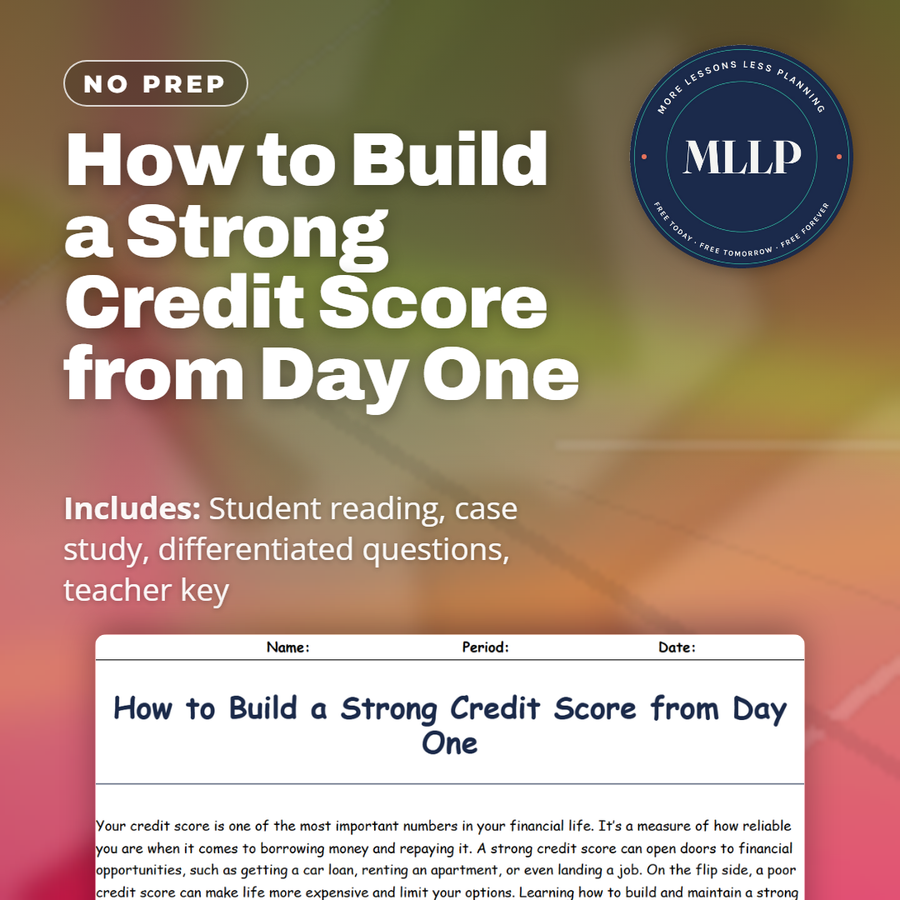
How to Build a Strong Credit Score from Day One
Quality reviewed September 2026
Facts verified September 24, 2026
- Subject
- Career & Life Skills
- Grades
- Grades 9-12
- Length
- 7-page student worksheet
- Time
- About one 50-minute class period
- Great for
- Sub plans and independent work
- Includes
- Reading passage, comprehension questions + full answer key
- Format
- Print-and-go PDF
What students do
- Match terms like payment history and credit utilization to definitions such as a record of on-time payments and the percentage of available credit you're using, plus credit limit, credit score, and credit report to their own definitions
- Fill in the blanks on what credit utilization measures, what a good score can lower on a loan, and what to review regularly to catch errors
- Answer multiple choice questions on the single biggest factor in a credit score, why keeping utilization under 30 percent matters, and what a credit report actually is
- Write short answers on how on-time payments build a score, why opening too many accounts at once can hurt it, and how Jordan's secured card habits got him a 750 score without a co-signer
What it covers
- The five factors behind a credit score: payment history, credit utilization, length of history, types of credit, and new credit
- The credit score range chart, from poor (300 to 579) to excellent (800 to 850), and what each range means for borrowing
- A case study on Jordan, who used a secured credit card responsibly and reached a 750 score before renting his first apartment
Start reading this worksheet
Your credit score is one of the most important numbers in your financial life. It’s a measure of how reliable you are when it comes to borrowing money and repaying it. A strong credit score can open doors to financial opportunities, such as getting a car loan, renting an apartment, or even landing a job. On the flip side, a poor credit score can make life more expensive and limit your options. Learning how to build and maintain a strong credit score is an essential skill, and the earlier you start, the better. Let’s explore what credit scores are, why they matter, and how you can establish healthy financial habits from the beginning.
What is a Credit Score and Why Does It Matter?
A credit score is a three-digit number, typically ranging from 300 to 850, that reflects your creditworthiness. In other words, it tells lenders how likely you are to repay borrowed money. The higher your score, the more trustworthy you appear to banks, landlords, and even some employers. Credit scores are calculated based on information in your credit report, which tracks your borrowing history. Major credit reporting agencies—Equifax, Experian, and TransUnion—collect this information to generate your score. Here’s why credit scores matter: Loan Approval: A high credit score makes it easier to qualify for loans and credit cards. Interest Rates: With a good credit score, you’re more likely to get lower interest rates, saving you money over time. Renting an Apartment: Landlords often check credit scores to determine if you’re a reliable tenant. Employment: Some employers review credit reports to gauge your financial responsibility. Your credit score can influence major life decisions, so it’s worth taking the time to build and maintain a strong one.
How Credit Scores Are Calculated
Credit scores are based on five main factors, each weighted differently: Payment History (35%): Paying your bills on time is the most important factor in your credit score. Late payments, defaults, or bankruptcies can have a significant negative impact. Credit Utilization (30%): This measures how much of your available credit you’re using. Keeping your usage below 30% of your total credit limit is ideal. Length of Credit History (15%): The longer you’ve had credit accounts, the better. Even a small amount of history can boost your score over time. Types of Credit (10%): A mix of credit types, such as credit cards, auto loans, and student loans, can improve your score. New Credit (10%): Opening too many new accounts in a short time can lower your score, as it suggests you might be taking on too much debt. Understanding these factors helps you make informed decisions about how to manage your credit.
Like what you read? The full reading, the case study, and every question set are in the free download below, along with the answer key.
Why this matters
Most teens don't touch credit until they need it for something big, like a car or an apartment, and by then it's too late to undo months of late payments or maxed-out cards. Jordan's case shows how fast a score can climb with small, ordinary purchases and consistent payments, which is realistic for a student with a part-time job rather than someone with a big income. Understanding what actually moves the number, especially payment history and utilization, means students can start building credit before they're relying on it for something they actually need.
From one teacher to another
A credit score comes down to five factors, and the reading walks through what each one is worth: payment history, credit utilization, length of credit history, types of credit, and new credit. It maps out the score ranges from poor up to excellent and what a lender sees at each level, plus practical habits like opening a secured card, paying balances in full, and keeping utilization under 30 percent. In the case study, Jordan is a college freshman who used a $500 secured card for gas and groceries, paid it off every month, and reached a 720 score in six months, then a 750 that let him rent an apartment without a co-signer.
What you get
Download
Where should I send the next one?
Everything here is free and it stays that way. Leave your email and I'll send you the new lessons as they go up. You can unsubscribe from any one of them.
Related resources
Debit vs. Credit Cards: How to Choose the Right Payment Method
Financial Scams Teens Should Know: Spotting and Avoiding Fraud
How to Read a Paycheck: Understanding Deductions and Net Pay
How to Start Saving for Retirement as a Teen
Insurance for Beginners: What Teens Need to Know About Coverage
Money Myths Debunked: What Teens Get Wrong About Finances
Every lesson on this site is free to download and use. If one of them saved you a prep period, you can chip in a few bucks toward my three kids' daycare fund. That's genuinely where tips go.